
Shaping
Site Analysis

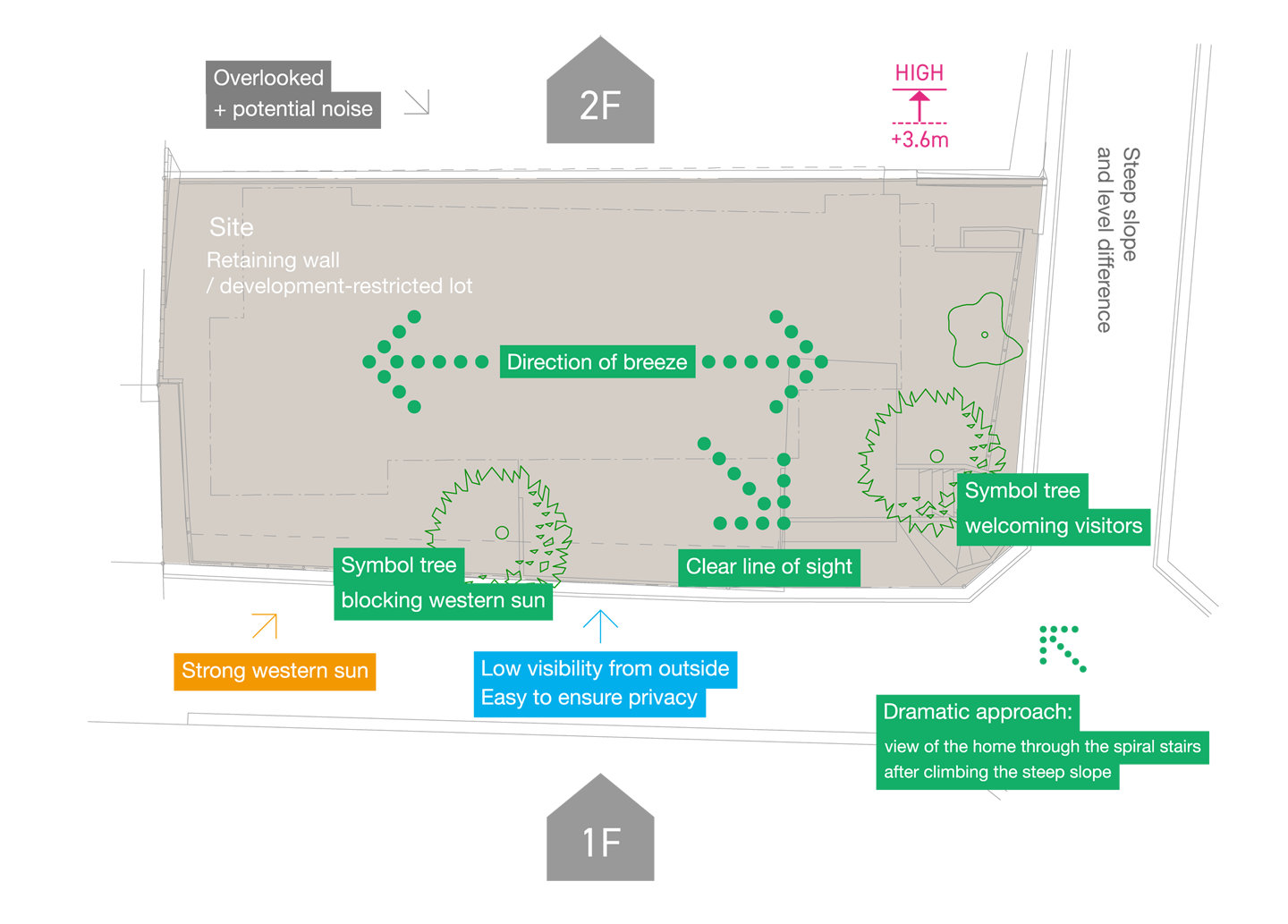
Plans


Photo by Akiyoshi Fukuzawa (1-22)


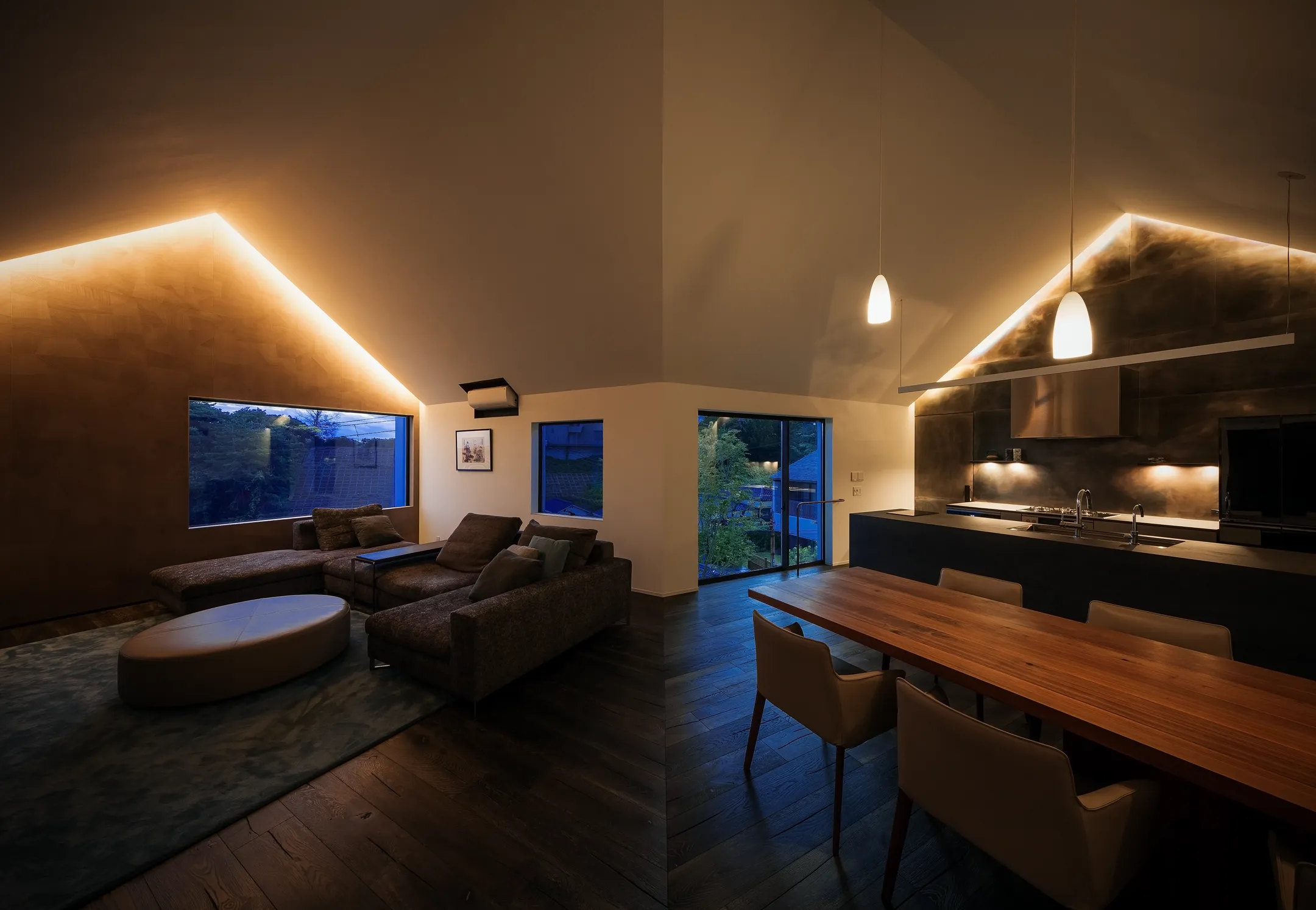
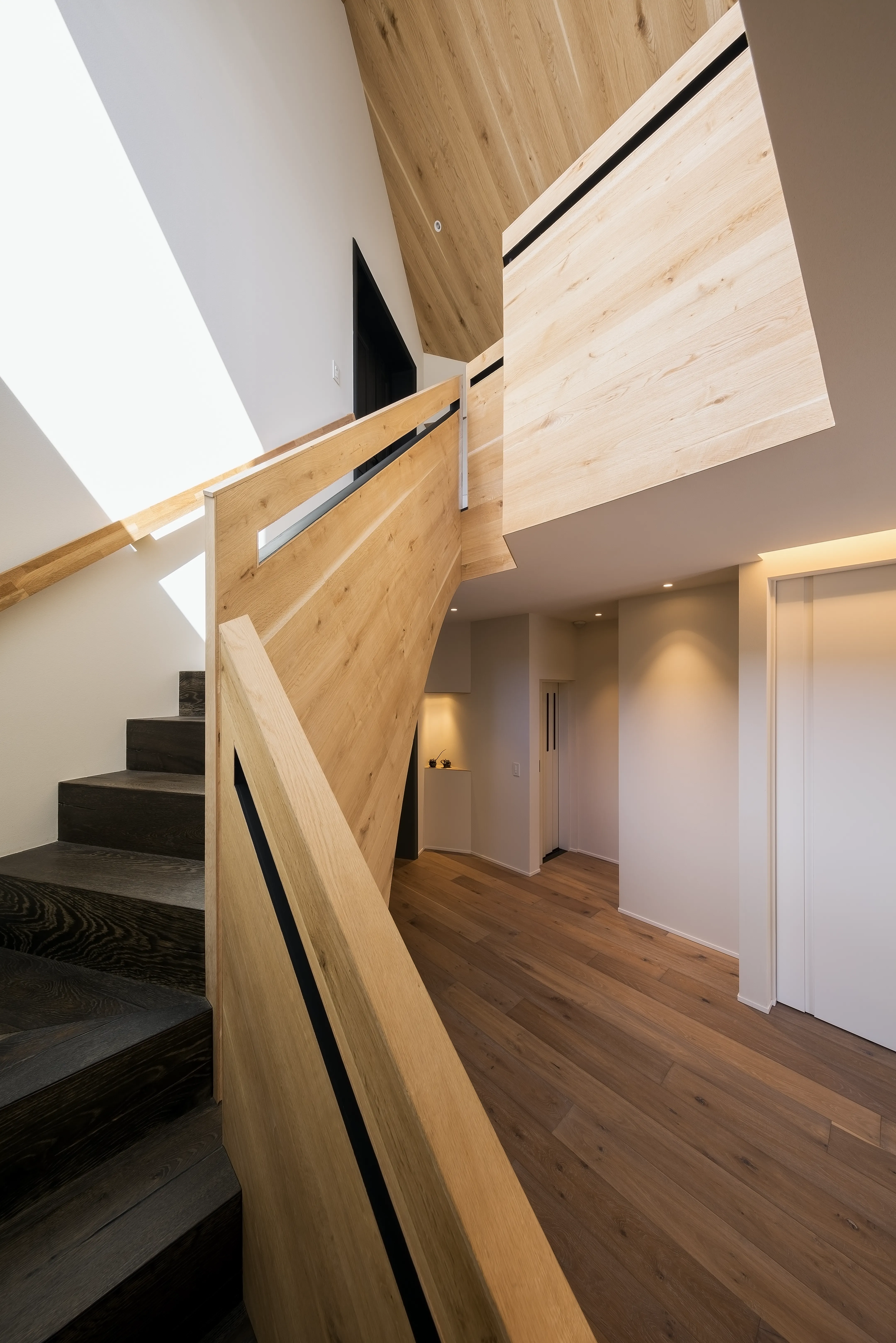
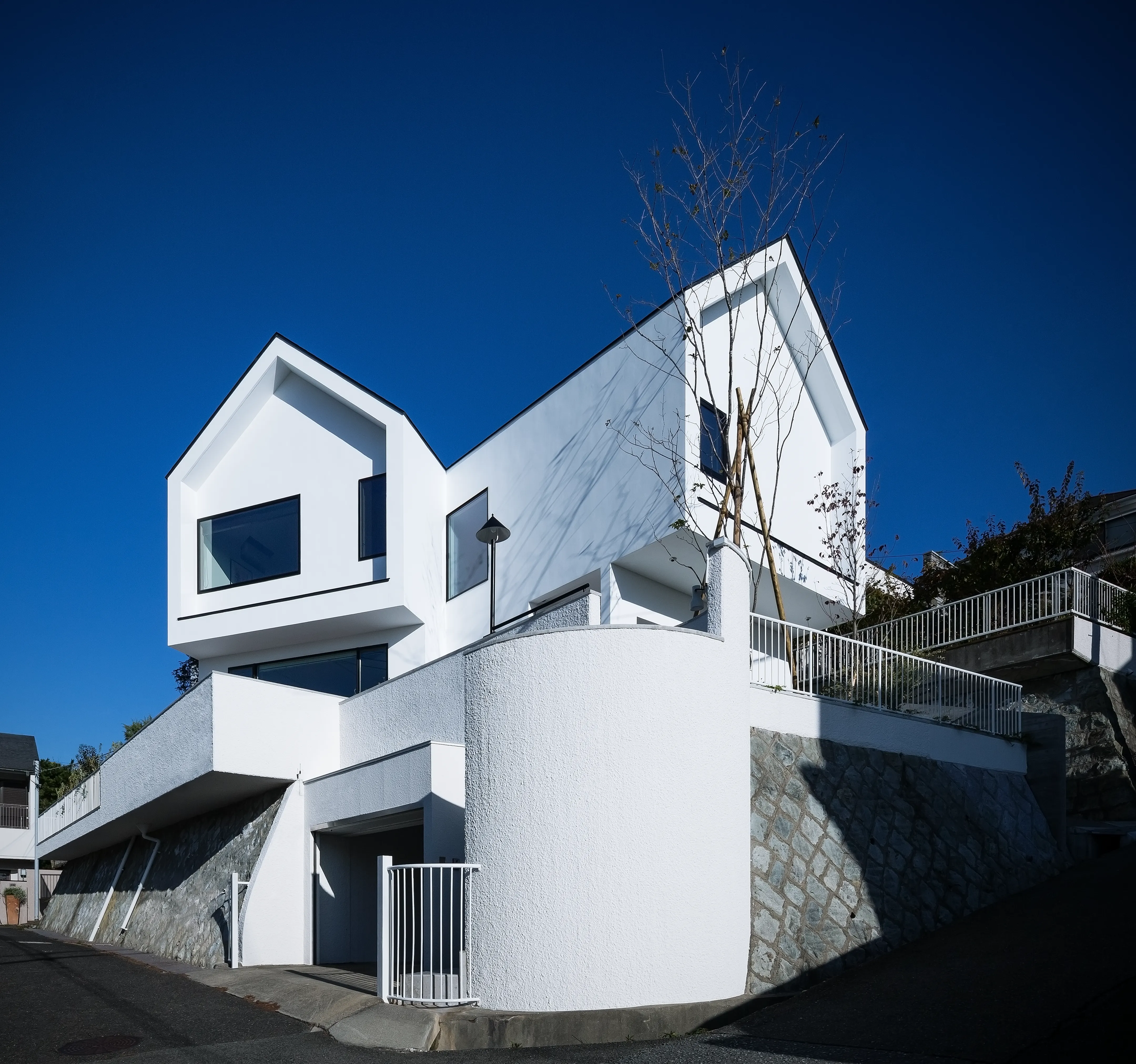
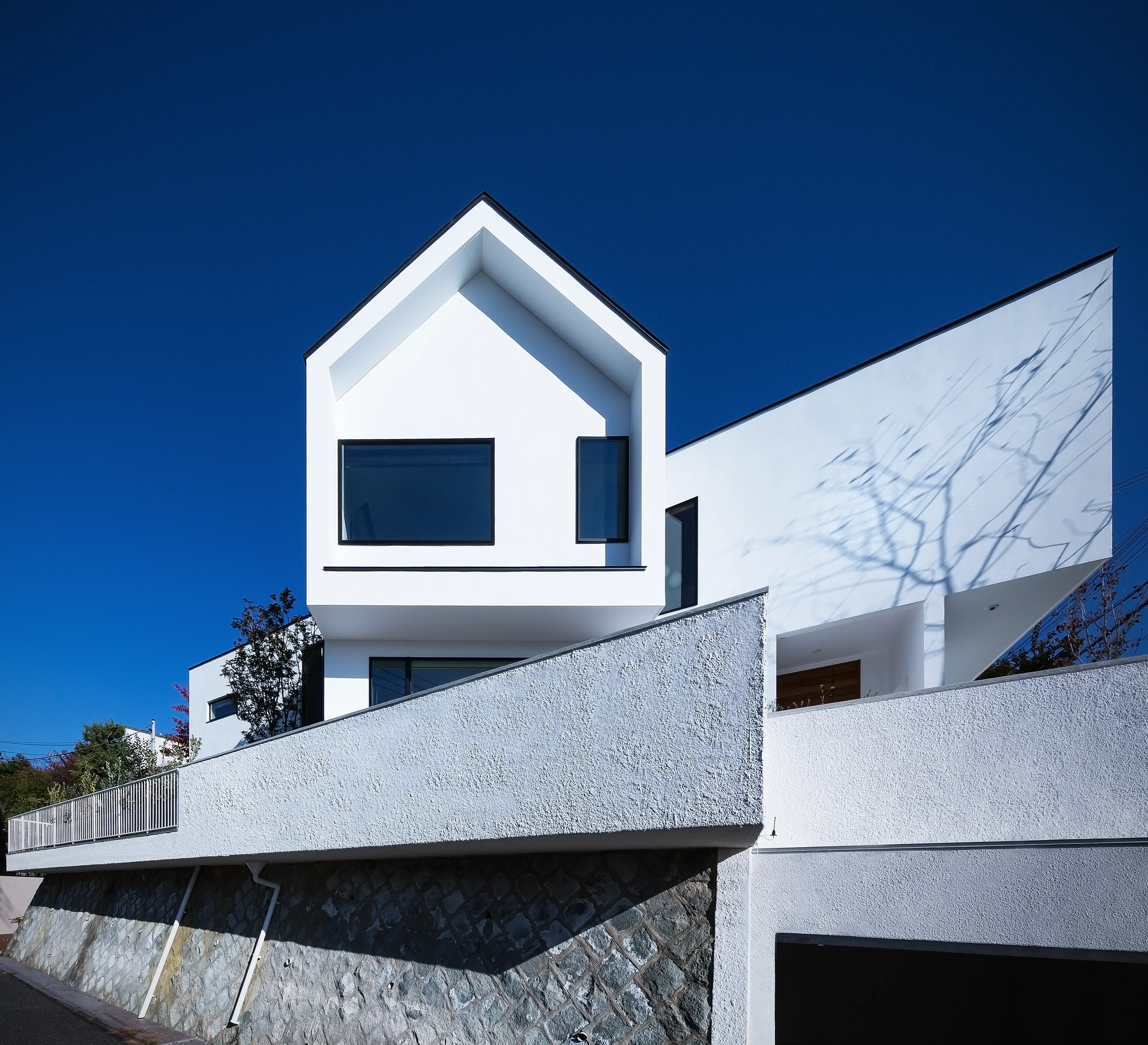
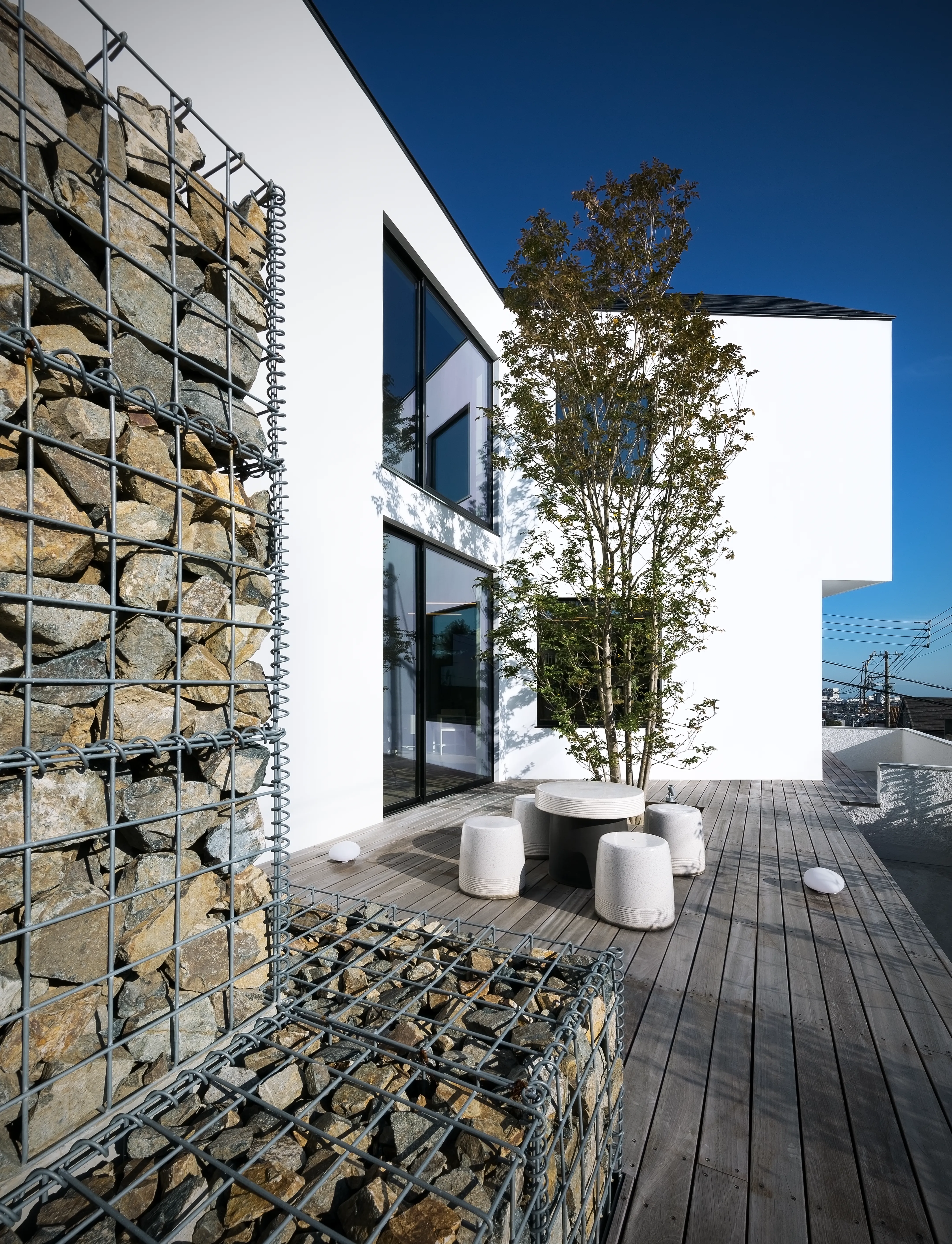
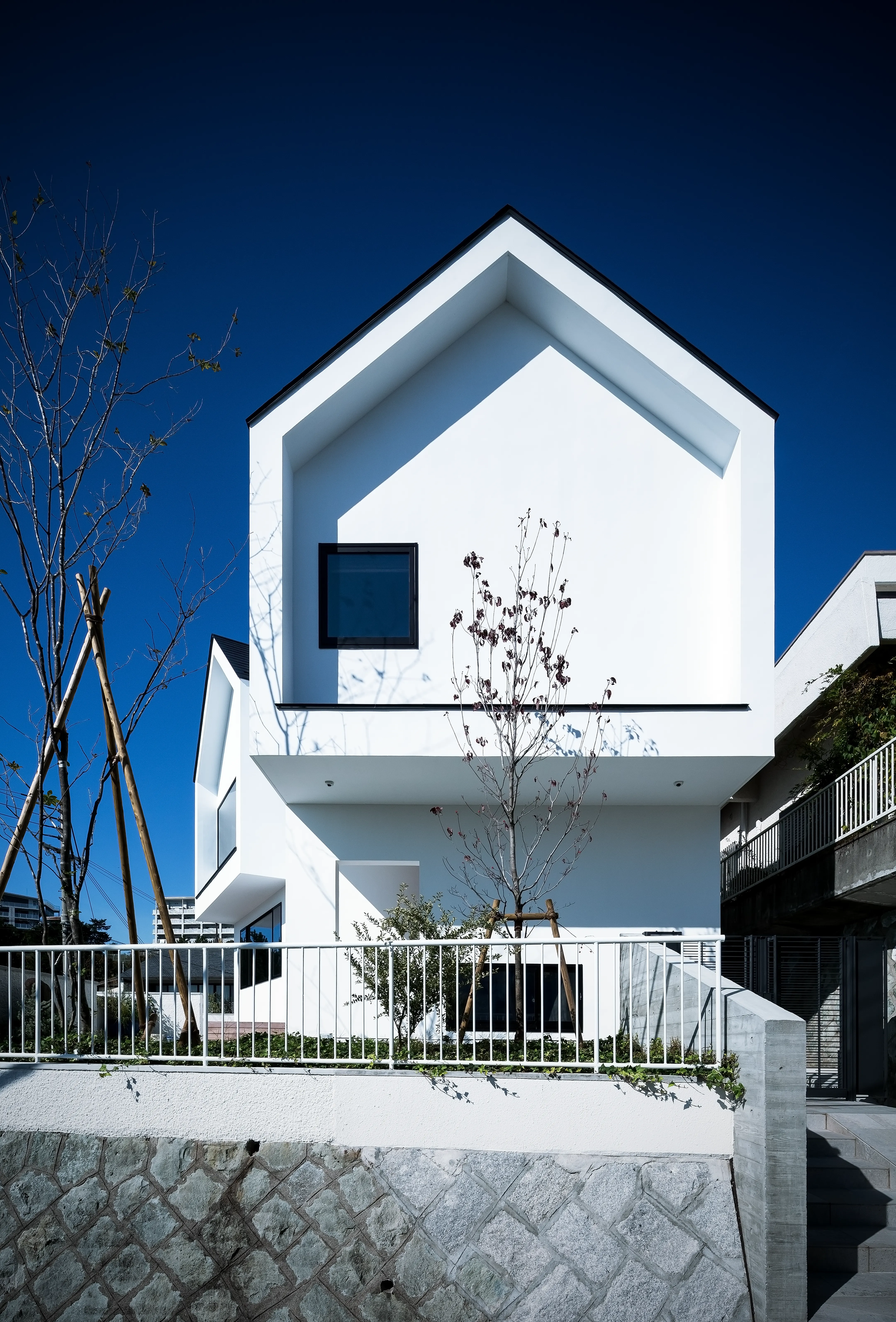
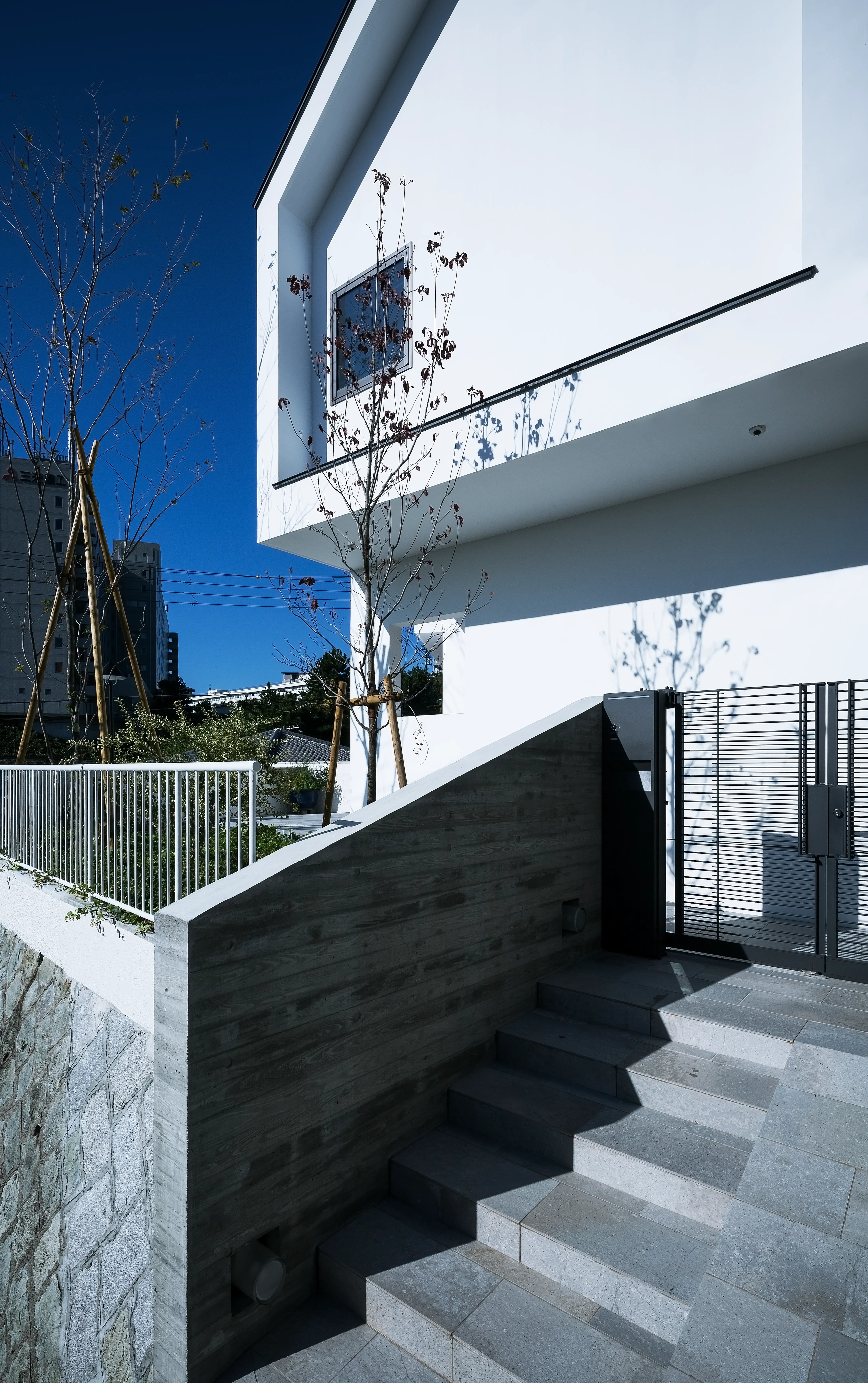
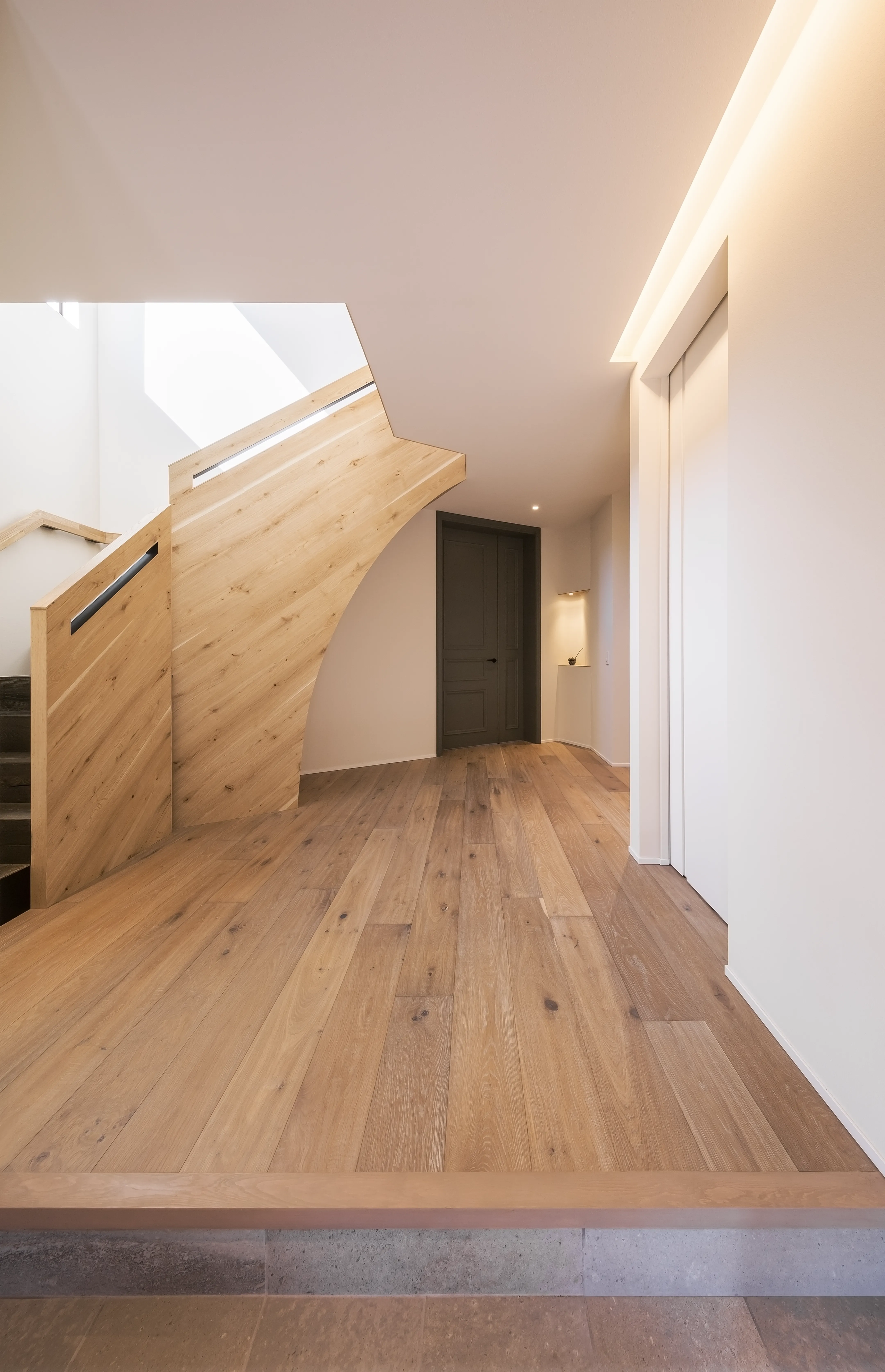
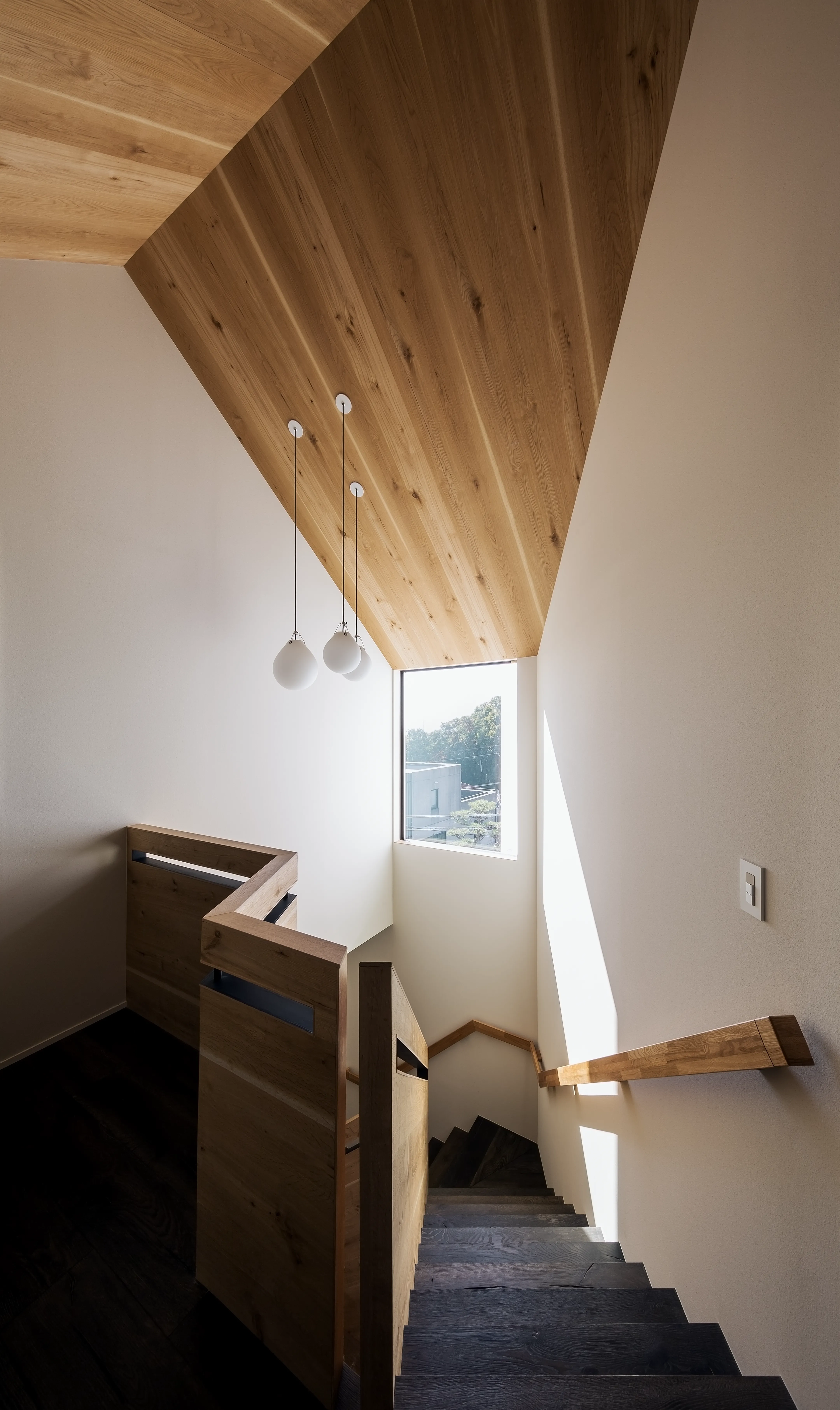
This house stands on a hilltop, replacing an older wooden home that once occupied the site. As you climb the steep slope to the entrance, a striking image unfolds: a white facade and a sculptural tree framed by a graceful spiral staircase.
Two axes emerged from our site analysis: one running east-west along the length of the plot, and another angled about 30 degrees, aligned with views of the Tarumi coastline to the south. Following these orientations led naturally to a plan that branches out, giving rise to what we now call the Branch Haus.
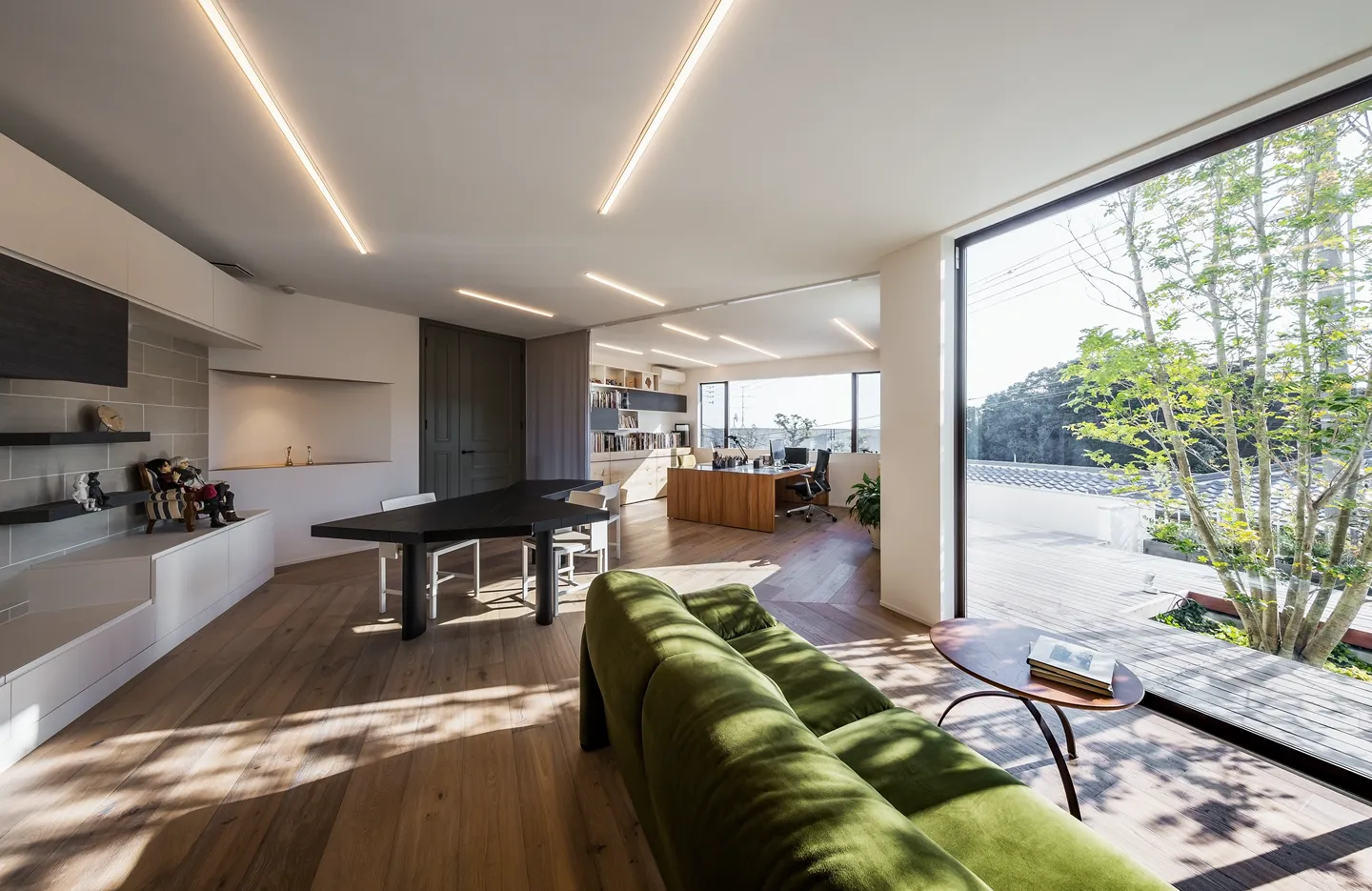
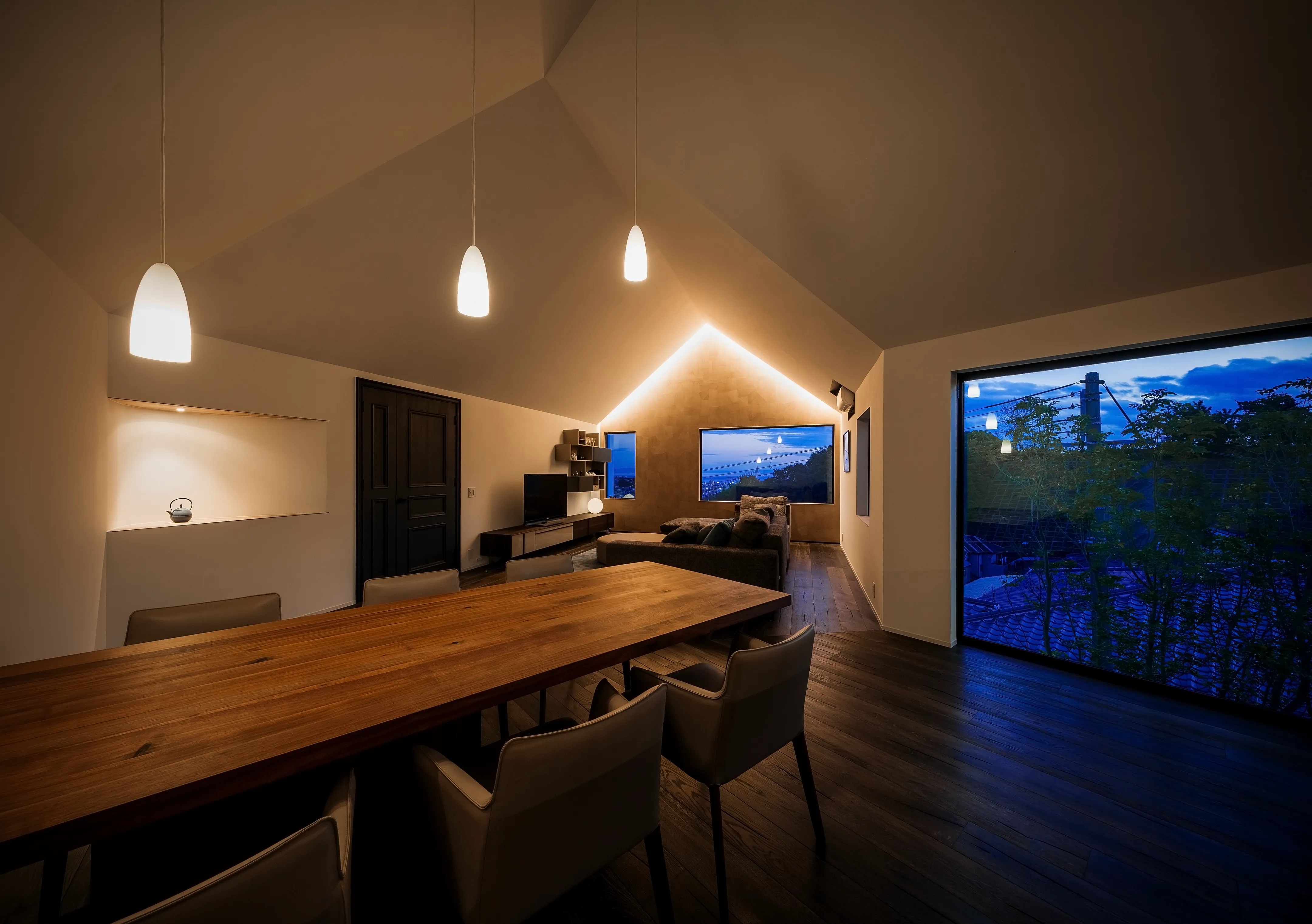
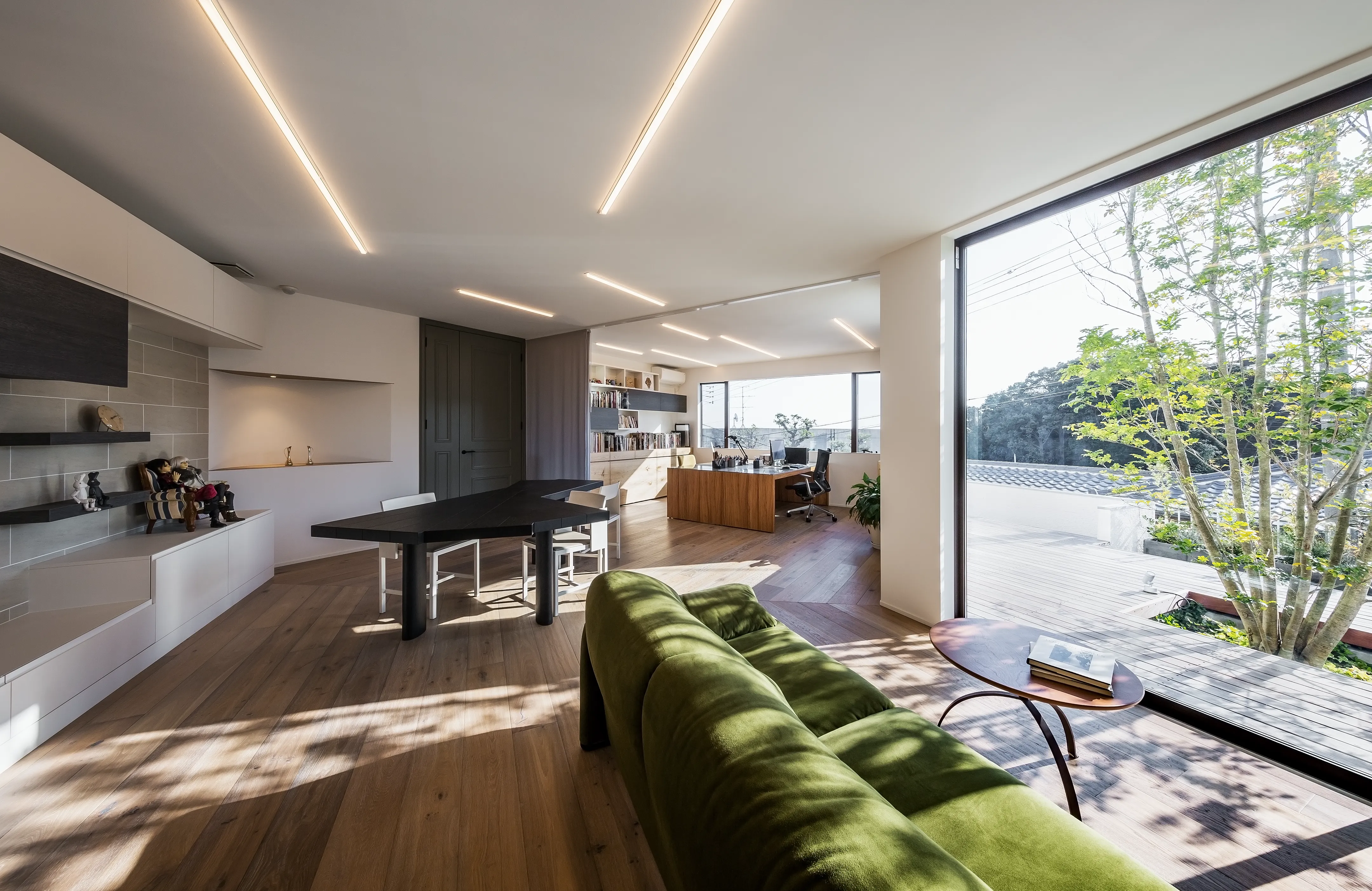
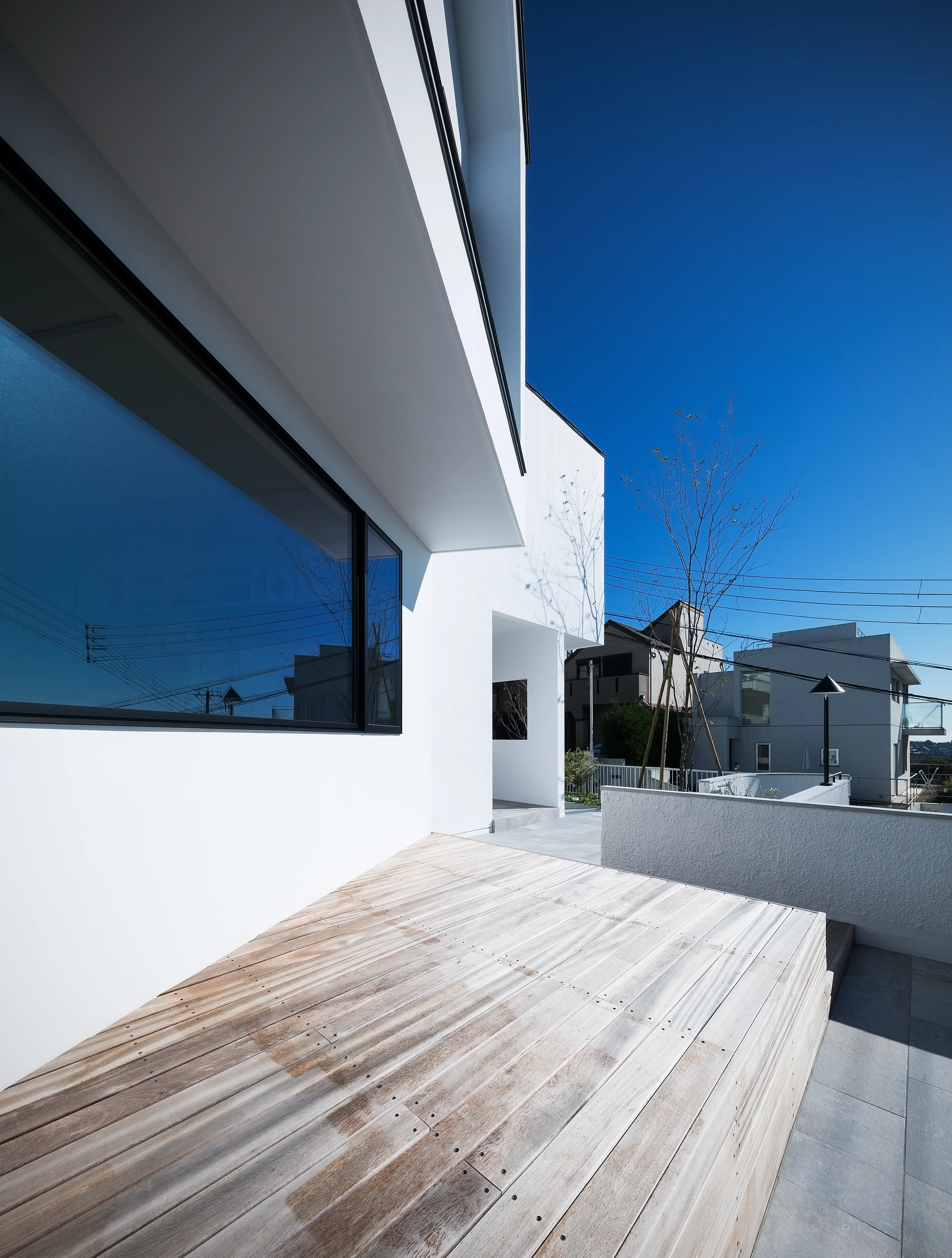
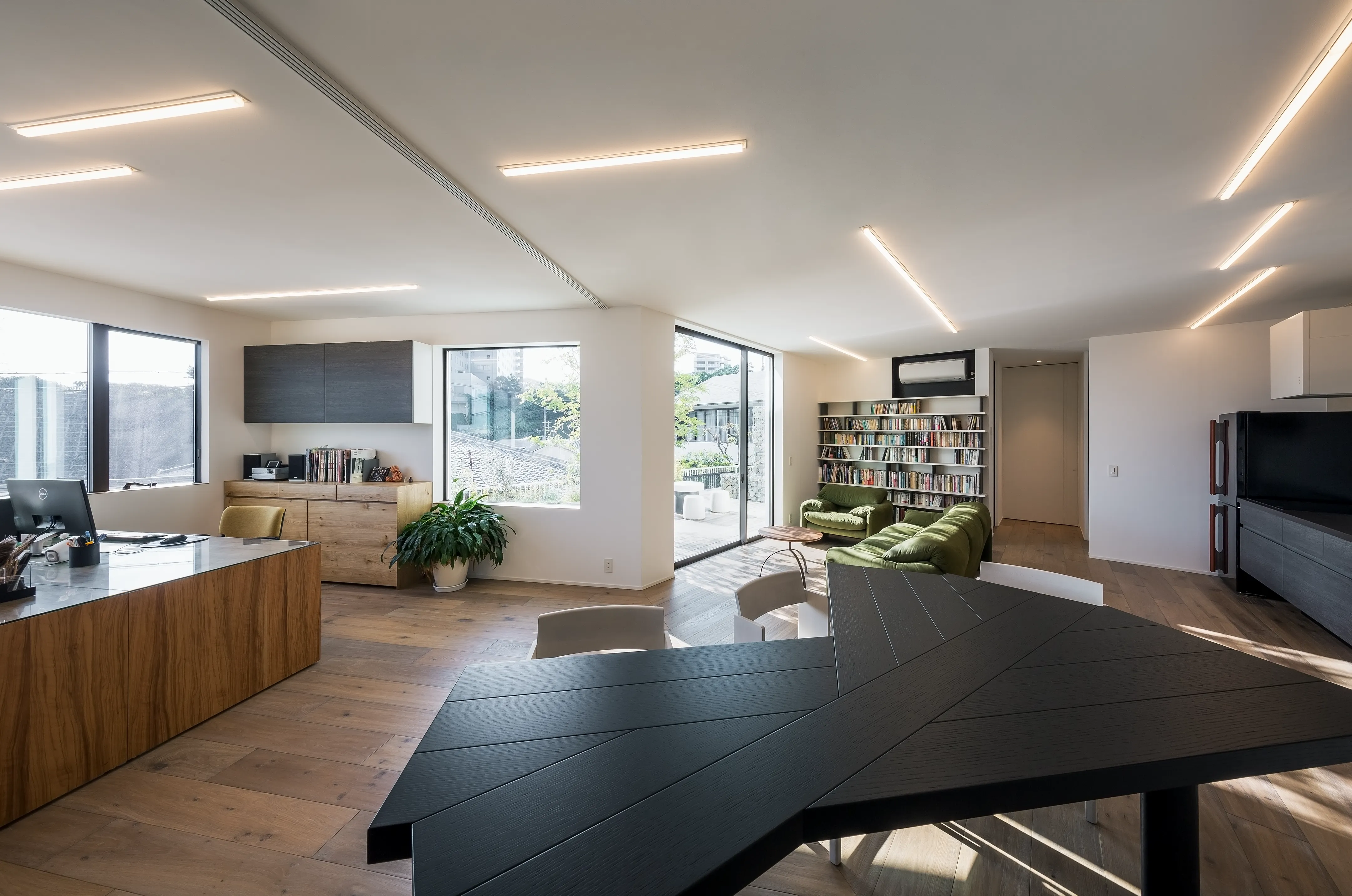
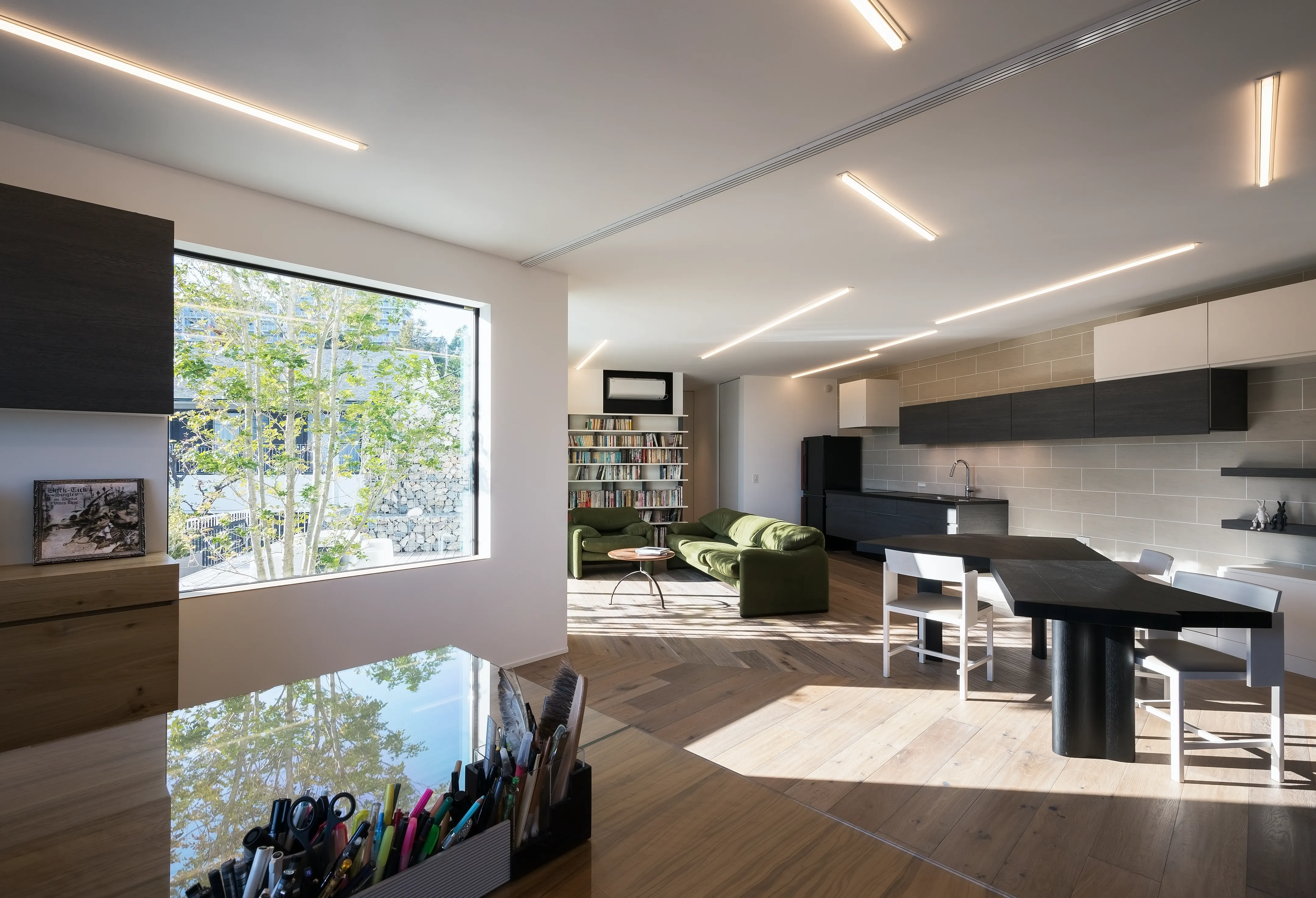
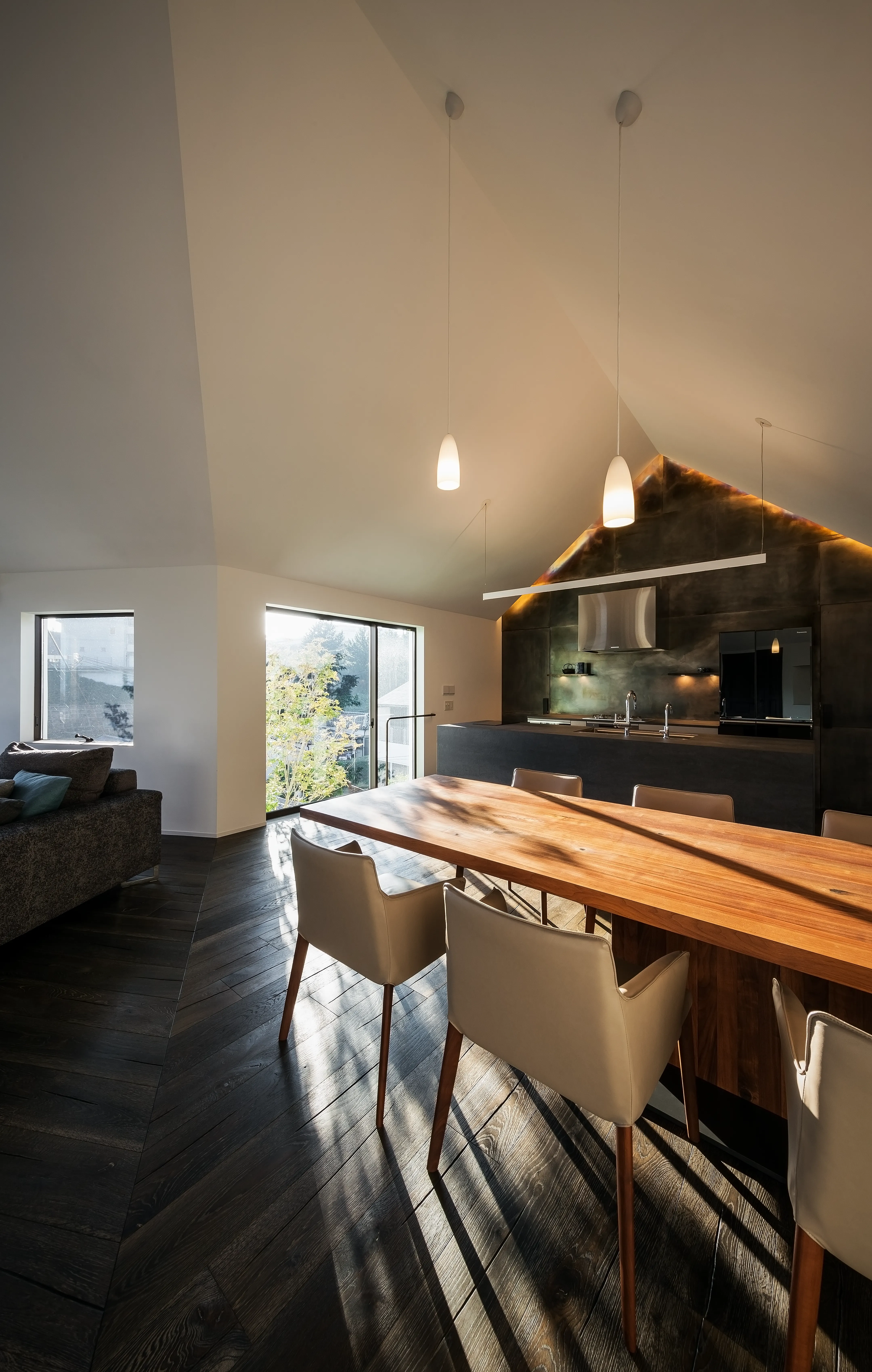
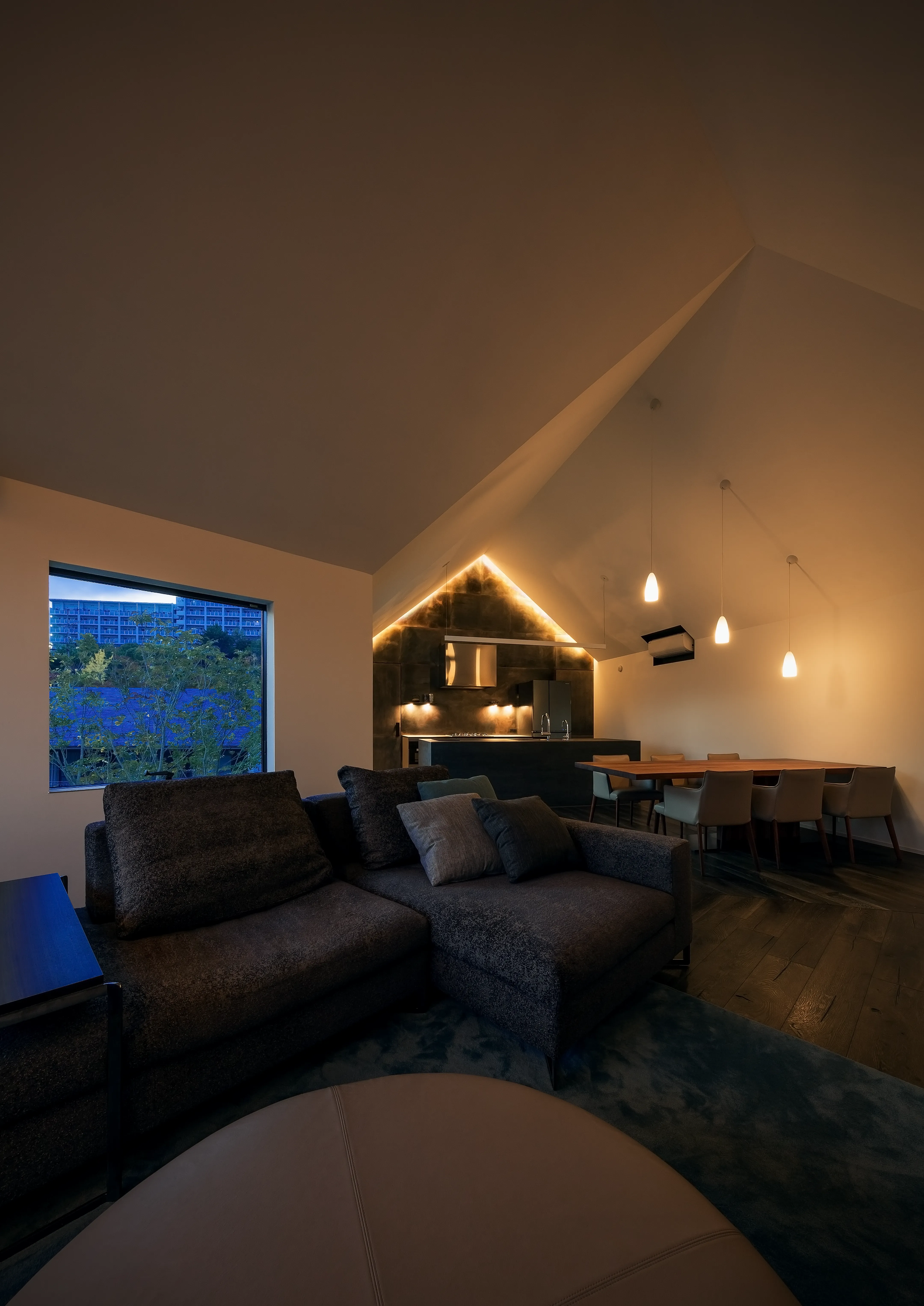
At the center of the house are two key spaces: a chevron-shaped atelier on the first floor and a living-dining-kitchen (LDK) area above. These are spaces where the client spends much of their time, so we placed them along the axis offering the best views. A large opening faces due south toward the sea, providing ample light and eliminating the need to worry about strong western sun. The view from the second-floor LDK is especially open and expansive. Before the rebuild, only a sliver of ocean was visible, and the client mostly looked out onto neighboring rooftops. After changing the orientation of the windows, the transformation was so dramatic that the client remarked, “I never imagined how much the view could change just by shifting the angle!”
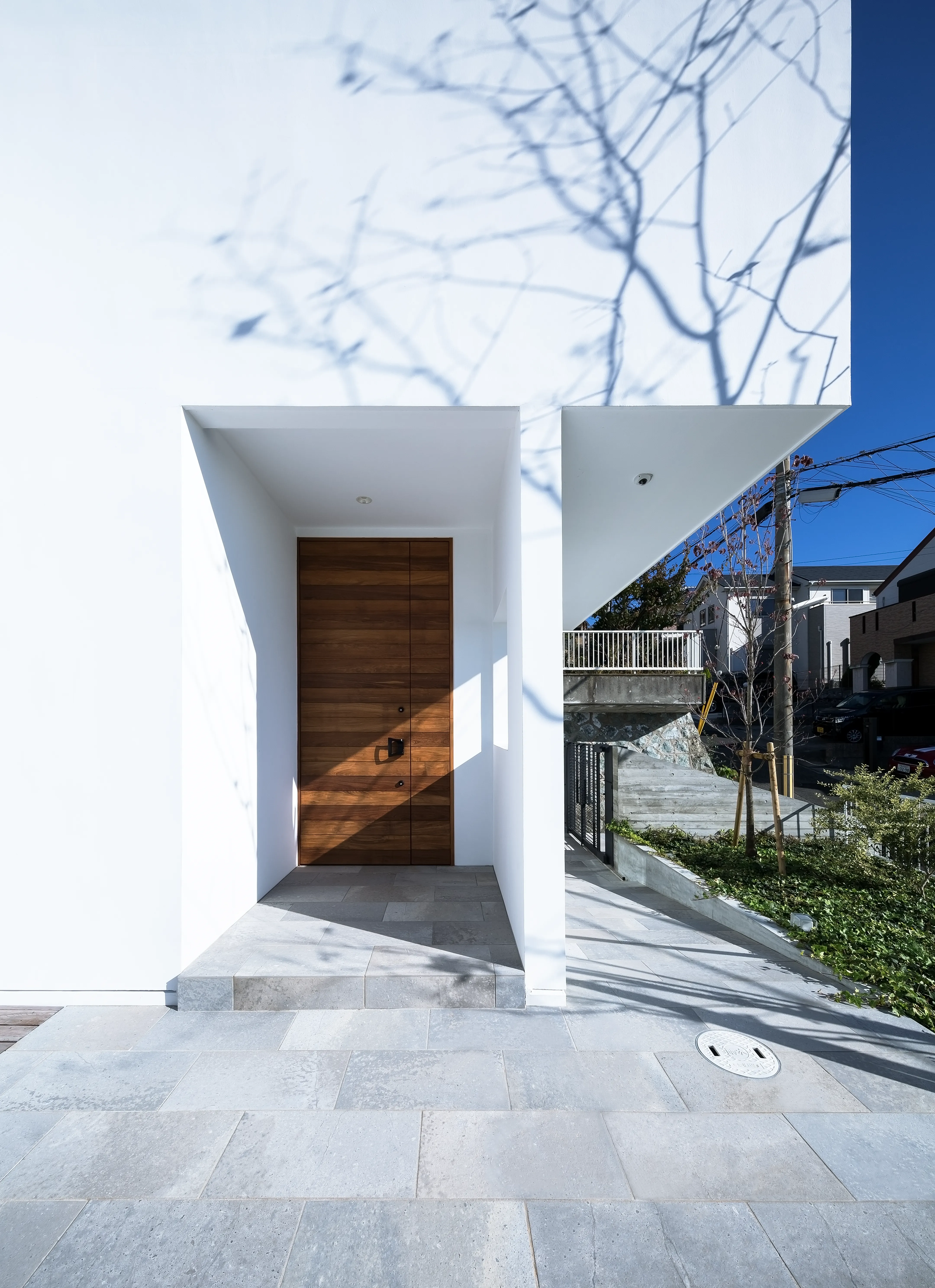
The site is long and narrow from east to west, with the entry at the eastern tip—conditions that could easily result in a long, inefficient circulation path. By placing the atelier and LDK at the center and allowing access to east and west wings through these central spaces, we created a more compact and fluid plan. This not only minimized unnecessary hallways, but also made more efficient use of the available volume.
The house was built using a hybrid structural system: a traditional Japanese timber frame enhanced with a rigid wood-frame moment structure for greater spatial freedom.
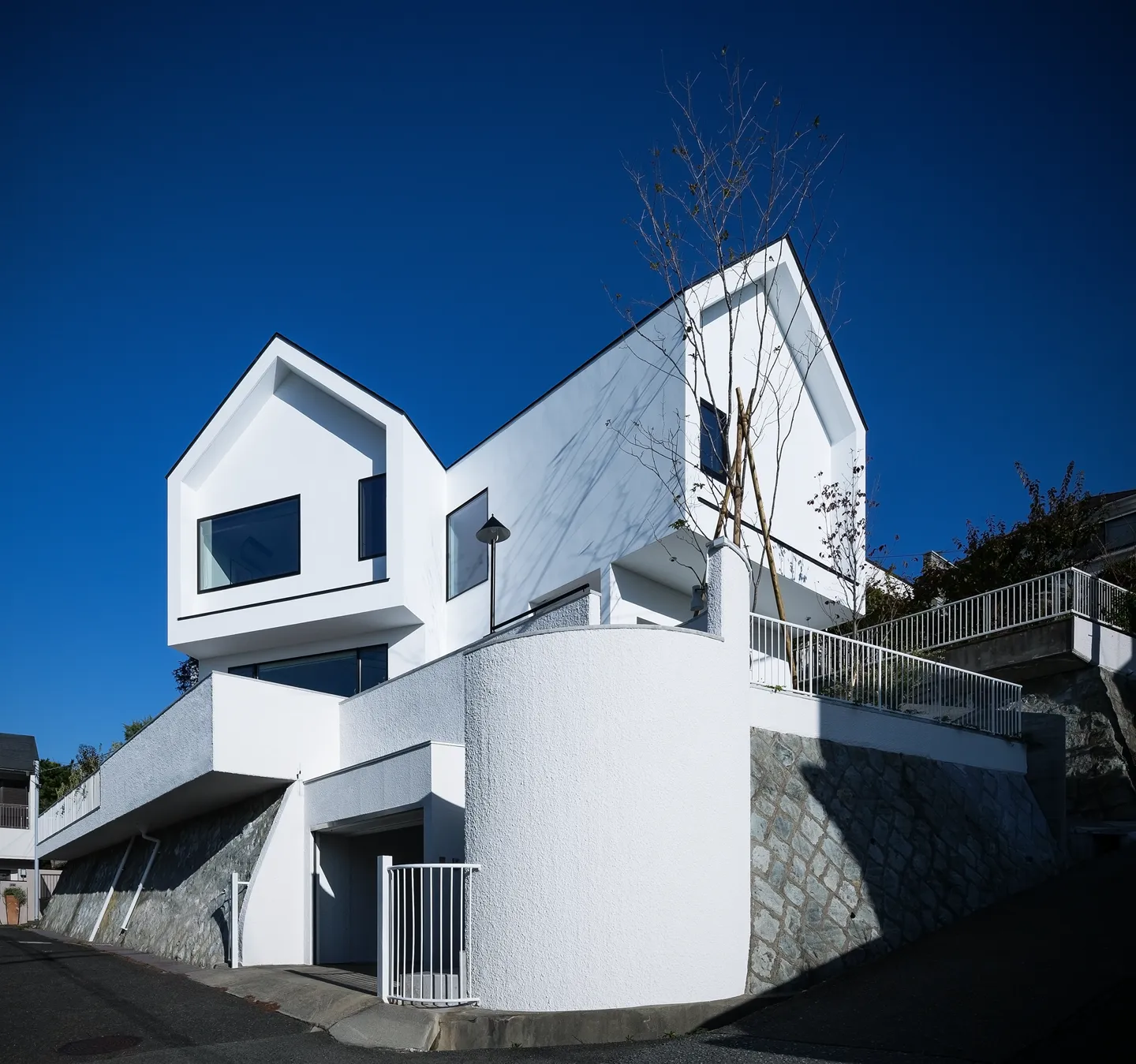
The plan branches in two directions, giving rise to the name “Branch Haus.” This layout follows the two natural axes of the site: the long east-west orientation and the diagonal view toward the sea.
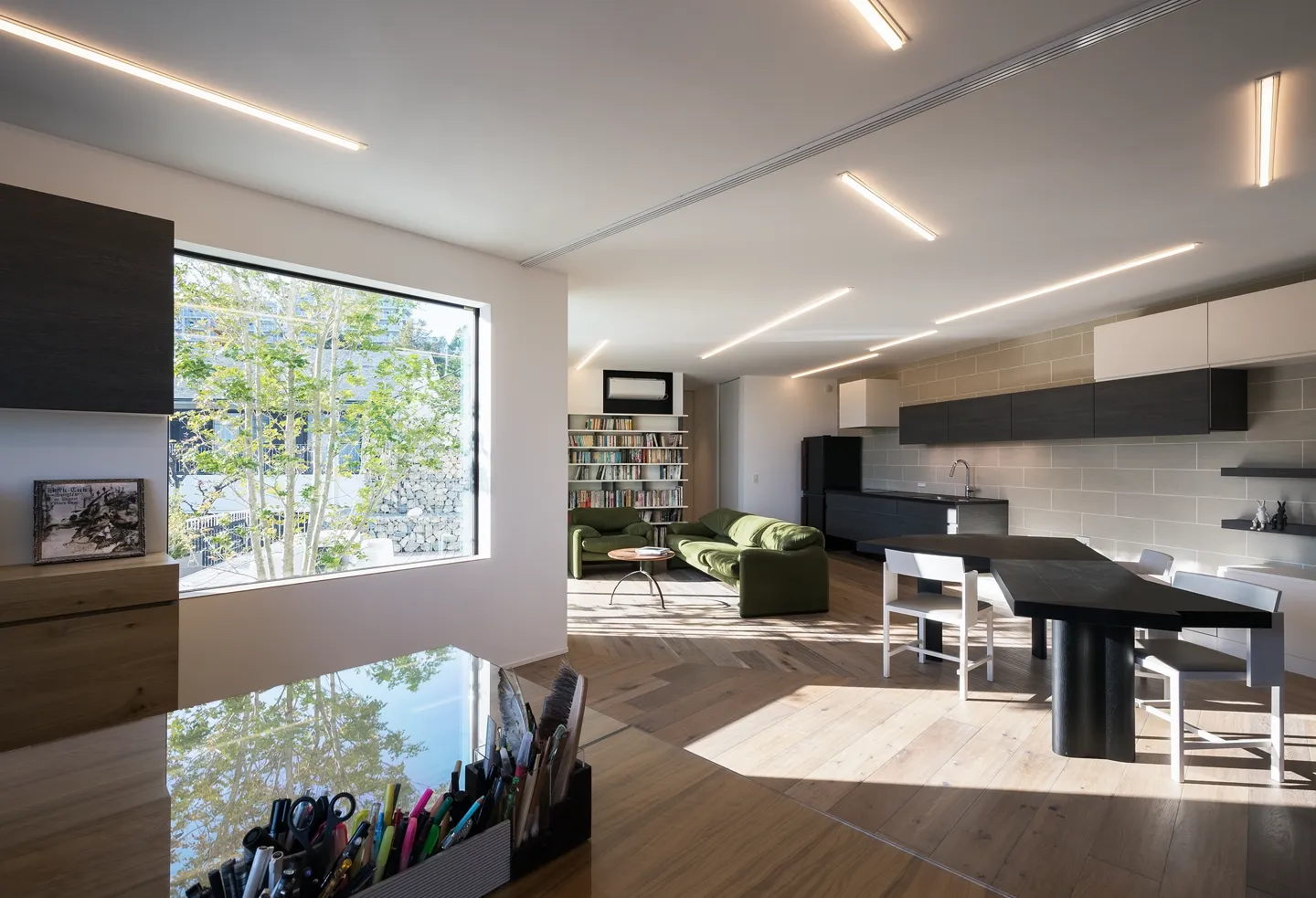
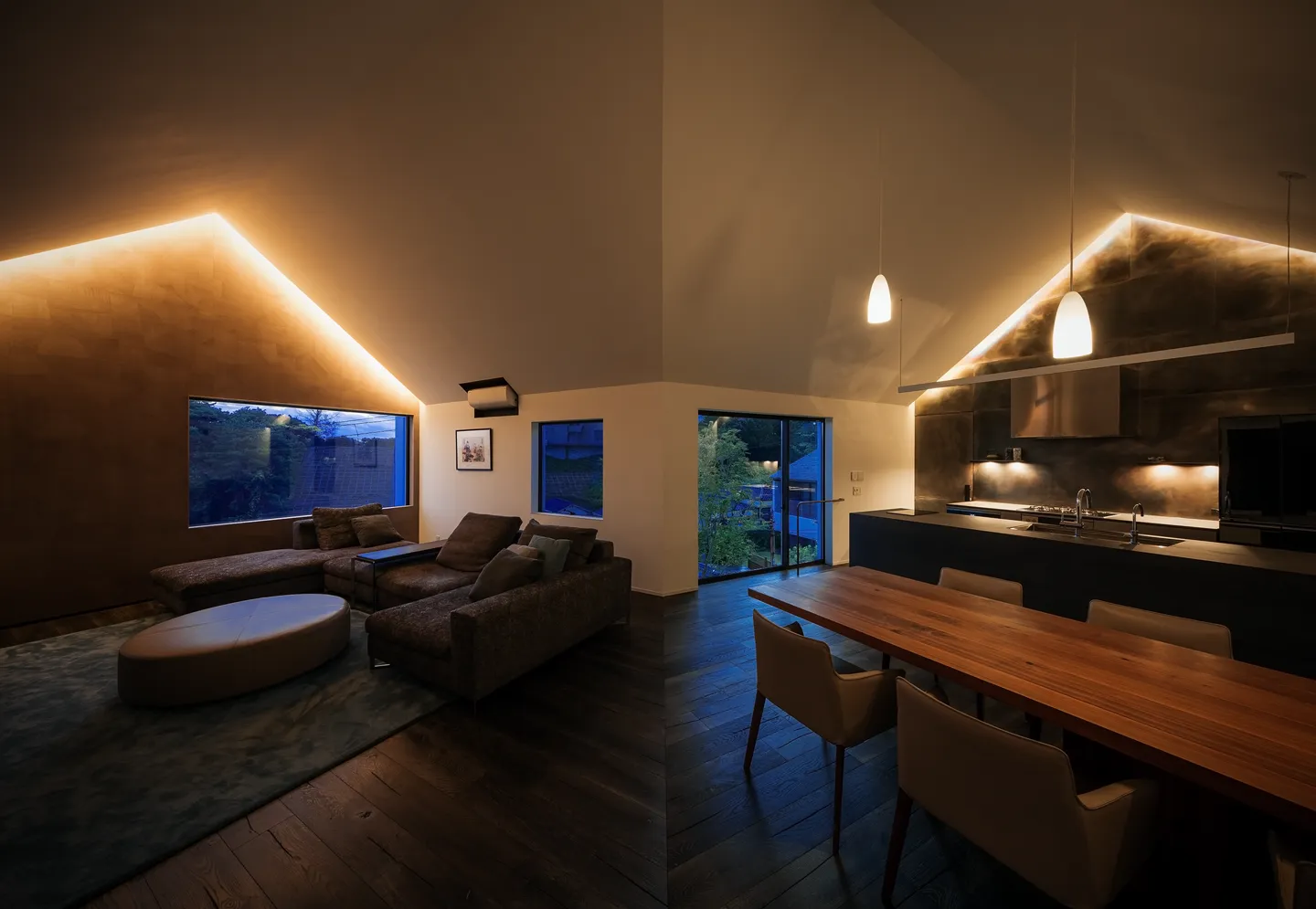
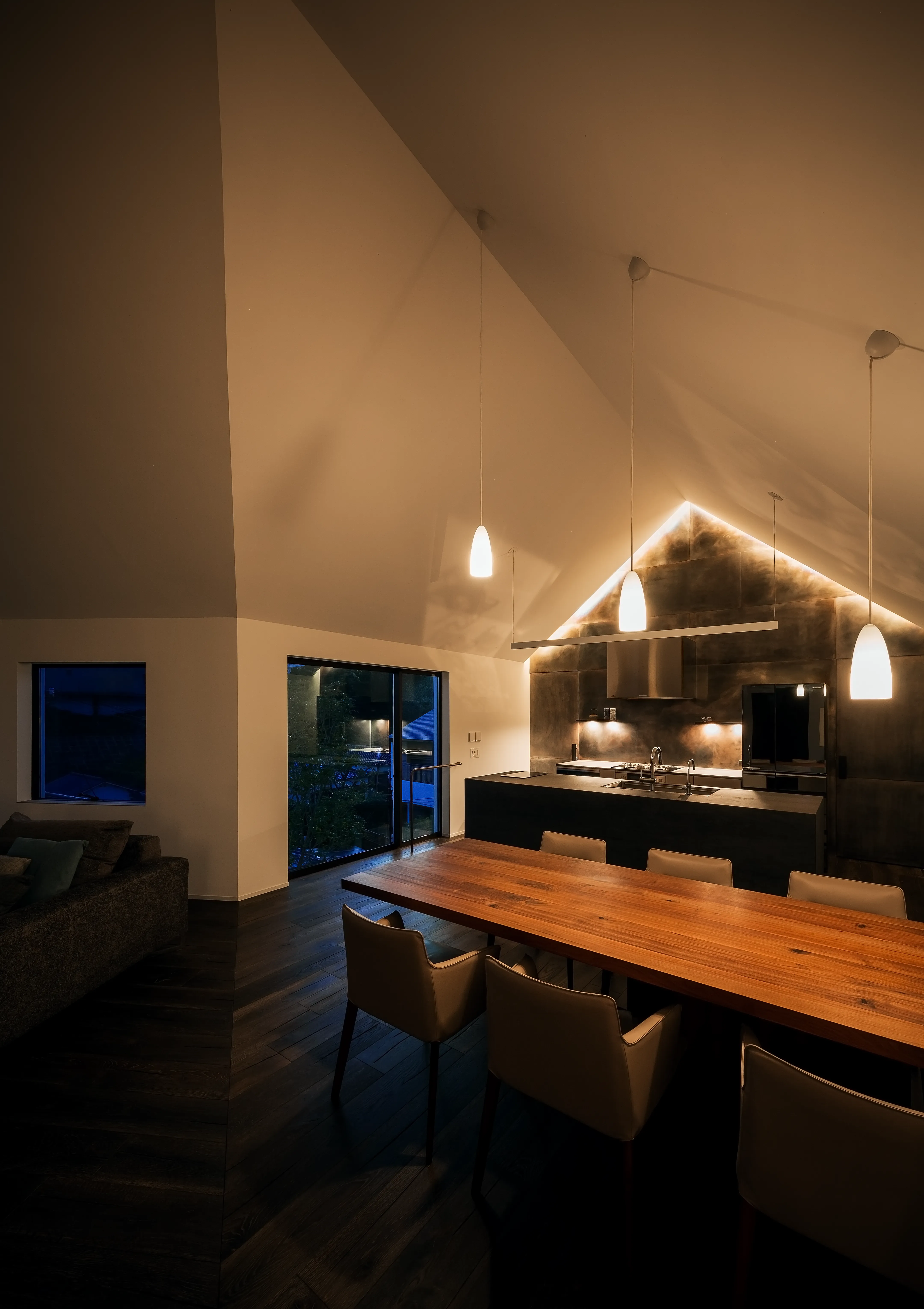
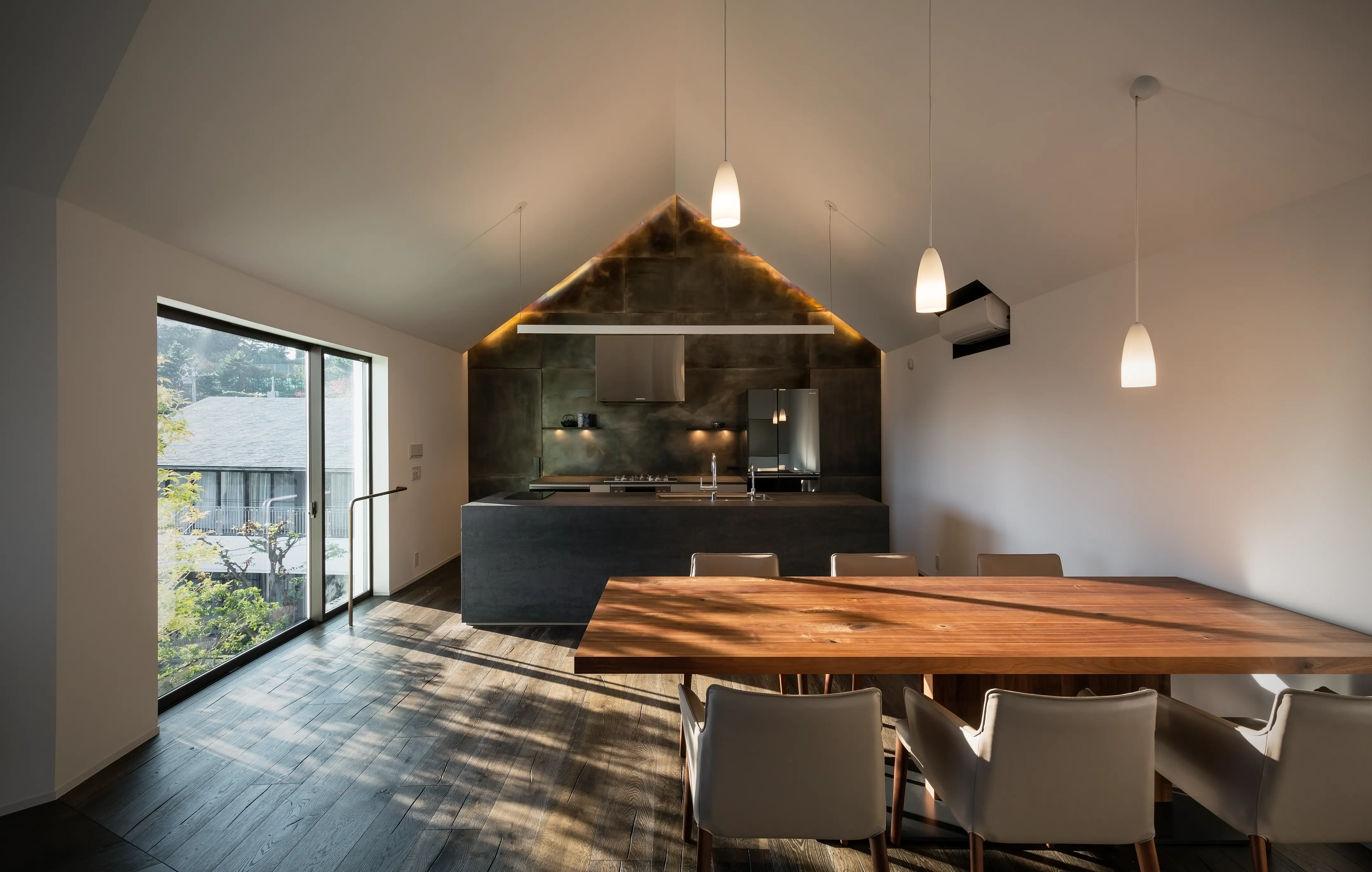
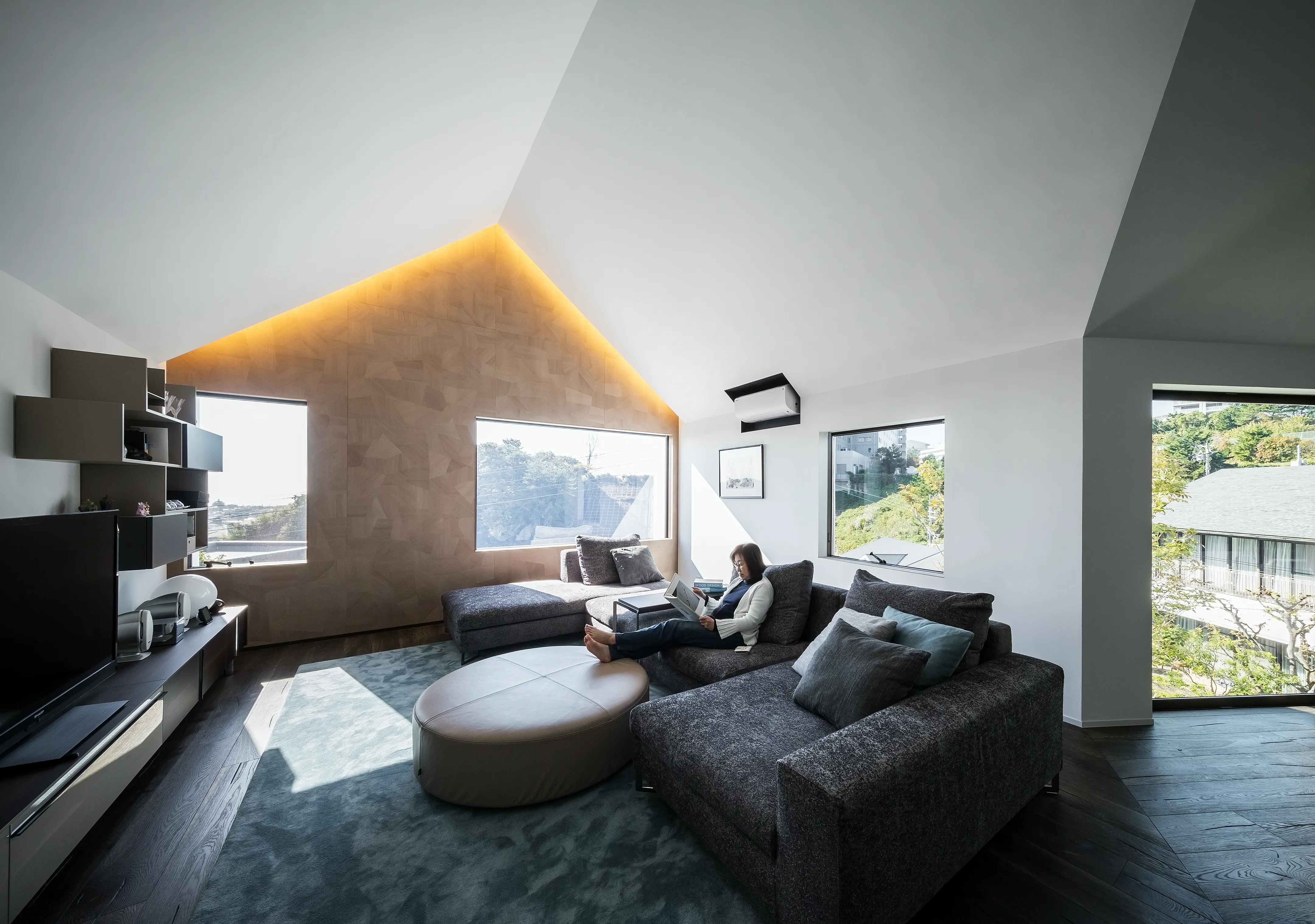
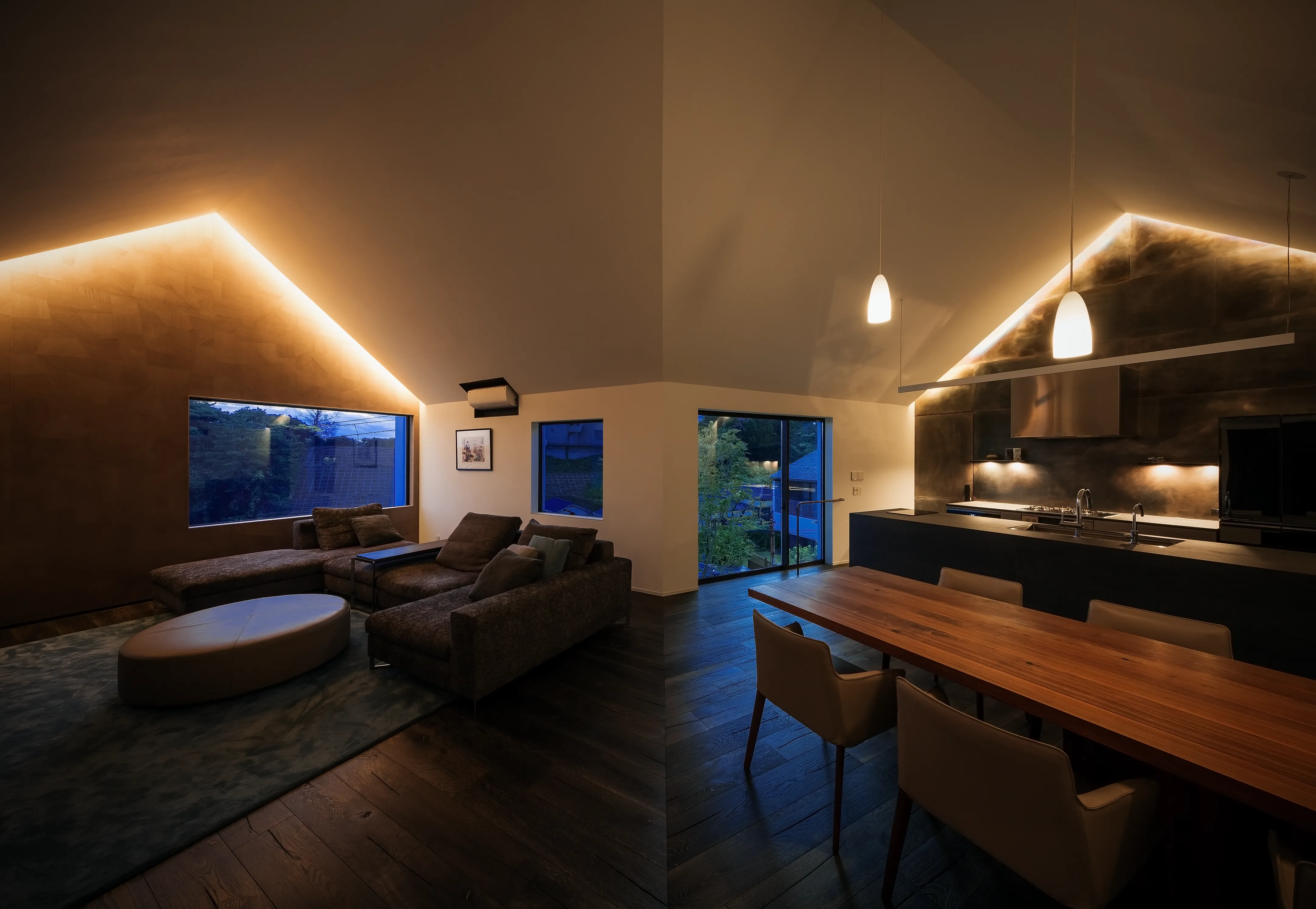
Thanks to this layout, the second-floor LDK opens fully to the view. The chevron-shaped 36-tatami LDK offers a sweeping panorama of the ocean.
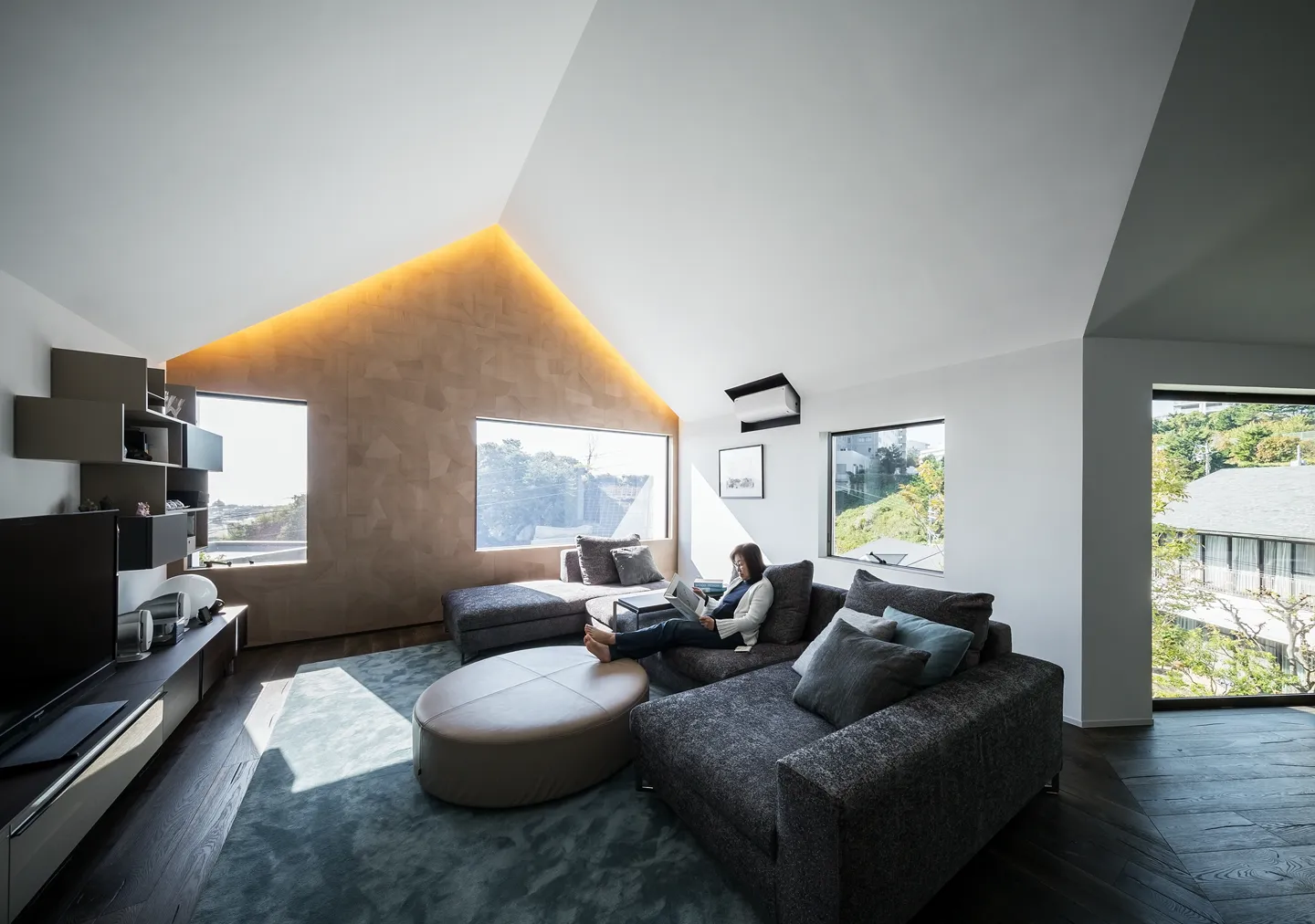
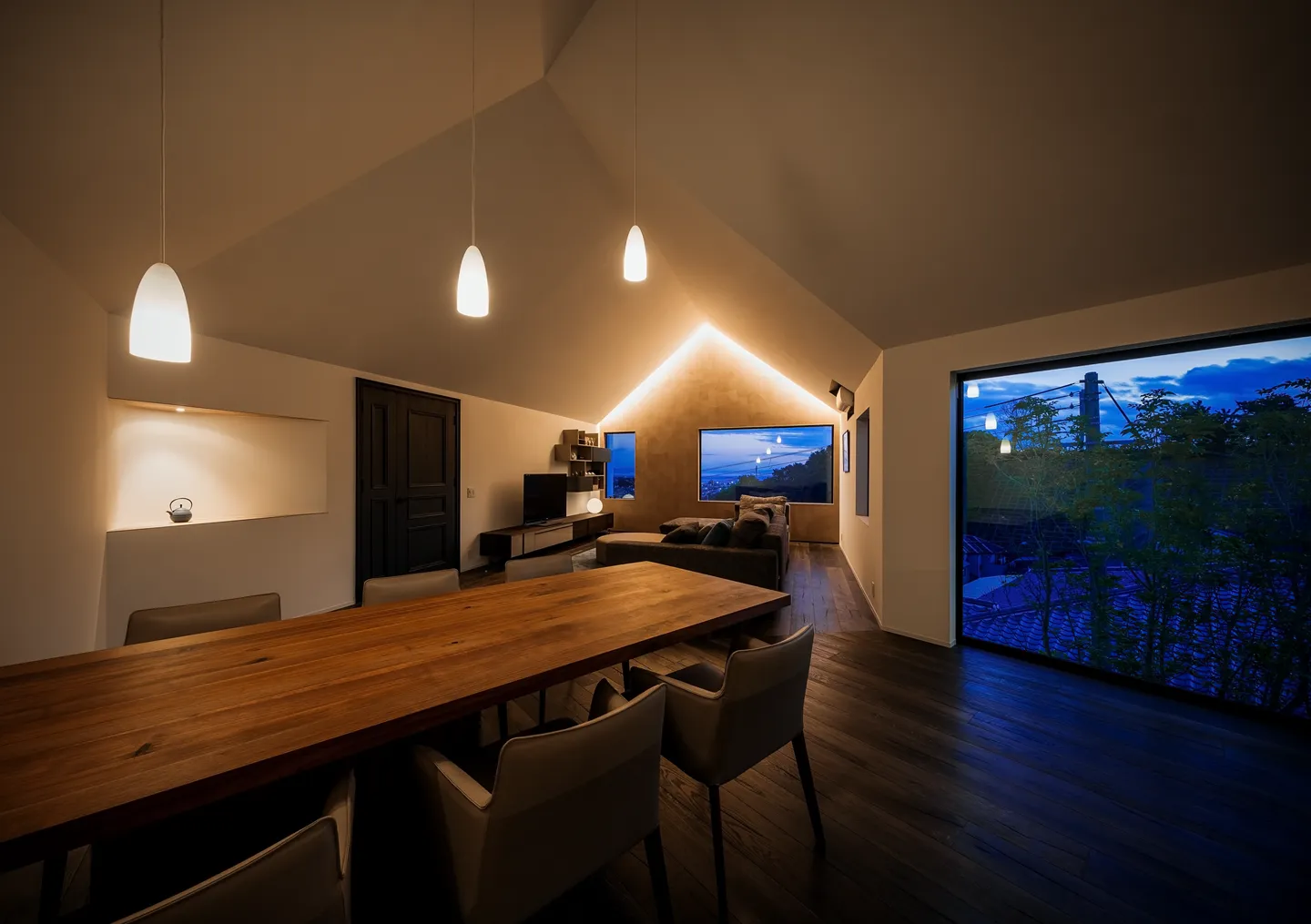
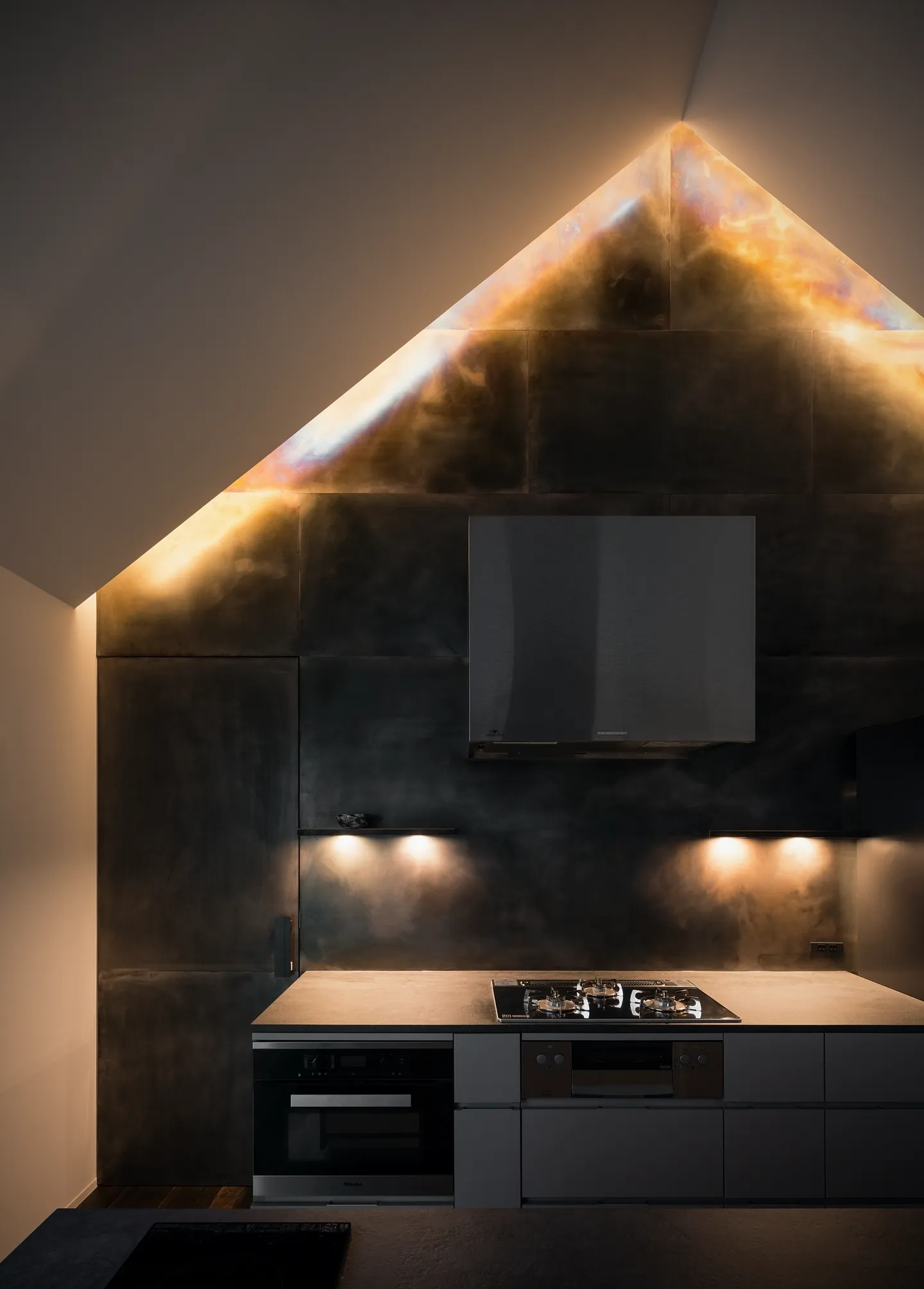
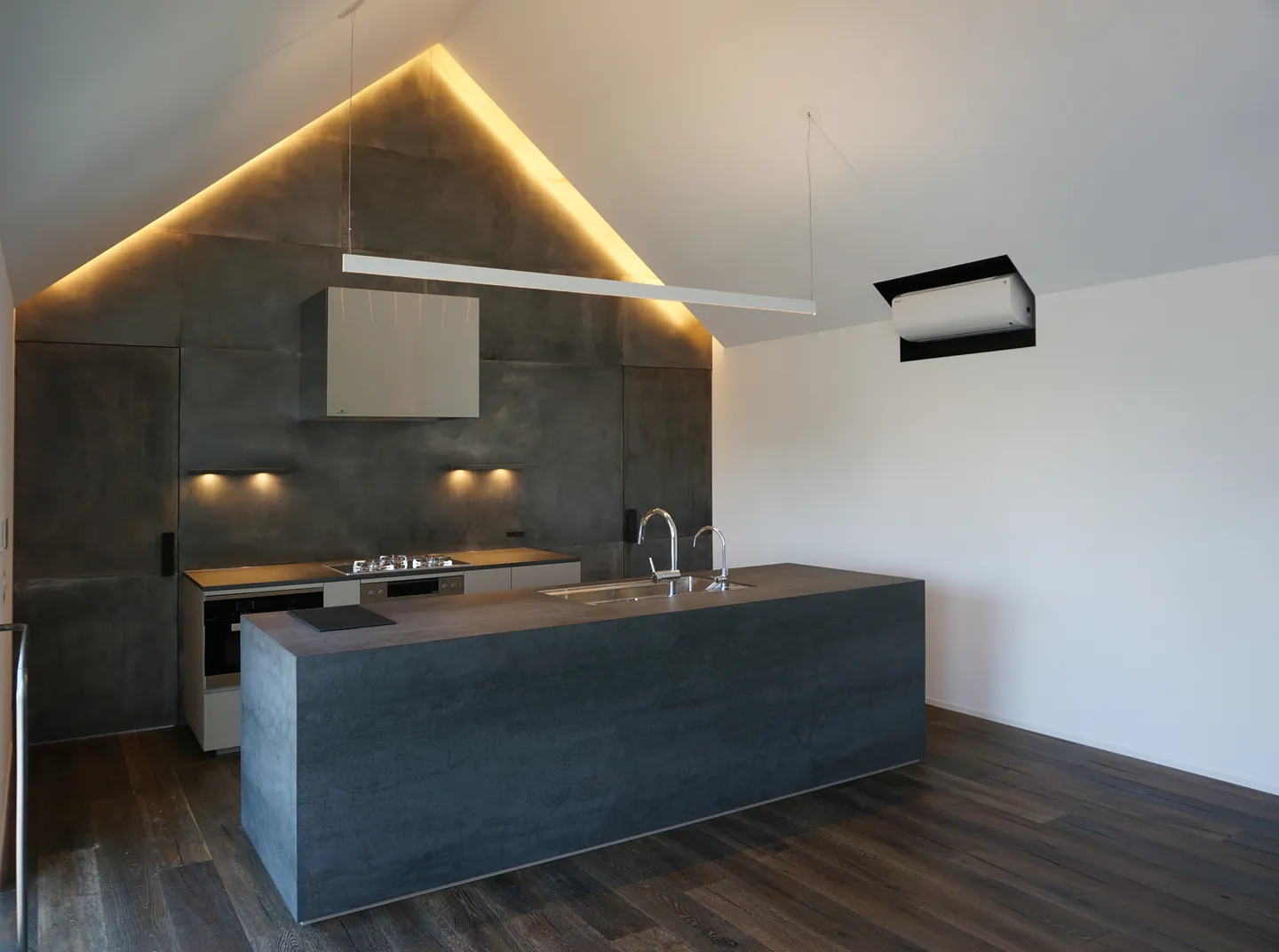
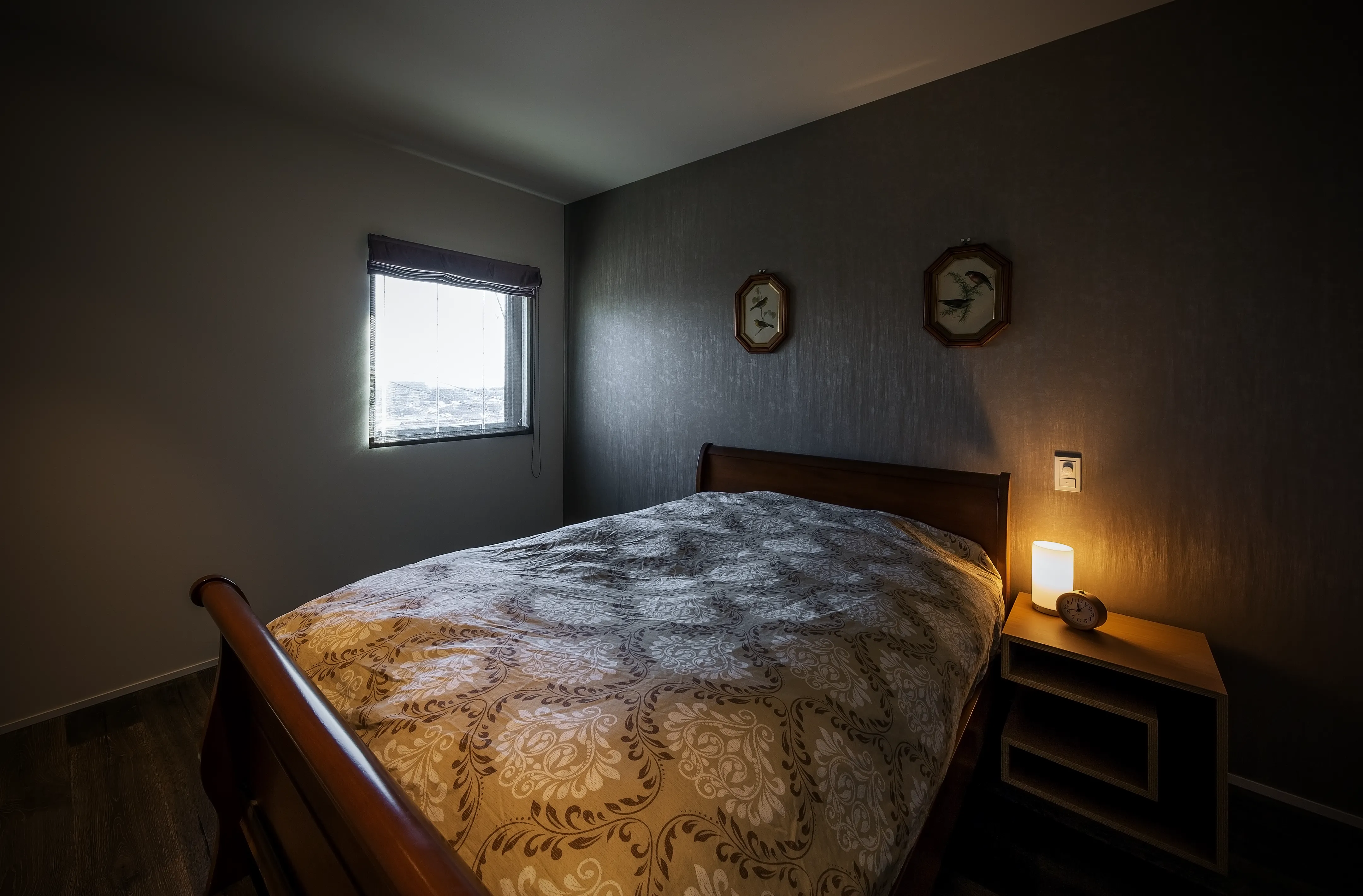
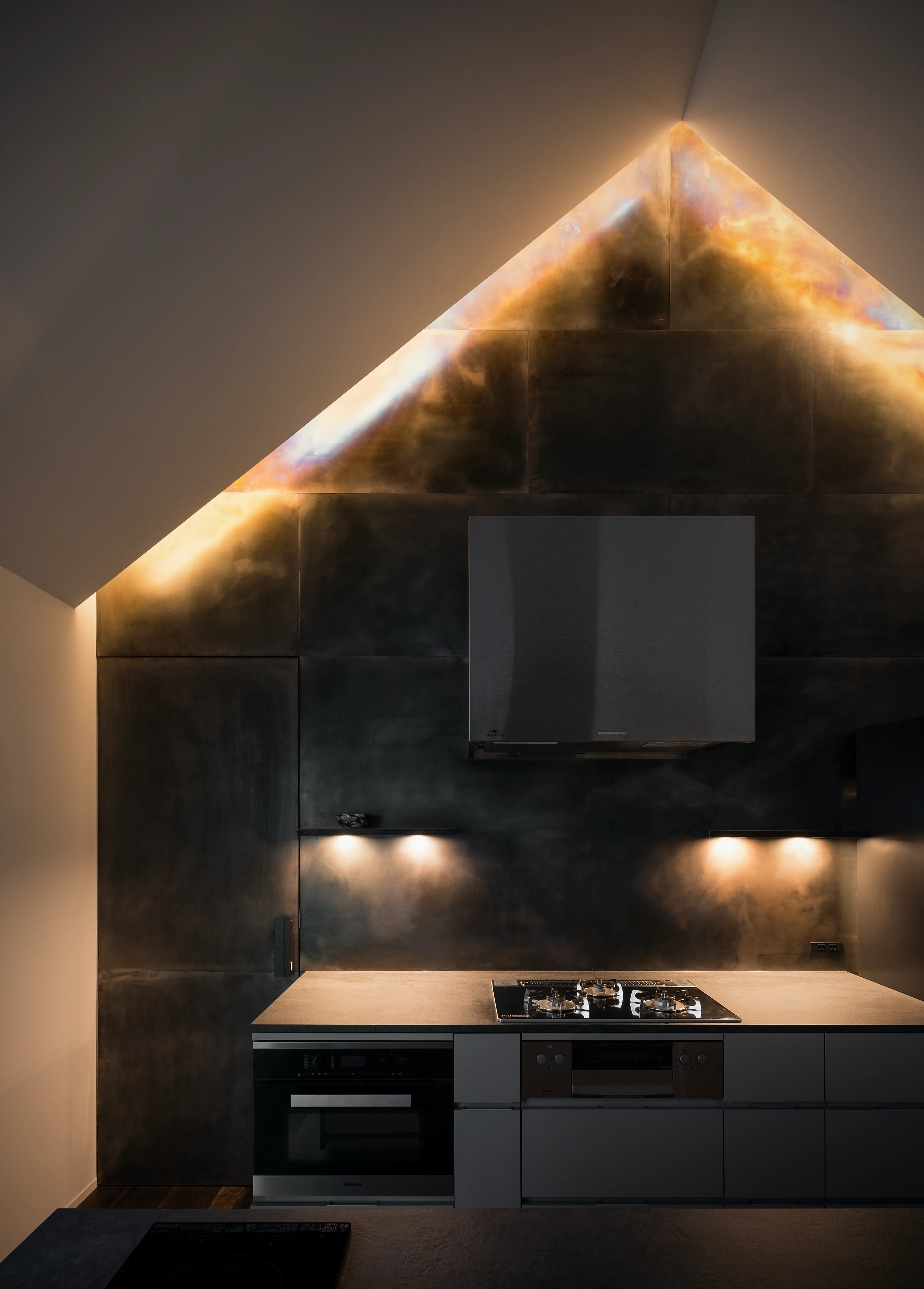
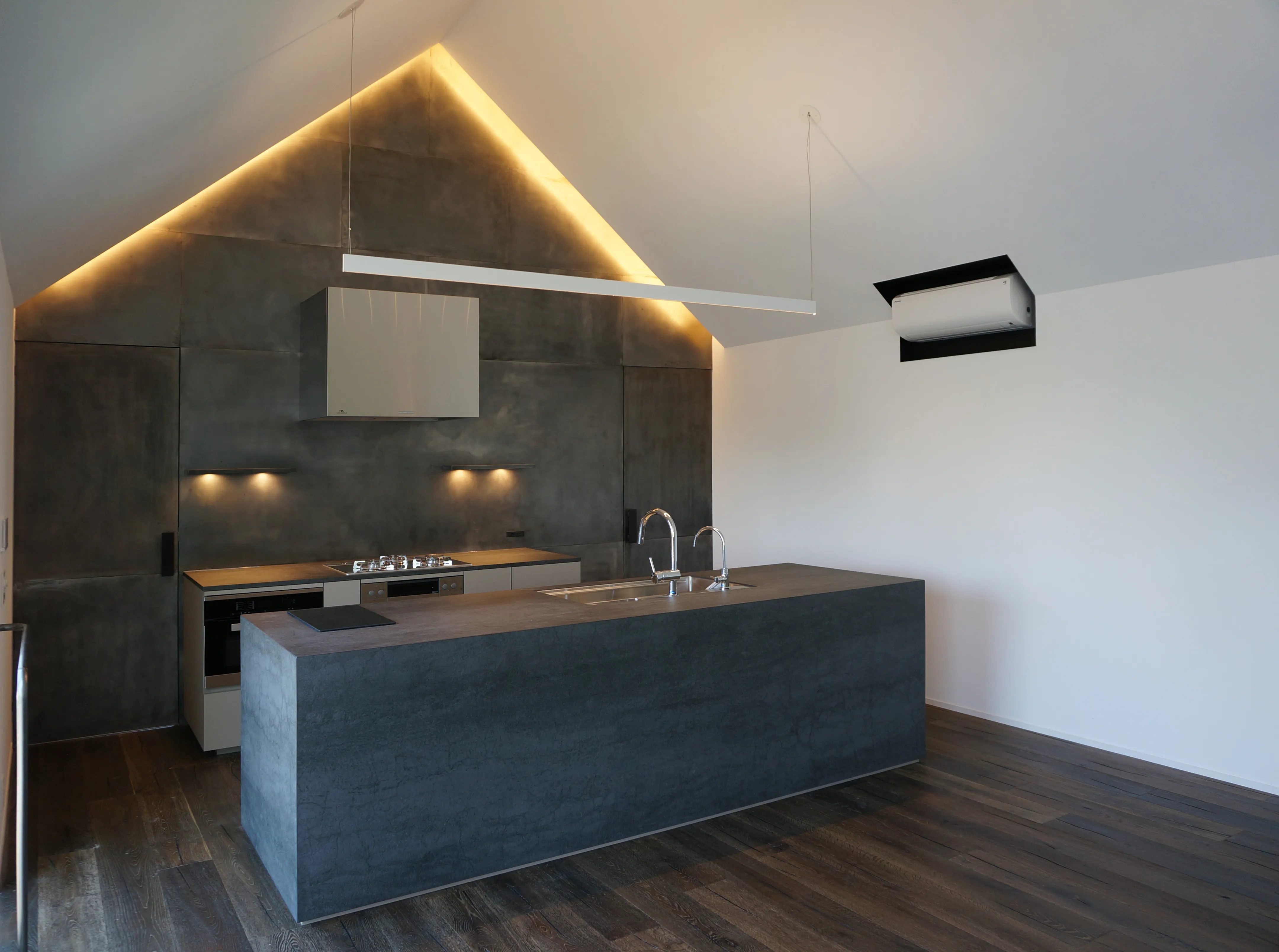
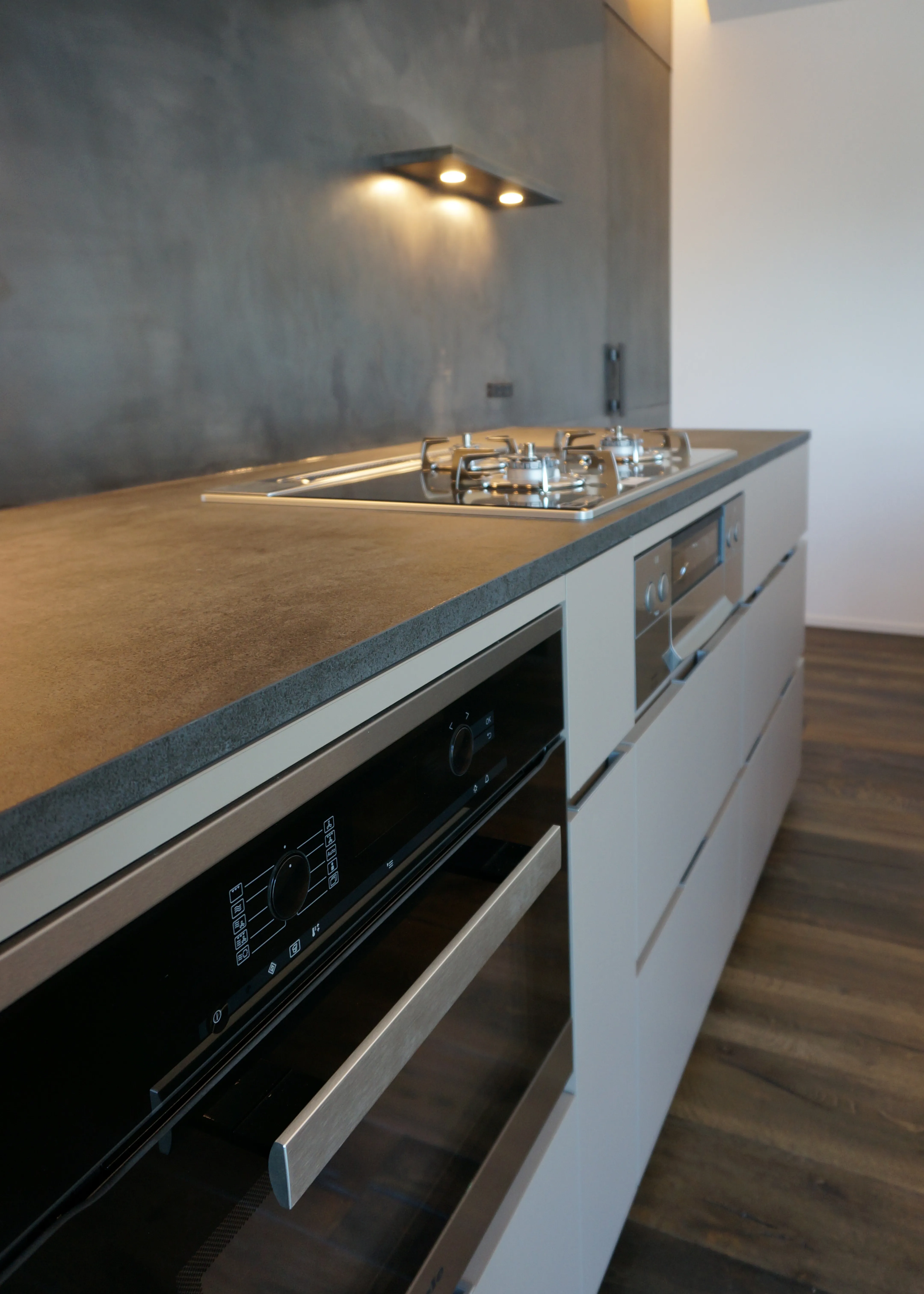
The interior blends modern, rustic, and luxurious elements. On the gabled walls of the LDK, two contrasting materials create a textured effect. One wall features solid stainless steel treated with acid, which will develop a unique patina over time.
| Builder | Beams Construction Co., Ltd. |
|---|---|
| 1F Kitchen / Bathroom | Cucina Kobe |
| 2F Kitchen | Kitchenhouse |
| Furniture | Molteni & C / Arflex Japan |
| Location | Tarumi Ward, Kobe |
|---|---|
| Use | Private Residence |
| Family | Single occupant |
| Year | 2017 |
| Structure | Wooden / 2F |
|---|---|
| Site Area | 271.8 m² (≈ 82.2 tsubo) |
| Total Floor Area | 206.6 m² (≈ 62.5 tsubo) |
| Total Cost | 67.5 million JPY |