
Shaping
Site Analysis

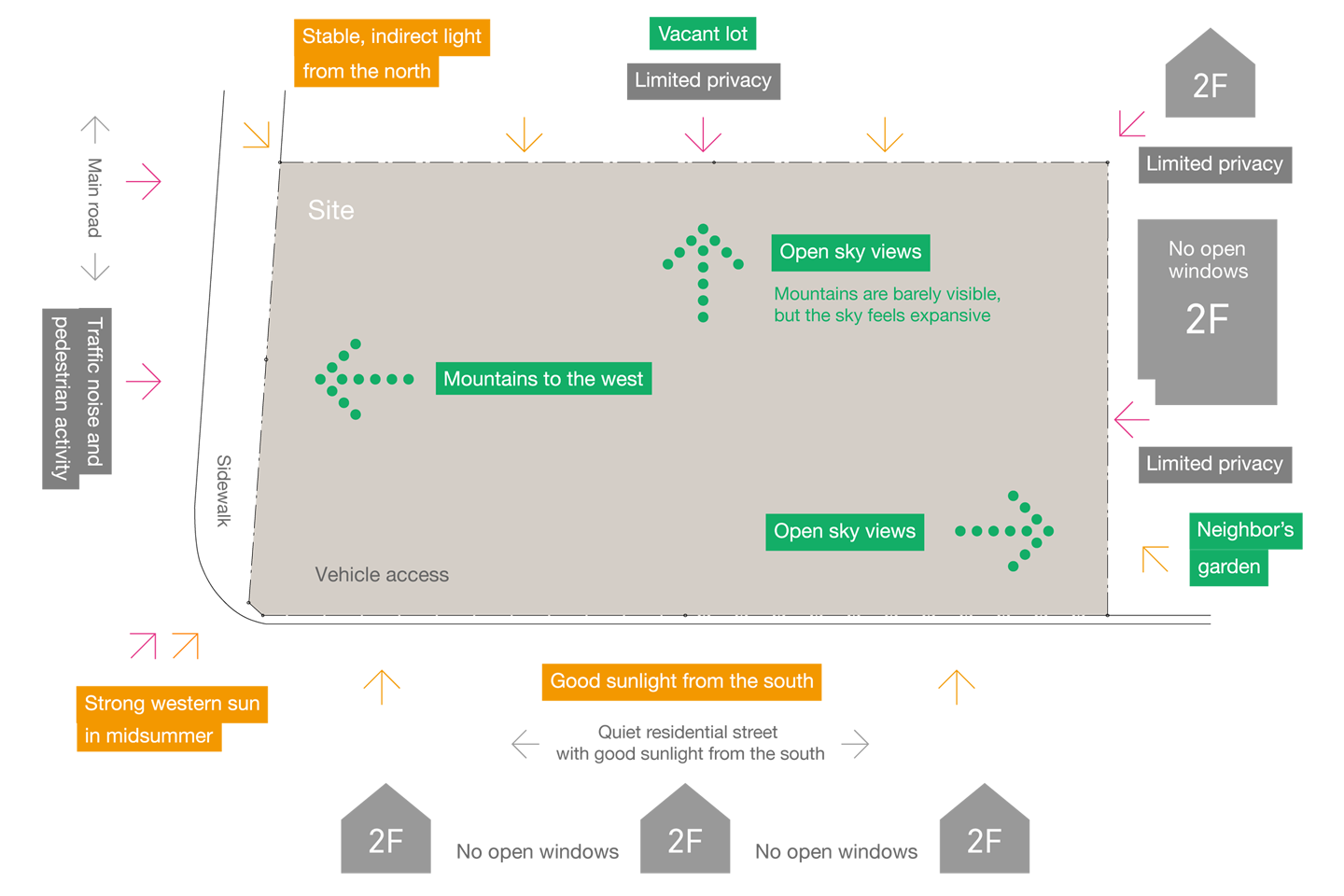
Plans

Photo by Akiyoshi Fukuzawa

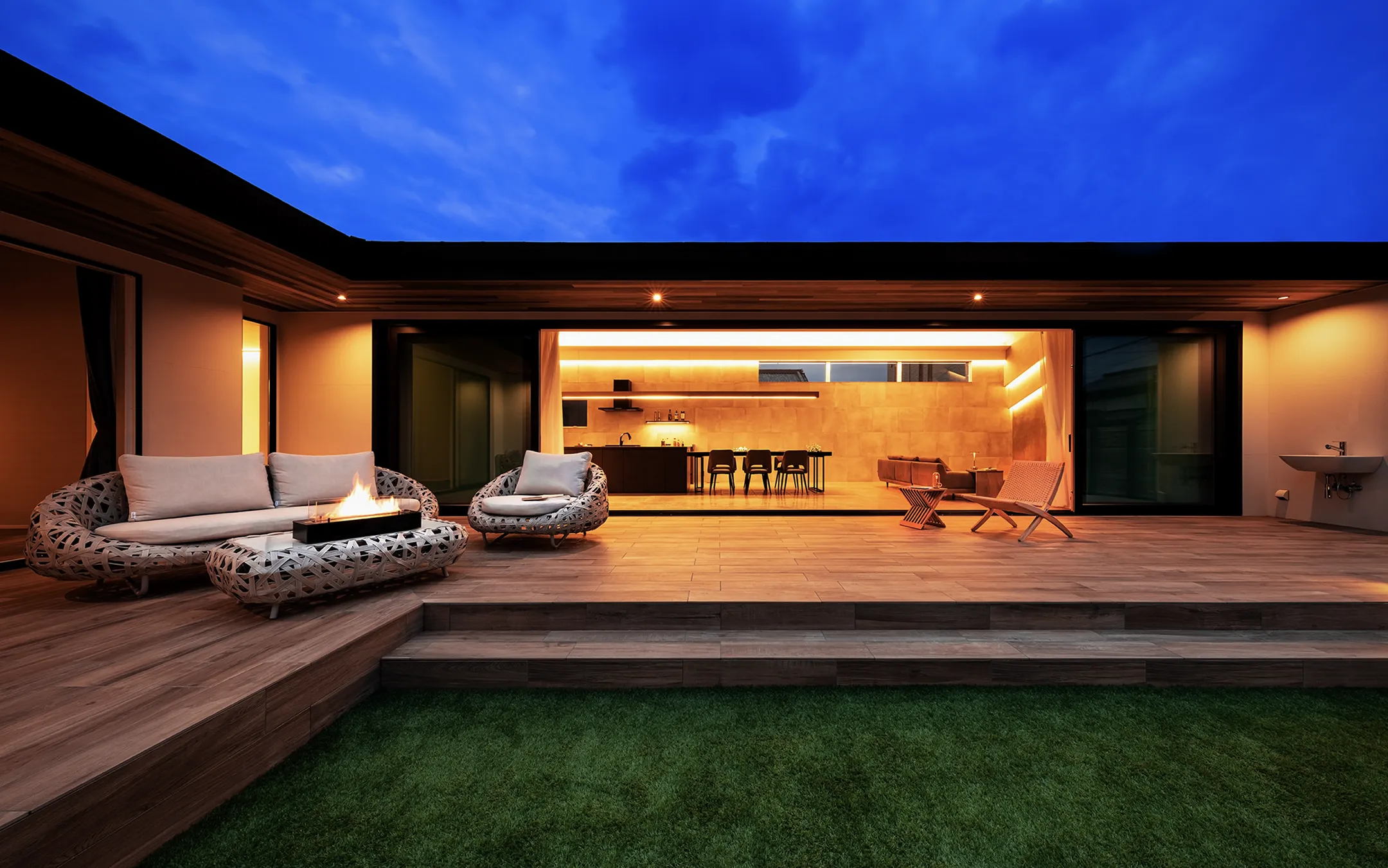
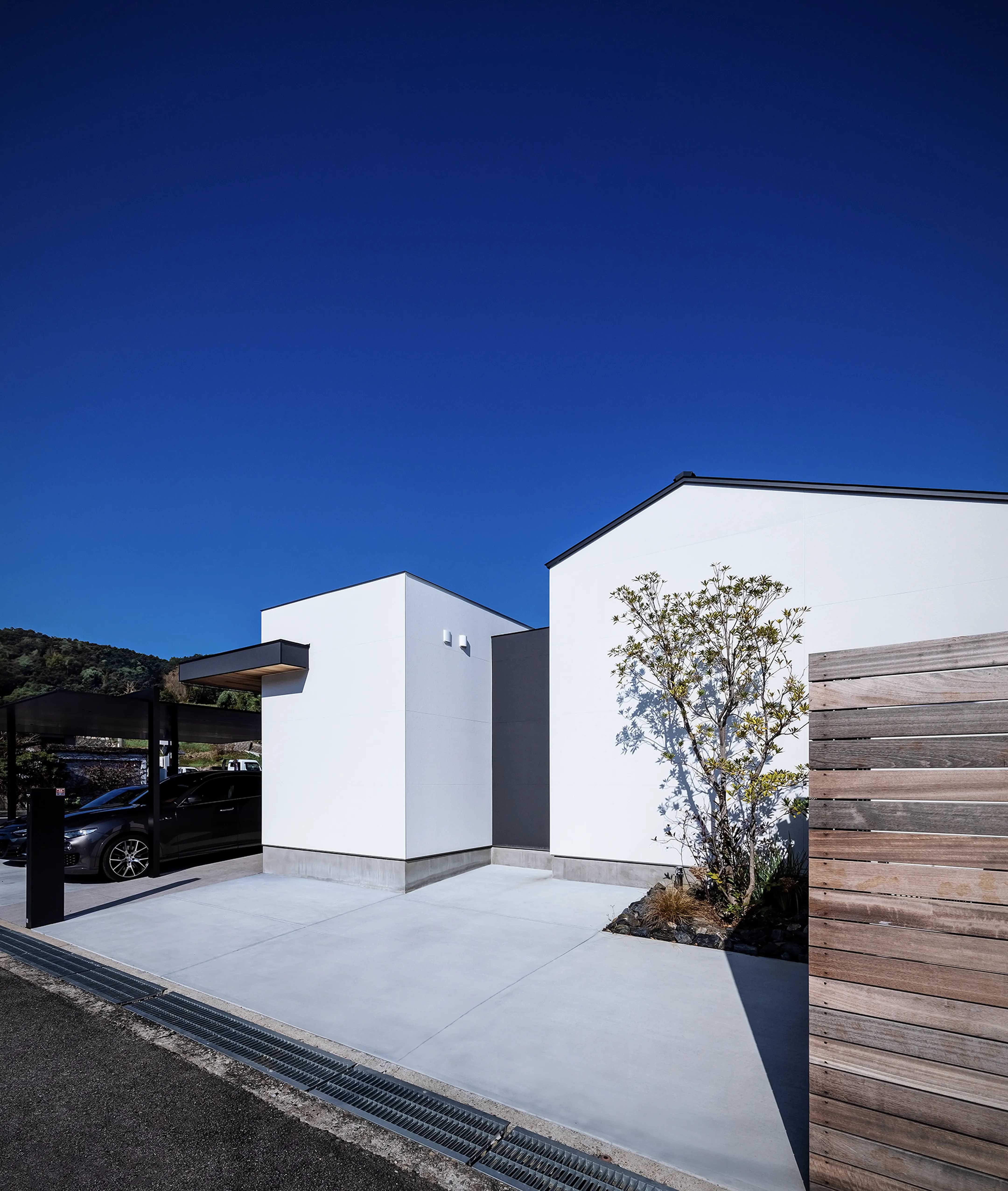
Located near the northern tip of Awaji Island, this single-story home stands just a short distance from the sea.
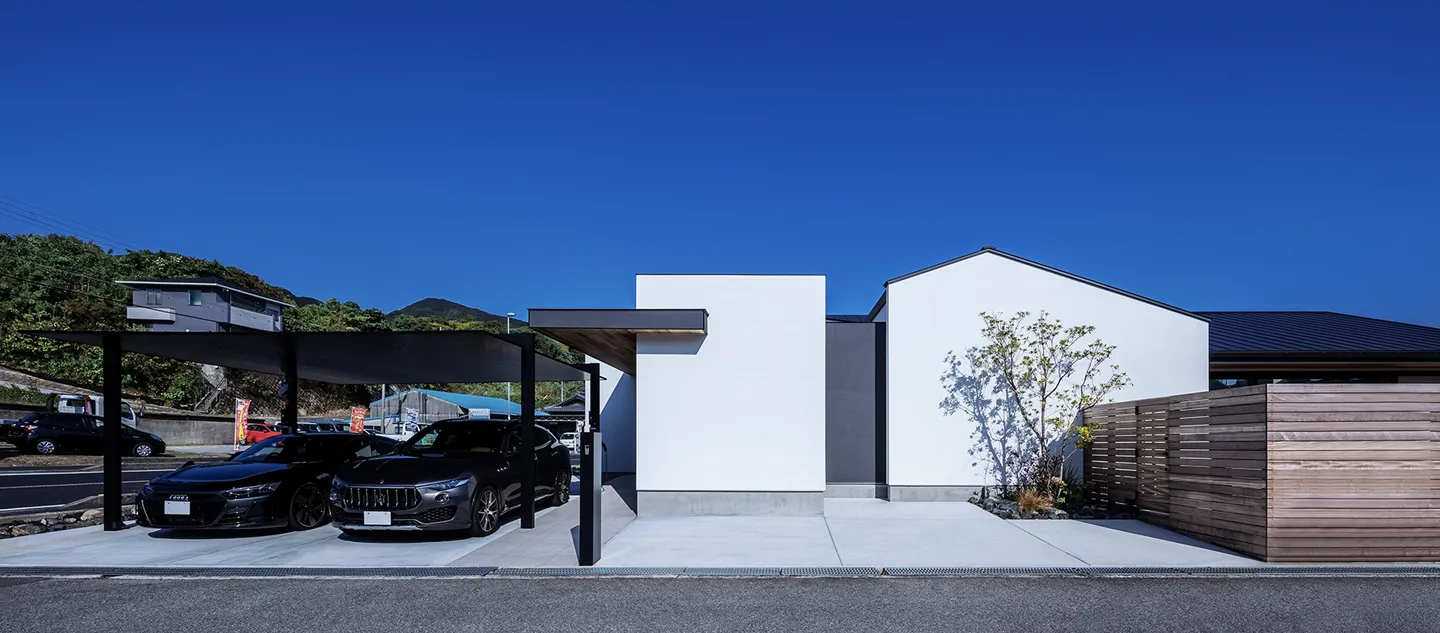
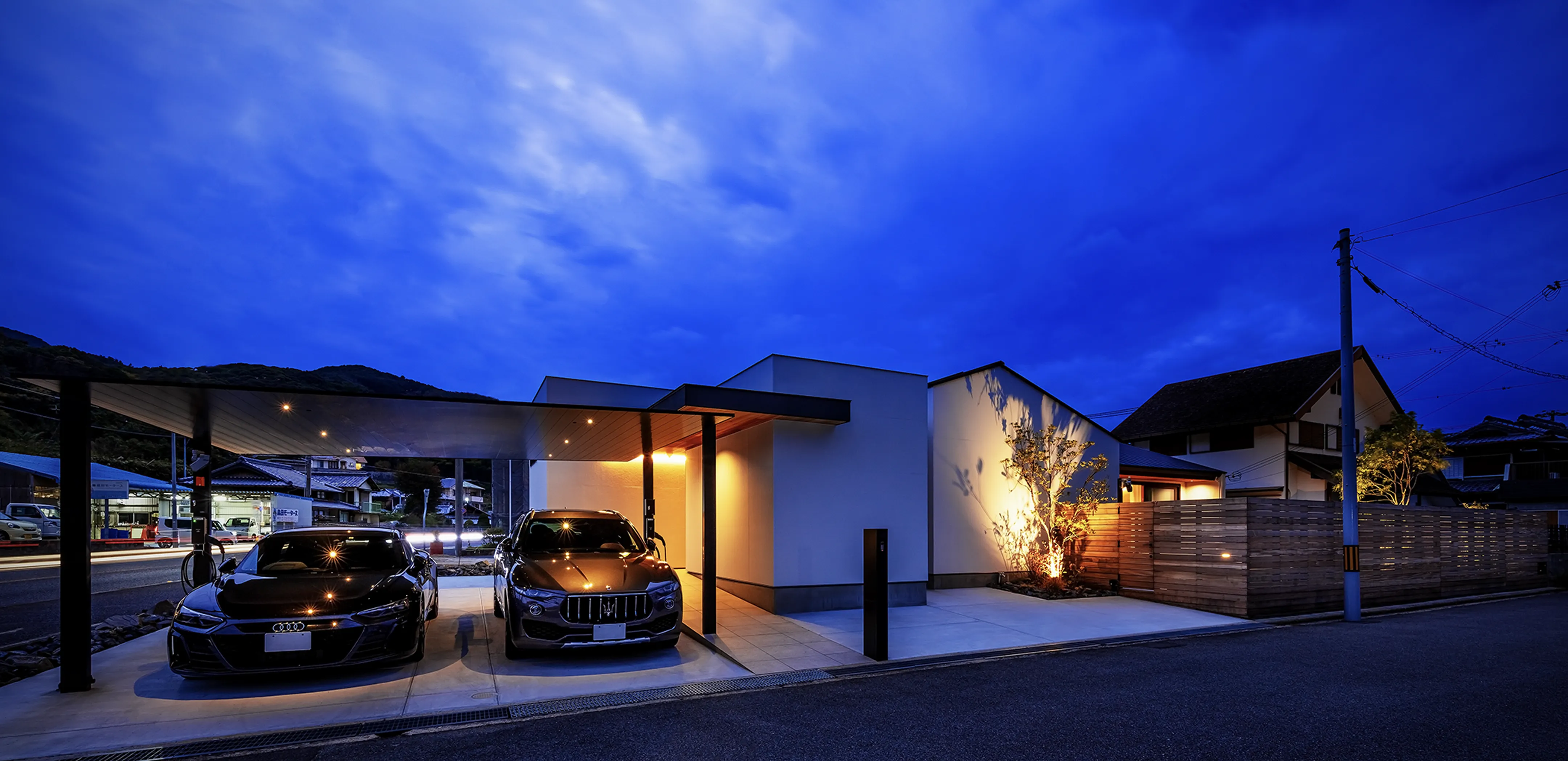
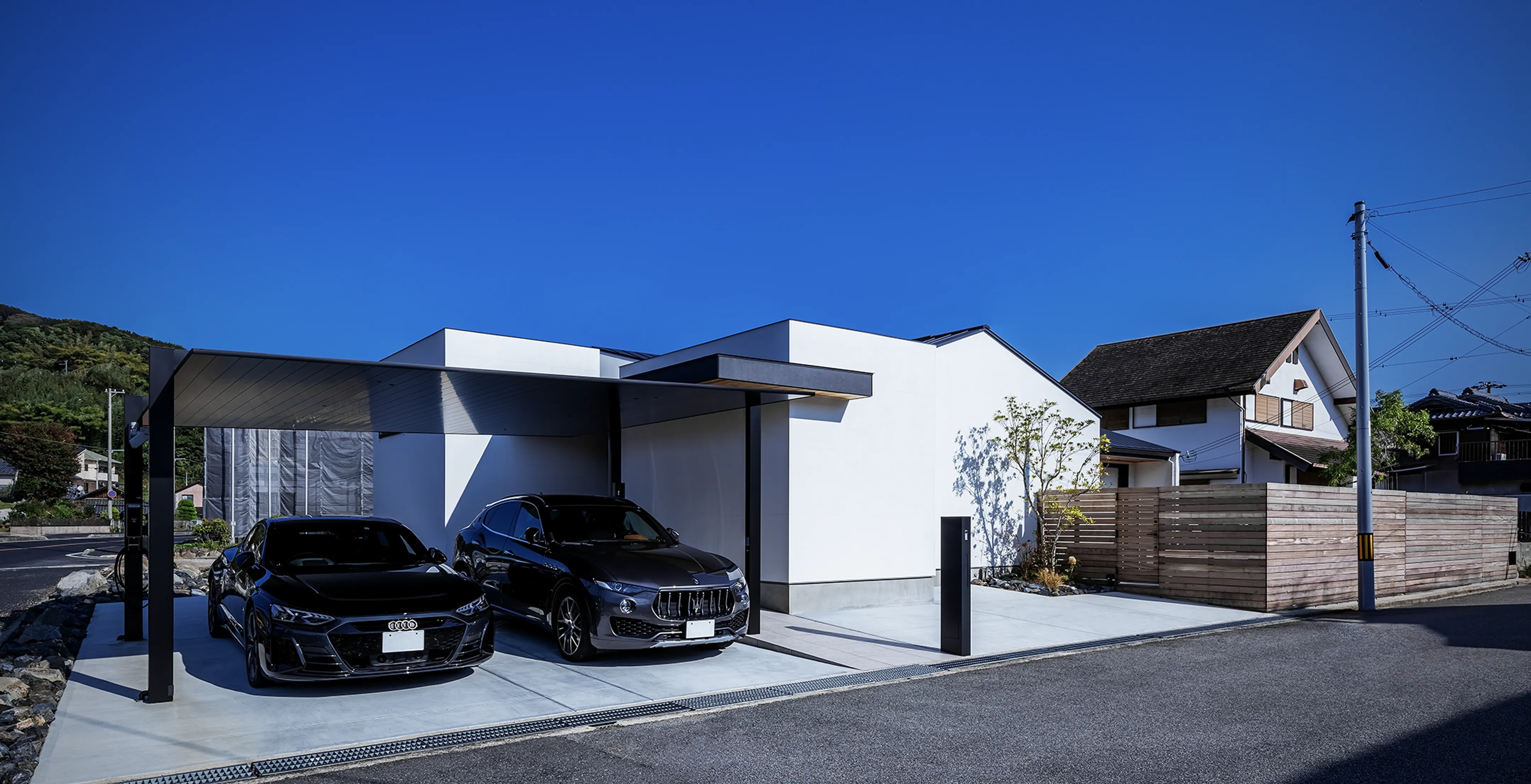
Though nestled within a quiet residential neighborhood with an expansive sky, the site faces one of the island’s main roads—making it both highly visible and convenient. Awaji has long been known as a resort destination, and in recent years its unique appeal has been rediscovered, drawing new residents and becoming one of the most sought-after areas in the Kansai region. In such a setting, we proposed a spacious wooden bungalow with a building footprint of 170 square meters and a total floor area of 138 square meters.
A key concern in the planning process was how to secure a calm, private space sheltered from traffic noise and visibility, while still incorporating a generous garden. While it would have been easy to simply erect a wall to block out the road, such a solution would risk creating a sense of enclosure and failing to contribute positively to the local scenery. Instead, we pursued a more thoughtful approach—balancing privacy with openness, functionality with visual coherence.
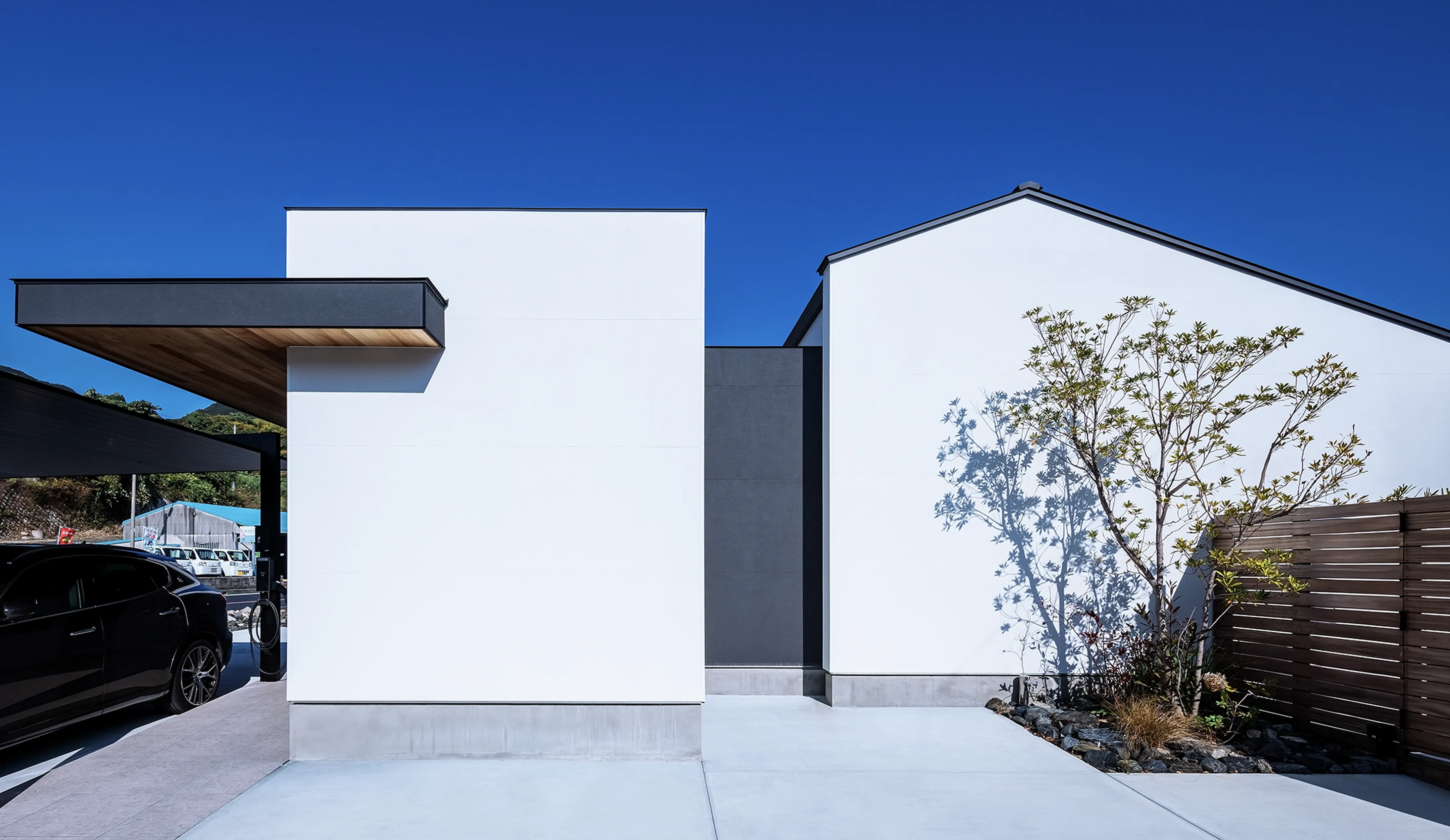
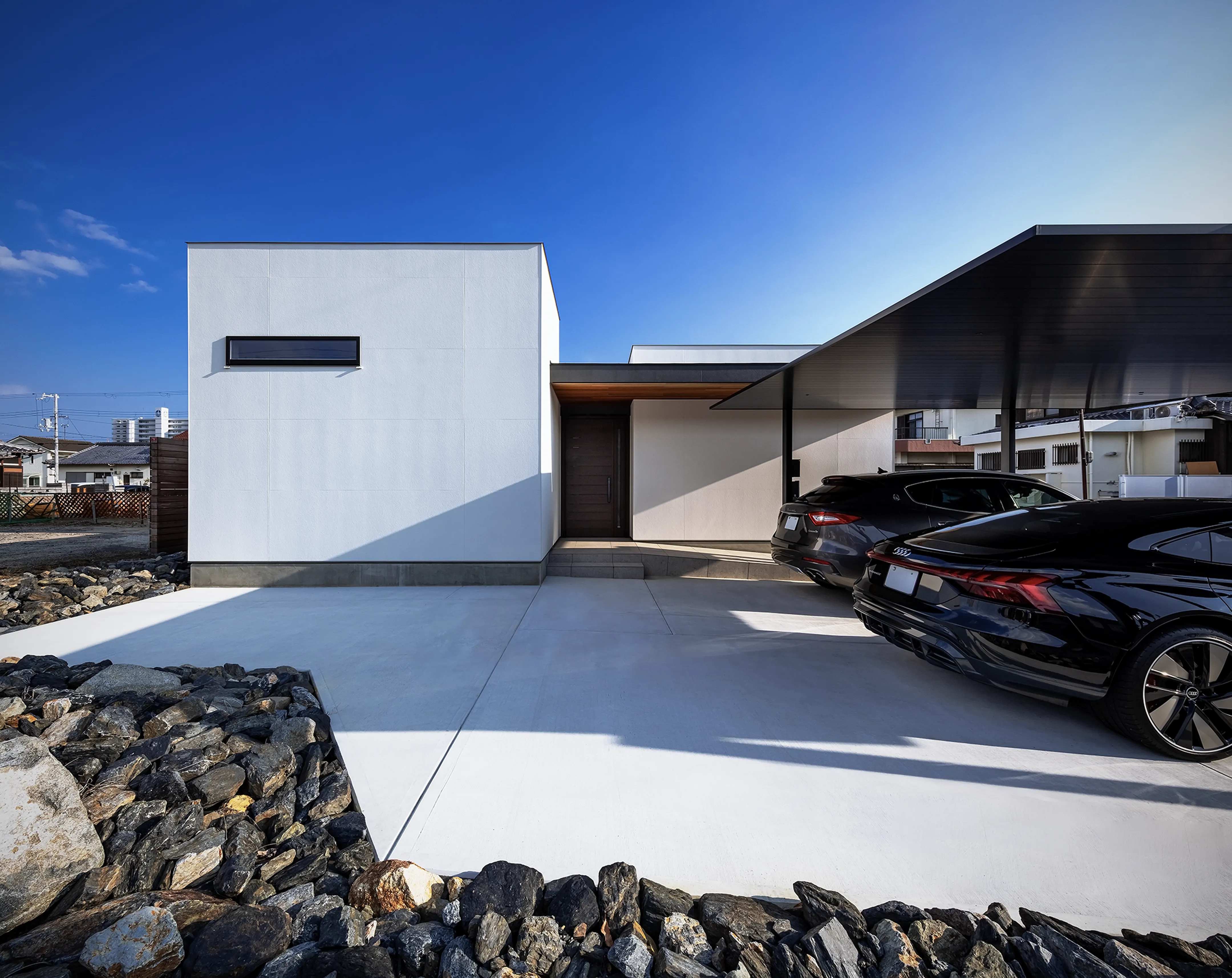
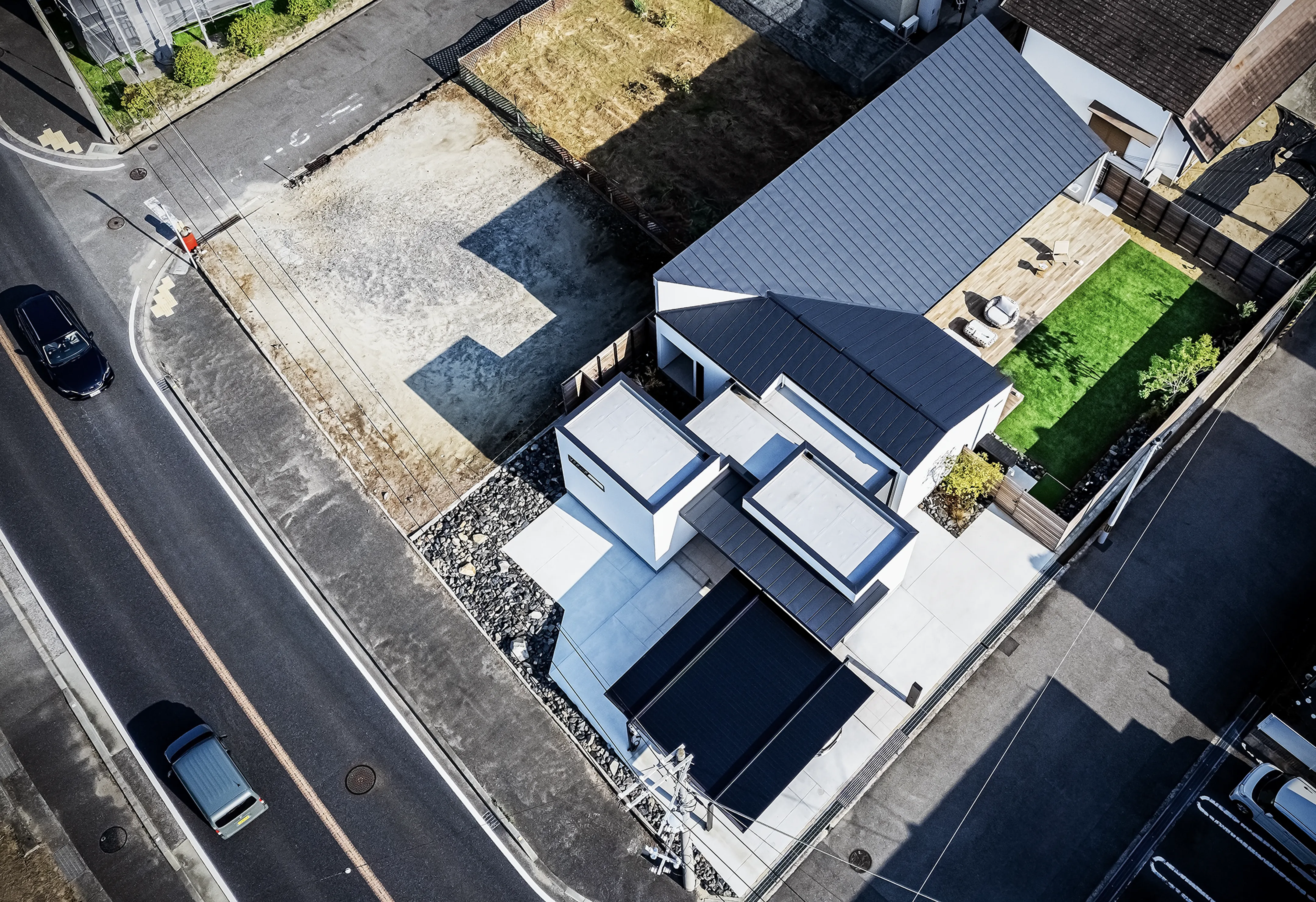
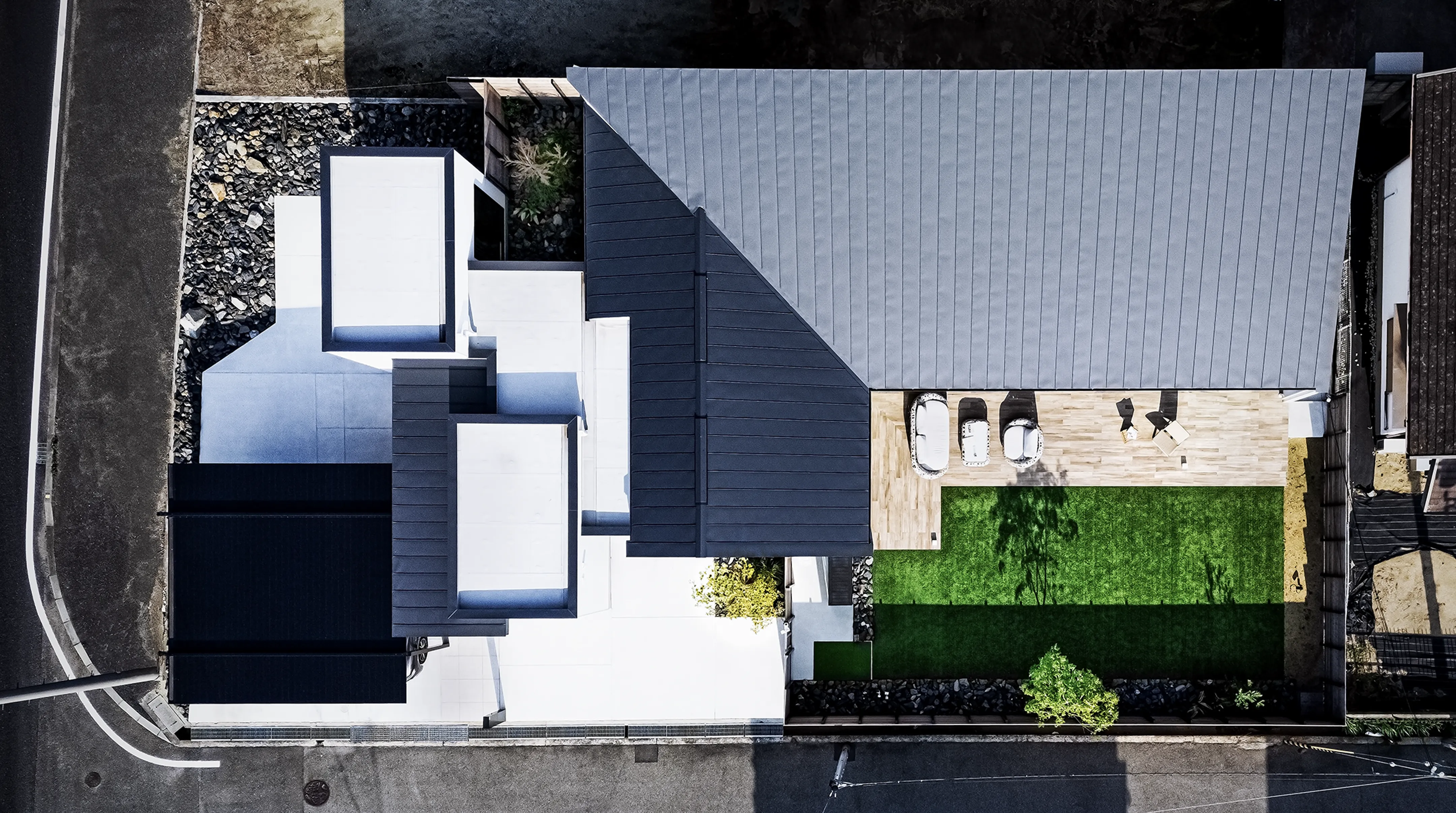
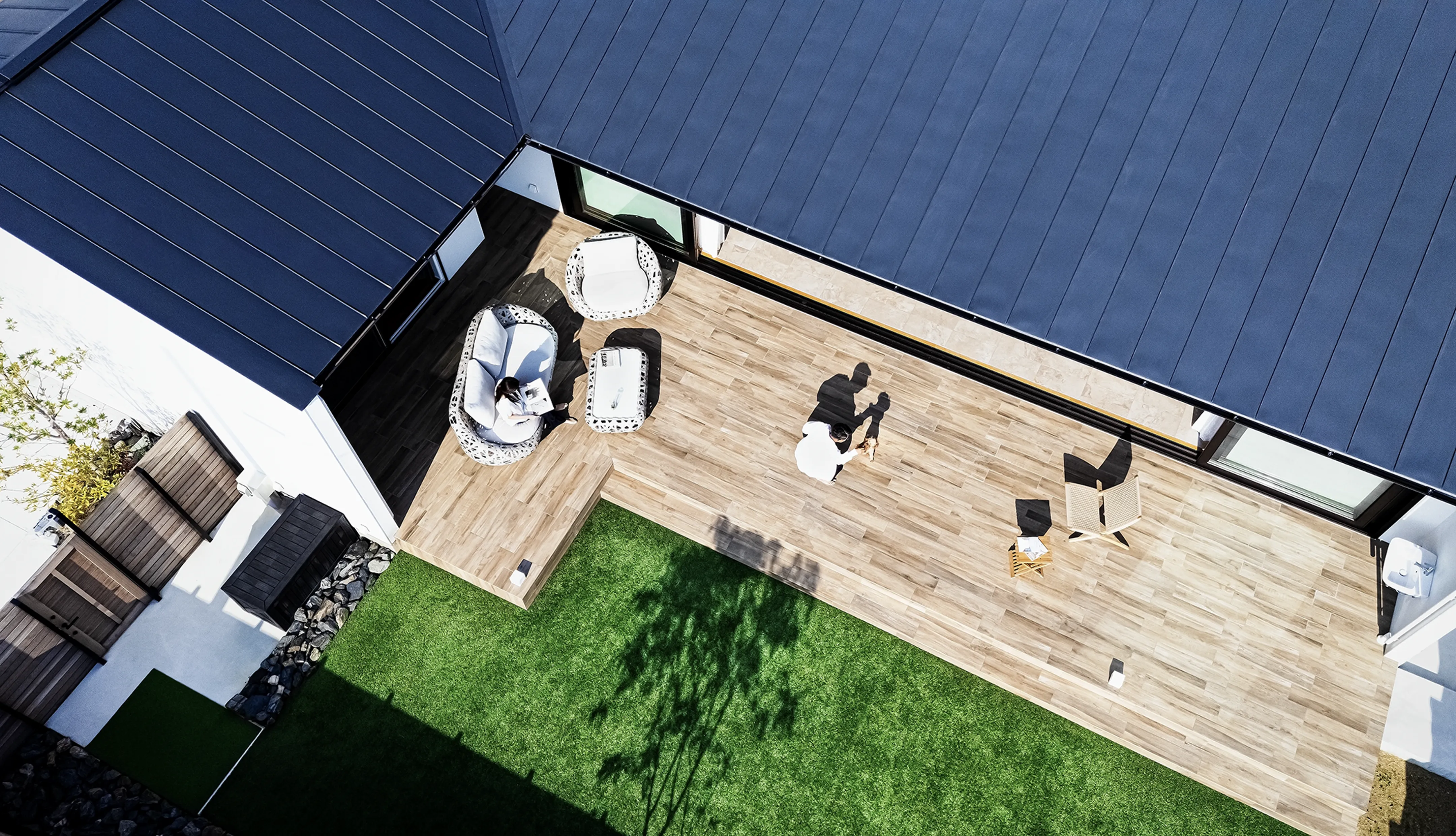
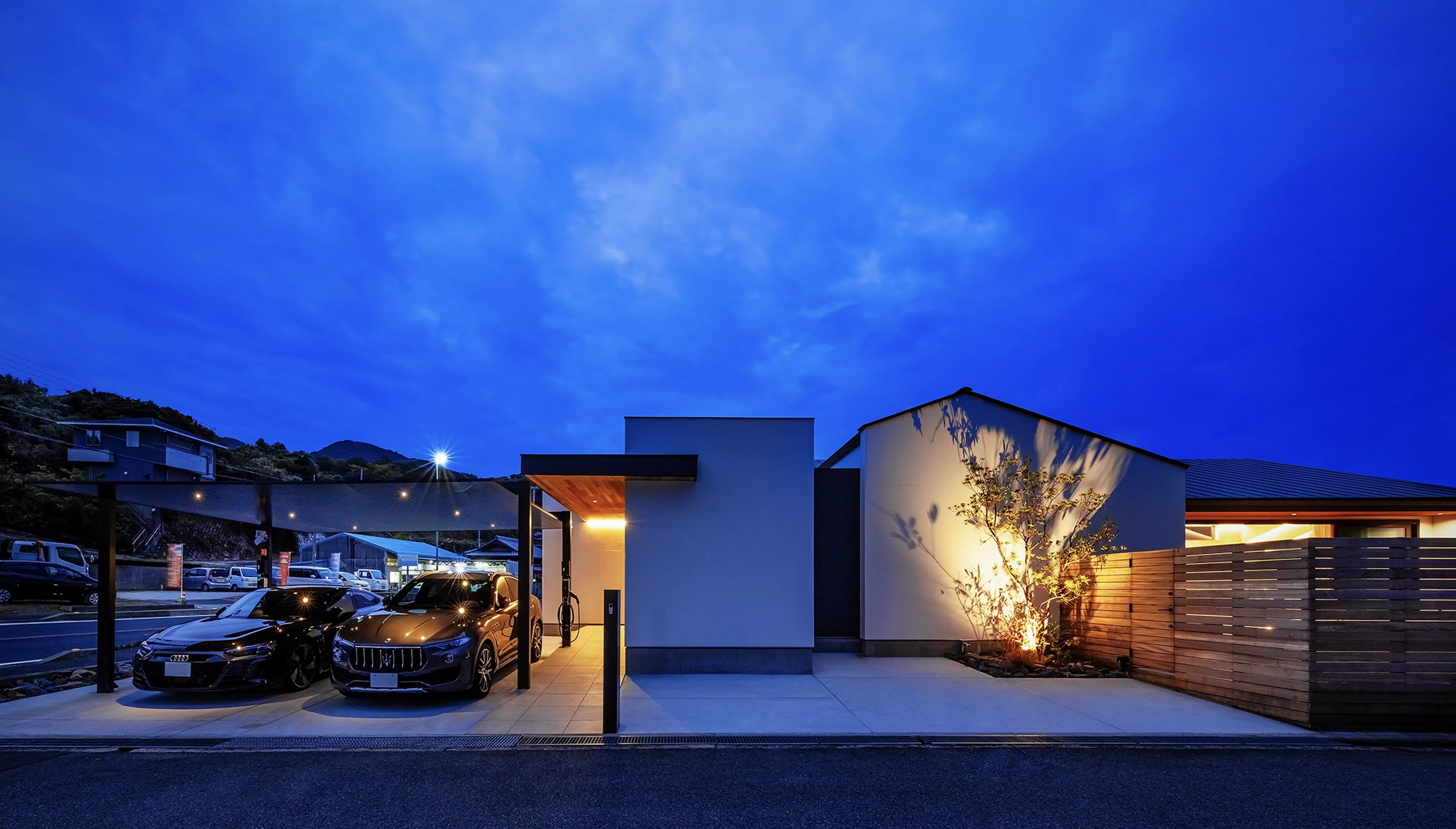
We’ve titled the project “Bungalow in Ōiso, Awaji Island.” Spatially, we divided the functional elements into four distinct volumes, arranging them separately across the site. The intentional gaps between these volumes—what we call in-between spaces—were transformed into gardens and circulation areas. As a result, nearly every space, including the hallways and bathroom, opens onto one of two gardens. Though single-story, the home is filled with light and breeze in every corner. The rhythmic interplay of volumes and margins also helps the building sit naturally within the surrounding Awaji landscape.
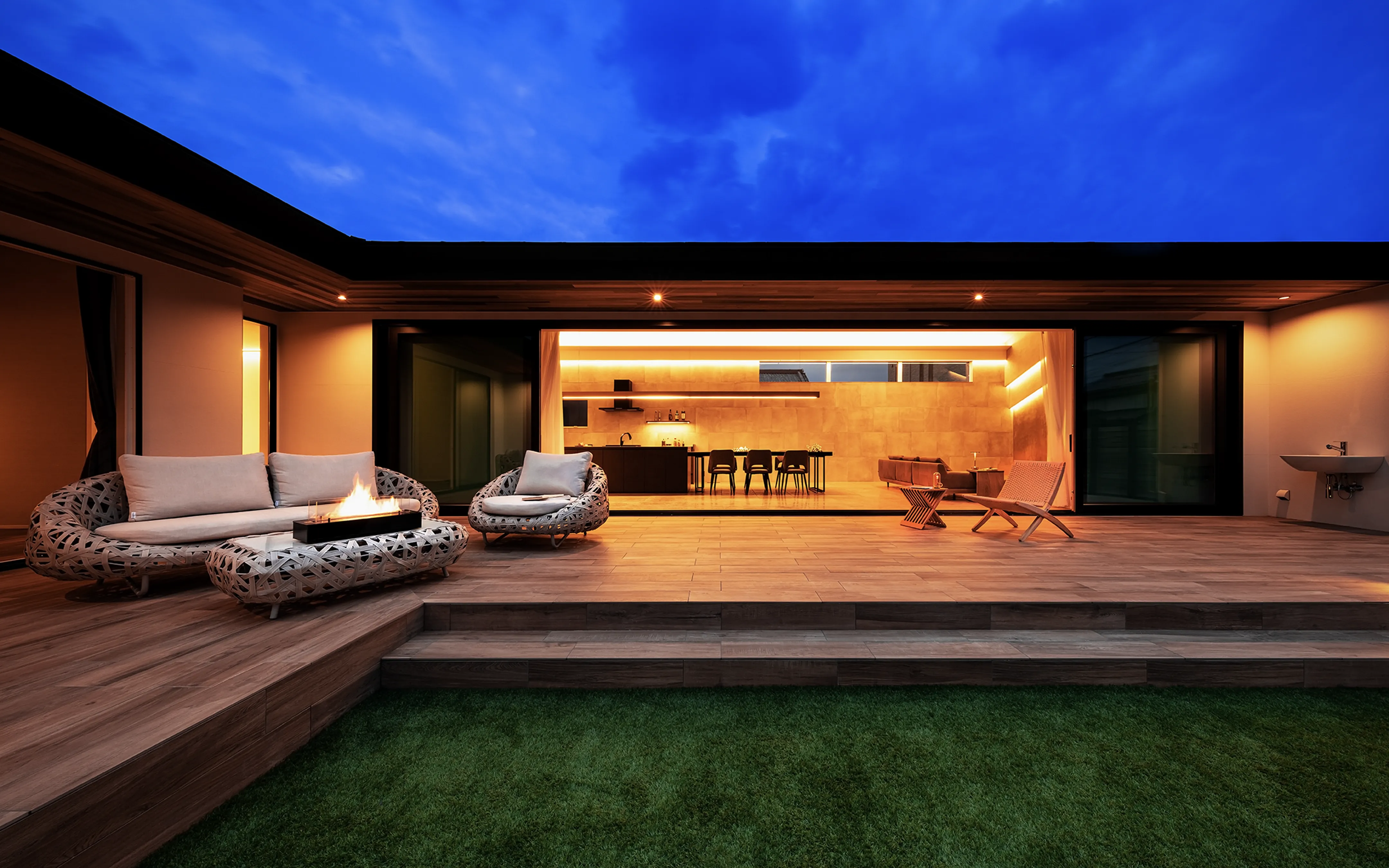
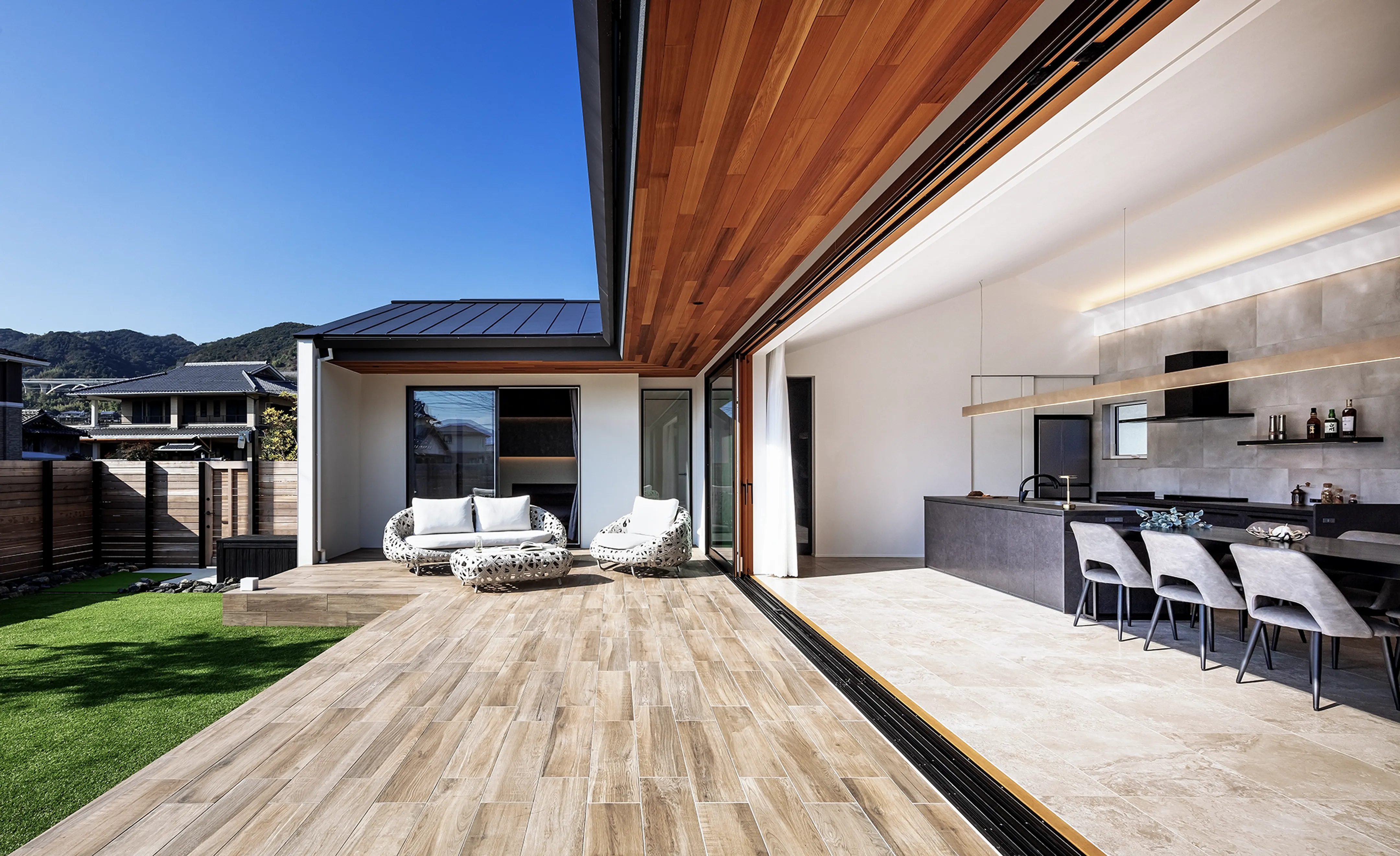
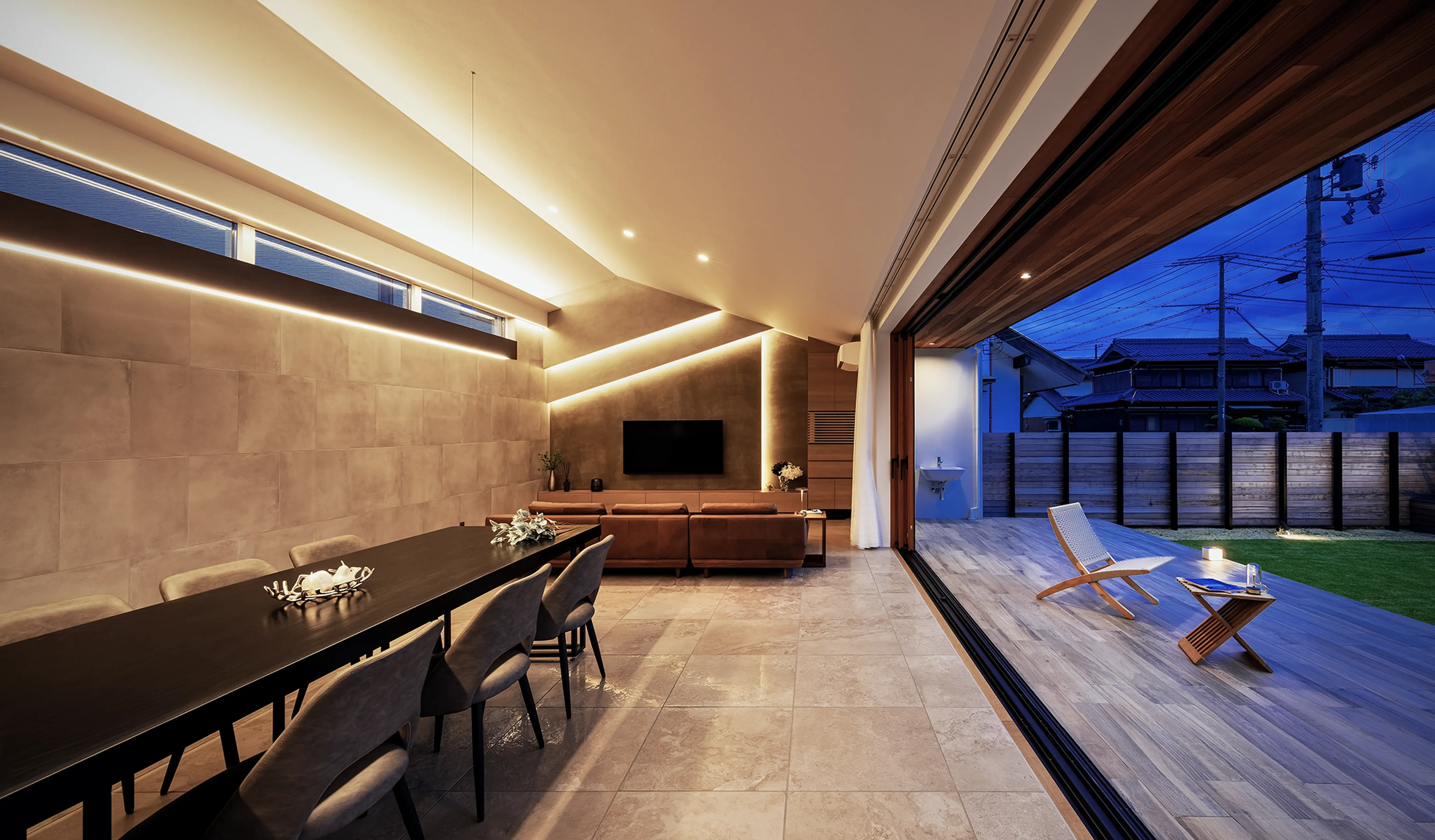
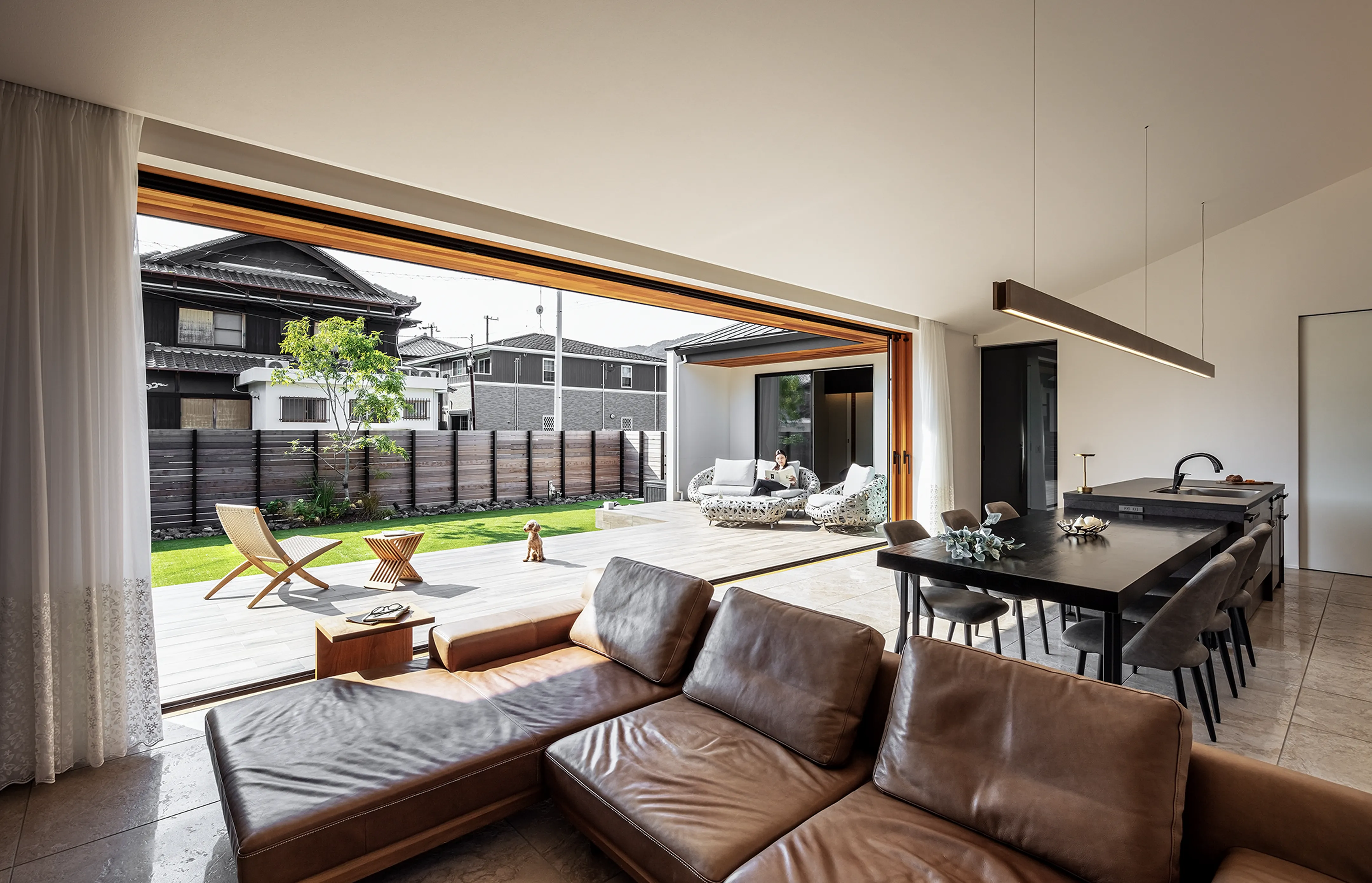
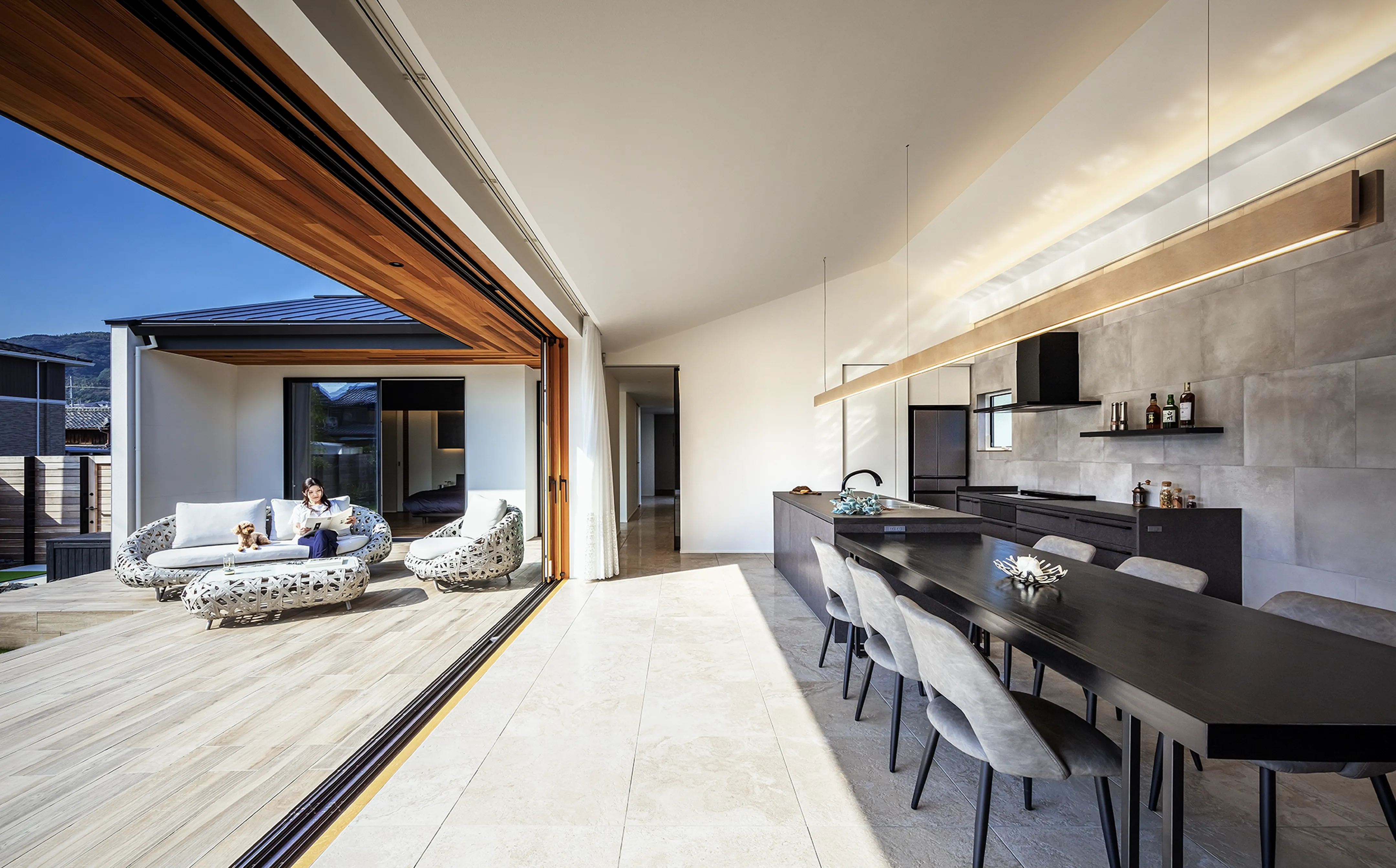
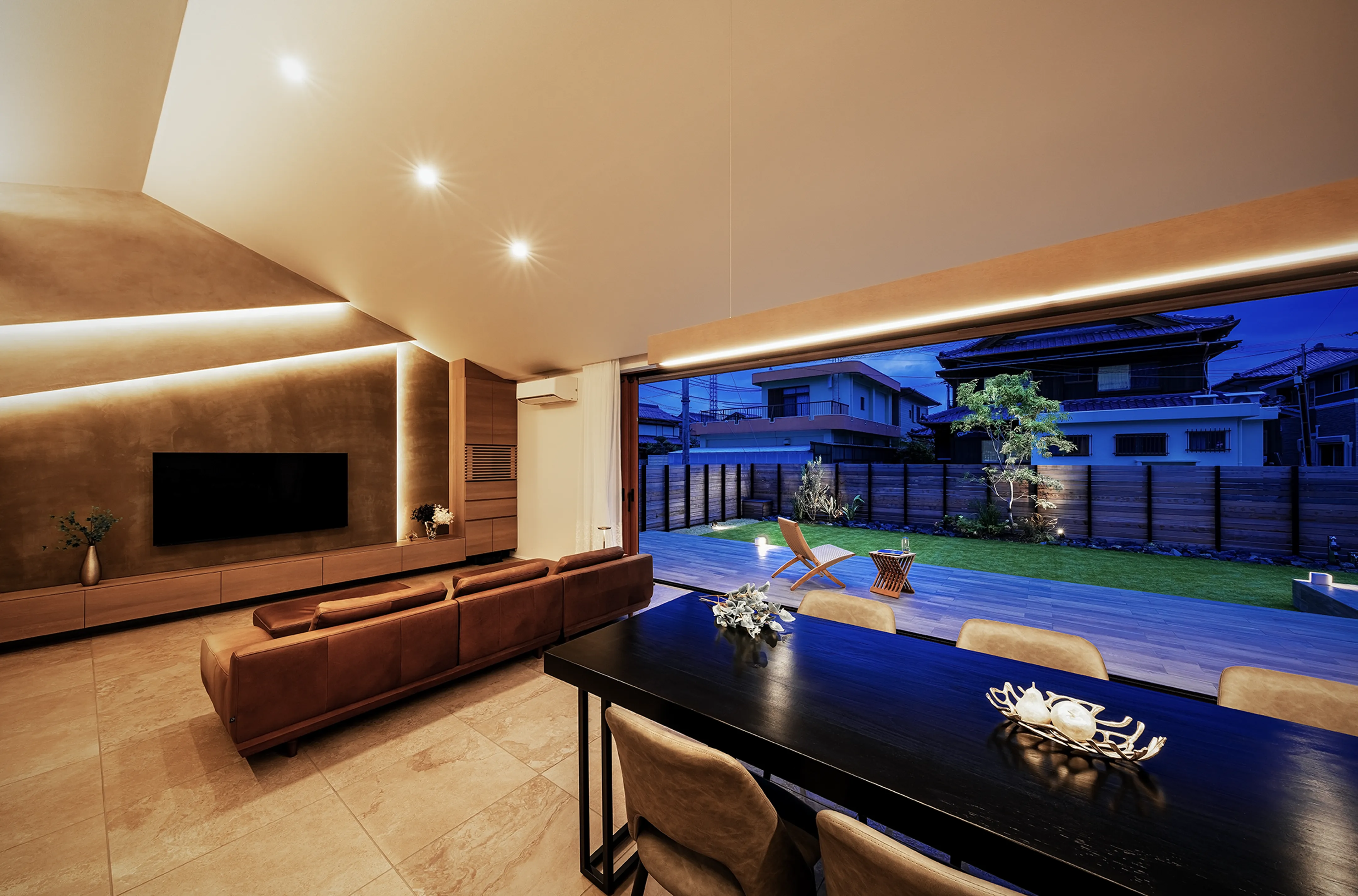
The main living-dining-kitchen (LDK) area, facing the central garden, offers a ceiling height of up to 3.7 meters and a floor area of over 34 tatami mats.
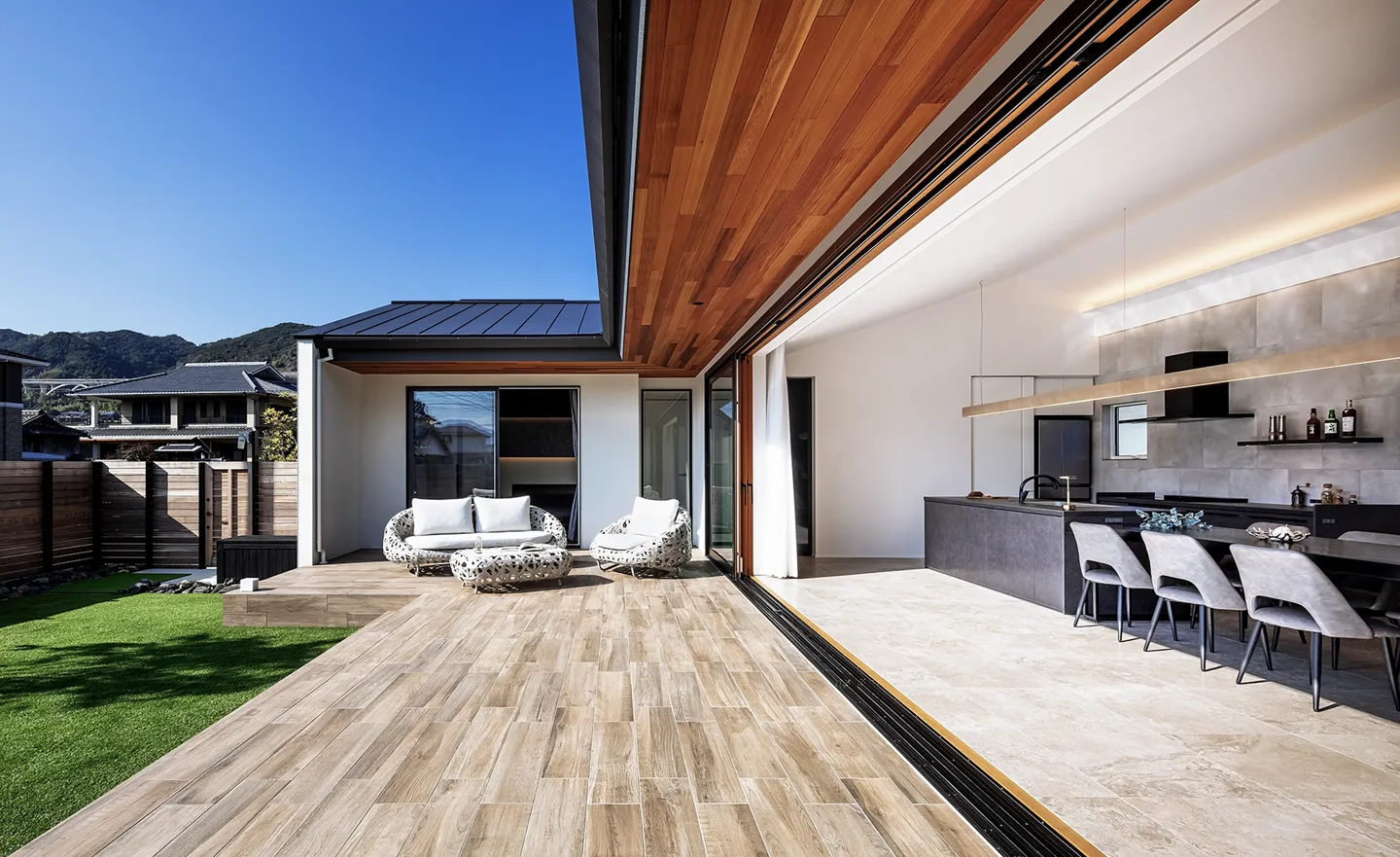
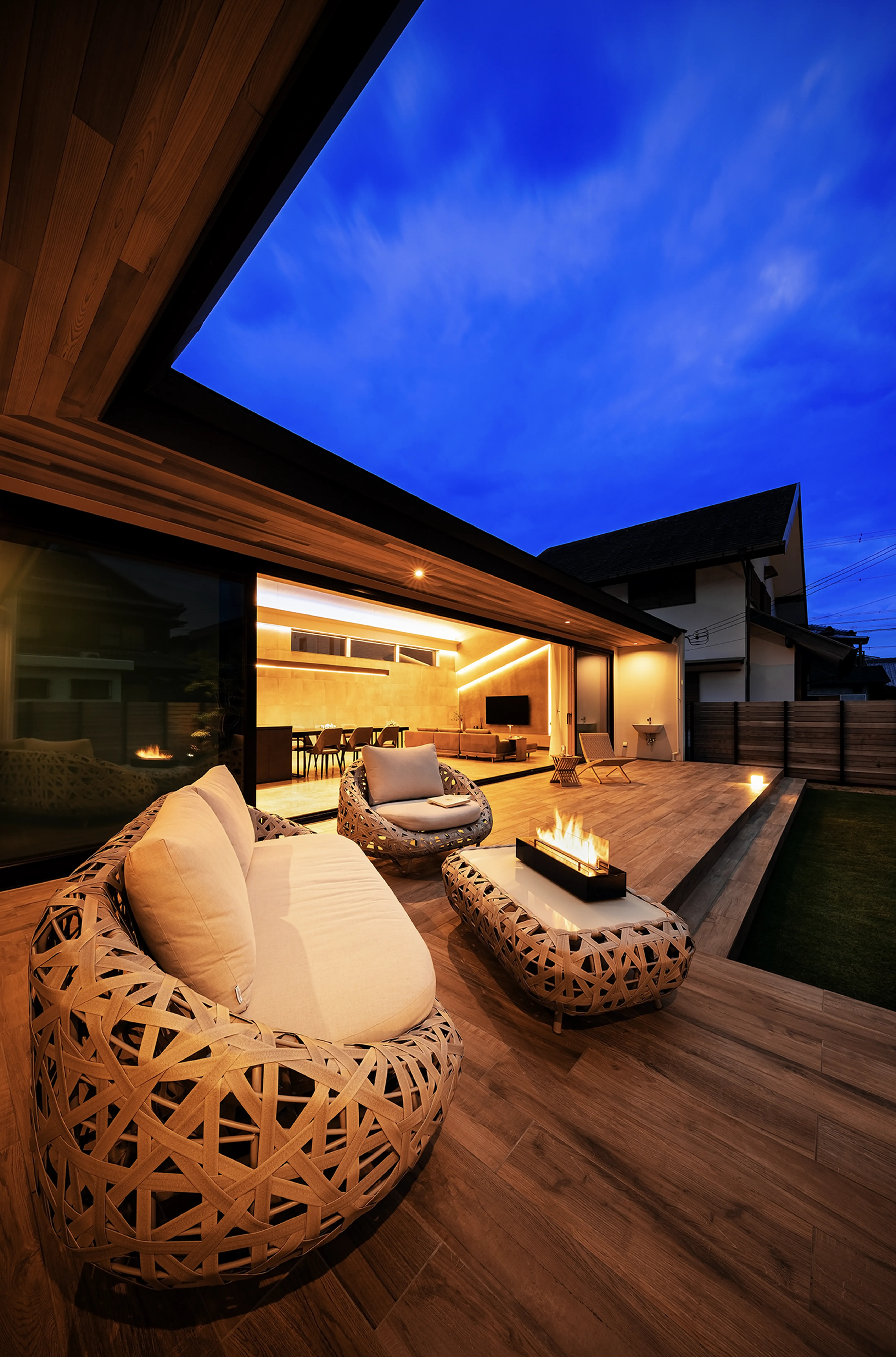
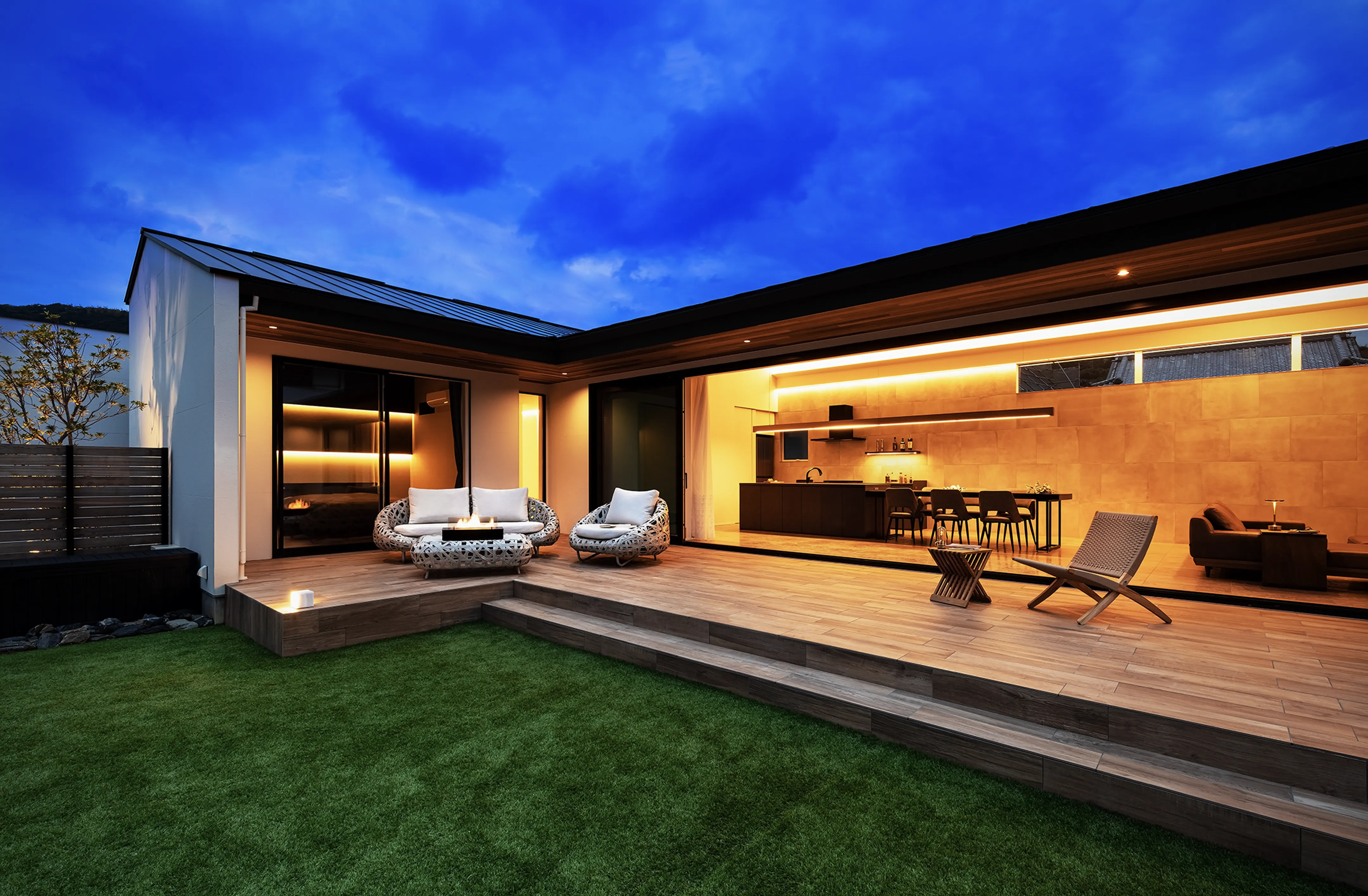
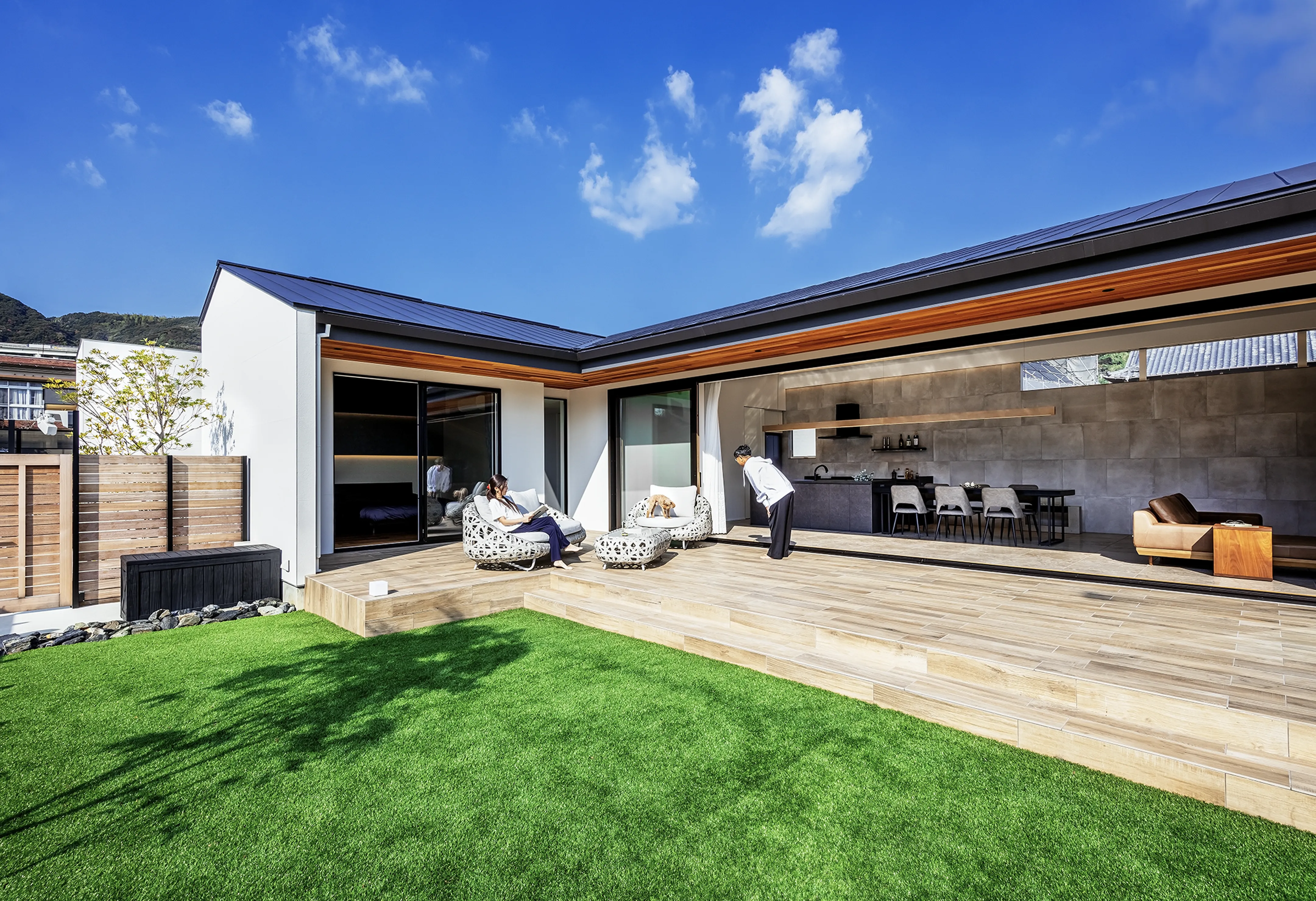
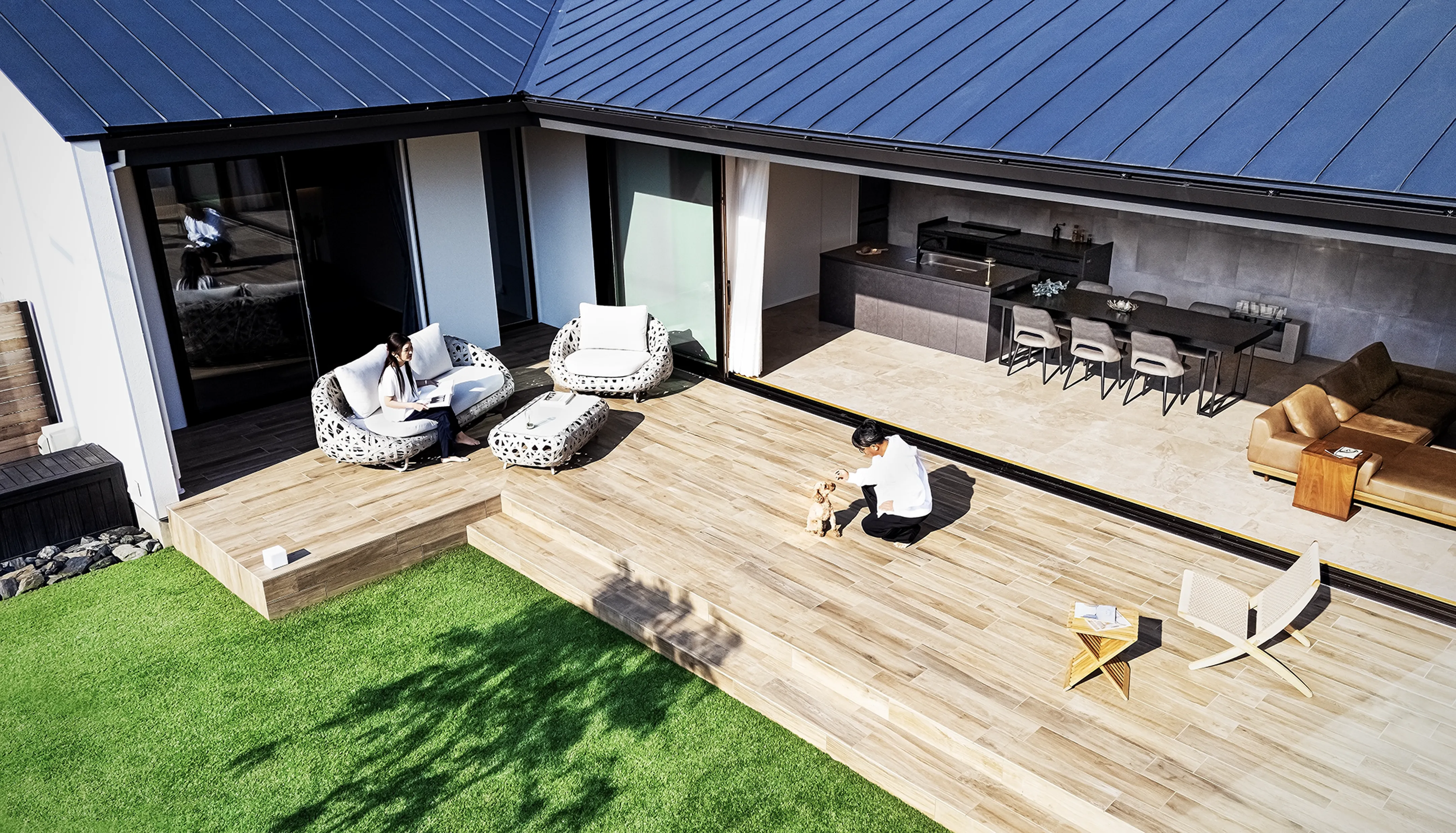
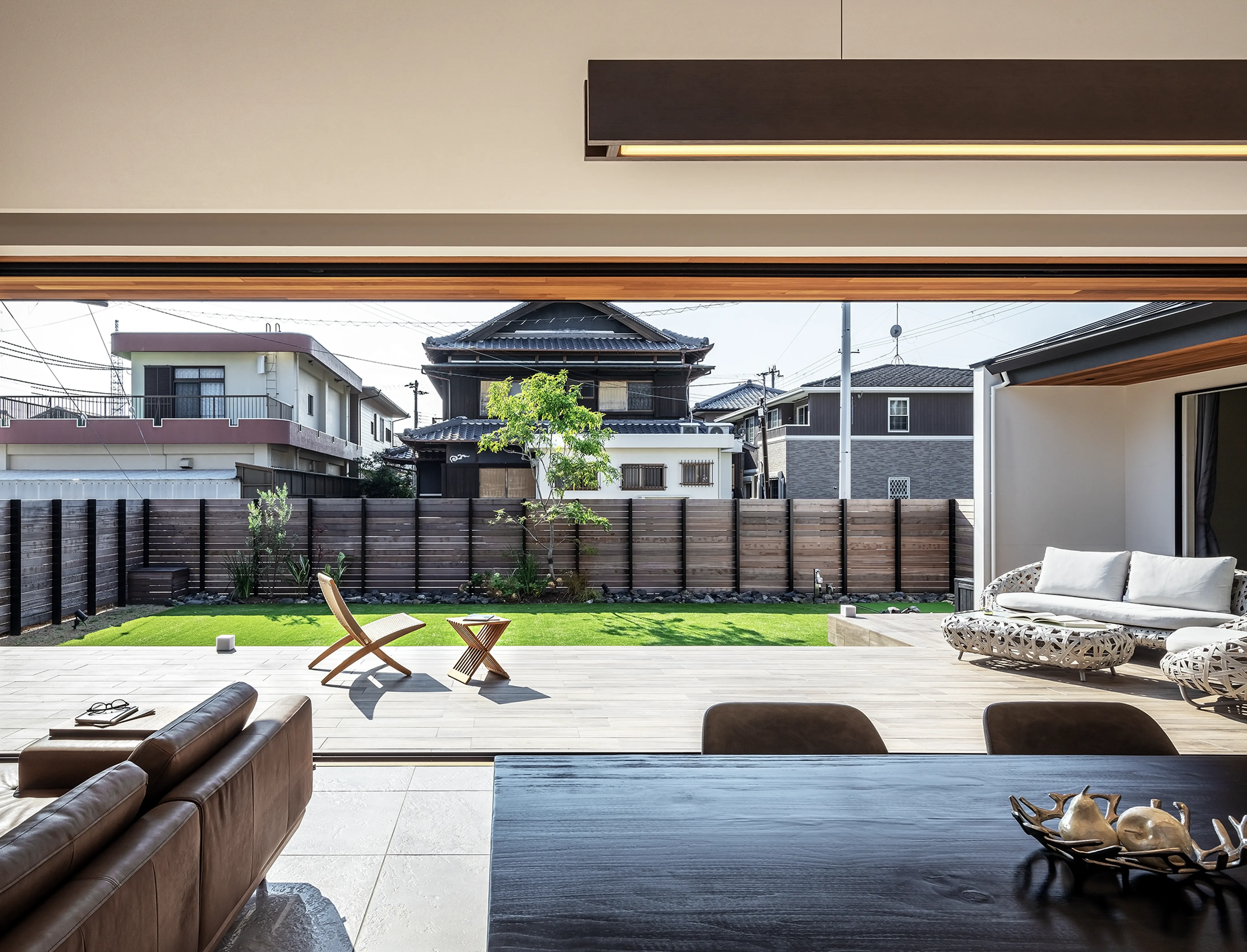
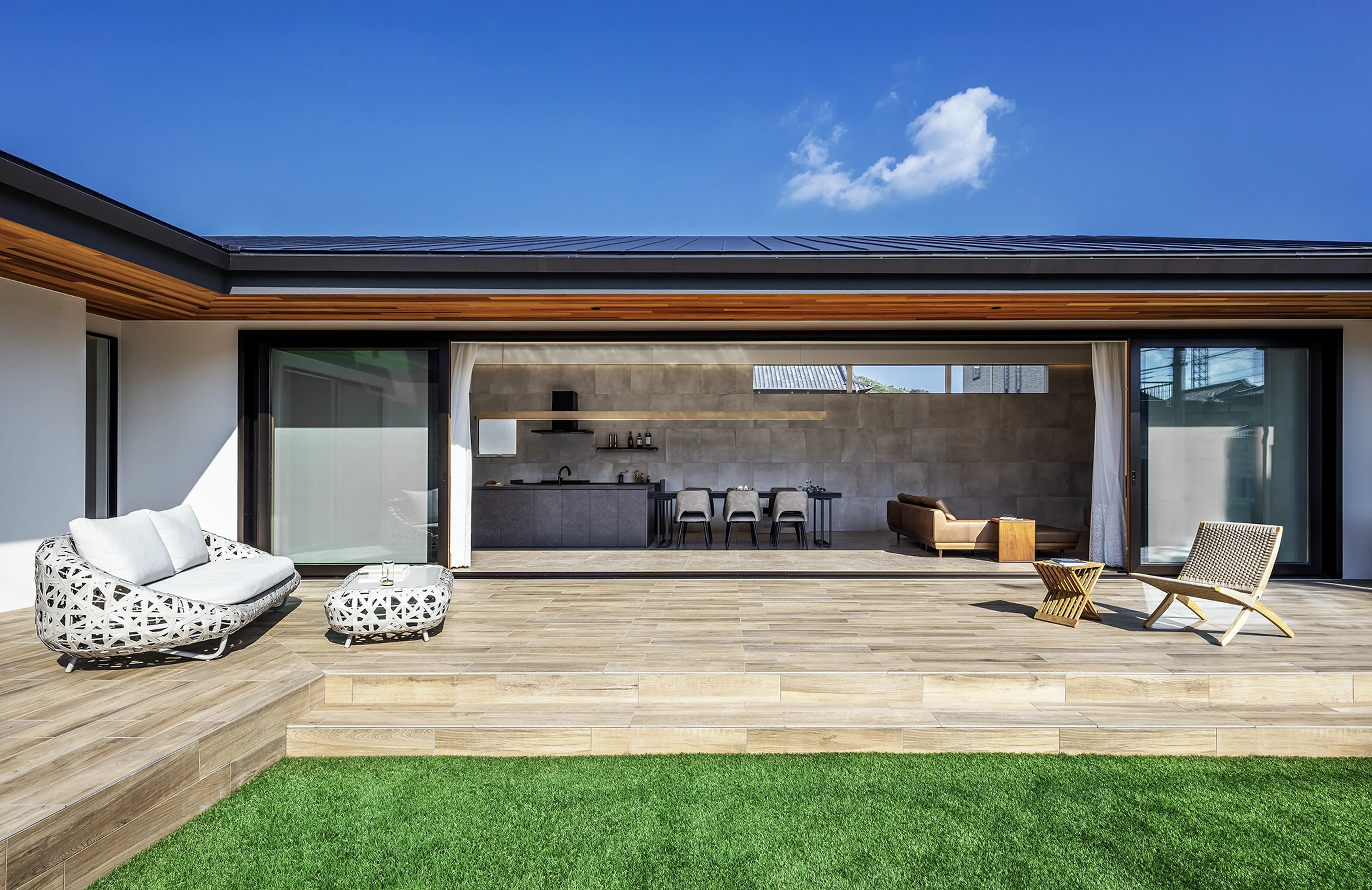
The LDK and primary bedroom are positioned in an L-shaped configuration, each facing the main garden where the client’s pets can roam freely. A continuous engawa-style wooden terrace connects the two spaces, creating both a compact daily flow and a spacious visual relationship with the garden. This layout allows the residents to enjoy a seamless connection between interior and exterior—both visually and physically.
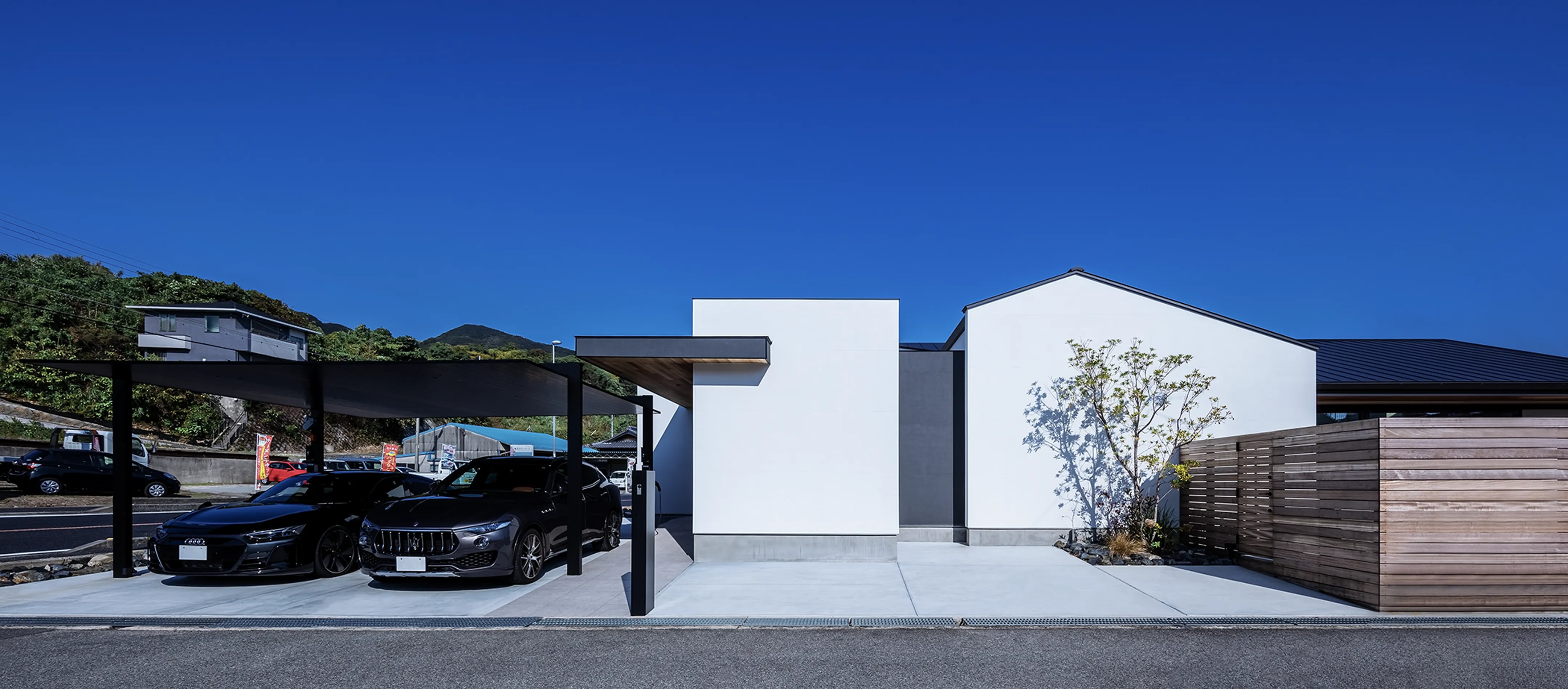
Less frequently used spaces—such as the carport, guest room, and walk-in closet—are placed toward the roadside to buffer sound and visual exposure.
In a country where compact, multi-story homes are the norm, a single-story layout—especially one composed of distinct volumes—is itself a rarity. In this project, we aimed to offer not only ample space, but also a more fluid and generous experience of daily movement.
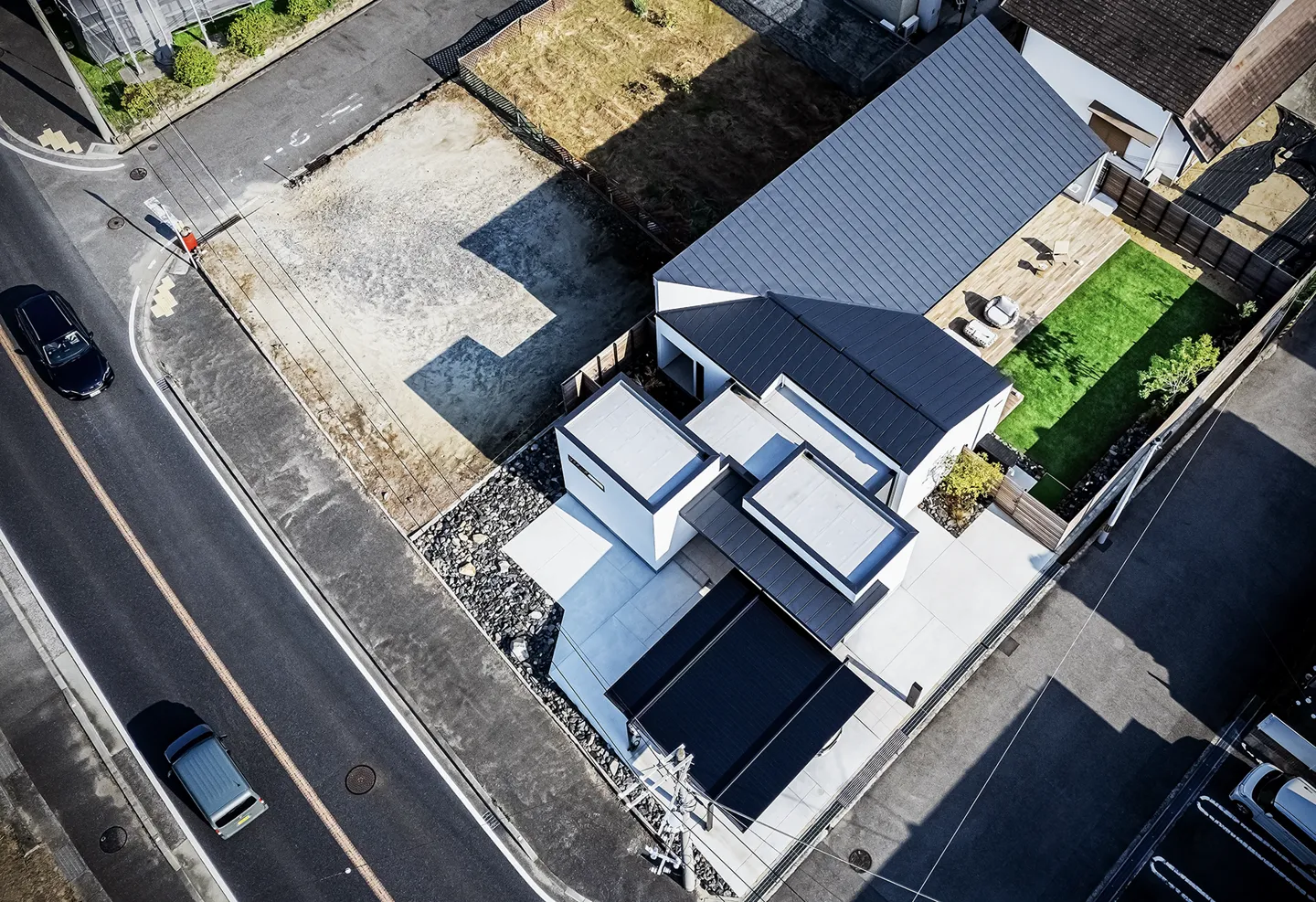
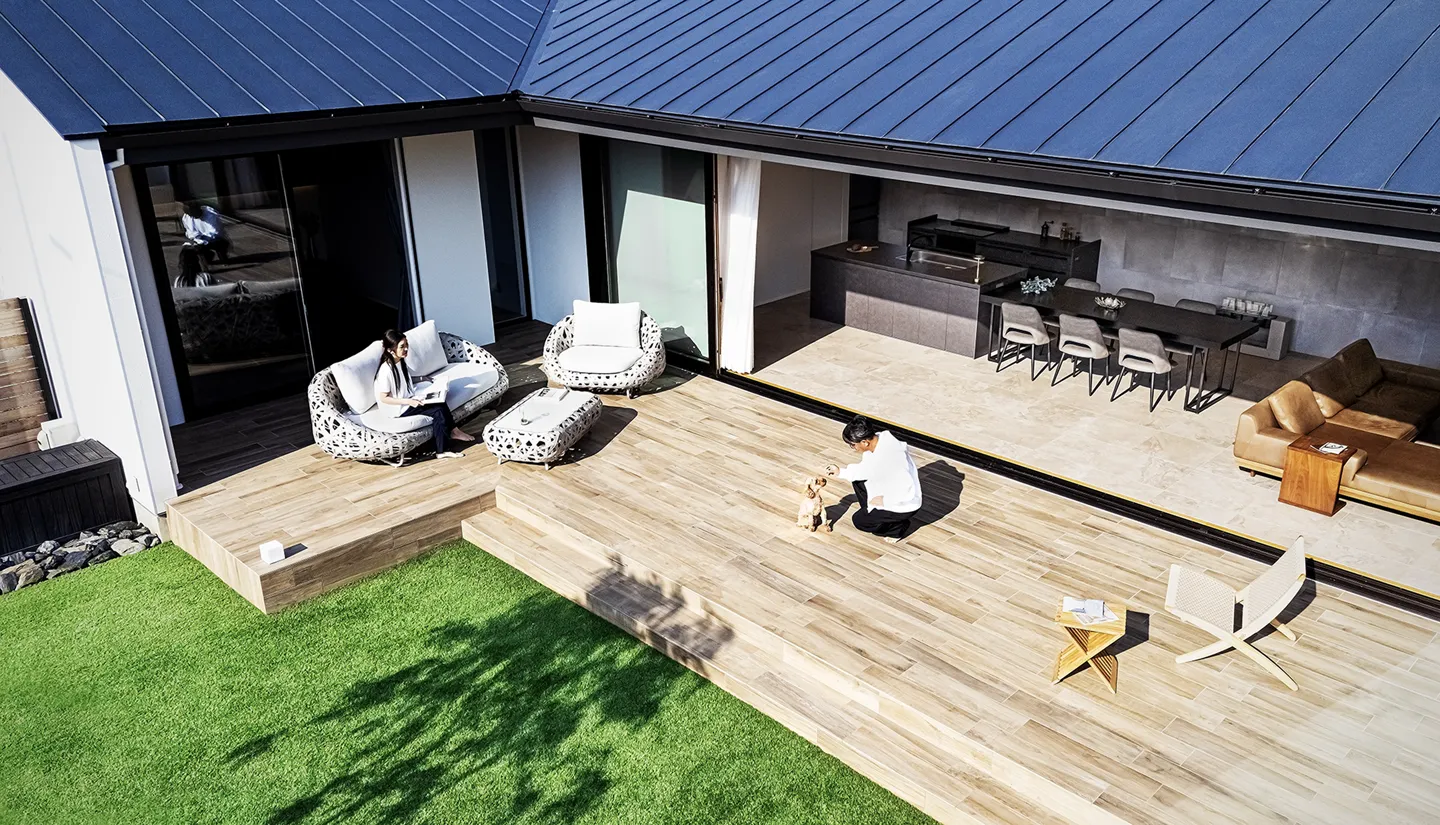
Rather than shaping the house as a single, large mass, we divided it into four separate volumes based on function. This allowed for meaningful spaces to emerge between them—what we call in-between spaces. In larger buildings, one common challenge is how to bring in light. Here, natural light introduced through these interstitial spaces fills the home with warmth and softness.
The volumes and margins also create a sense of rhythm in the exterior composition, resulting in a profile shaped to harmonize quietly with the surrounding landscape.
The primary garden—positioned in the most favorable part of the site—is bordered on two sides by the LDK and the primary bedroom, forming an L-shaped configuration. Given the site’s northwest–southeast orientation, the garden itself takes on a long rectangular shape along the plot. We positioned the LDK along the longer edge to maximize its frontage, with the bedroom along the shorter.
This configuration not only creates a compact and efficient daily flow between the most frequently used rooms, but also expands the sense of space through their shared connection to the garden.
Terraces level with the interior flooring extend the indoor spaces outward, especially the LDK, which features a custom wooden sliding door unit 8 meters wide and 2.55 meters tall. When fully opened, the room becomes airy and seamlessly connected to the garden.
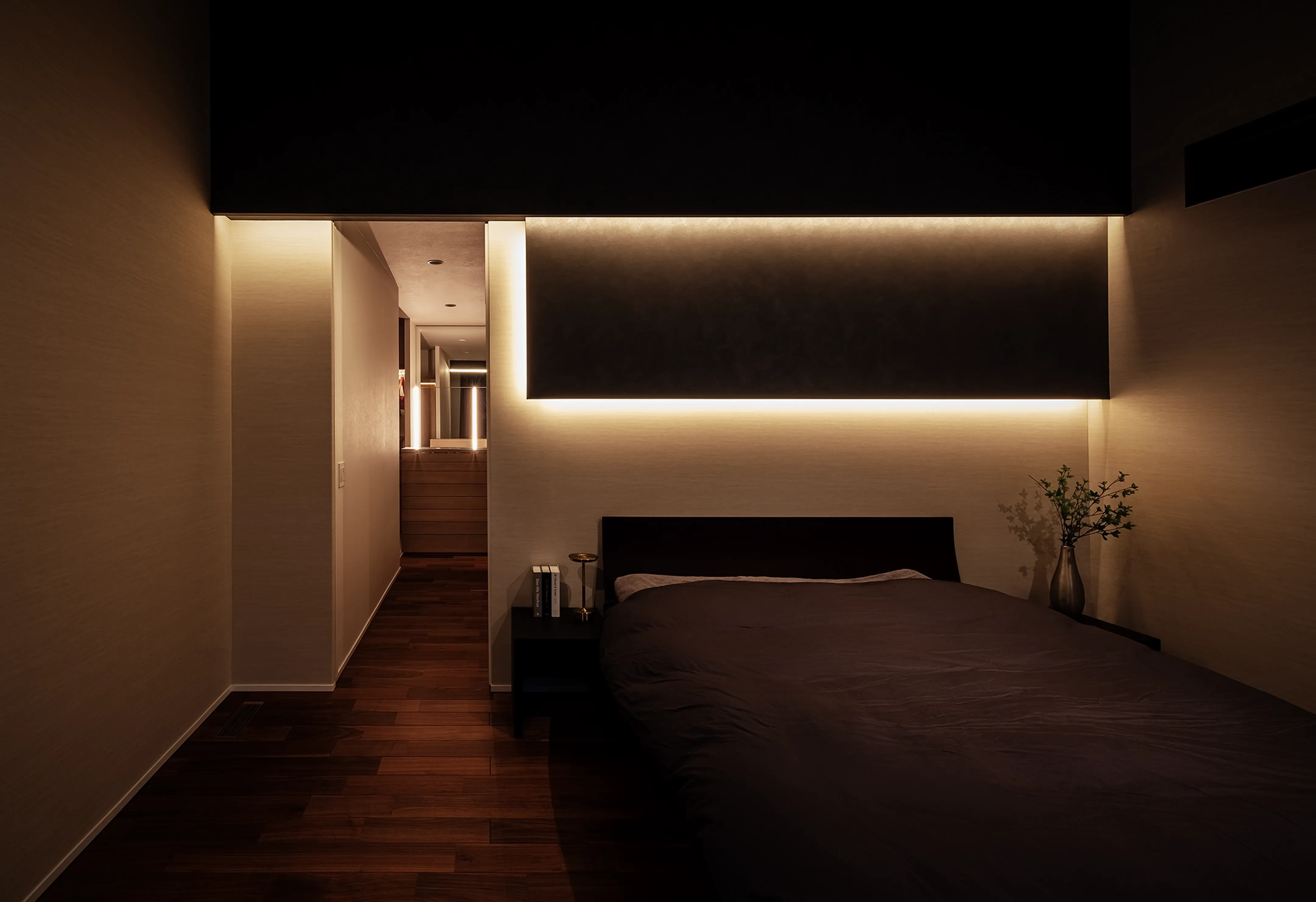
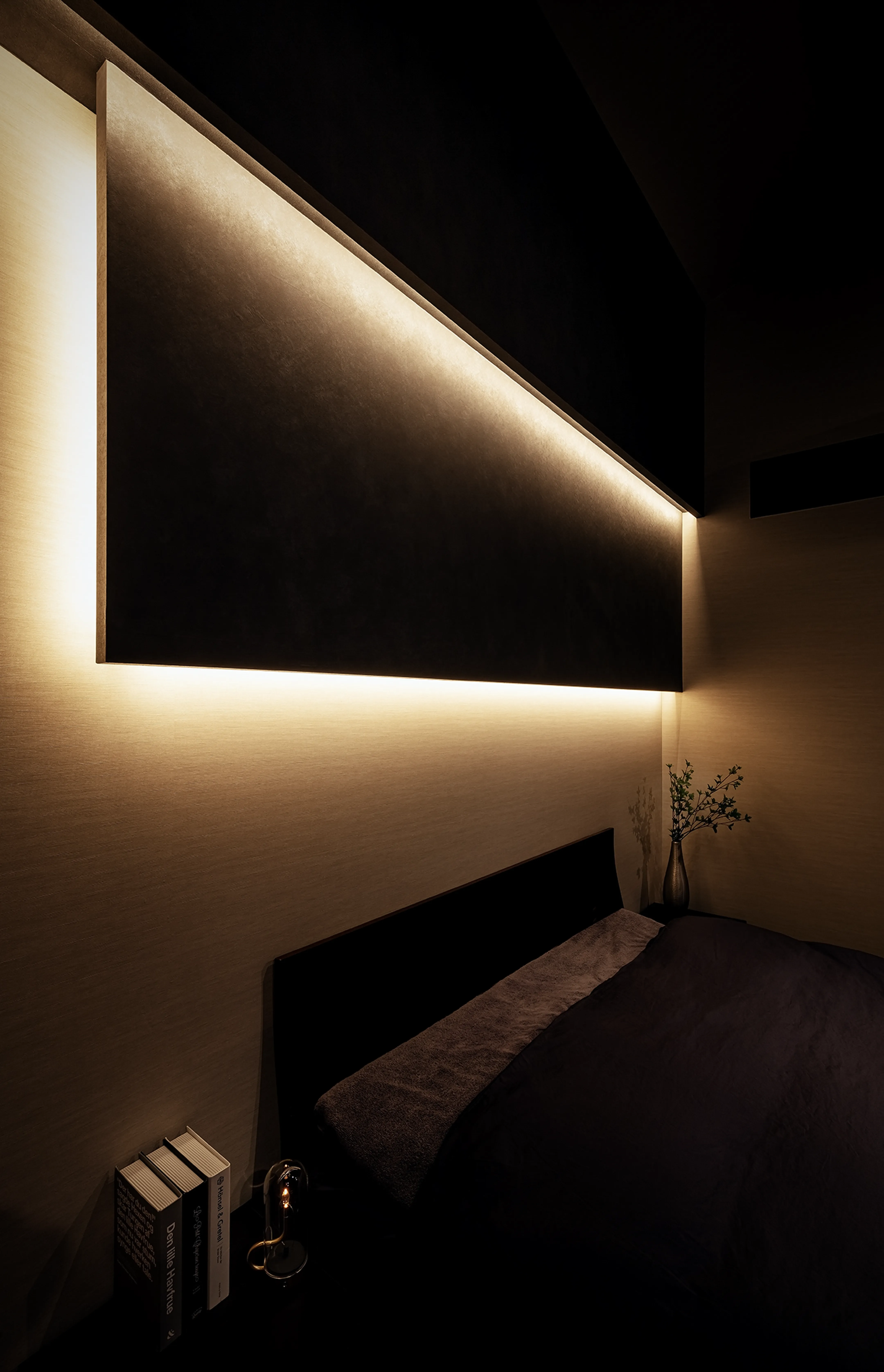
Both the bedroom and LDK face southeast or southwest. Carefully calculated eaves block high-angle summer sun while allowing low-angle winter light to reach deep inside. Inside, sloped ceilings give each room a distinctive character.
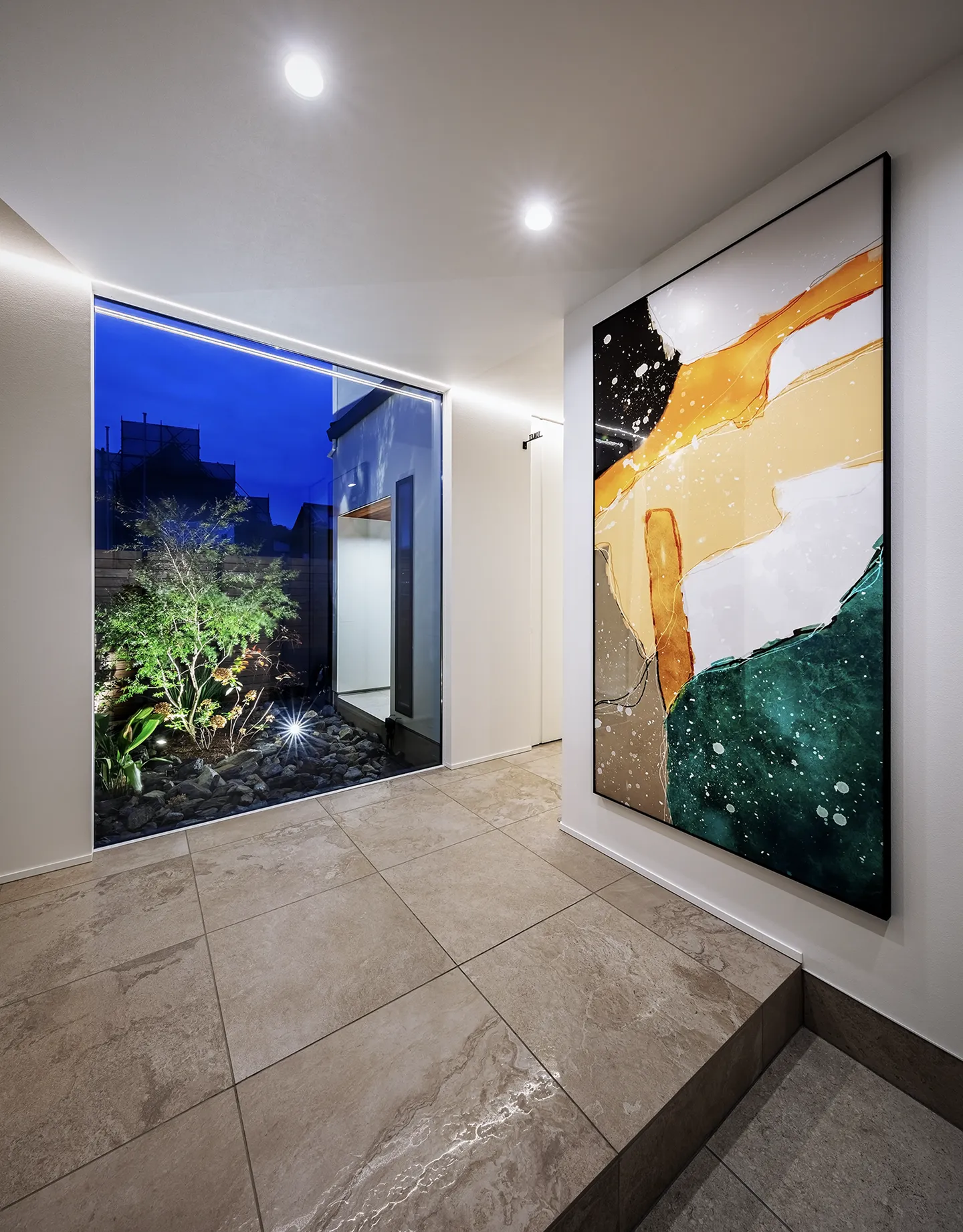
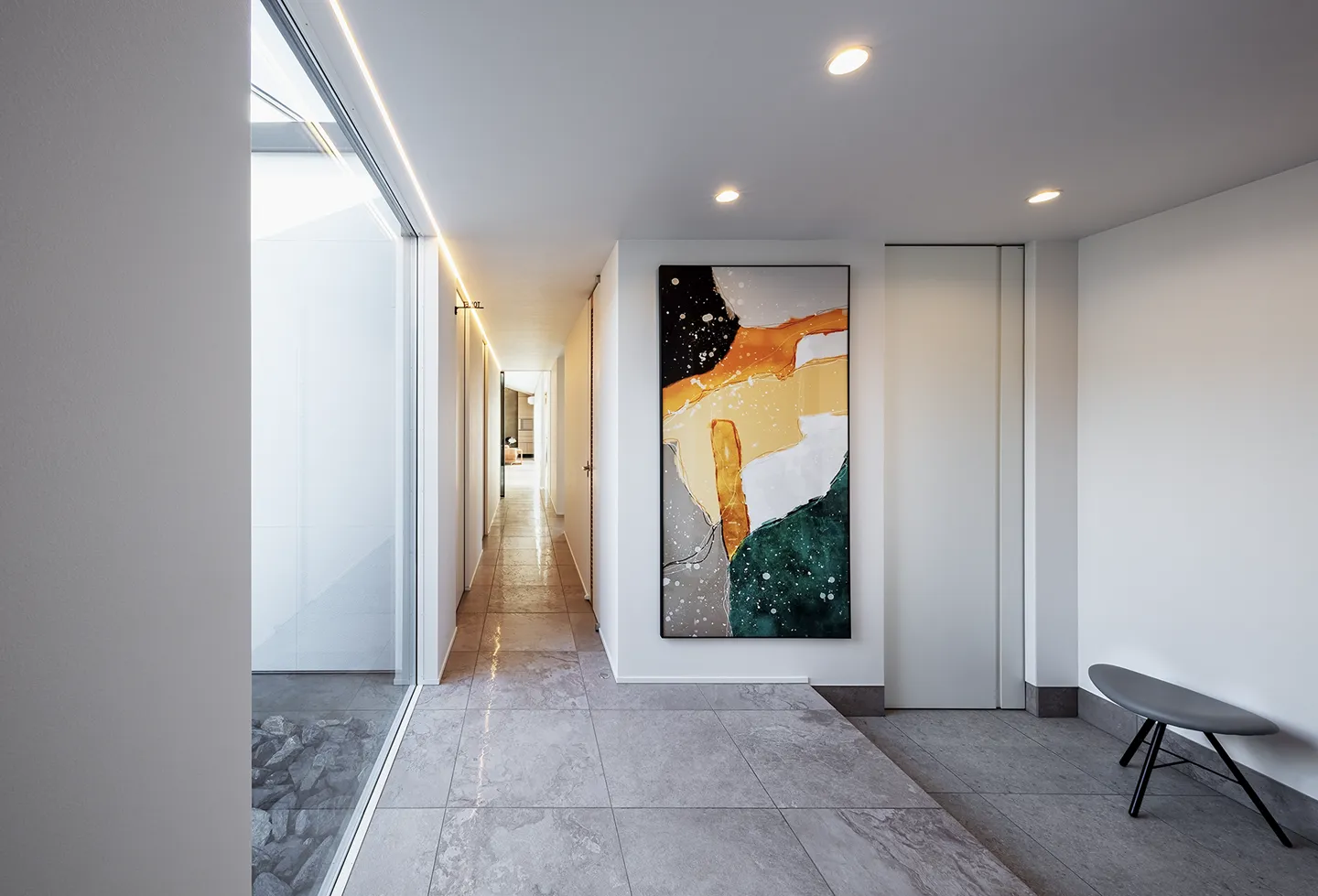
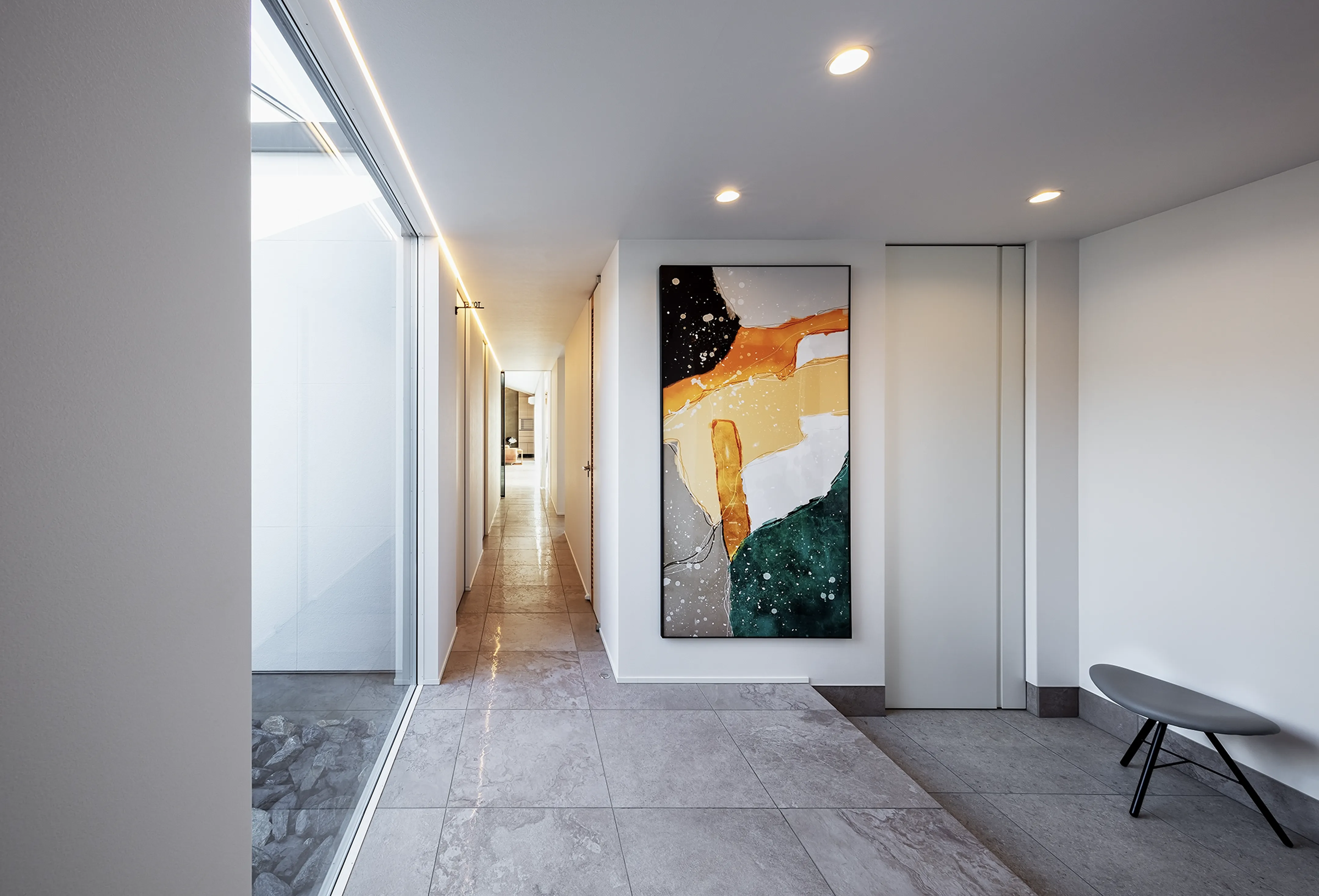
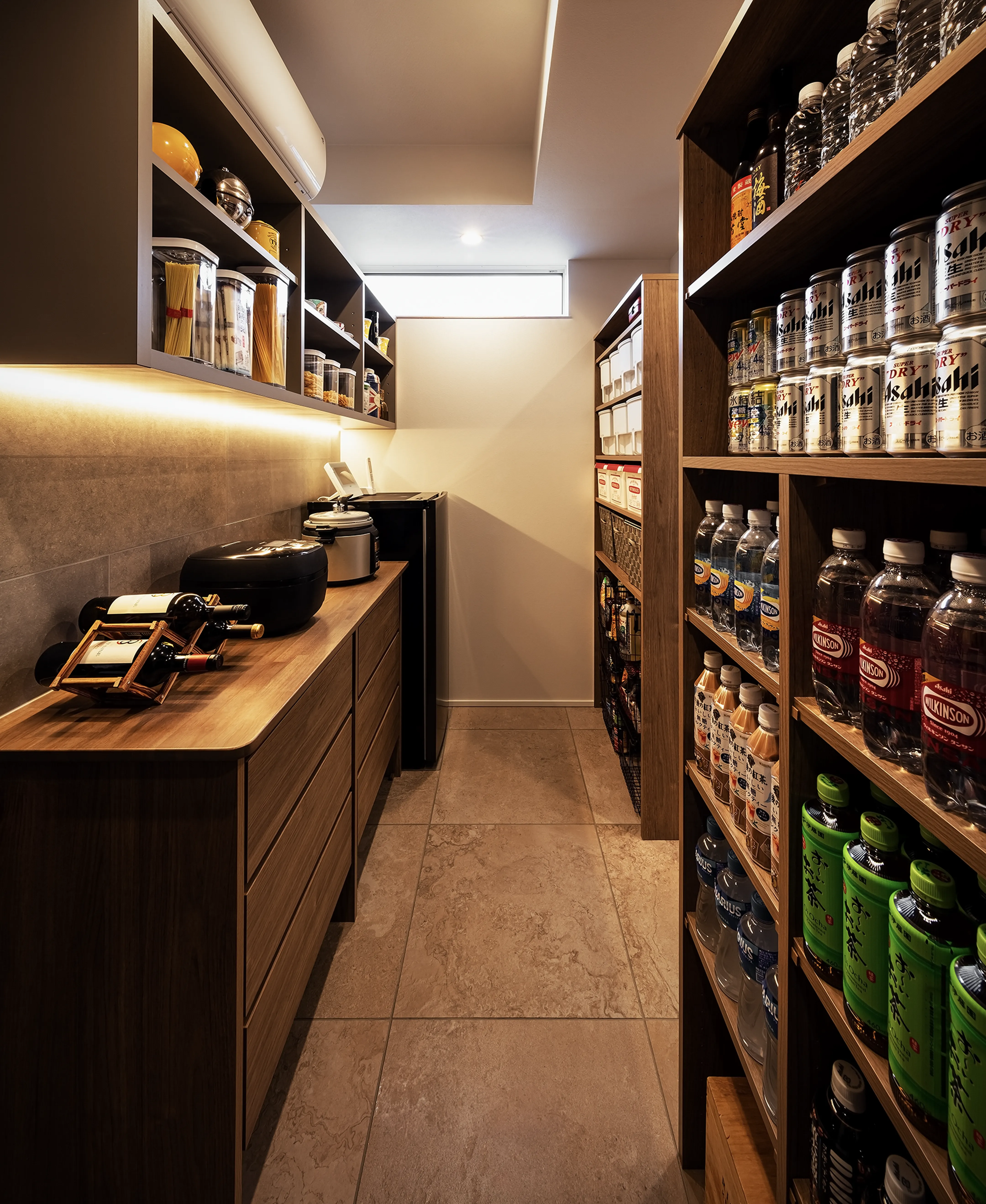
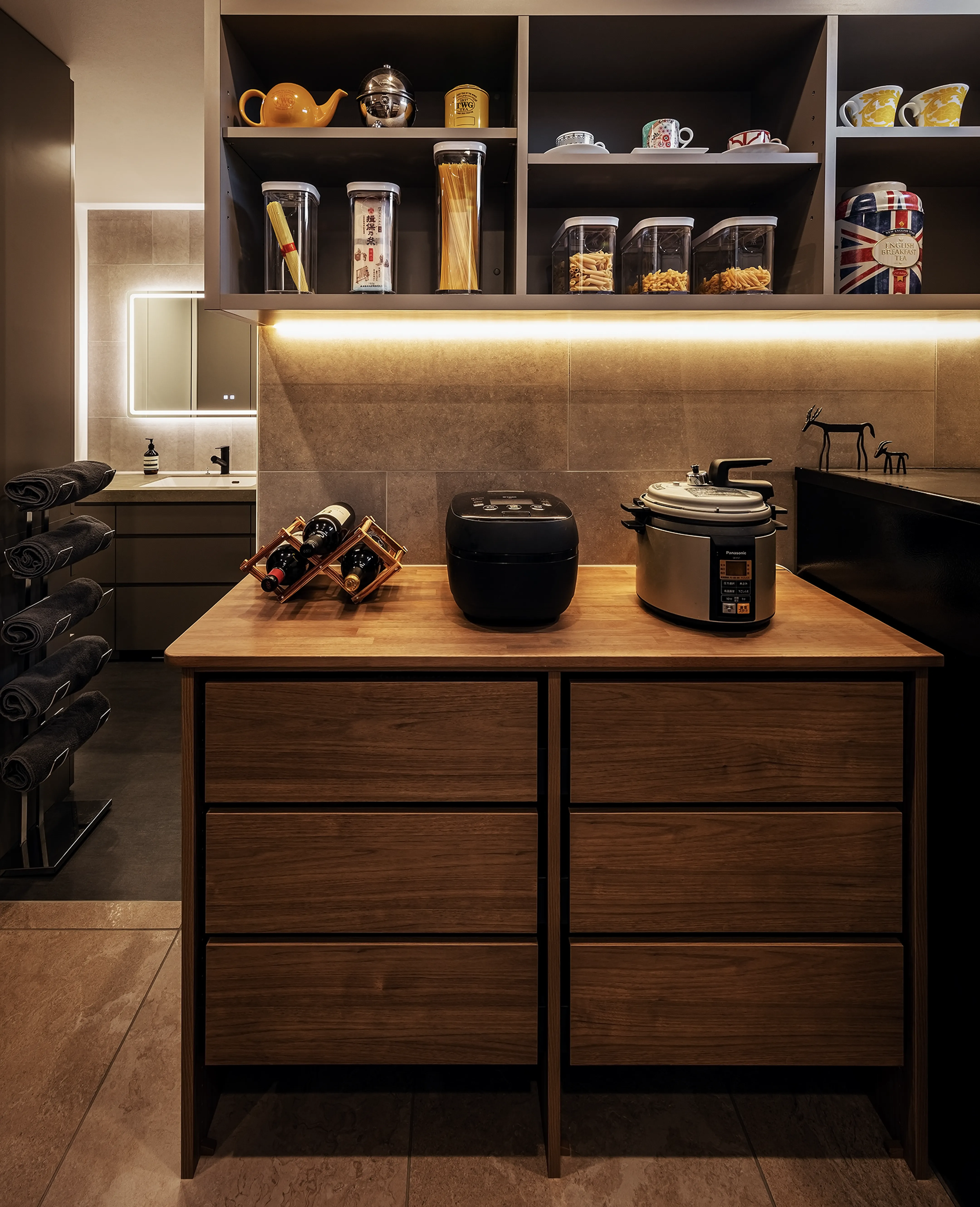
In many older Japanese homes, narrow hallways connected tightly divided rooms—often resulting in dark, underutilized spaces. Here, the hallway is minimized and reconsidered as part of the home’s functional design: a pass-through shoe closet, for instance, doubles as a connecting route, enriching both circulation and usability. This layout offers convenience for the client couple, who frequently travel for work or leisure.
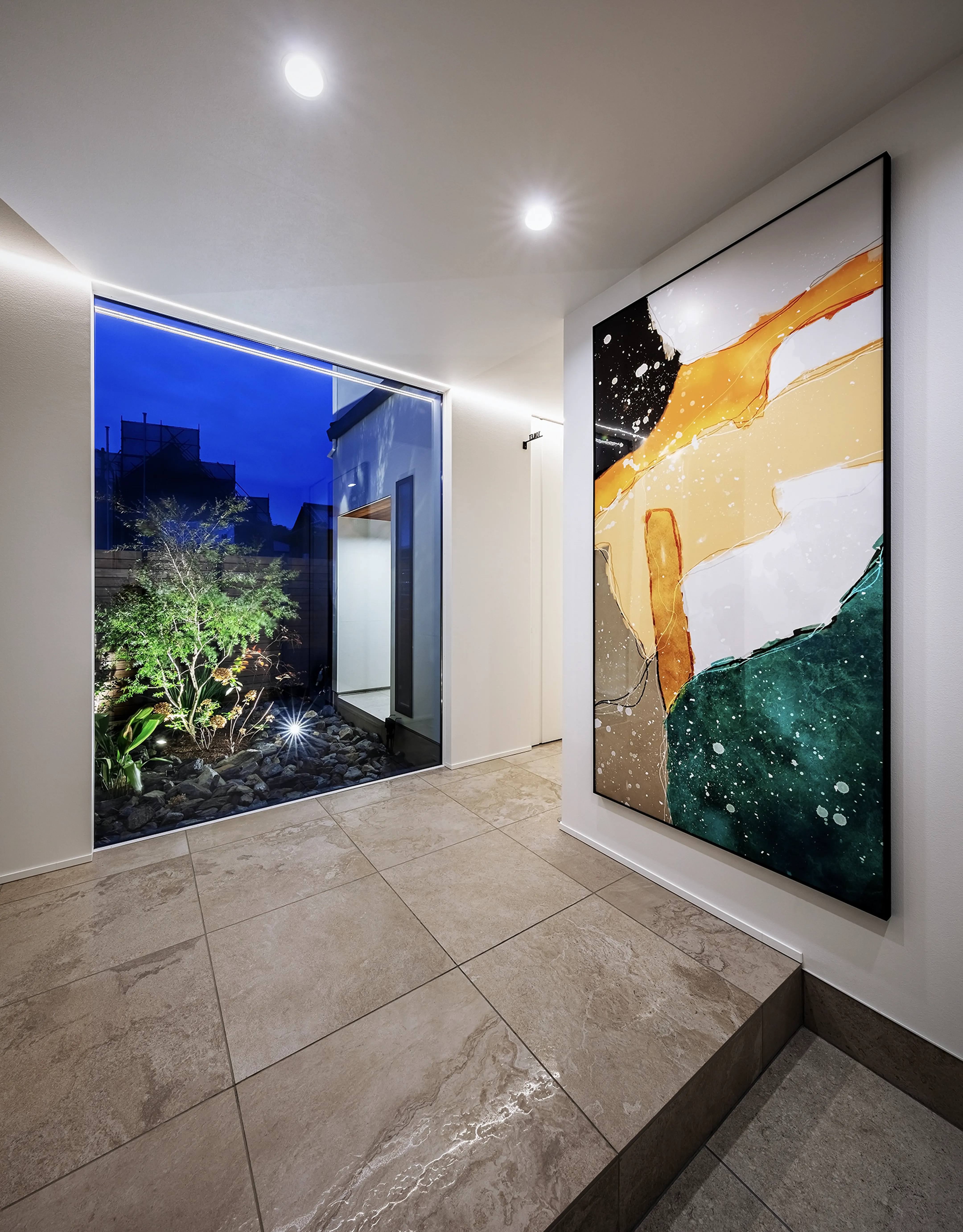
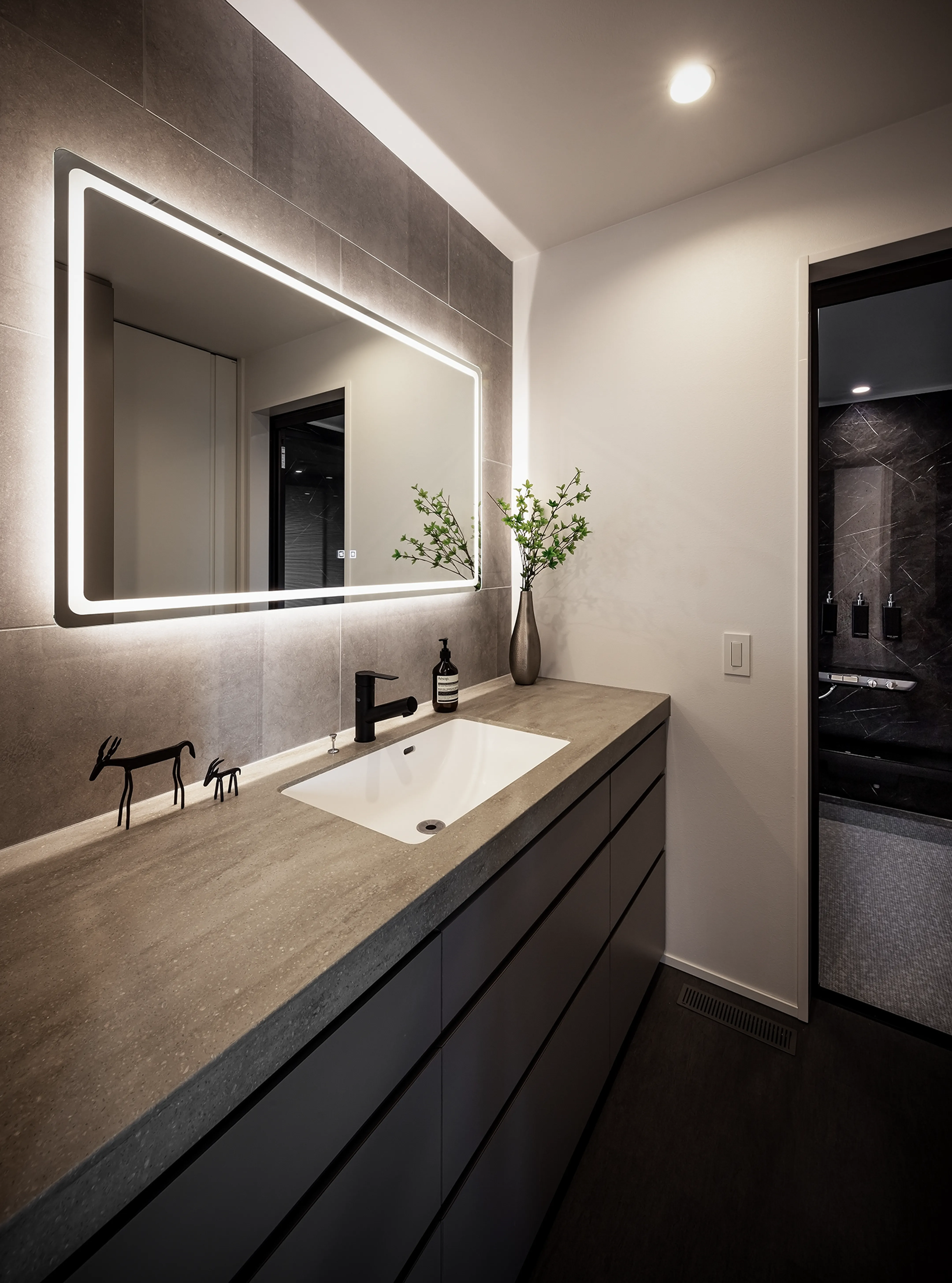
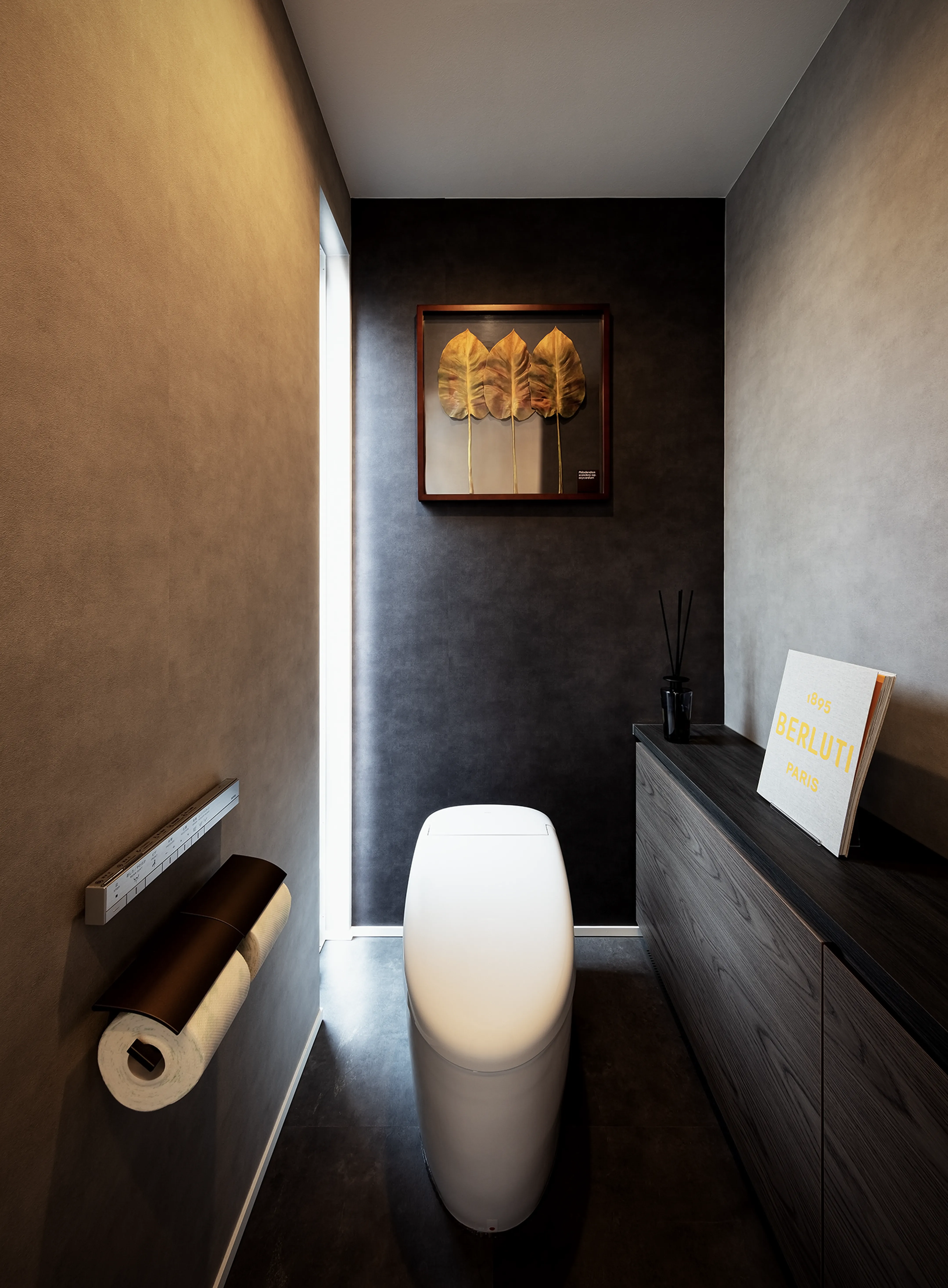
We also created a small internal courtyard next to the entry, ensuring that even the short hallway leading to the LDK is filled with light. The courtyard also adjoins the bathroom, offering a peaceful retreat.
| Builder | Susuki Komuten Co., Ltd. |
|---|---|
| Kitchen | Lixil / Richelle SI |
| Location | Awaji City, Hyogo |
|---|---|
| Use | Private residence |
| Family | Couple |
| Year | 2024 |
| Structure | Wooden / 1F |
|---|---|
| Site Area | 142.0 tsubo (≈ 470m²) |
| Total Floor Area | 45.7 tsubo (≈ 151m²) |
| Total Cost | --- |