0
作品写真

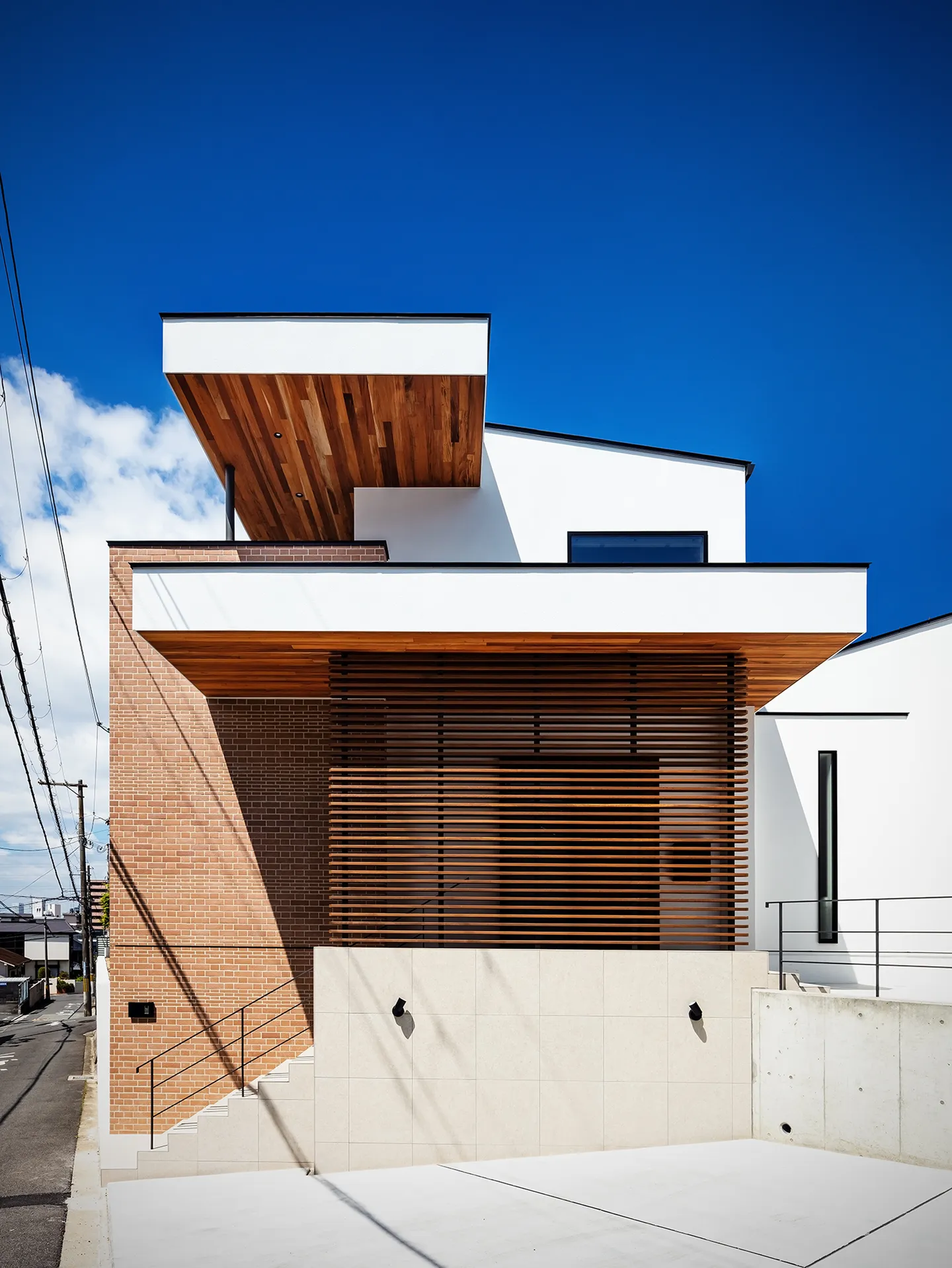
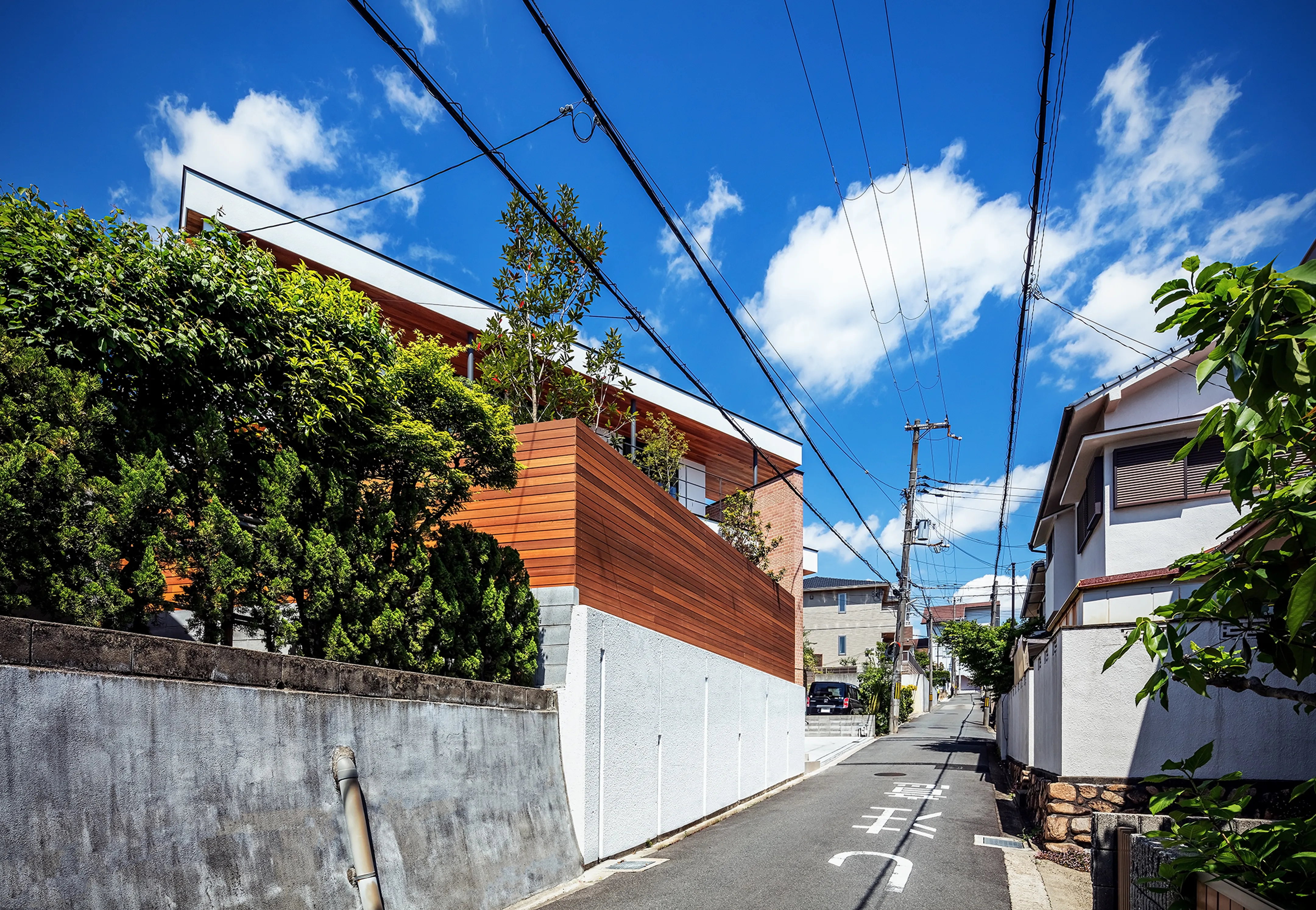
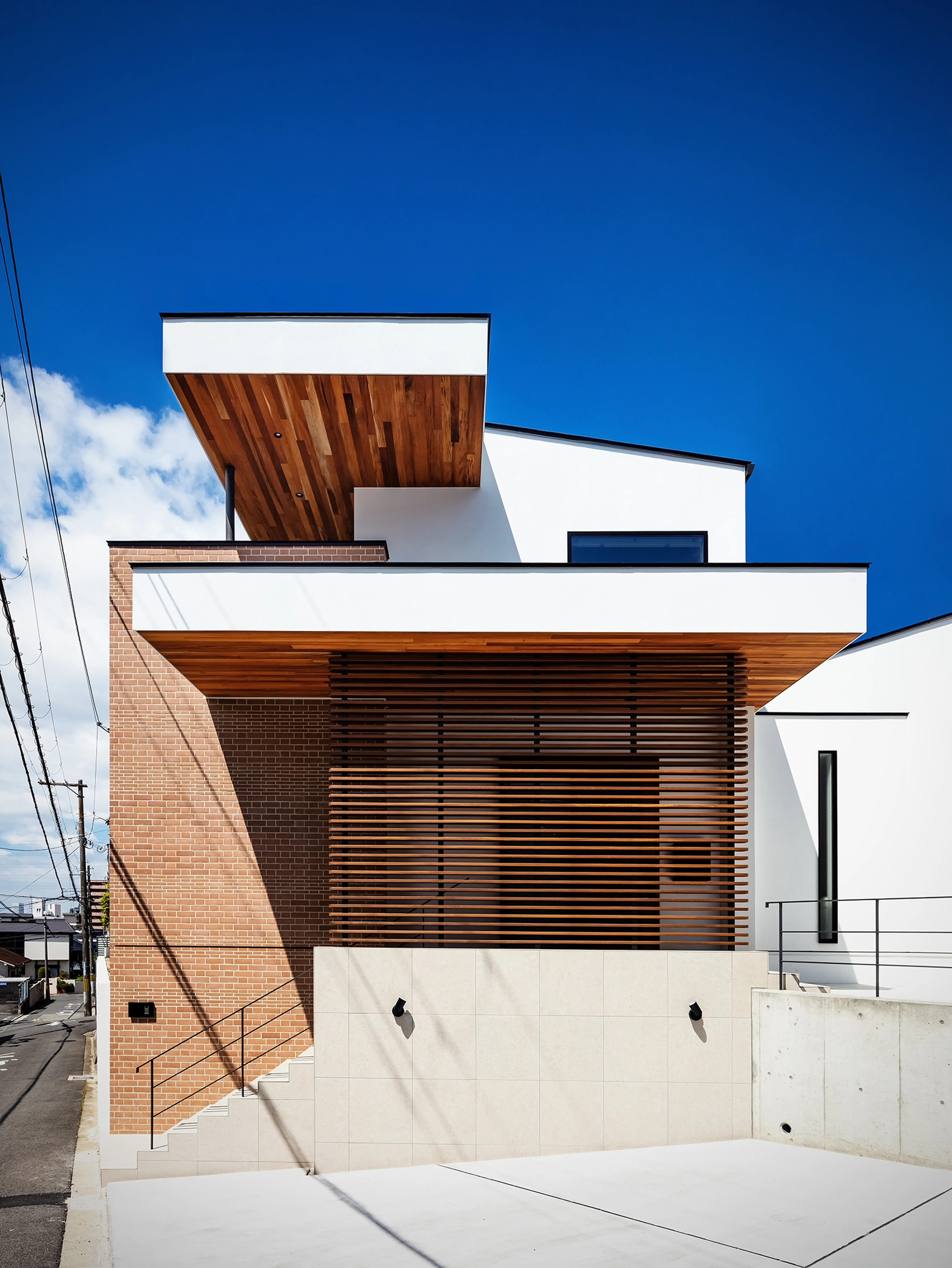
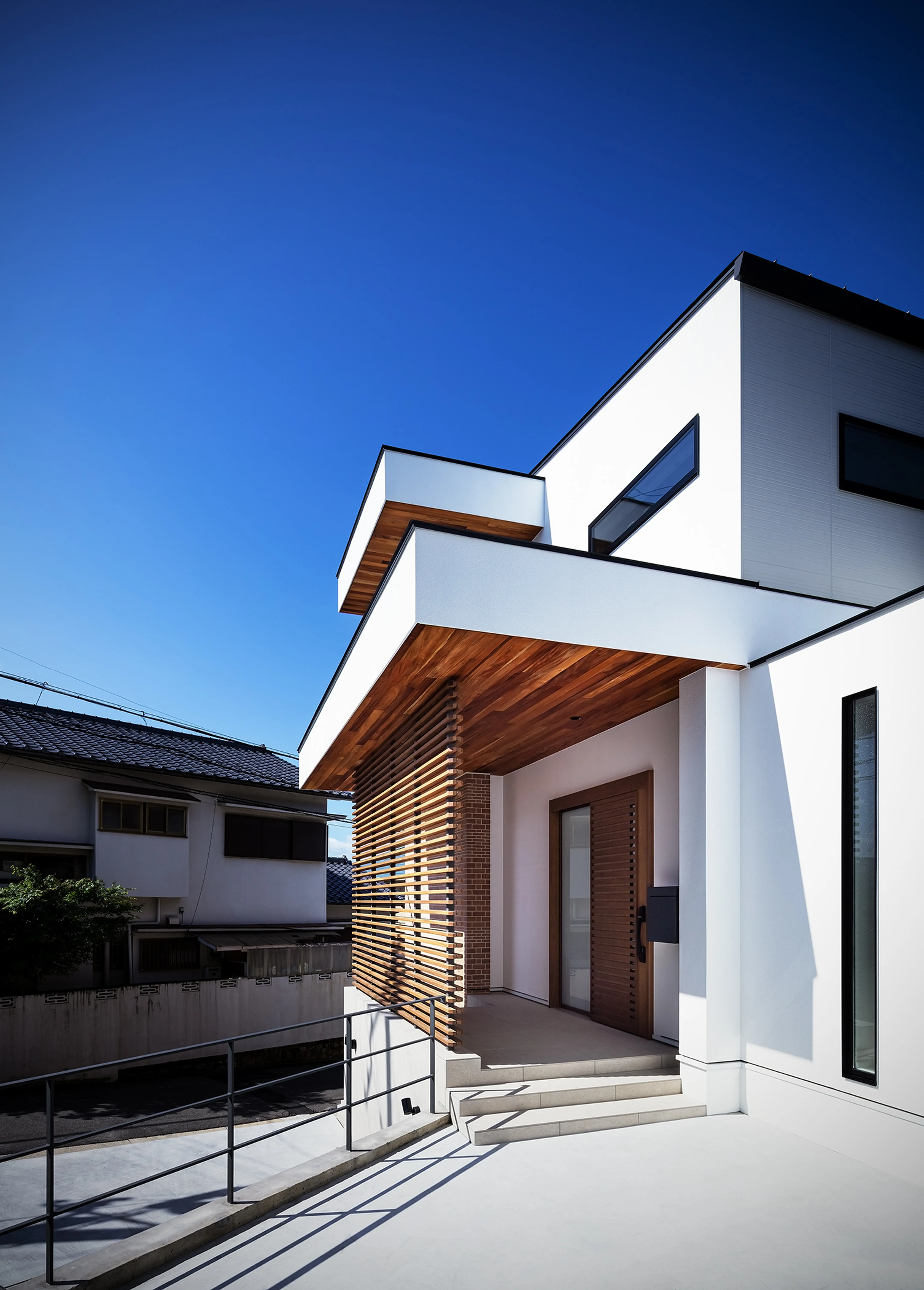
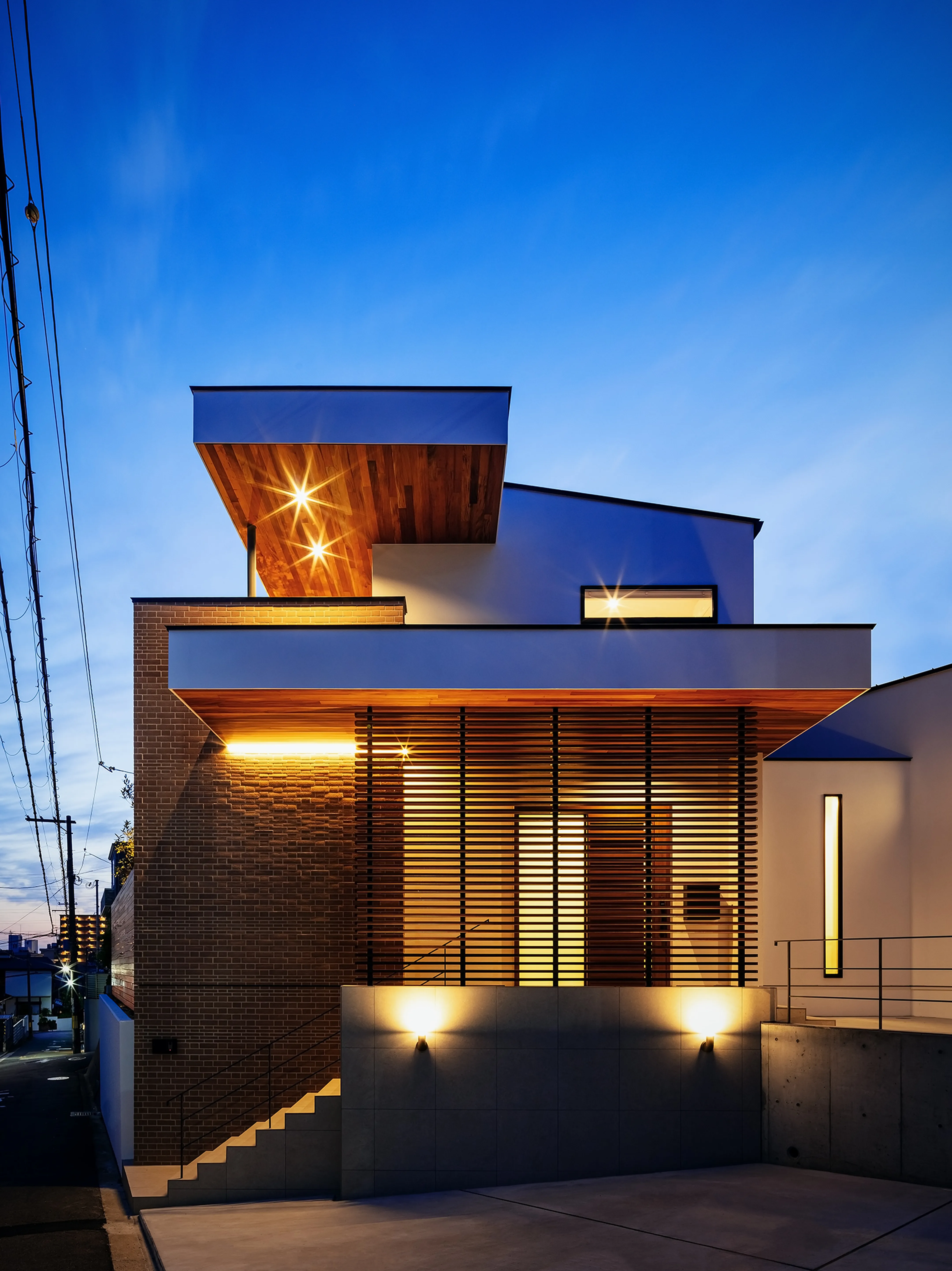
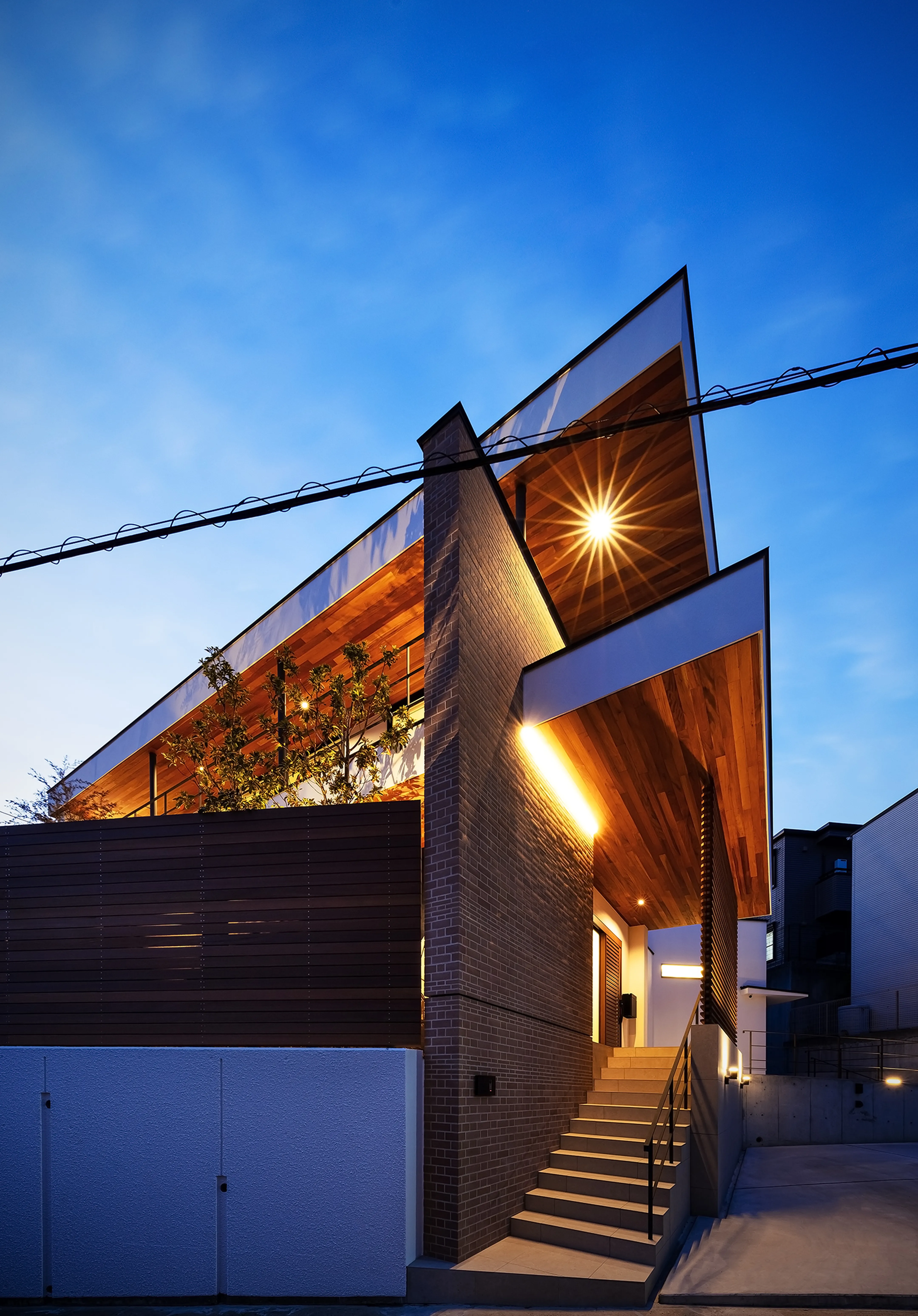
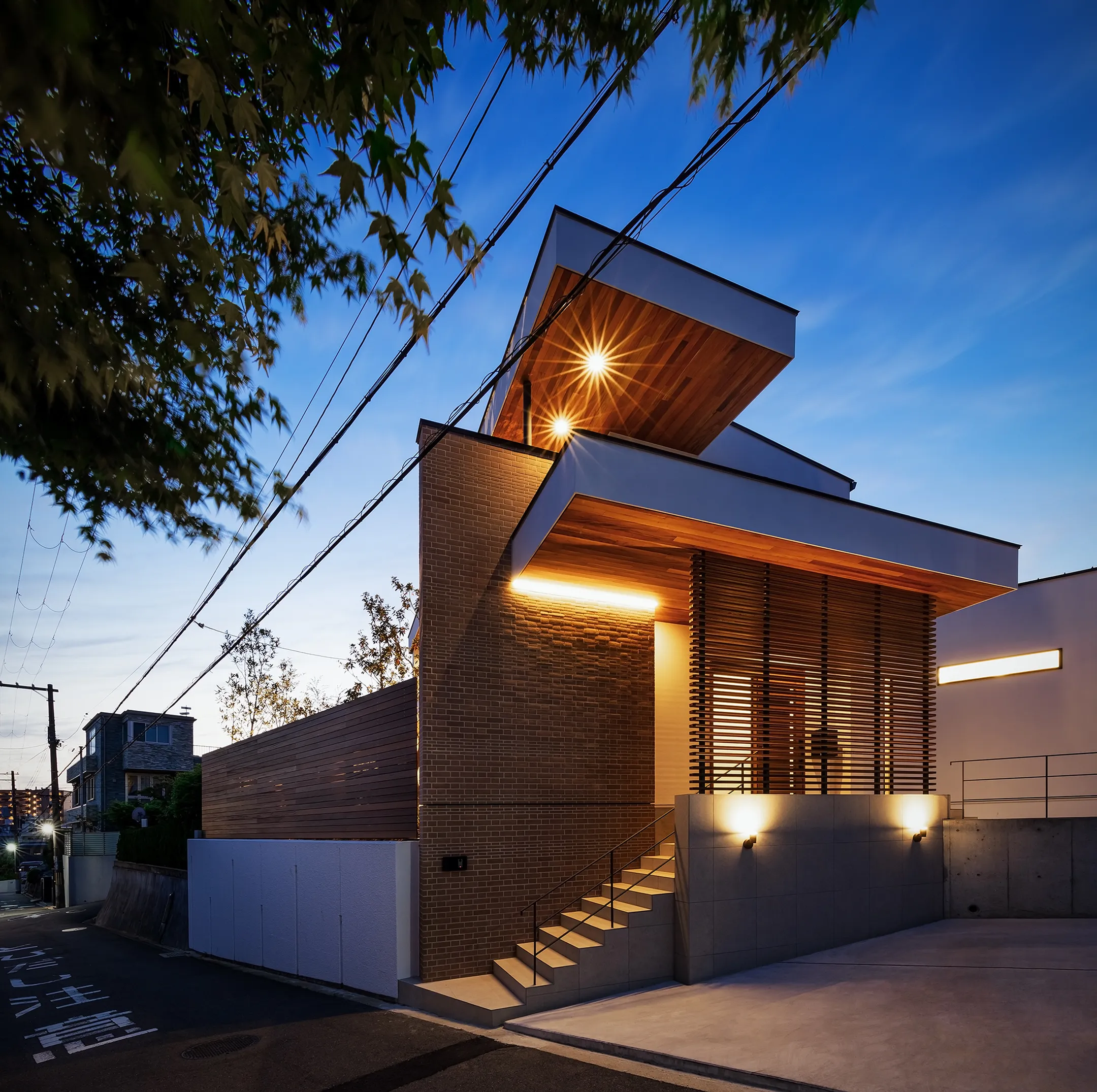
This house stands on a gentle hill where the sky feels broad and open. The area, originally a quiet new-town development, has seen a wave of replacements that have refreshed its character. Today it is regarded as an upscale residential neighborhood lined with spacious houses. Within this context, a two-story wooden residence was planned: building footprint 113.9 m², total floor area 136.6 m².

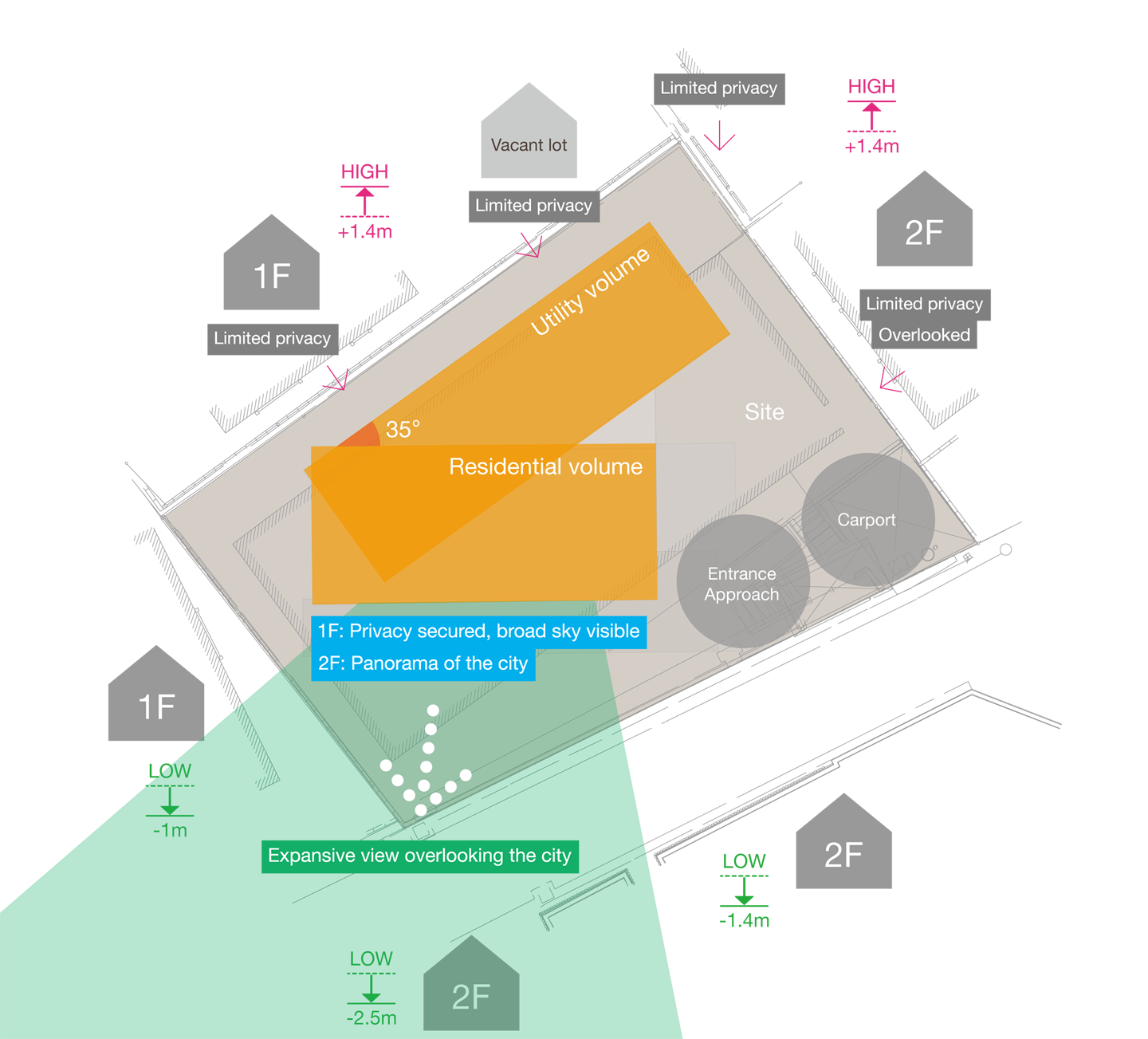
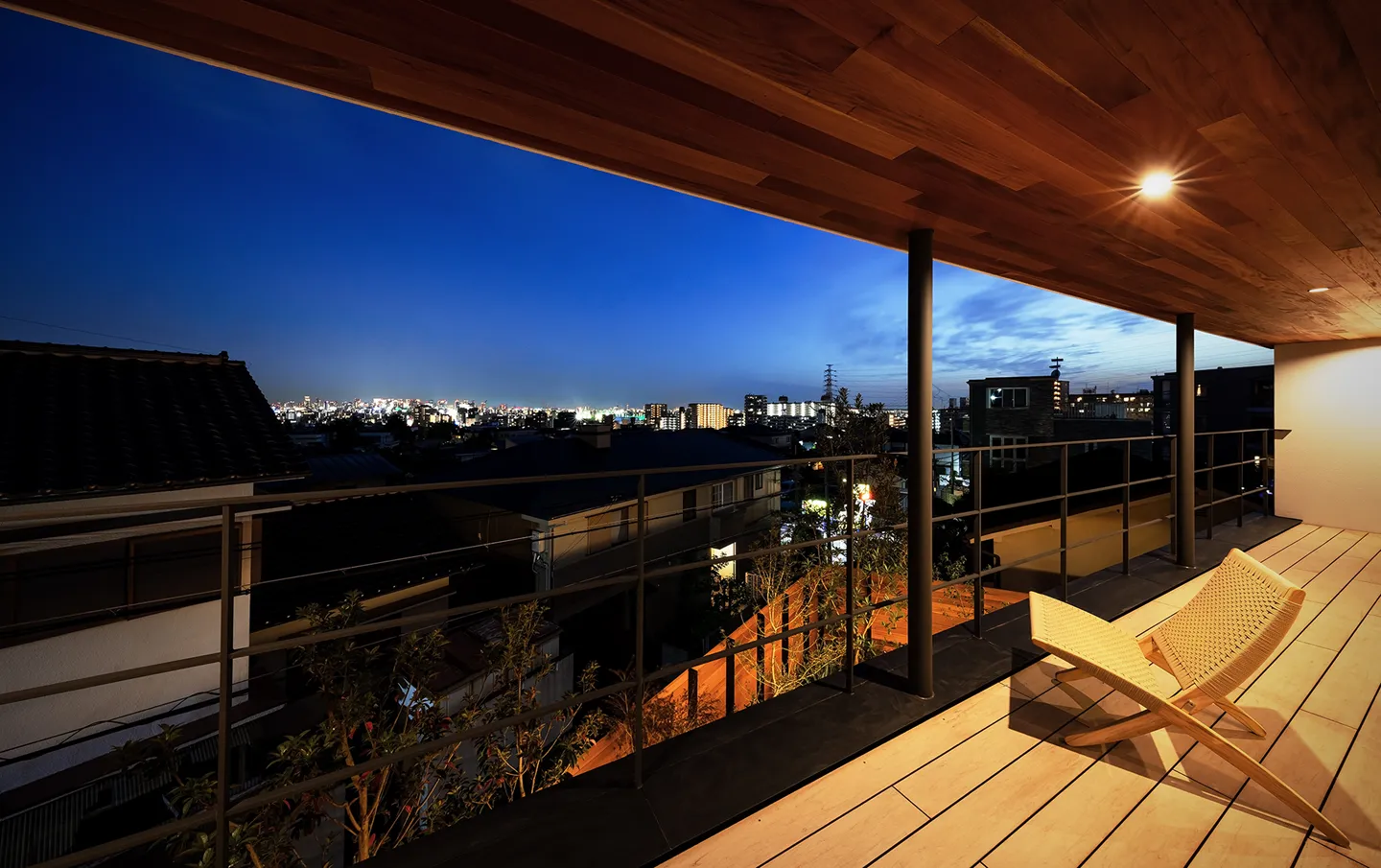
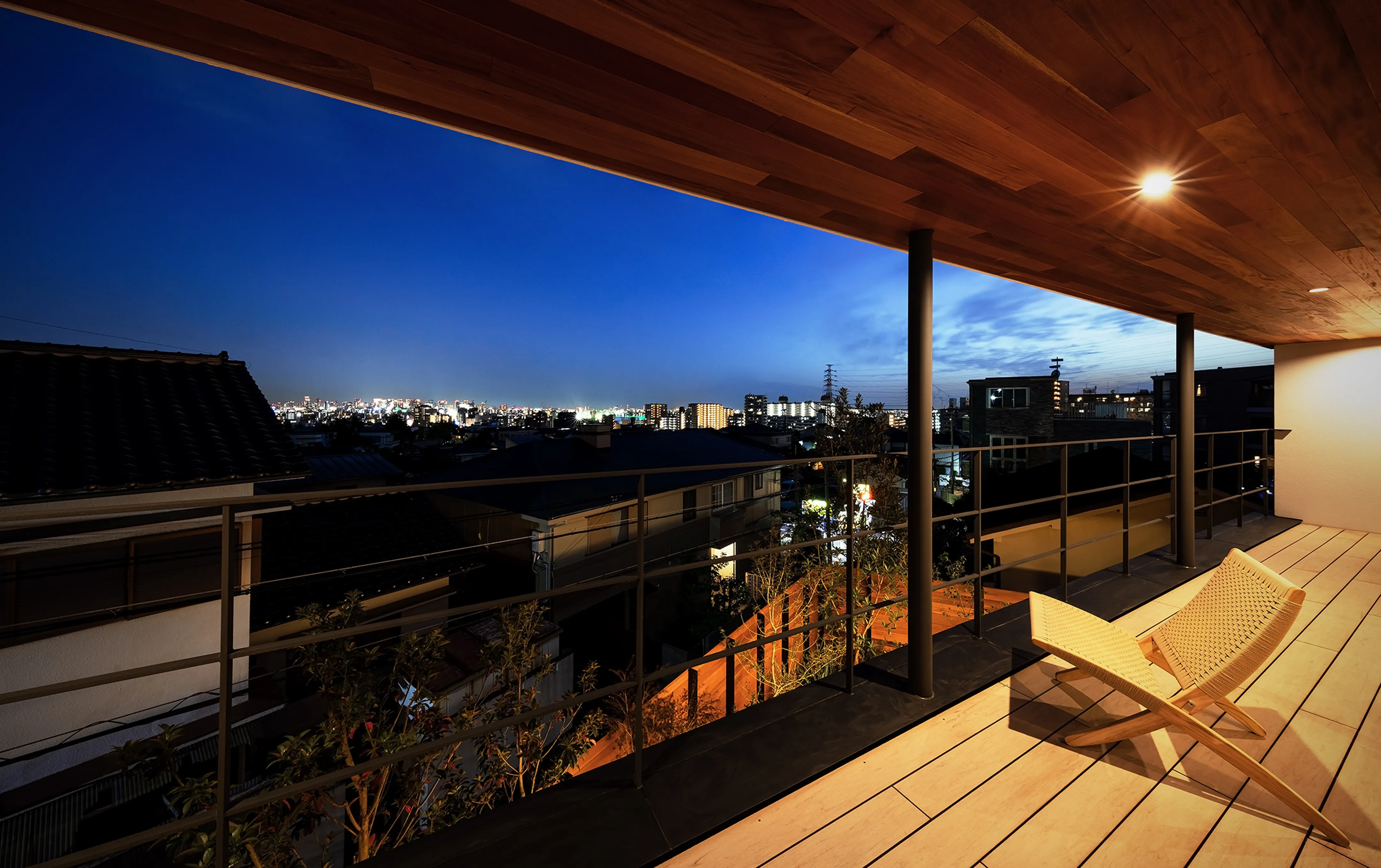
The first consideration in planning was the hillside setting. The land slopes downward toward the south and southwest, offering views toward central Osaka from the upper floor, while even the ground level provides an expansive sense of sky unobstructed by surrounding buildings.

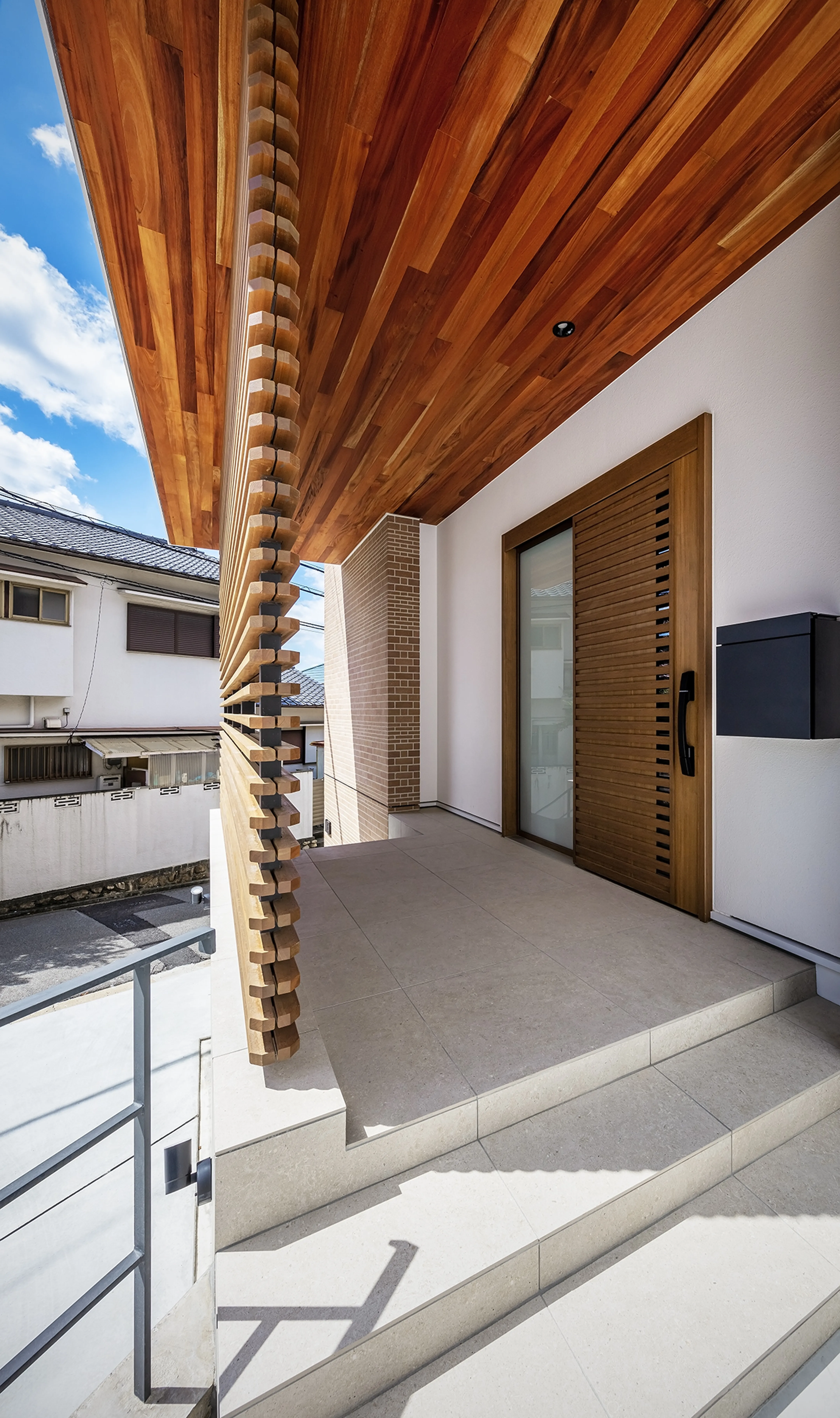
In contrast, the land rises on the north and northeast sides, making privacy a key concern. Because the site itself is higher than the road, the garage needed to be cut into the ground, and to reduce cost it was desirable to reuse the existing excavated garage space as much as possible.

From these conditions, it became clear that the site’s potential would be best expressed by creating a garden facing due south, connecting it directly with the living-dining-kitchen (LDK) through broad openings. From there, the plan unfolded by carefully analyzing each condition, addressing issues one by one with straightforward solutions, and allowing the project to take shape by making full use of the site’s characteristics.

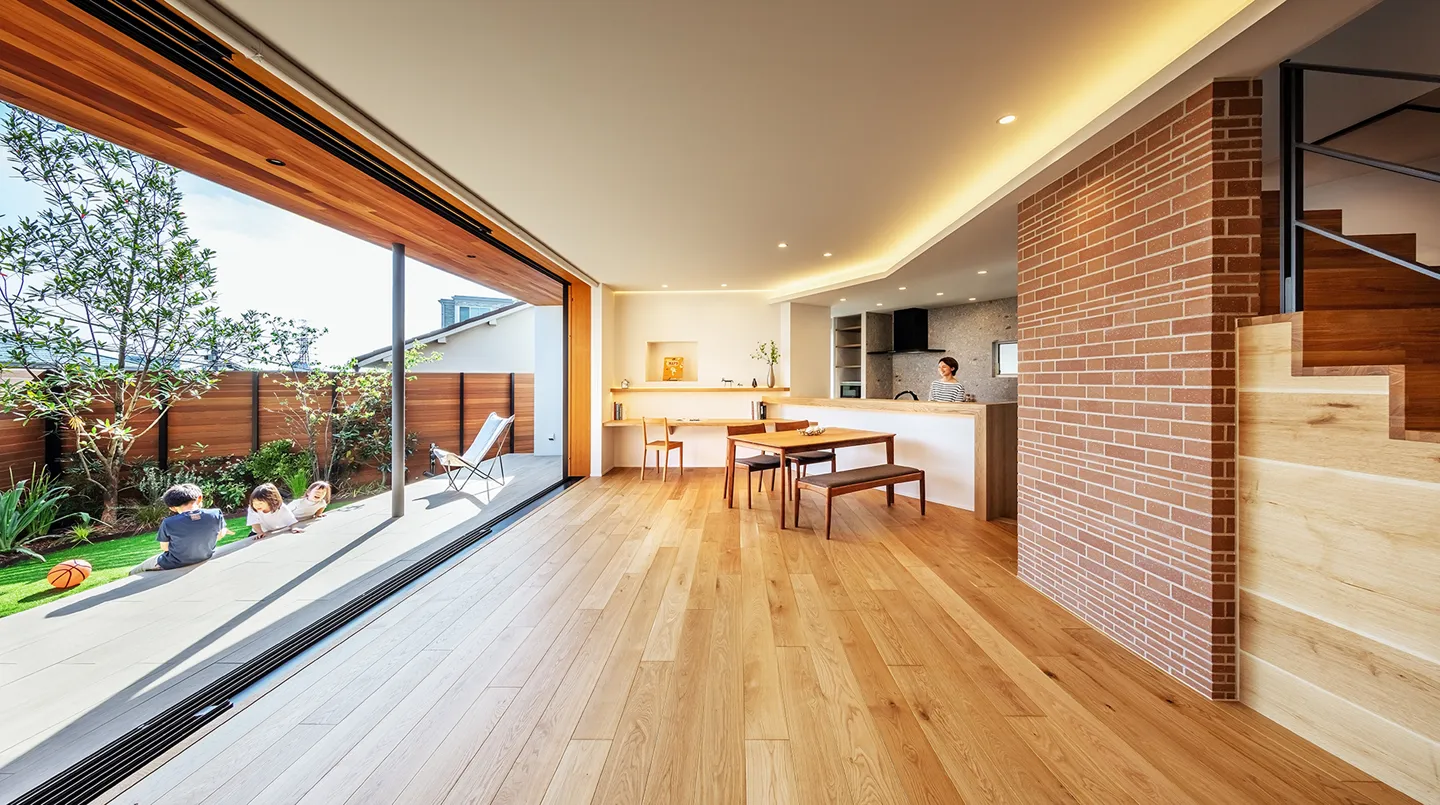
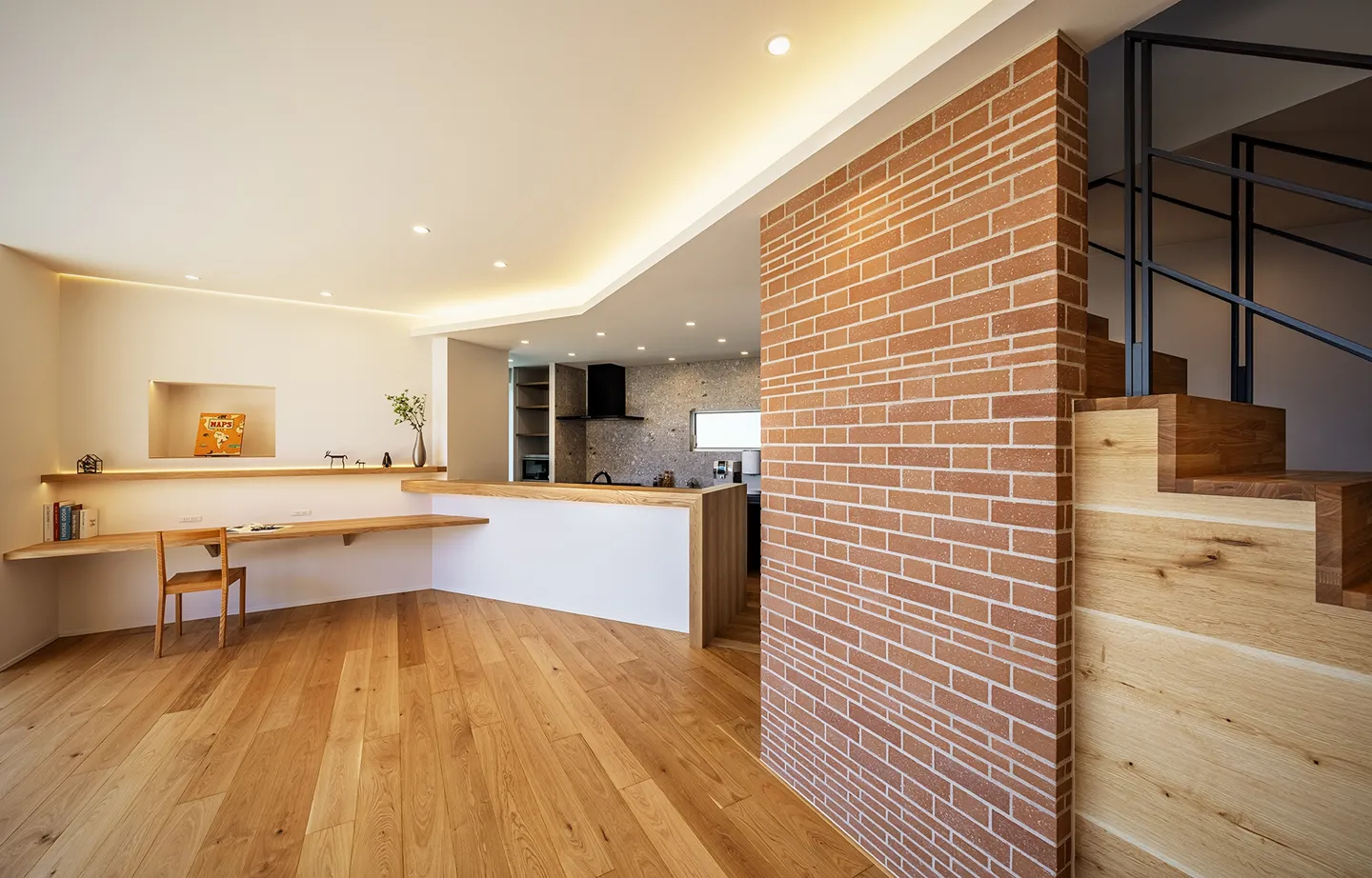
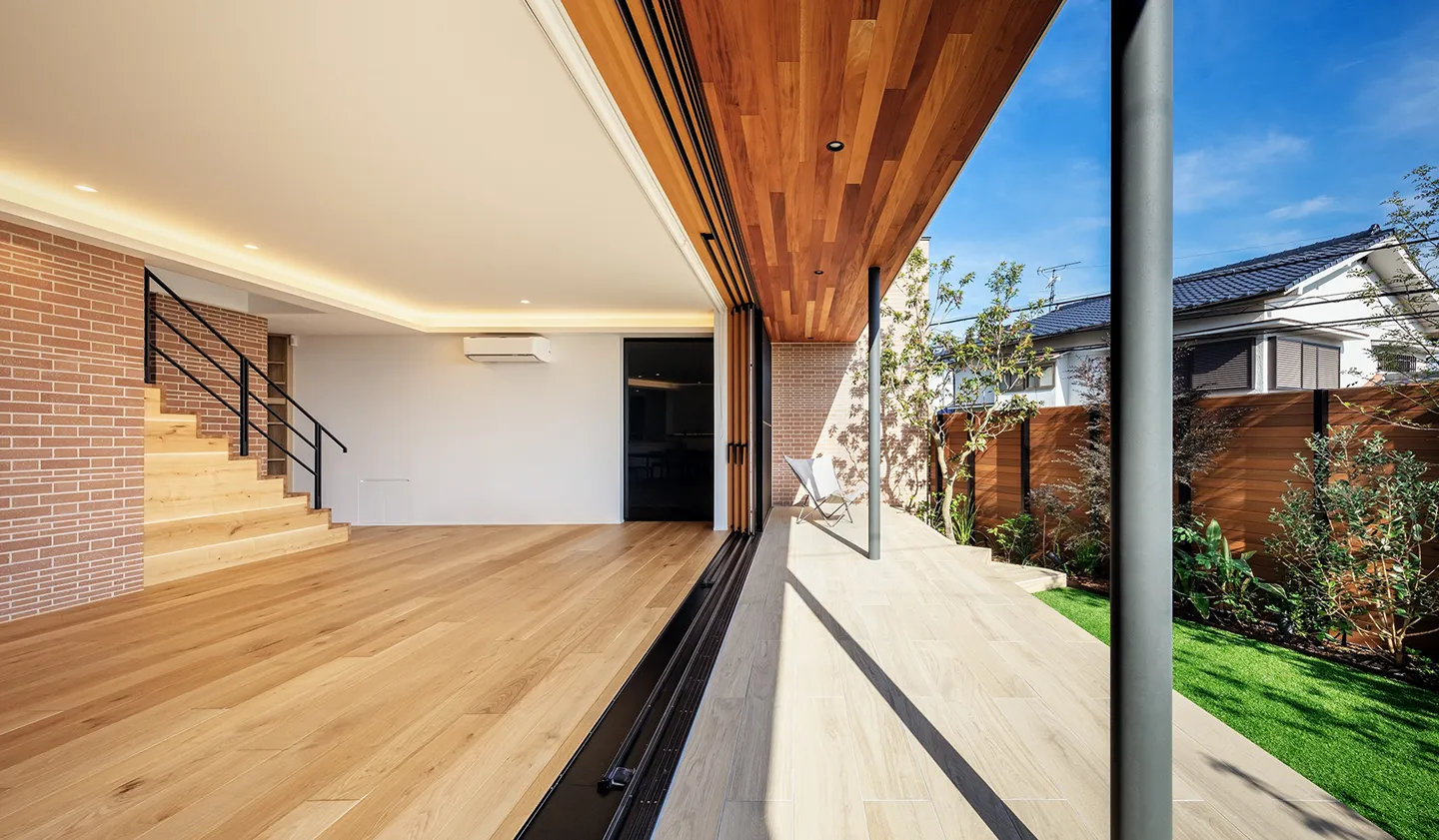
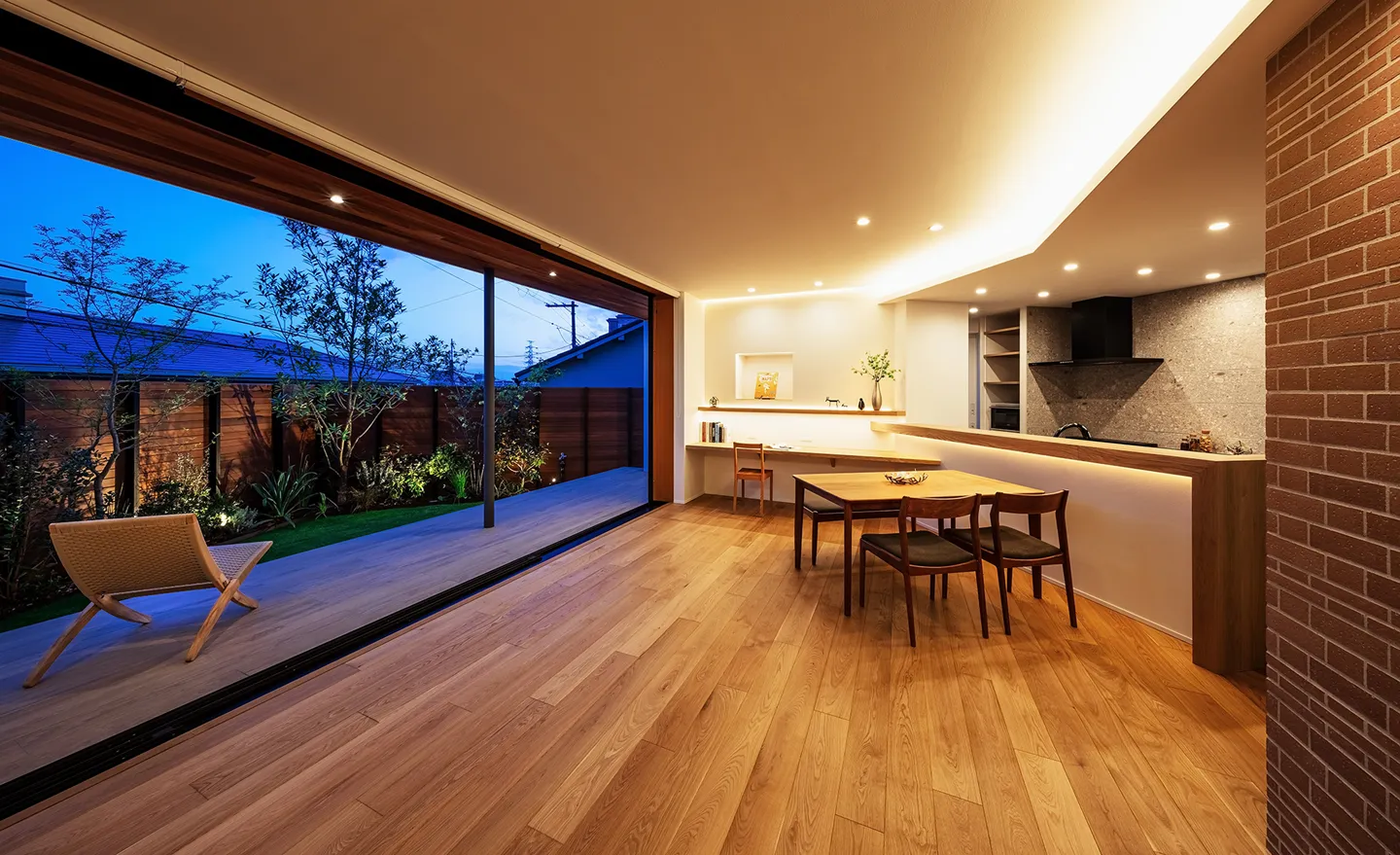
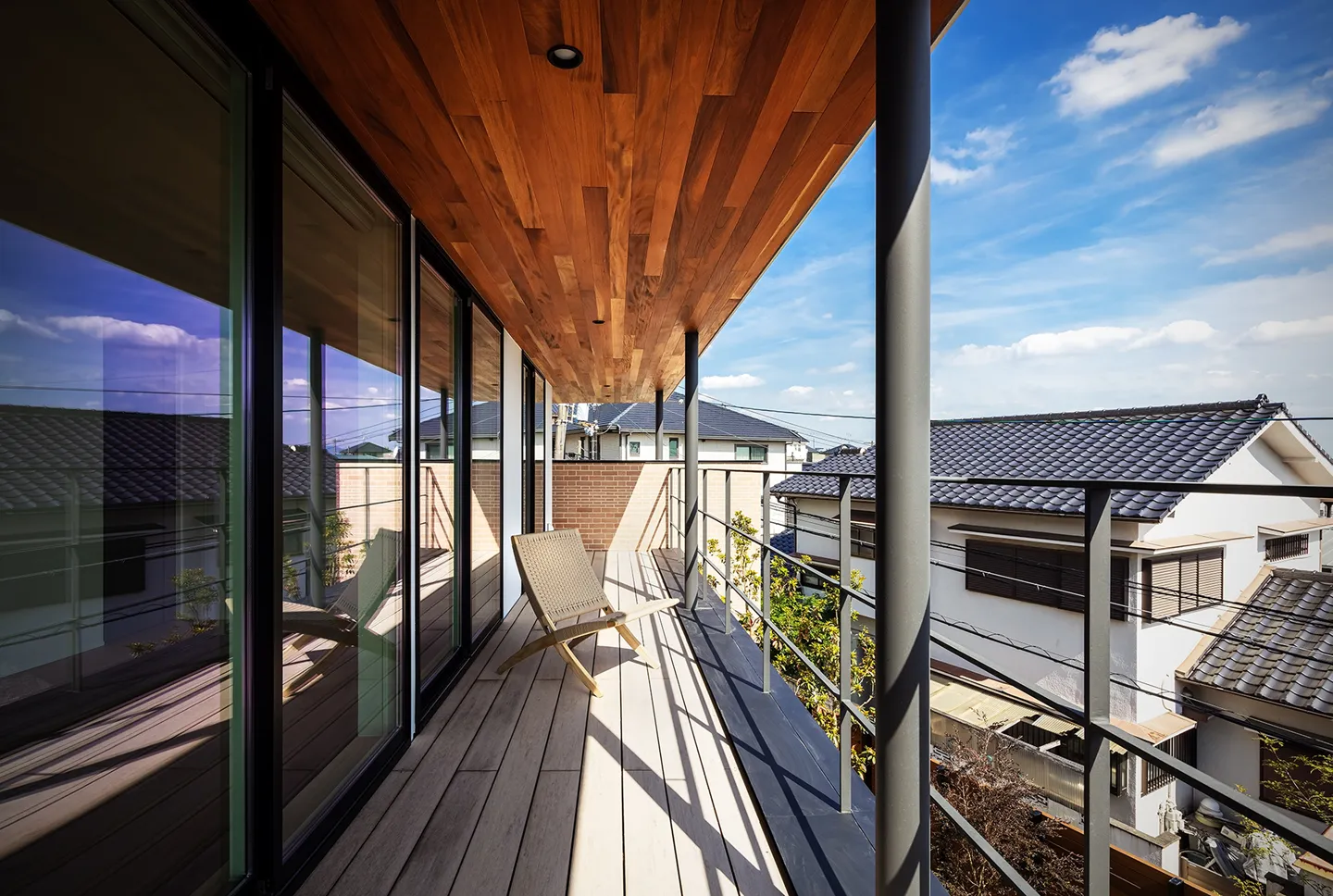
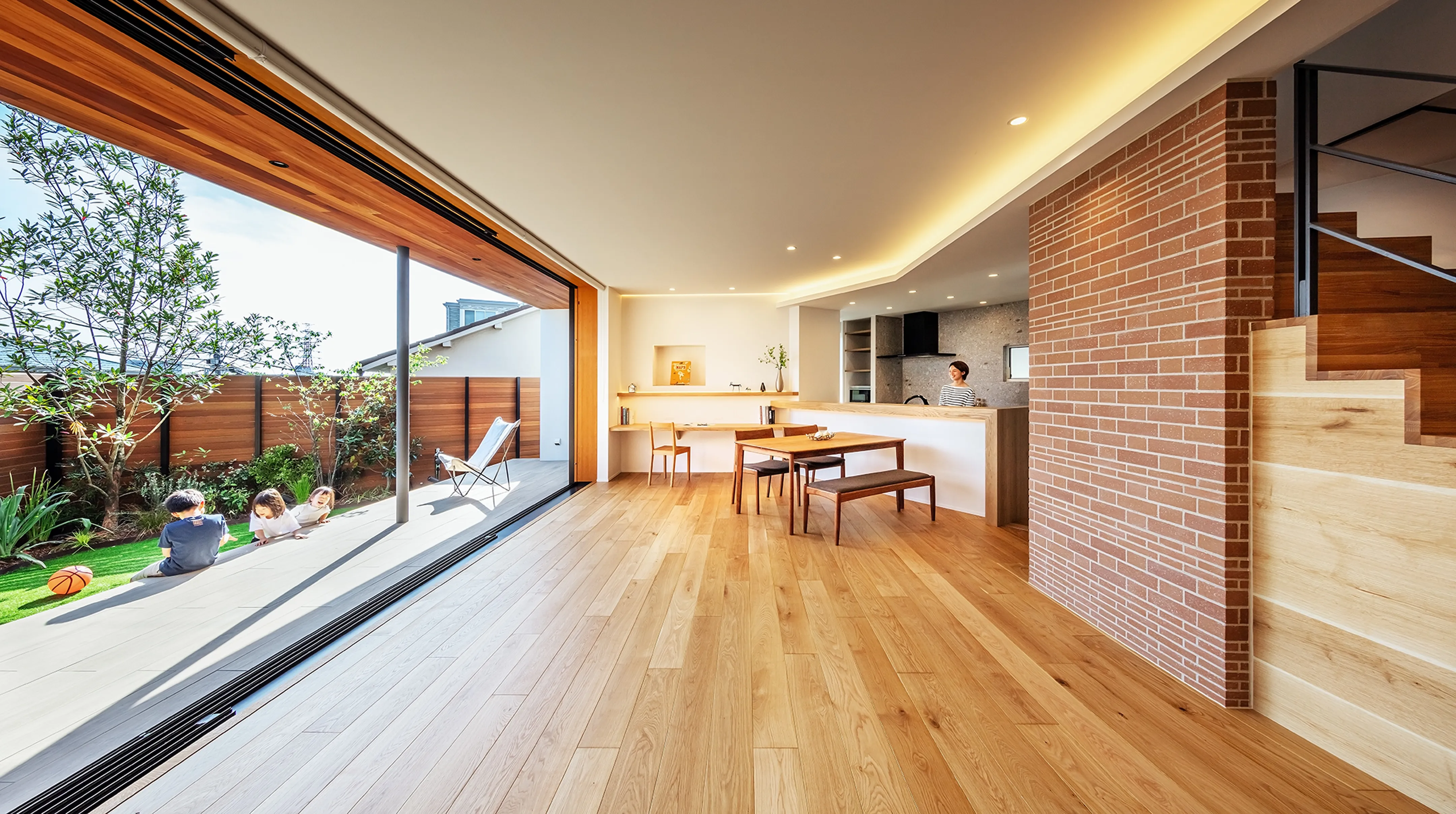
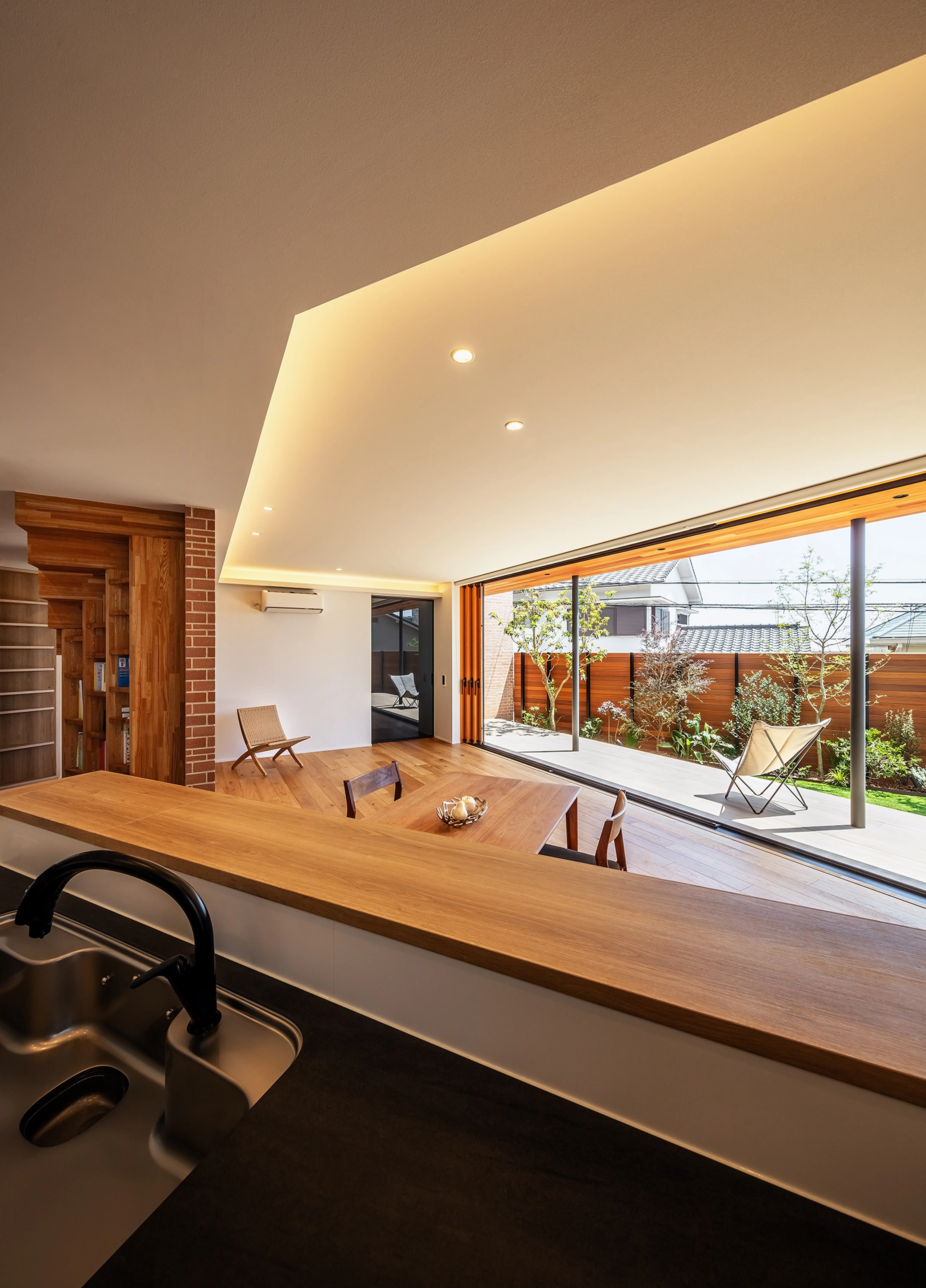
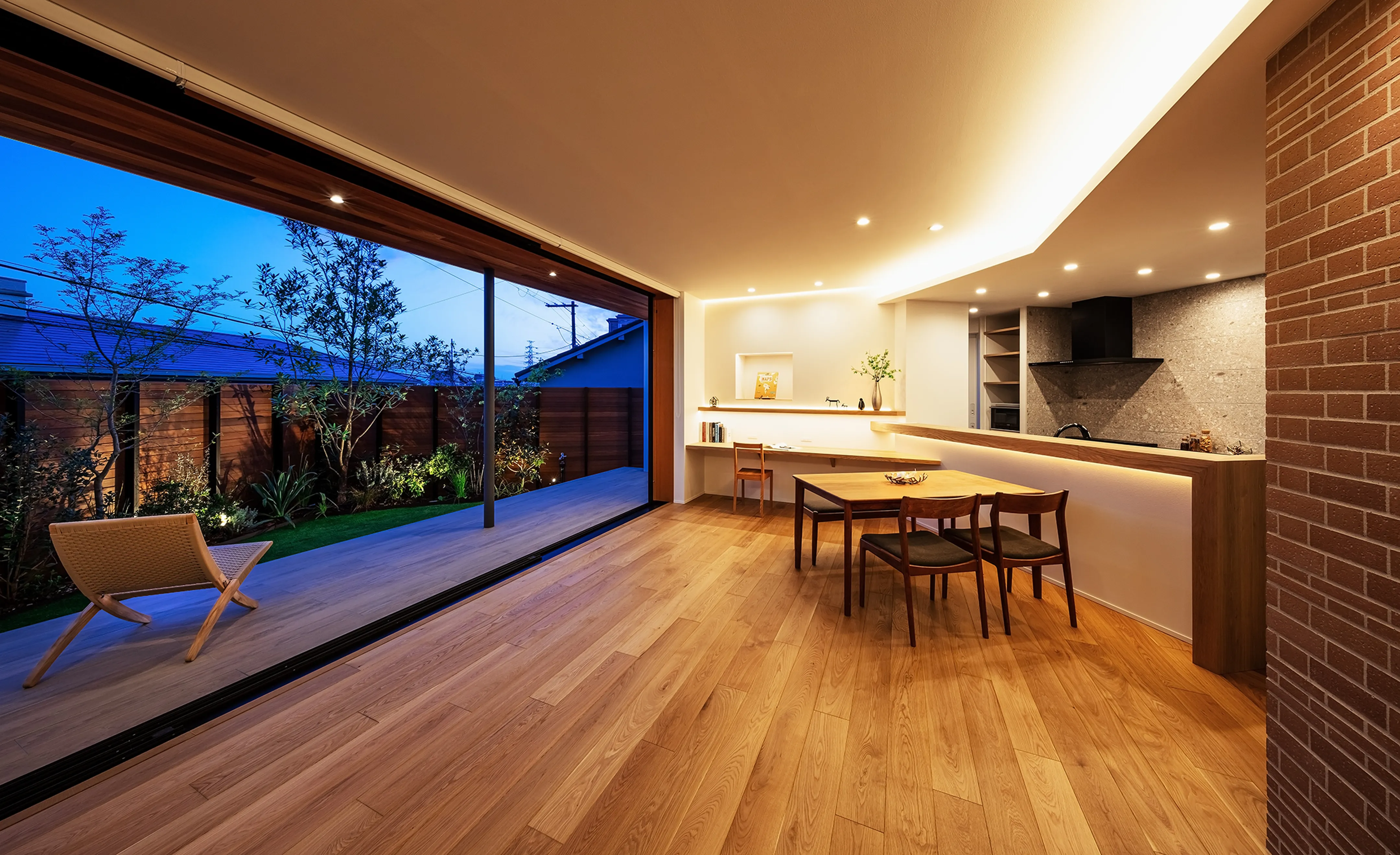
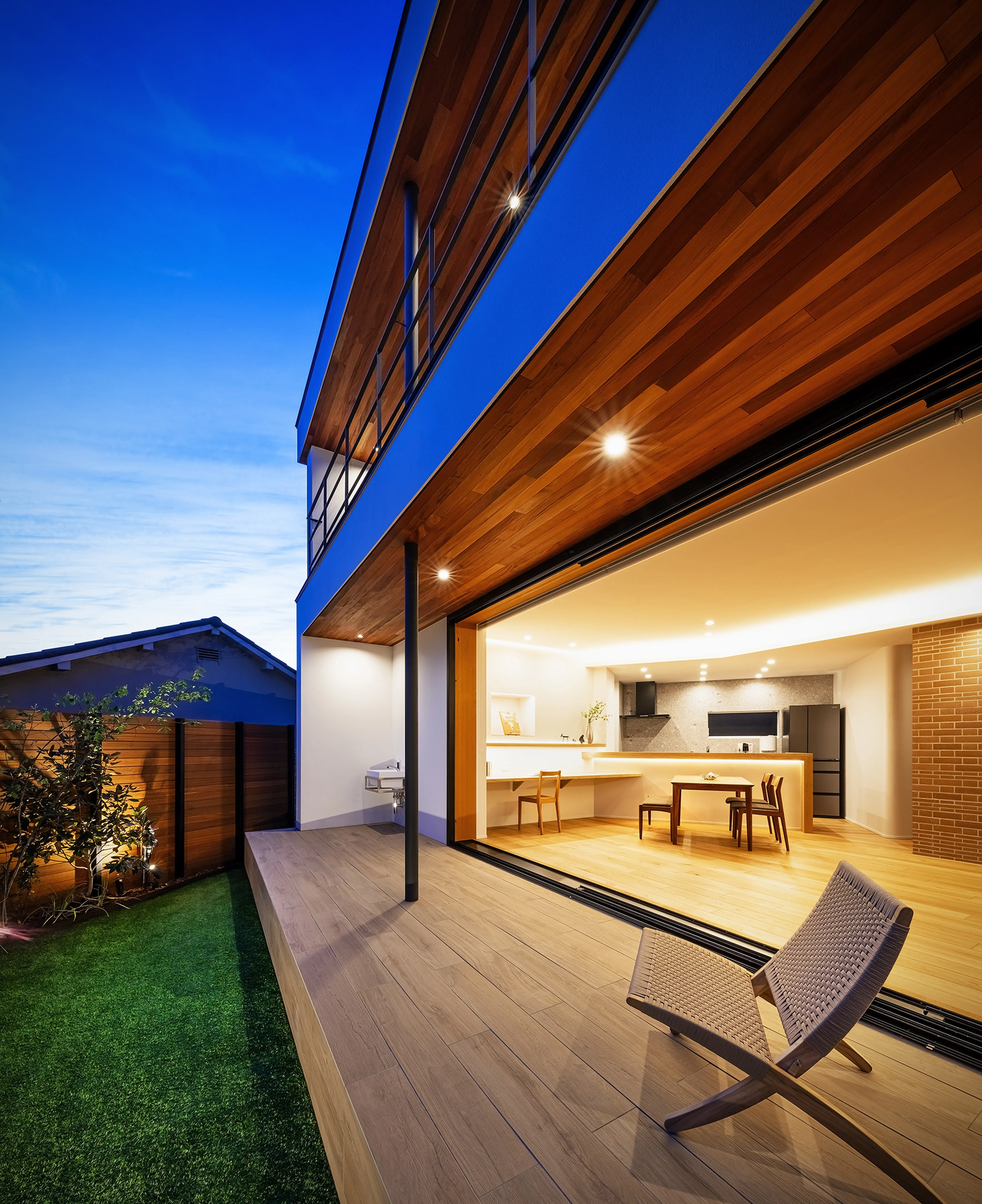
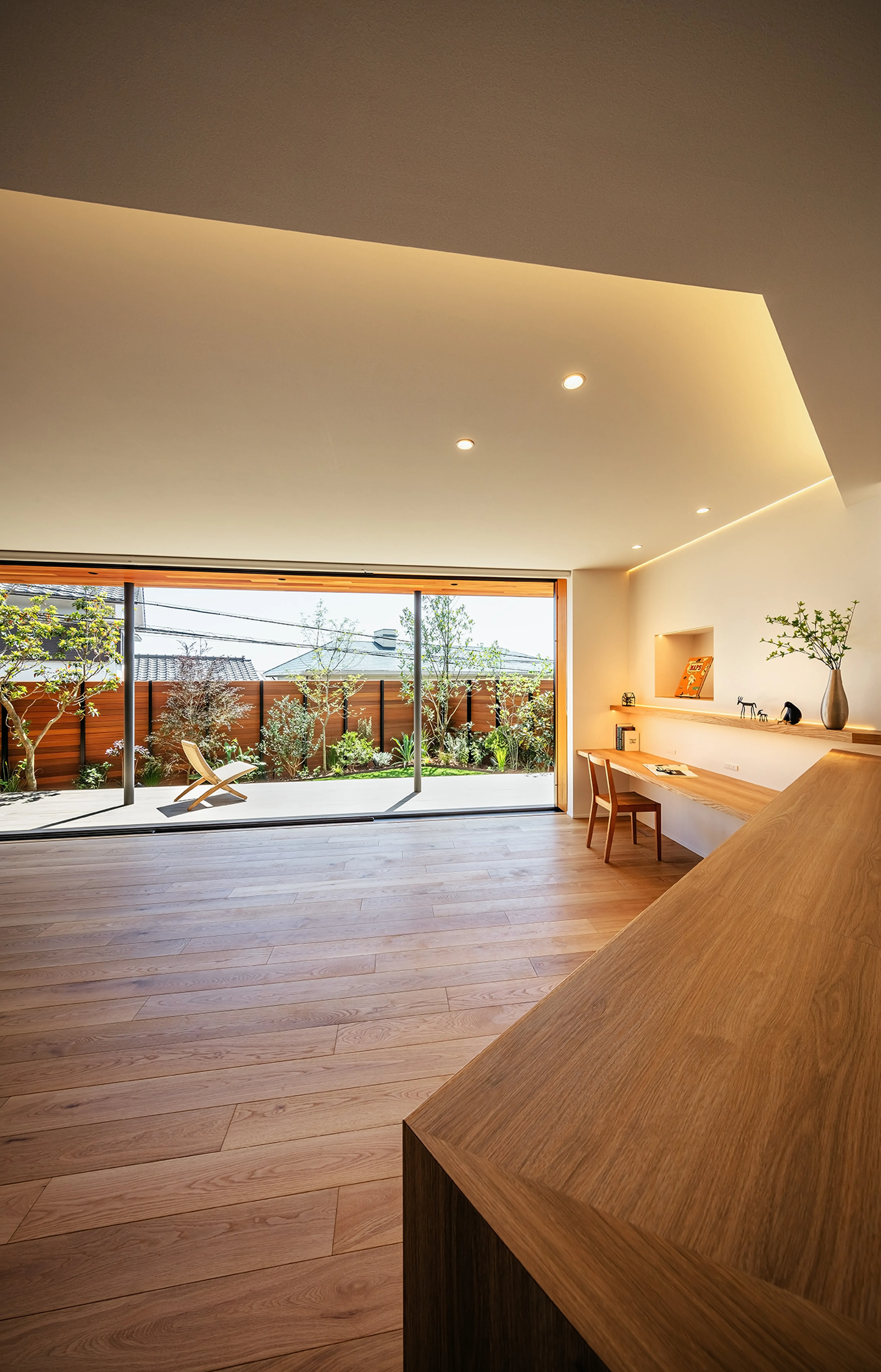
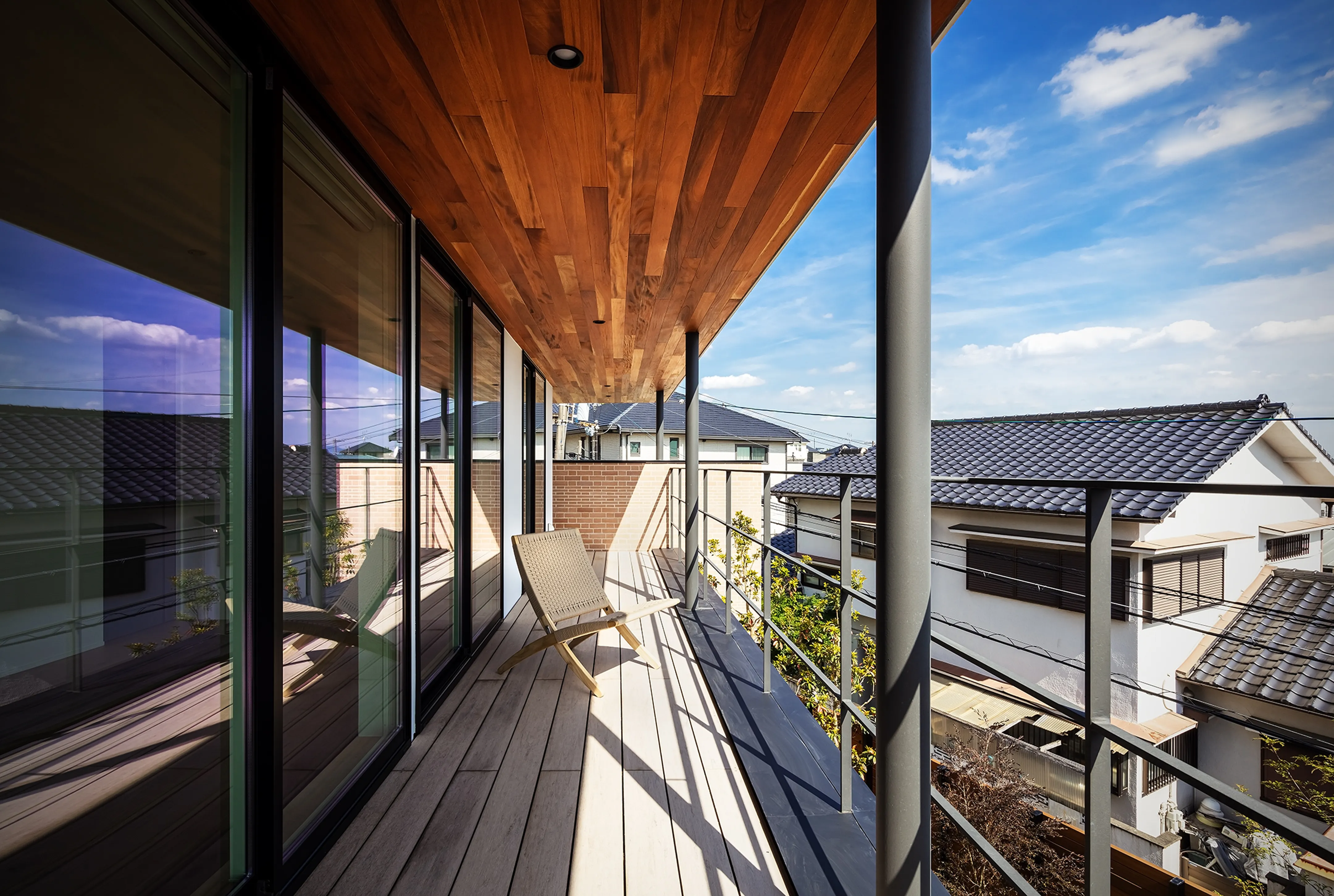
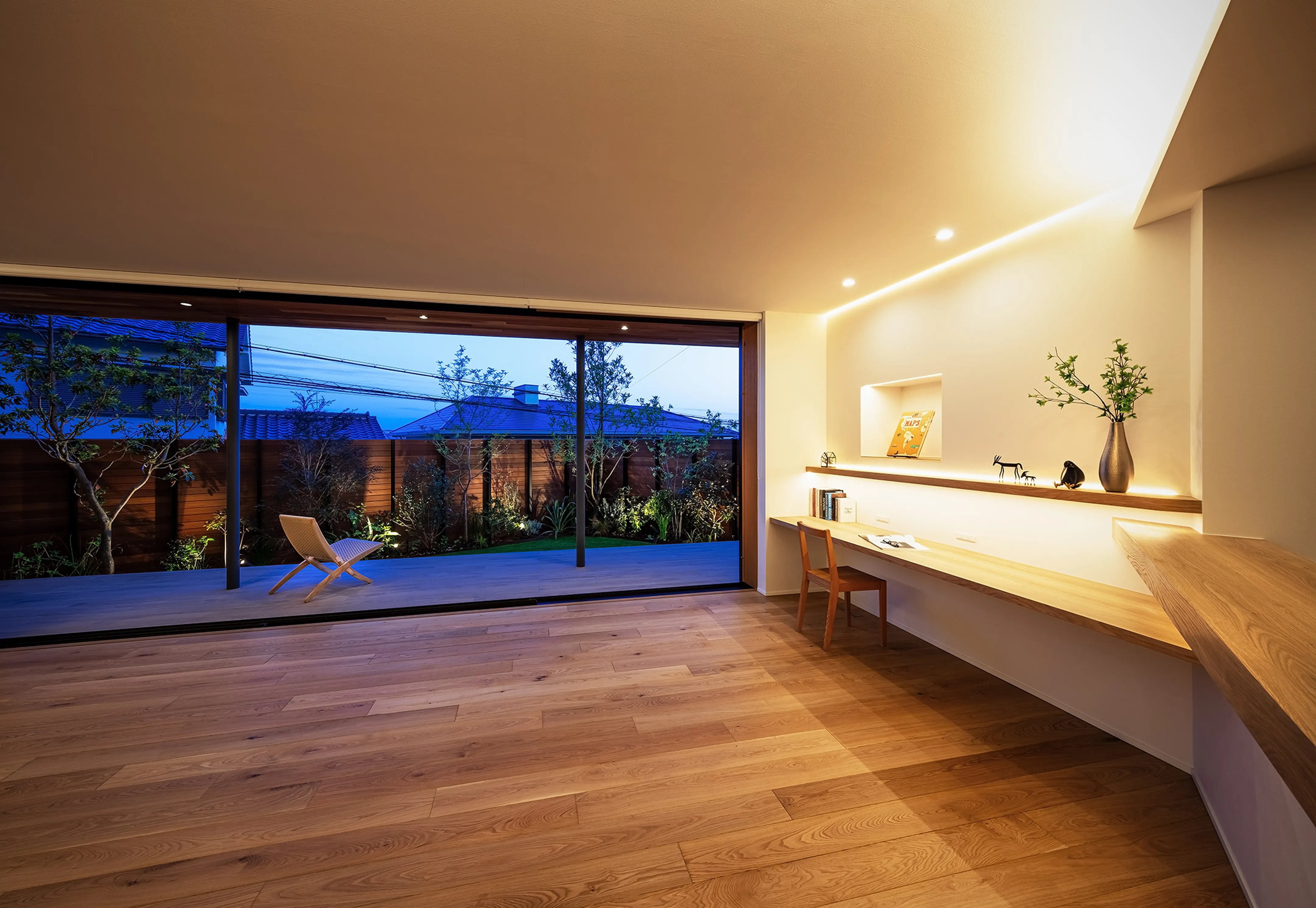
The title is “House on a Hill in Senriyama.” At the core is the first-floor LDK: a 2.6 m ceiling height with a 22-tatami LDK plus a 2.4-tatami library. Together they total 24.4-tatami, extending further to a 15-tatami engawa terrace (engawa: a veranda-like transitional strip along the house) that opens to the garden and wide sky, forming a very open space. On the second floor, each bedroom is provided with a terrace overlooking the view. It is a residence that fully enjoys the advantage of being on a hill.

Outline
  • A house planned on a hillside.
  • To utilize the site, residential and utility spaces are divided into separate volumes.
  • By grouping utility functions to the north side, the LDK was maximized while ensuring convenient daily circulation.
  • Removal of the existing floor level differences and opening of the concealed ceiling cavity allowed for ceiling heights of 2.7–3 meters.
  • Bedrooms are kept compact but each connects to a terrace, avoiding any sense of confinement.

Shaping

Site Analysis

direction

Site analysis—open for view, close for privacy.

Plans

direction

1F Floor Plan
2F Floor Plan

Features

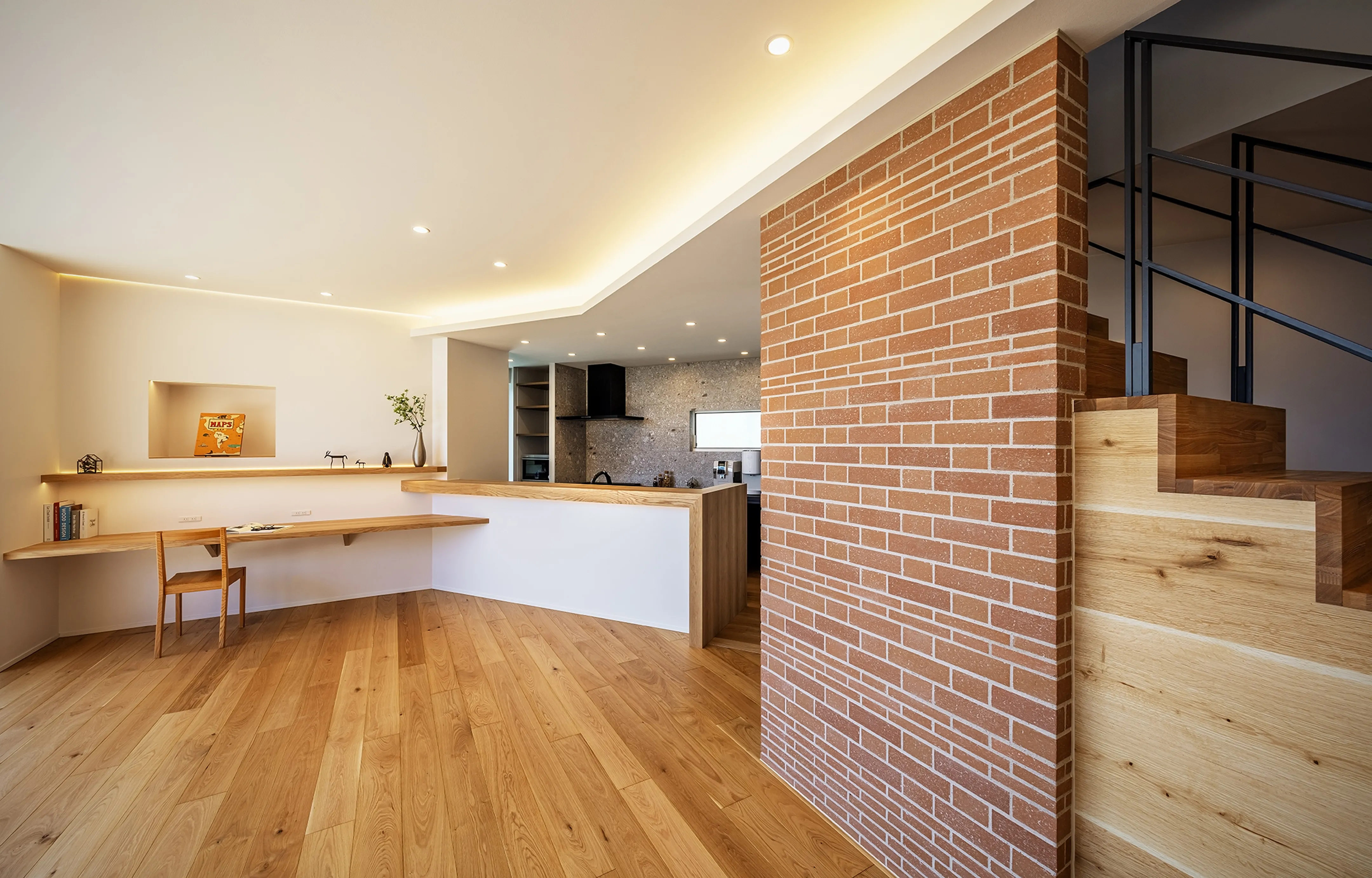
Brick wall
as a symbol

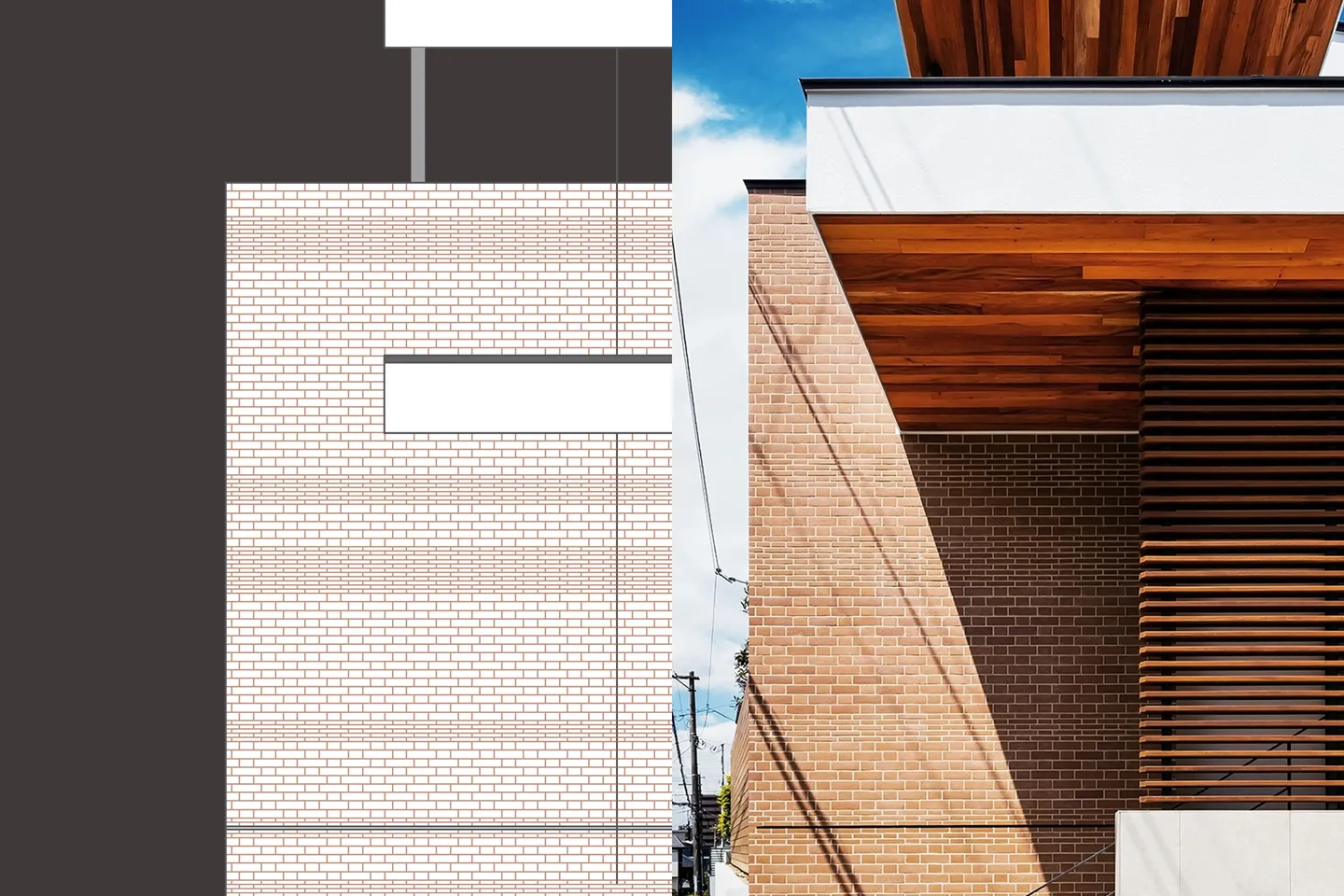
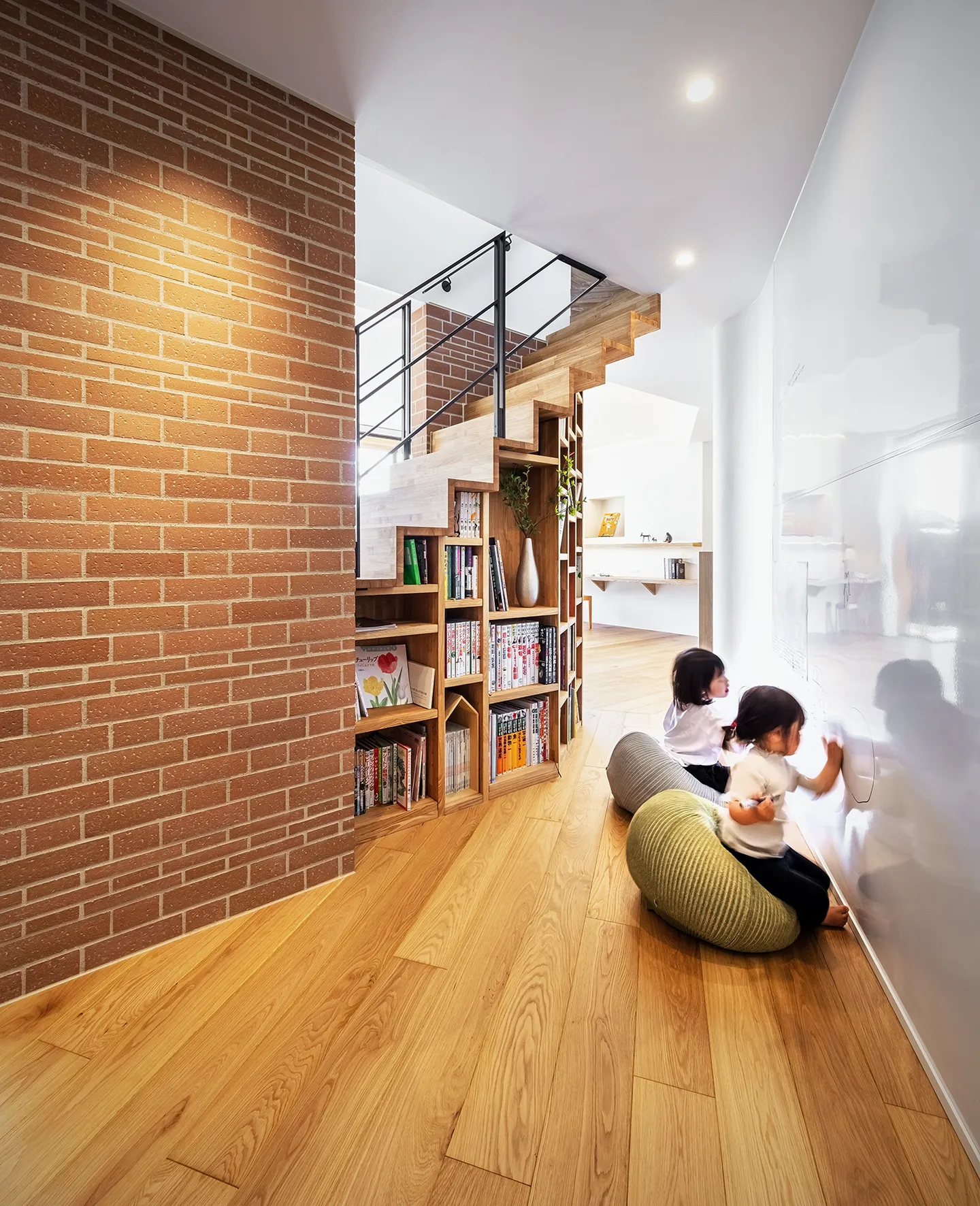
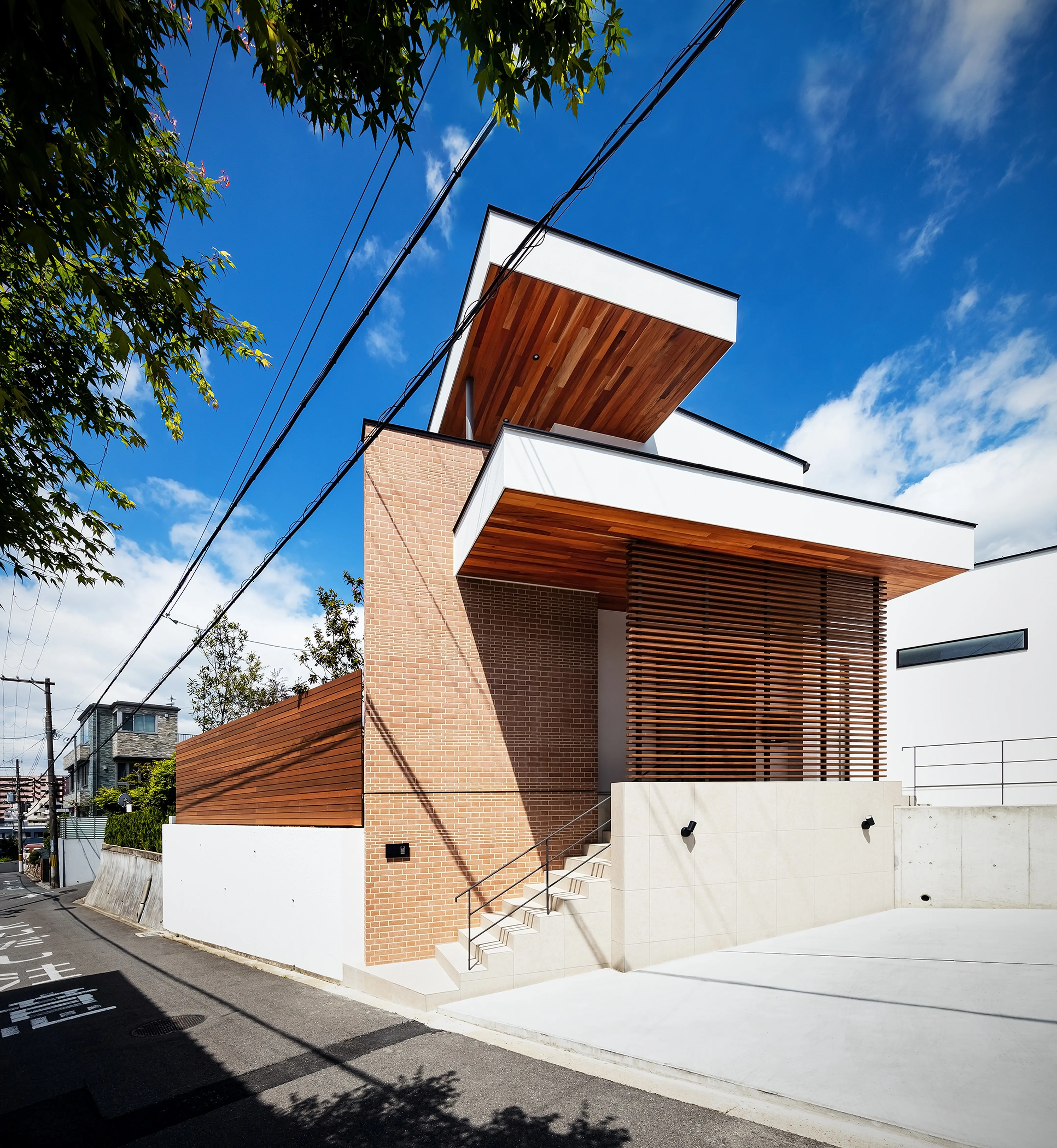
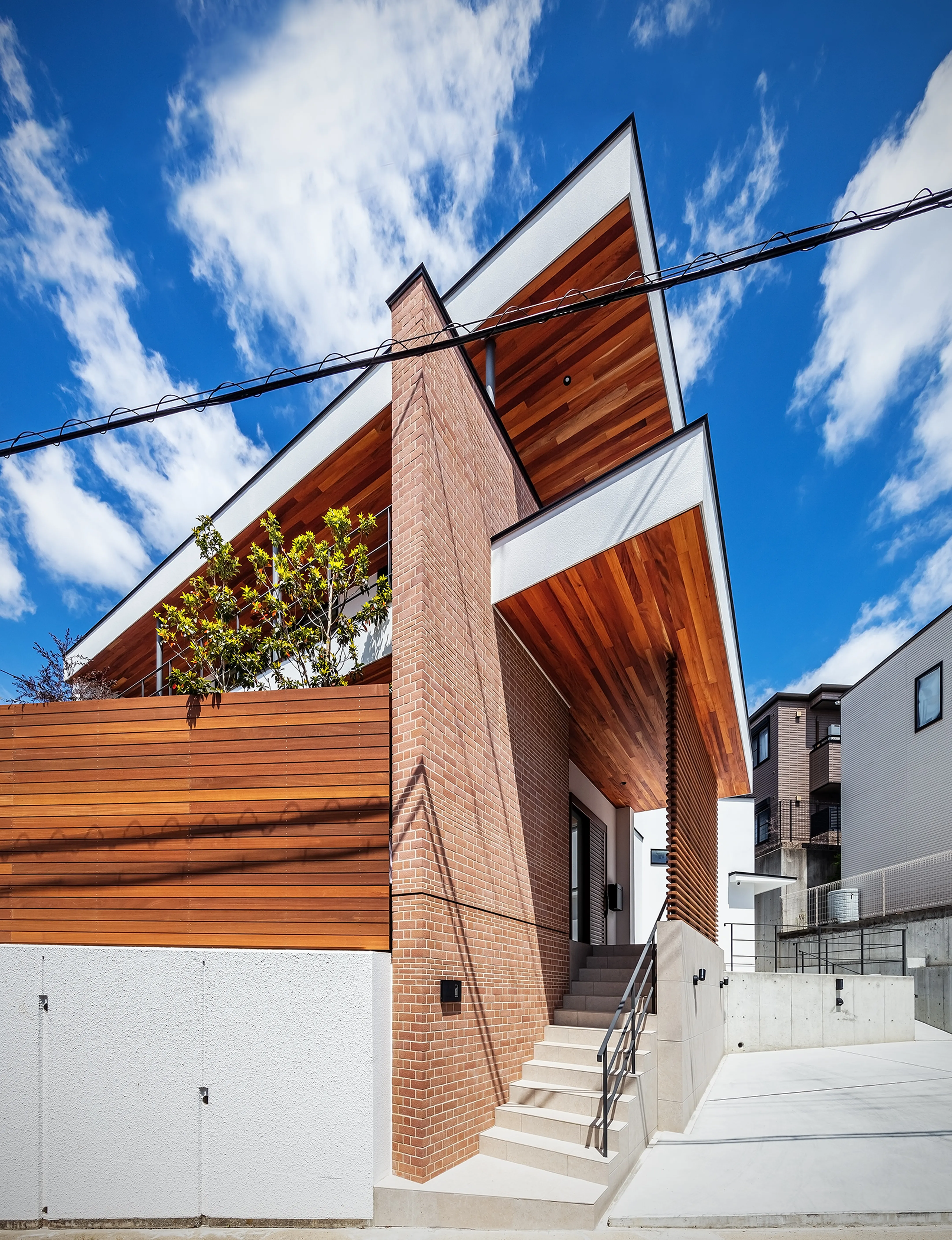
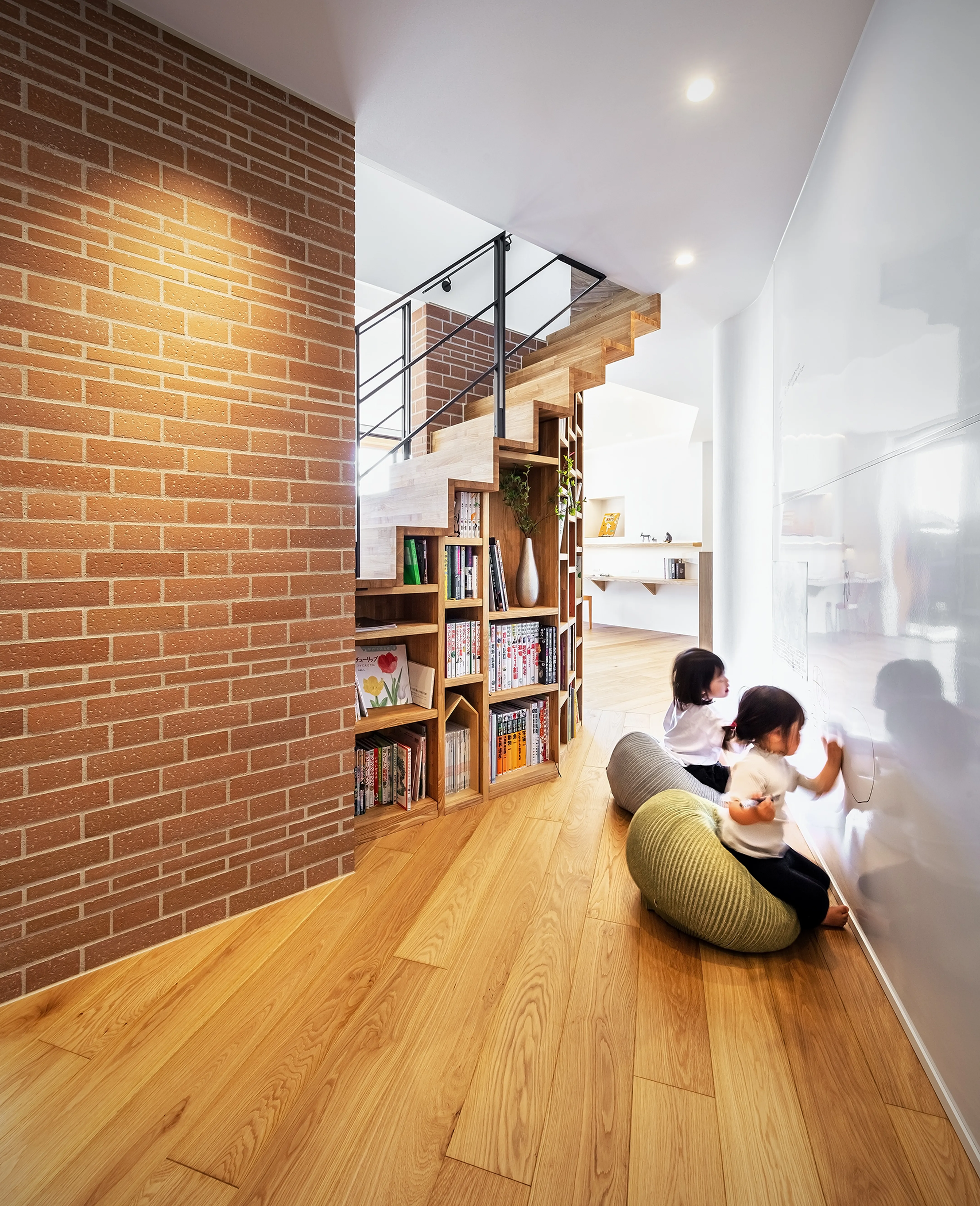
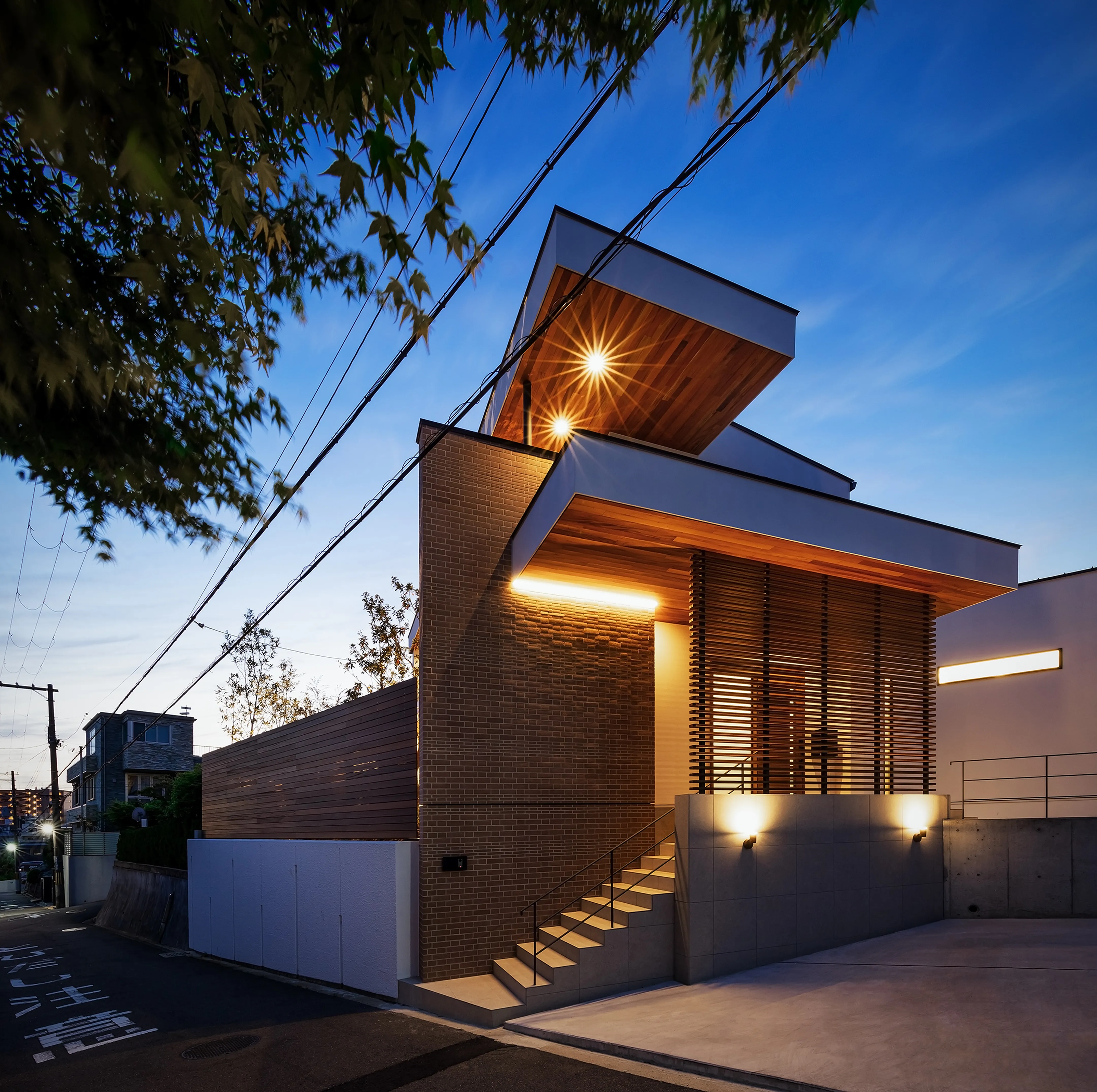
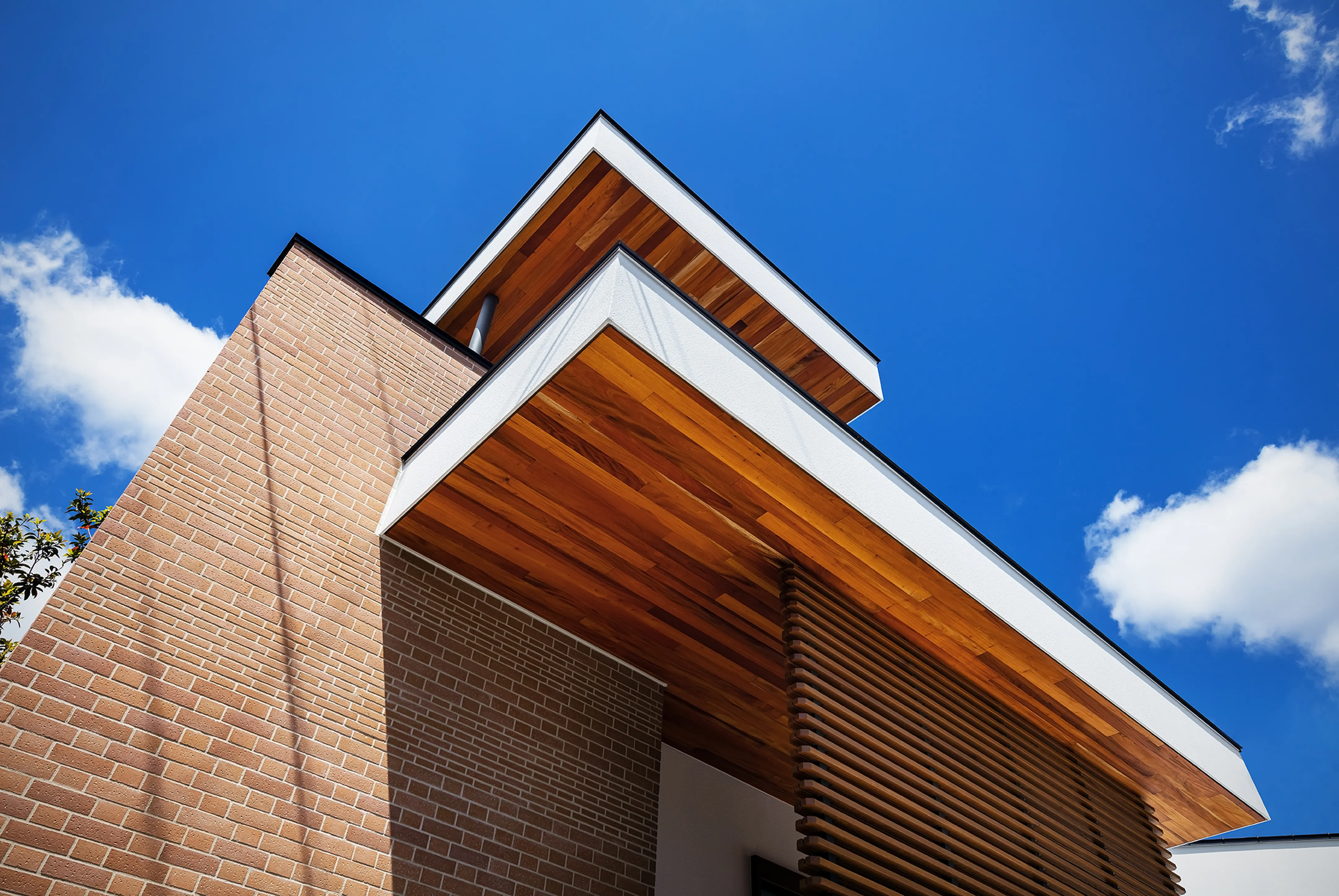
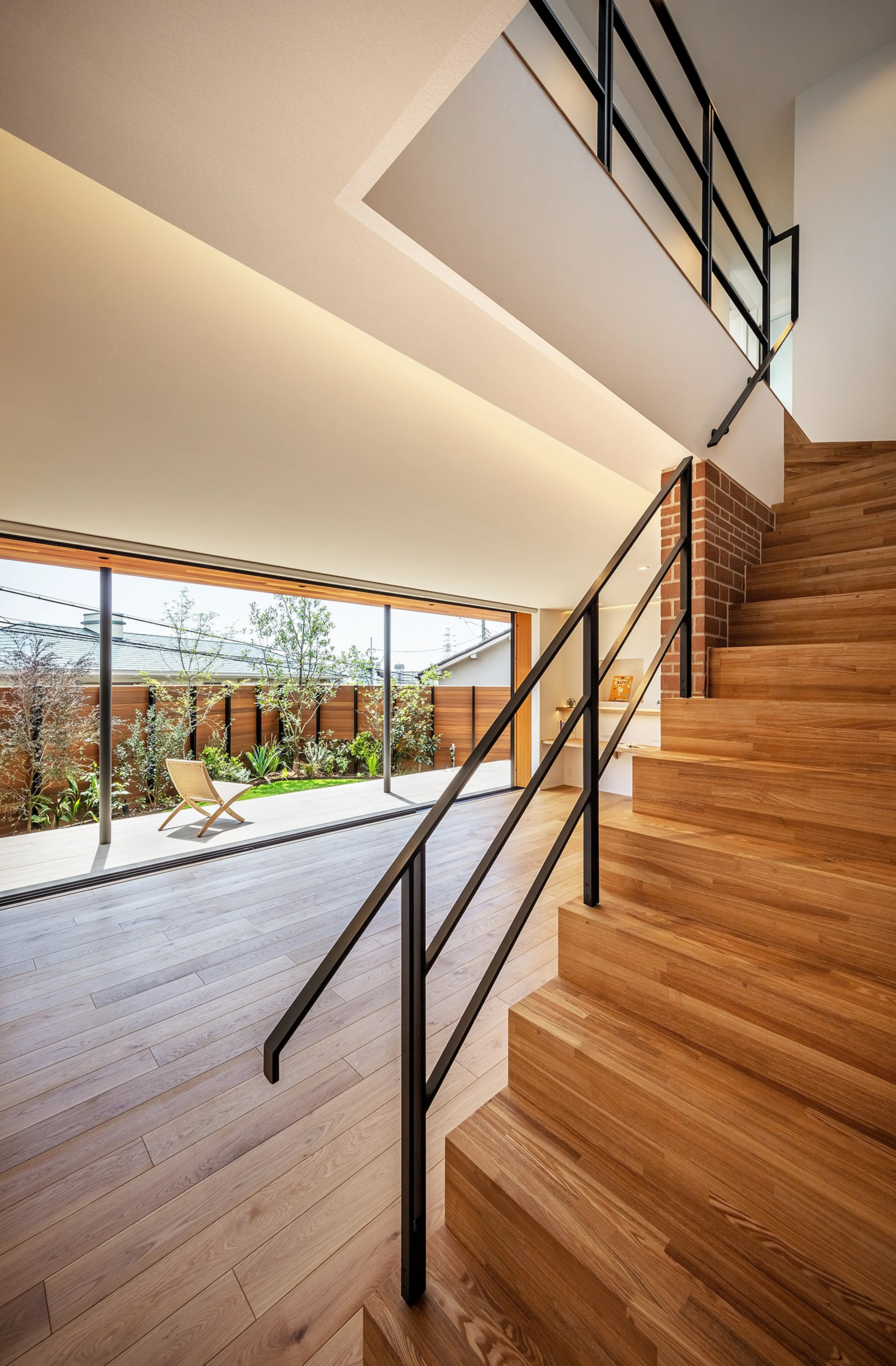
Selected exterior and interior LDK walls feature brickwork in a patterned bond, serving as a design focal point. Although brick can carry an old-fashioned image, when carefully handled it conveys intellectual and historical depth.

The bricks were ordered from KUNISHIRO Company, Limited. Through close communication with their staff, numerous prototypes were made to refine color tone, texture, size, and jointing method before final production. The result was well received by the clients.

Open LDK
and engawa terrace

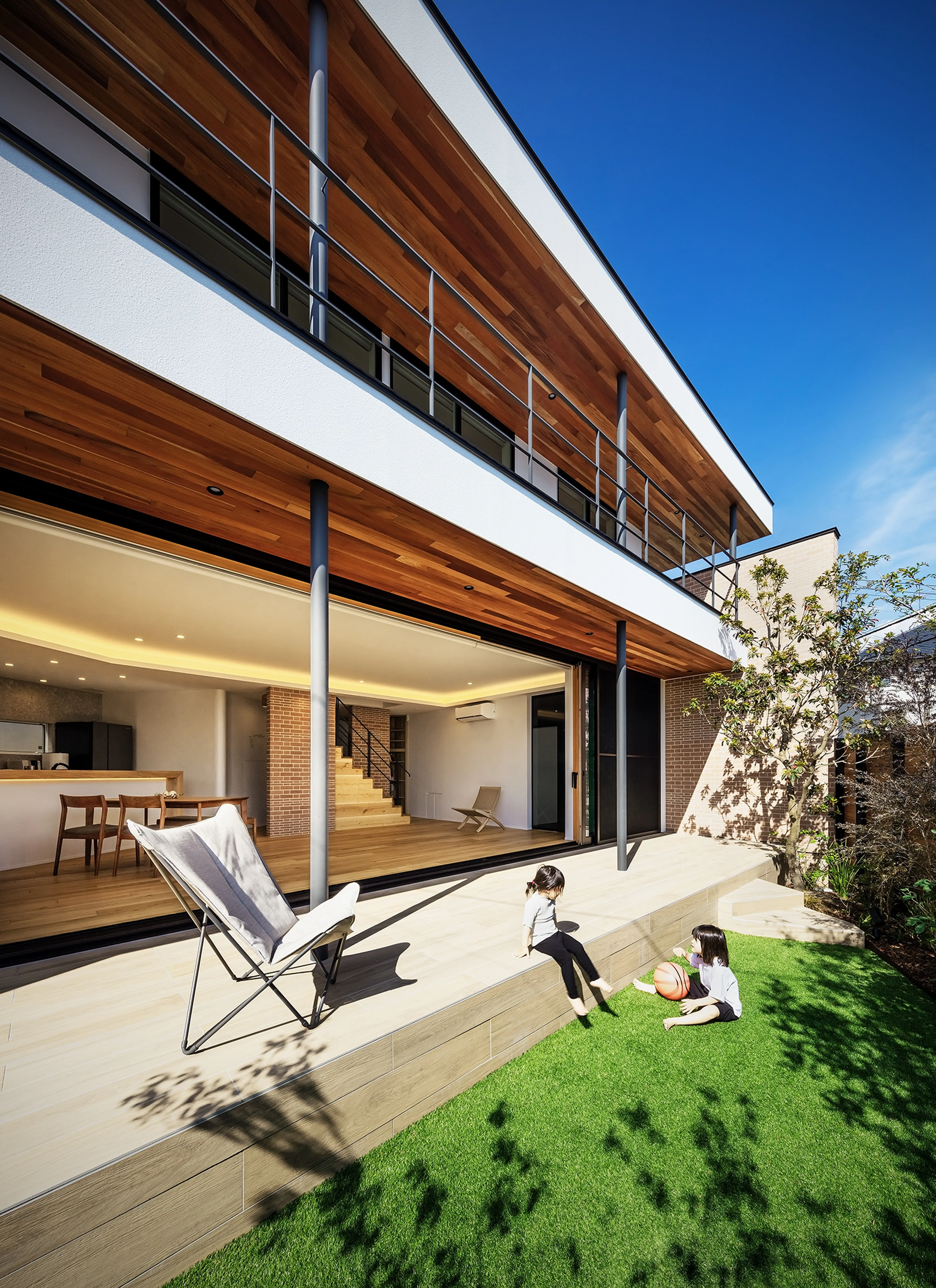
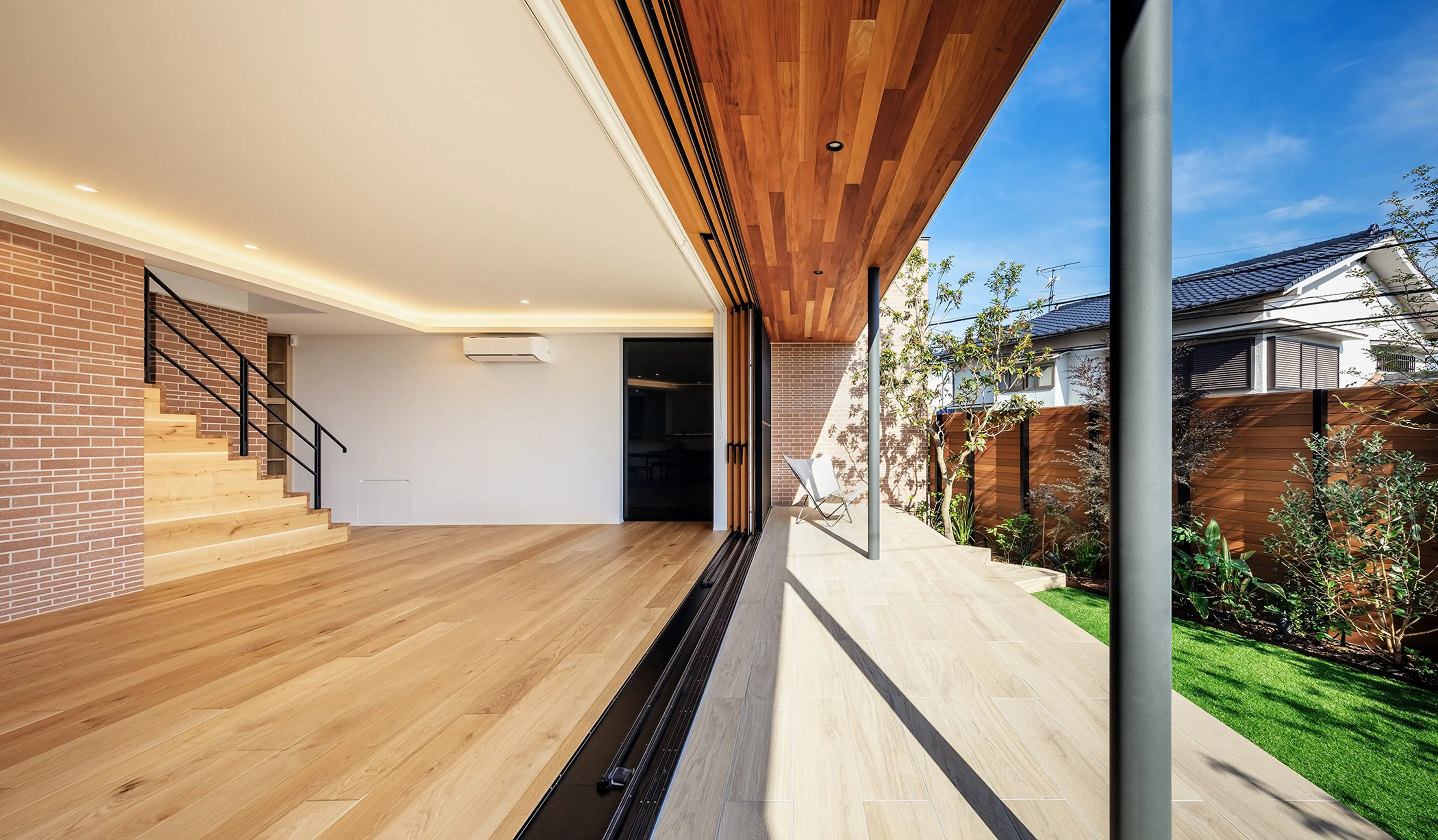
The first floor combines a 22-tatami LDK, a 2.4-tatami library, and a 15-tatami engawa terrace, creating a total of 37.4-tatami of connected space. To preserve this sense of openness, a 6.2 m (W) × 2.5 m (H) full-open sash system was used, consisting of three panels that retract fully into the wall. This design encourages a natural flow toward the garden.
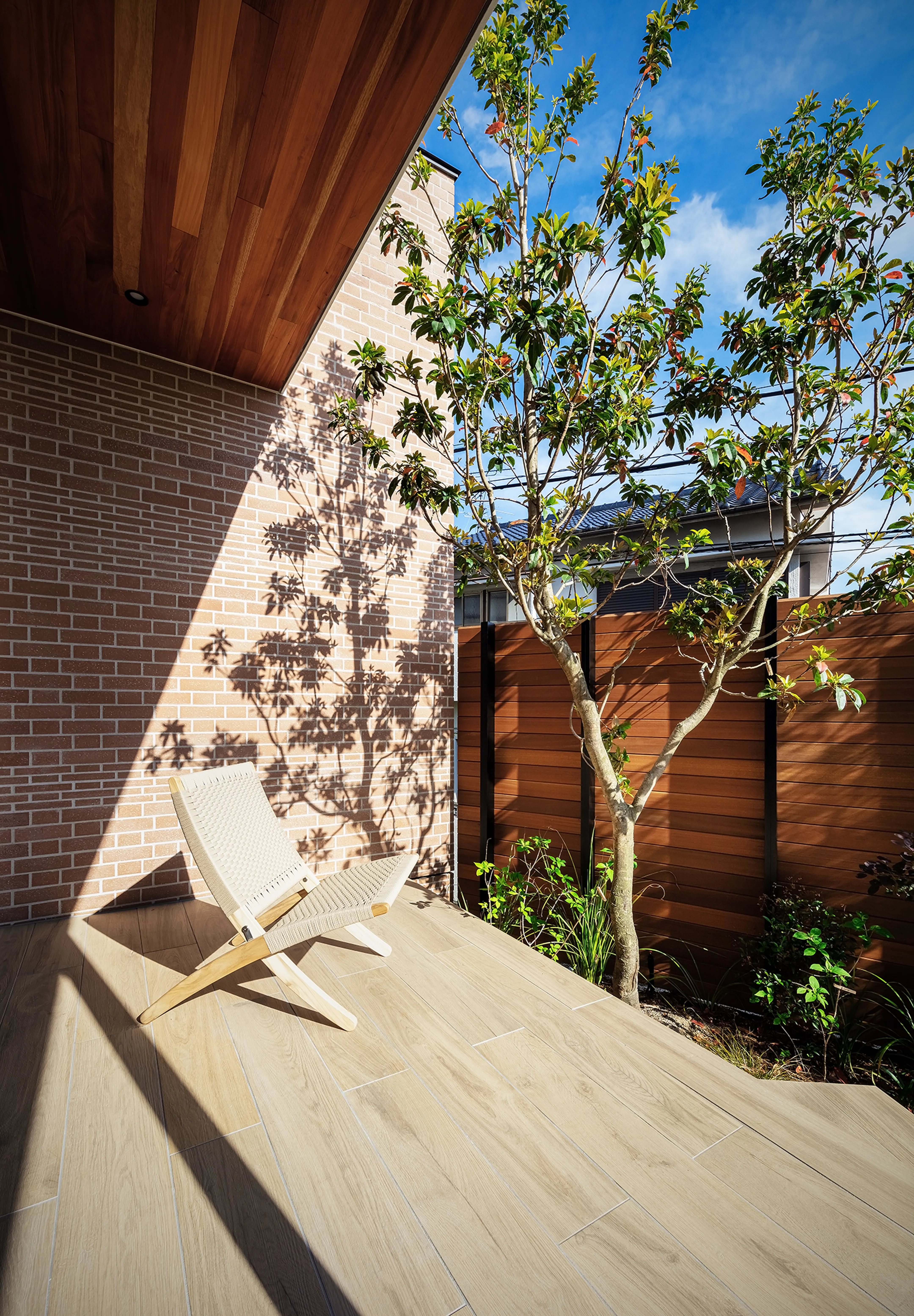
The sash is a wooden frame employing a Hebeschiebe (lift-and-slide) mechanism developed in Germany. With a handle, the door lifts and slides, allowing heavy panels to be opened and closed smoothly while maintaining airtightness, insulation, and waterproofing.

Design Attuned
to the Seasonal Sun

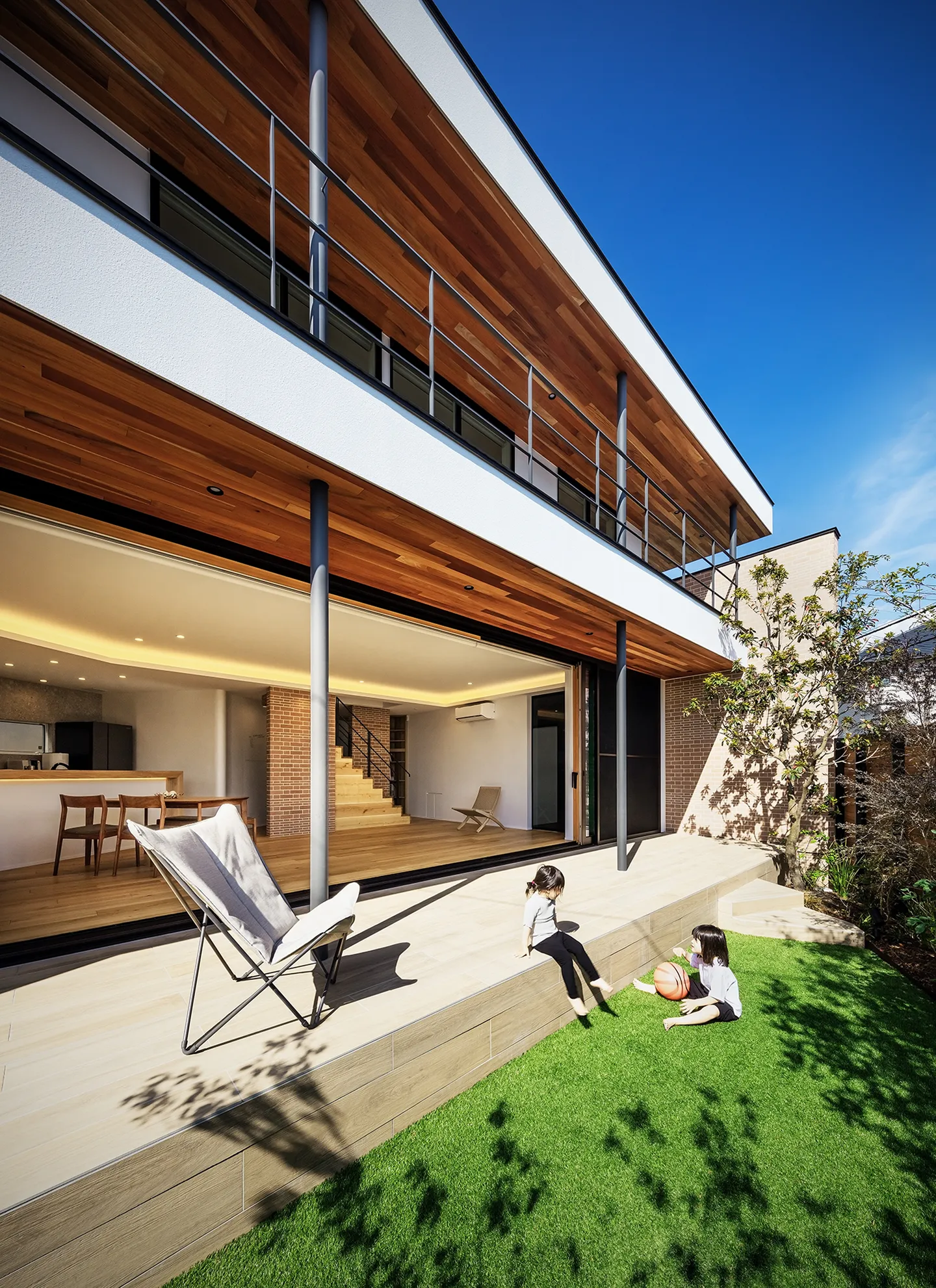
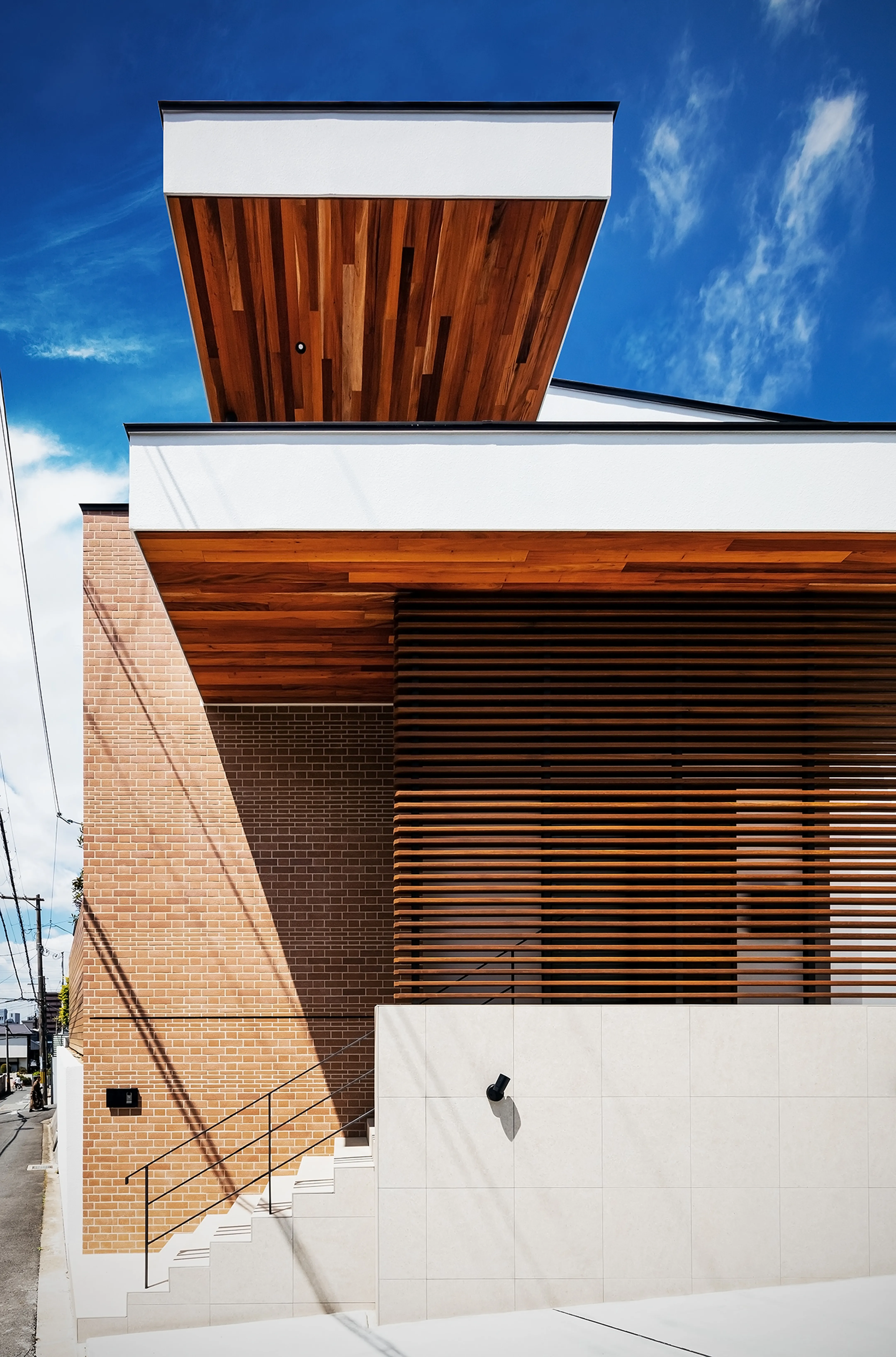
This approach seeks to admit winter sunlight while blocking the summer sun, keeping interiors cool in summer and warm in winter. The most effective way is to create large south-facing openings with deep eaves.

Without eaves, a pair of tatami-sized openings can admit about 650 W of solar heat—equivalent to having a kotatsu heater against the wall. With eaves, this can be reduced to around 53 W.
Here, orienting the building toward the view also meant facing south, allowing the seasonal sun to be harnessed directly.

Library doubling
as a shortcut

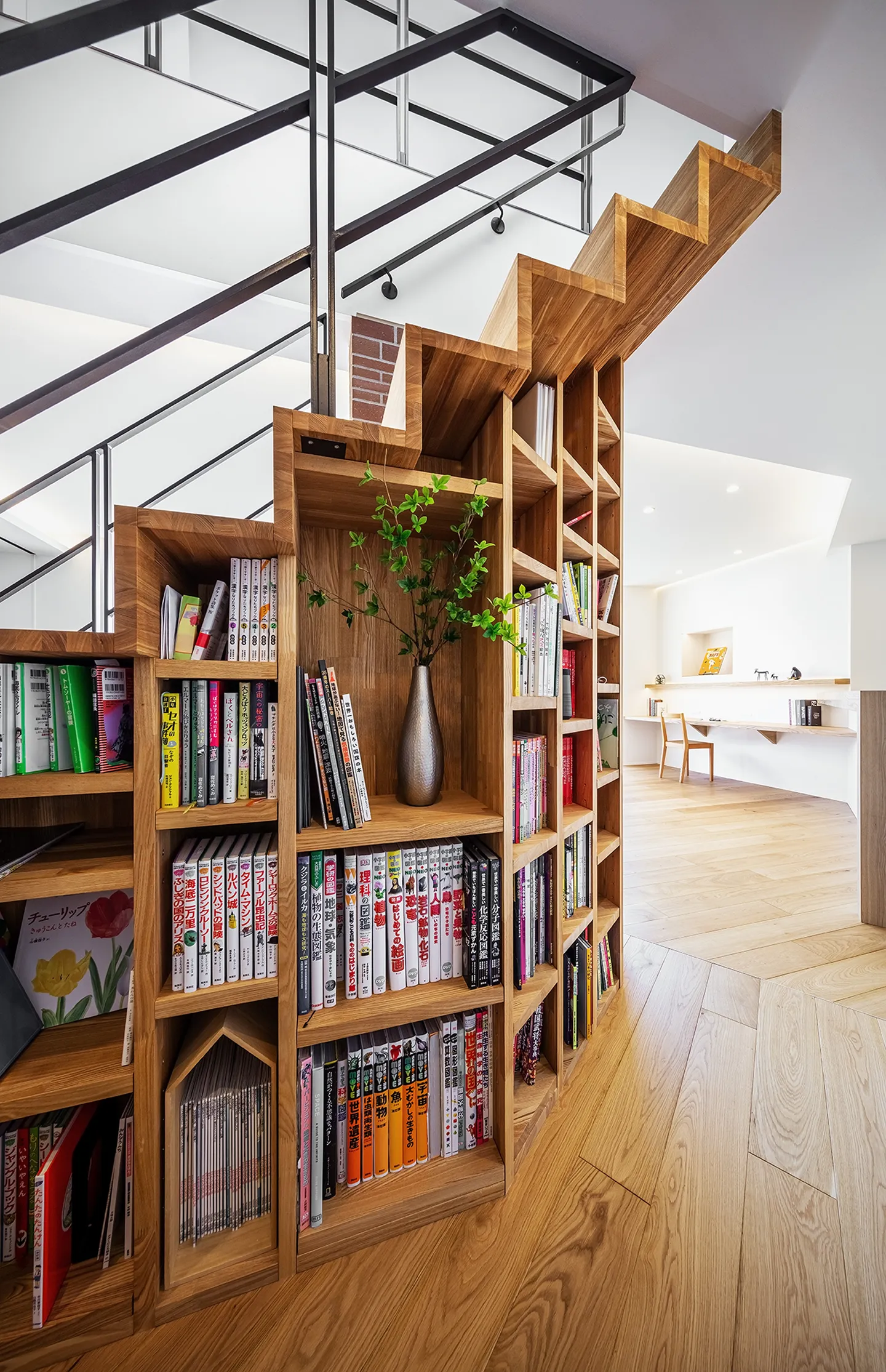
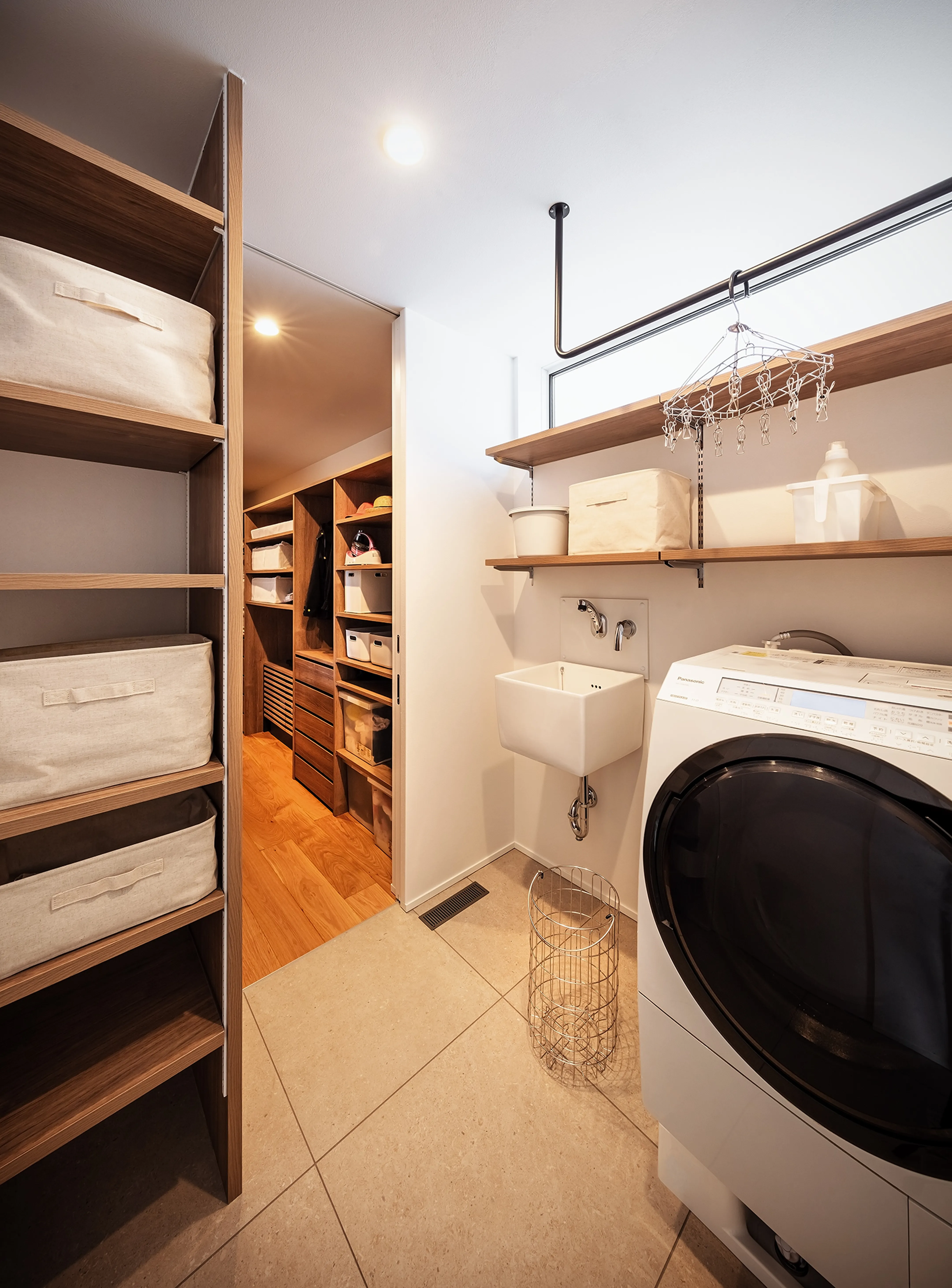
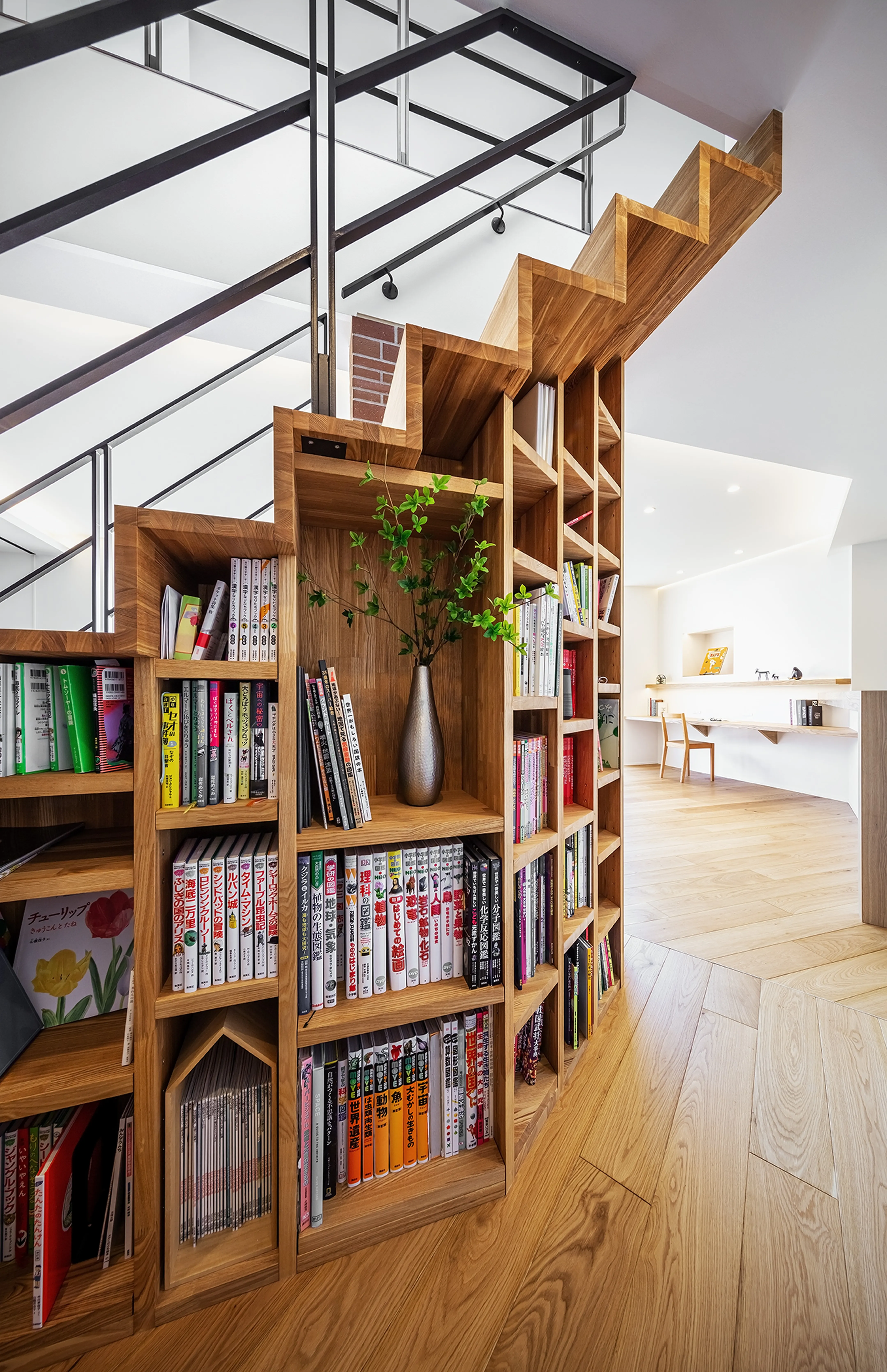
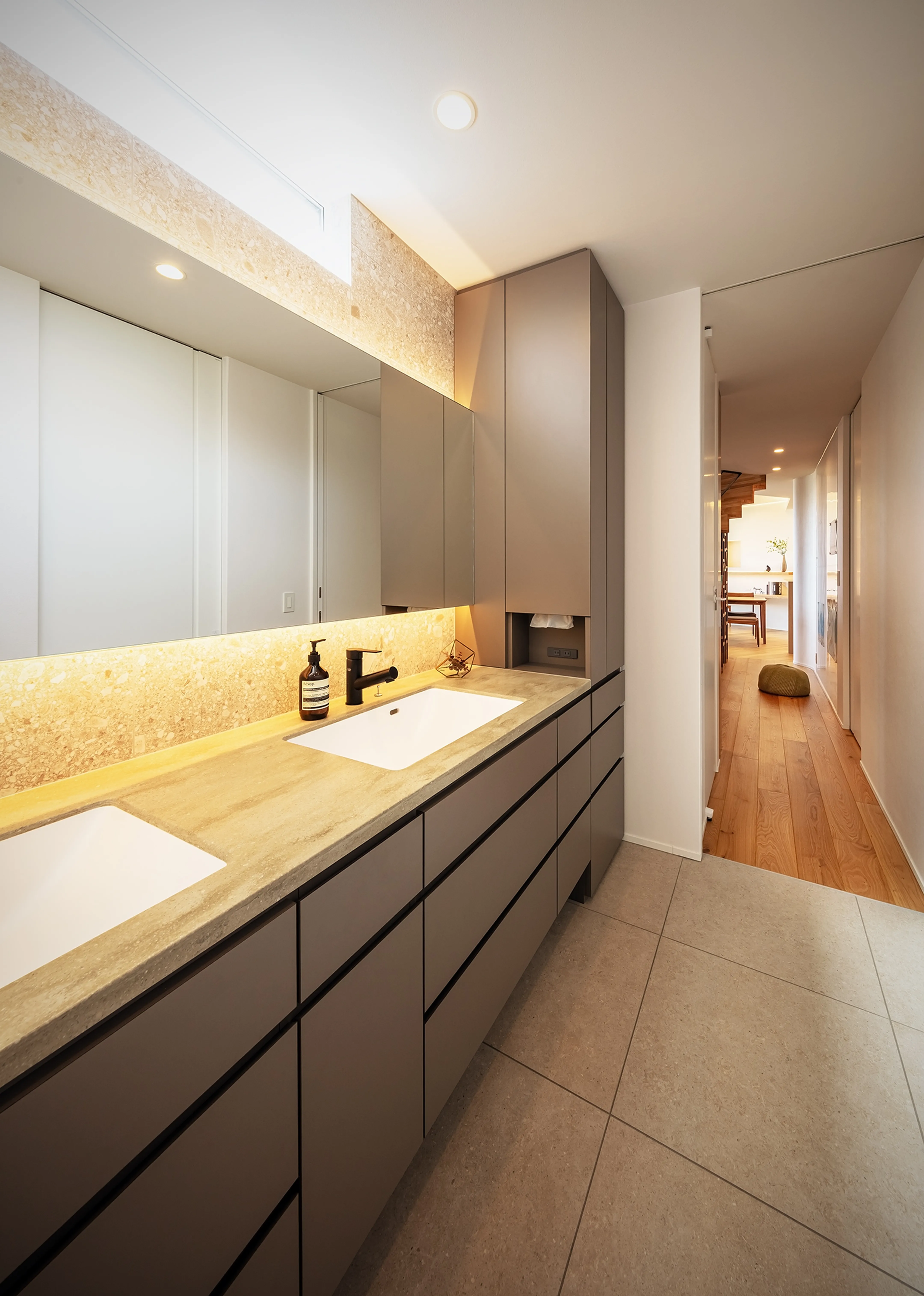
A compact library space for children’s books and school materials is placed along a shortcut corridor connecting the kitchen and the family closet. It stores not only books but also schoolbags, supplies, and small toys.

Compact bedrooms aligned
to the south

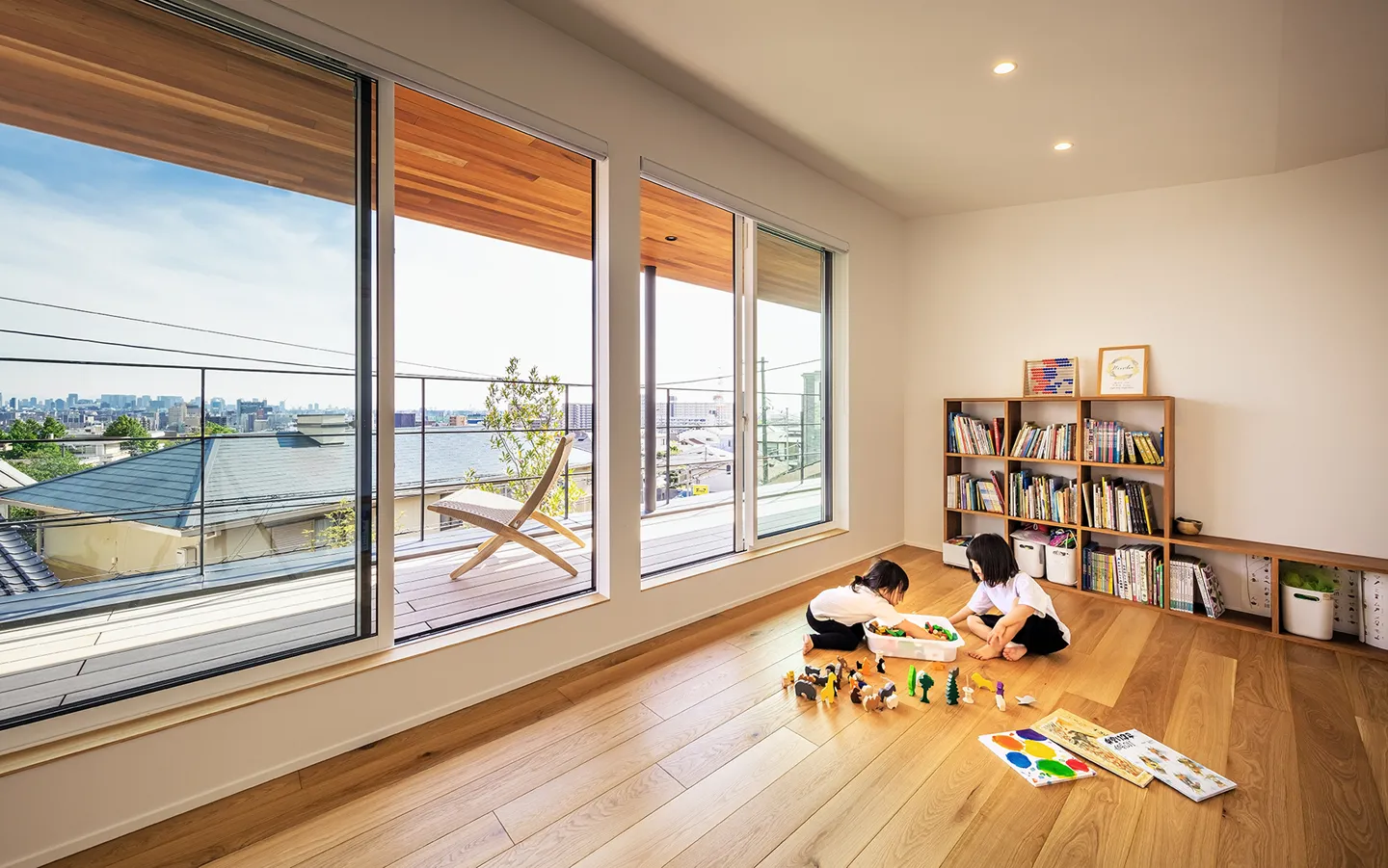
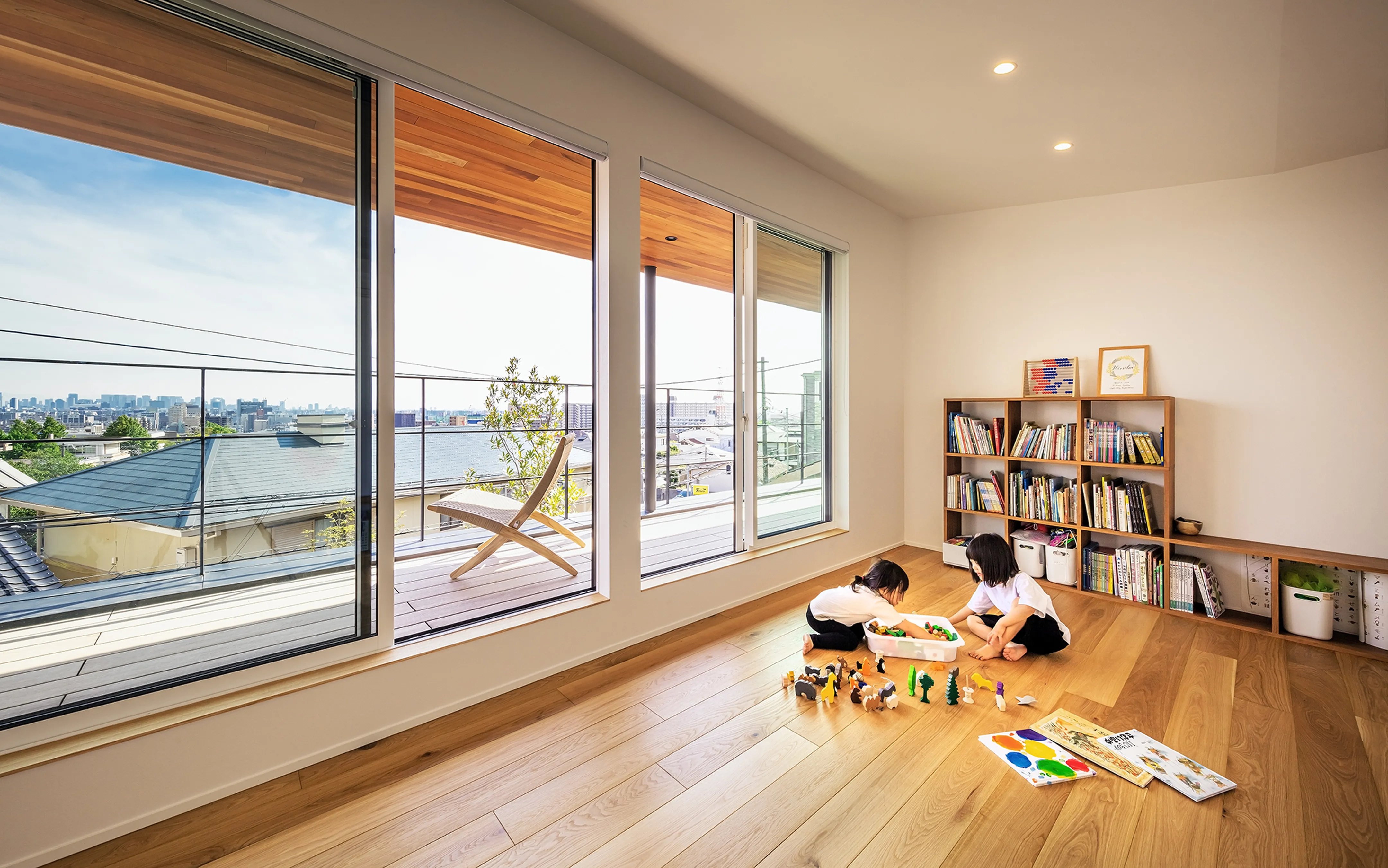
To dedicate more area to the LDK, bedrooms are kept minimal. However, each opens onto a terrace with sweeping southern views. With sloping ceilings rising to about 3 m, the rooms can host a projector for family movie nights.

Bedrooms 2 and 3 are currently combined into a 9-tatami space where the whole family can sleep together. With its broad window, it may also function as a second living space. In the future it can be partitioned into three rooms of about 5-tatami each.

Photographs

Data

House on a Hill in Senriyama千里山・丘の上の家

Builder Kenchiku Kobo Act Homes
Kitchen Lixil / Richelle SI