
Shaping
Site Analysis

Plans
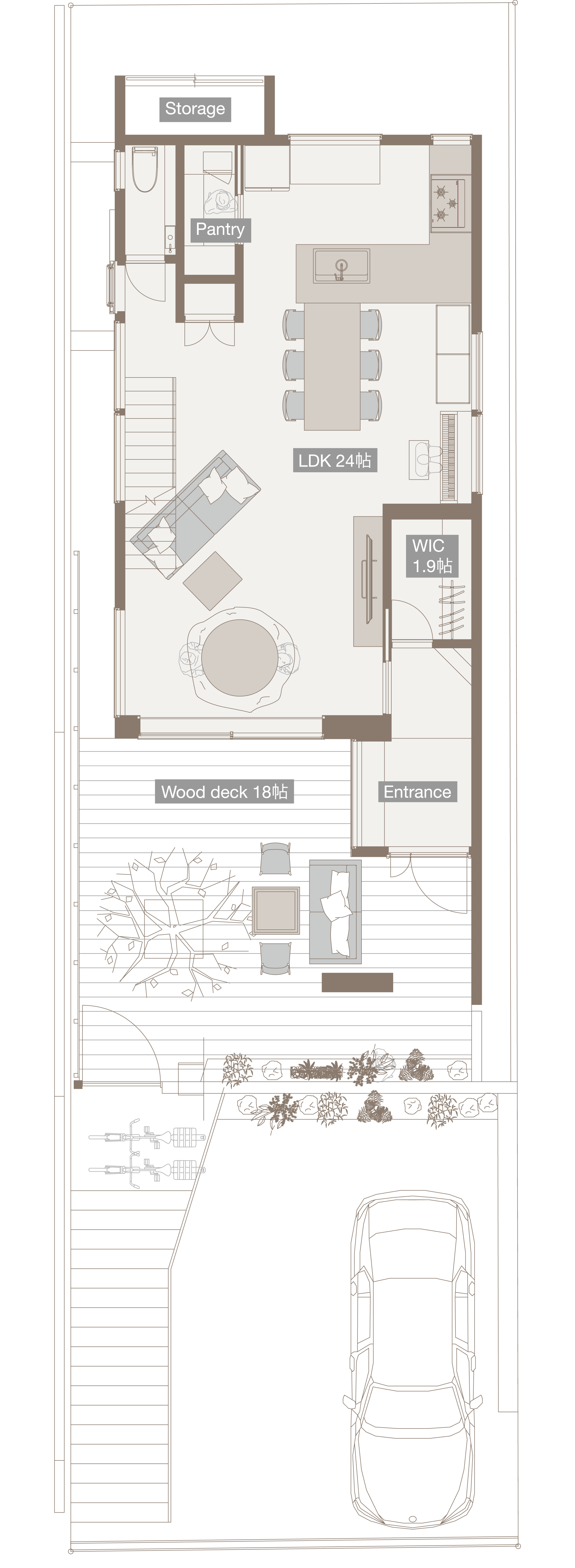
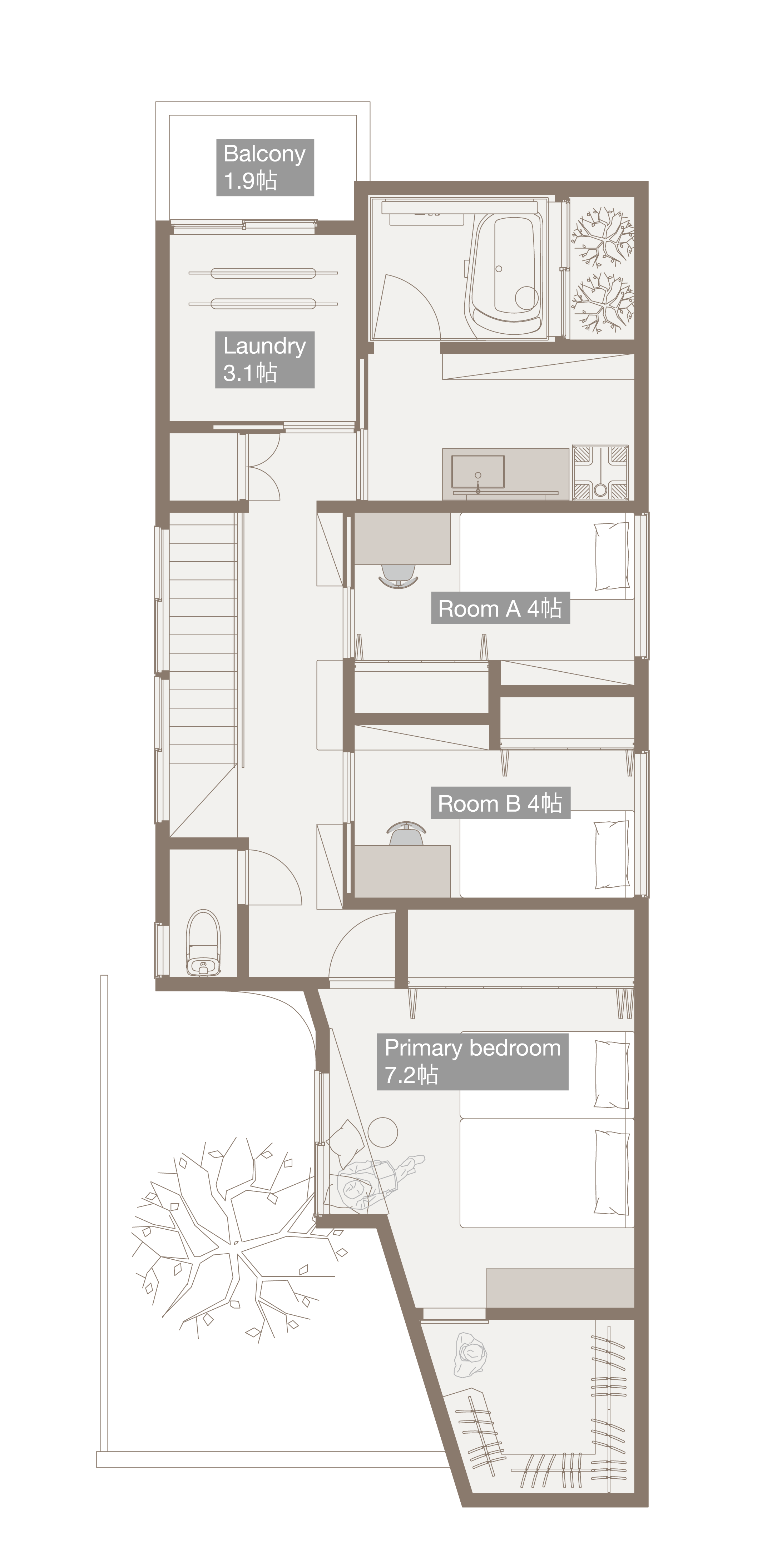
Photo by Akiyoshi Fukuzawa


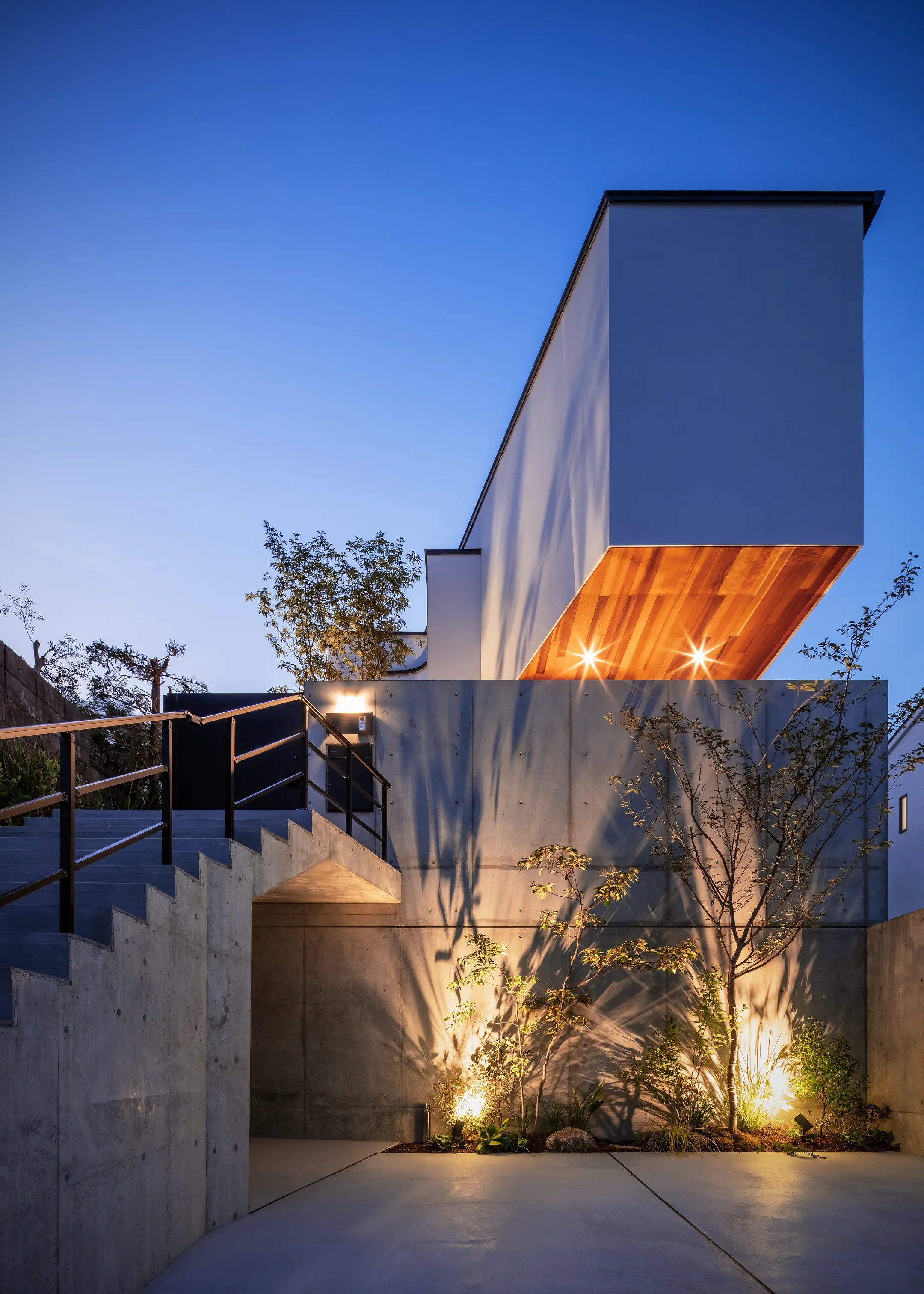
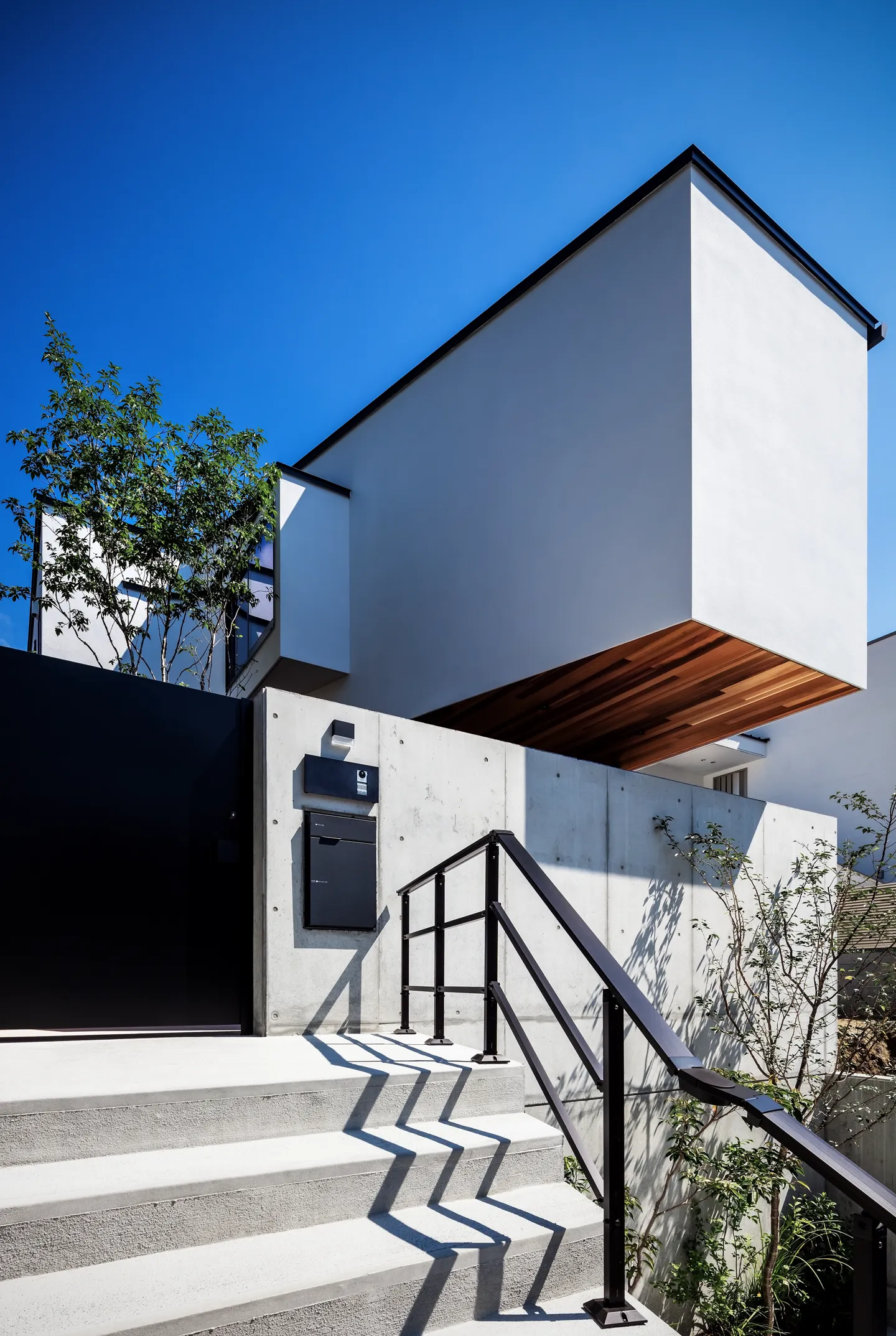
This two-story timber residence, with a building footprint of 21 tsubo (≈69 m²) and a total floor area of 36 tsubo (≈119 m²), was planned on a slightly steep slope in an expansive residential area. The neighborhood is distinctively Kobe, where the seasonal changes of Mt. Rokko can be felt. The presence of universities and churches scattered throughout this renowned academic district of Kansai also contributes to the atmosphere.
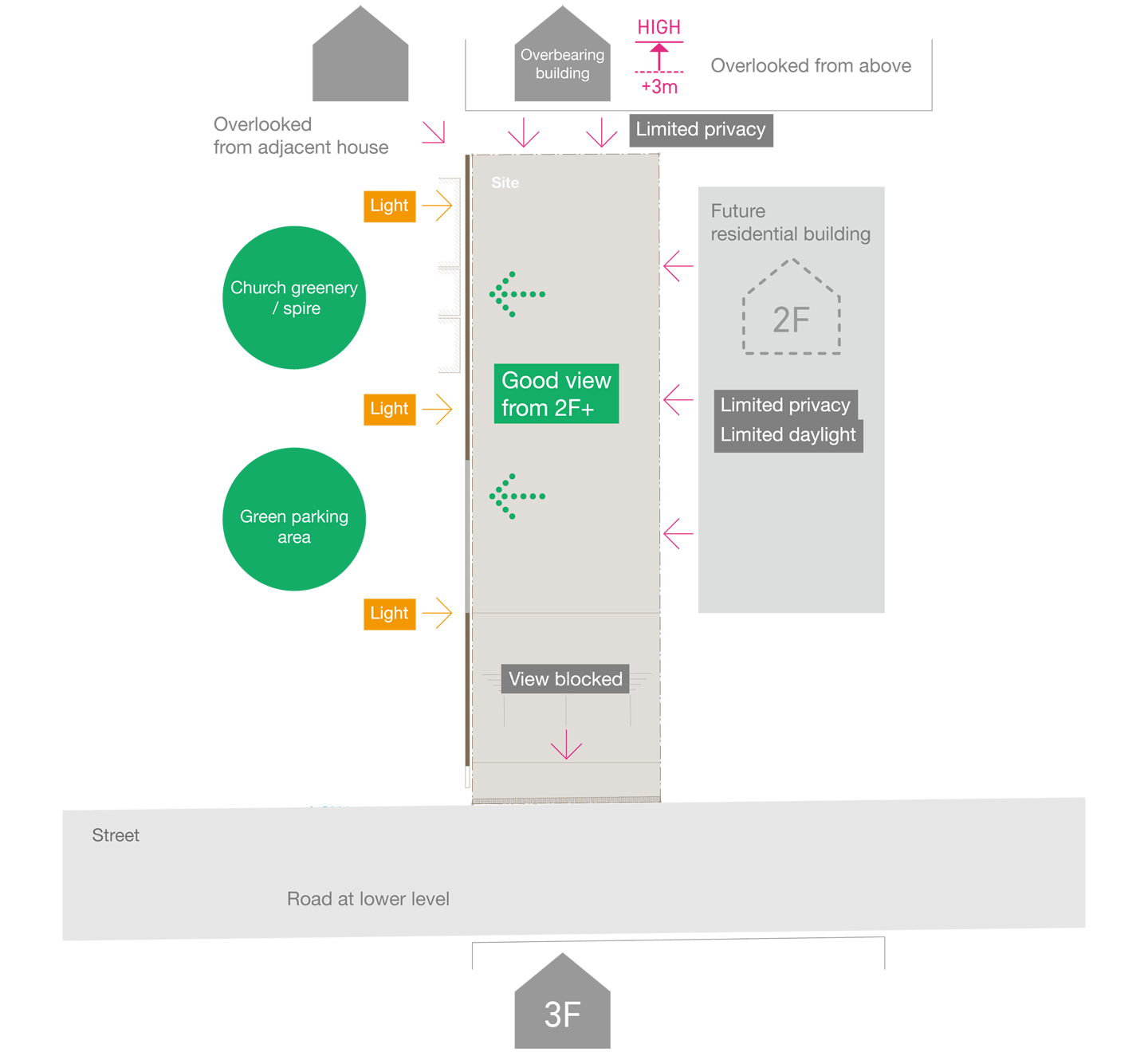
The most significant consideration in planning was Rokko Church to the west. Completed in 1956, its timber bell tower and the sound of its bells at noon and in the evening, the domed sanctuary, and the cherry blossoms that bloom in spring are all beloved as symbols of the area. Since the sanctuary was rebuilt after the earthquake, its appearance is unlikely to change in the long term. We wished to incorporate this view of Rokko Church into the design.
Another defining factor was the site’s long and narrow shape, stretching north to south. With its narrow frontage, the planning was not simple. The aim was to achieve a home filled with light that makes the most of the environment while maintaining privacy and using space efficiently. Where to place the garden, how to avoid dark, elongated corridors—by carefully reading the conditions and resolving each issue one by one, a natural form emerged.
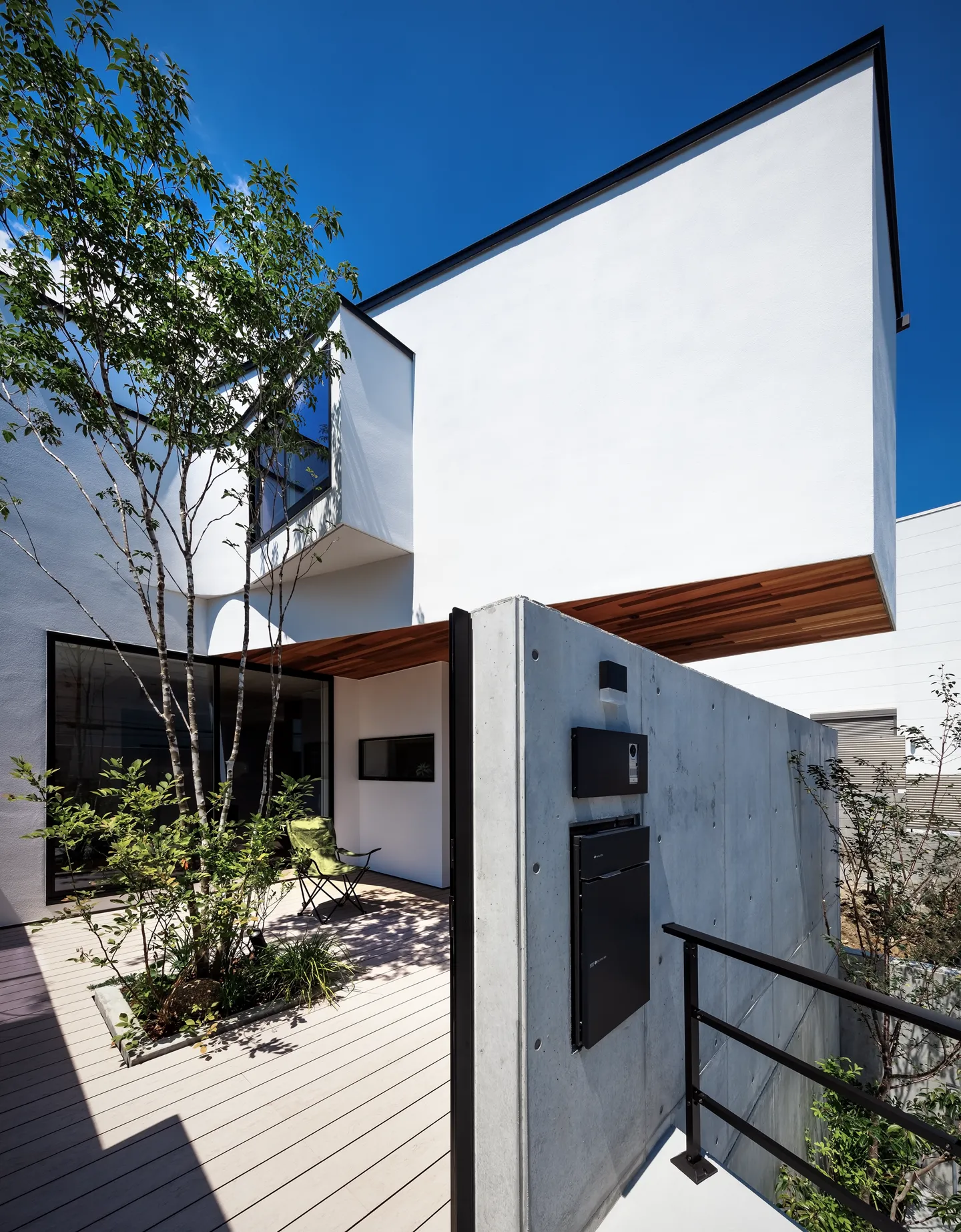
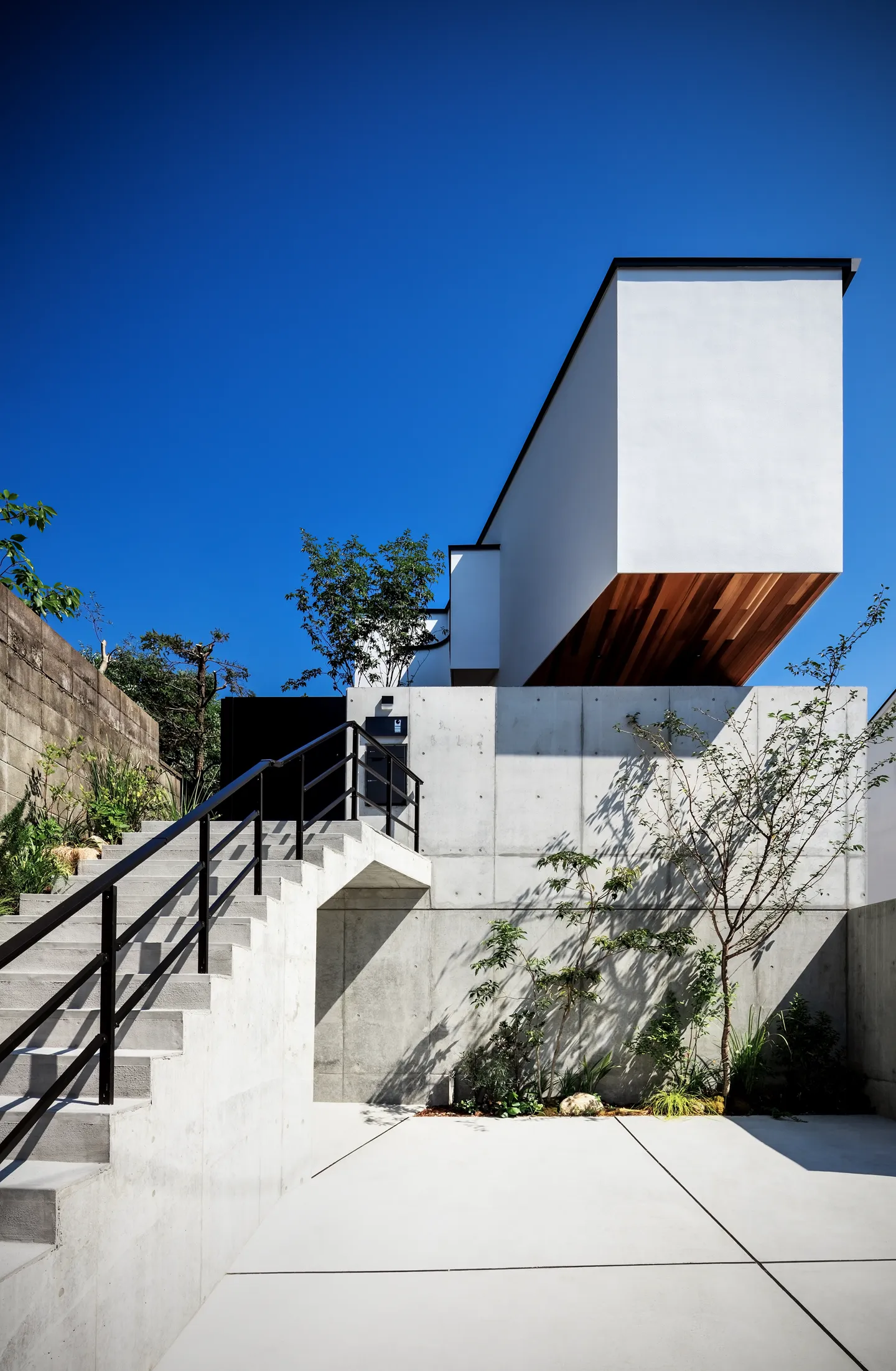
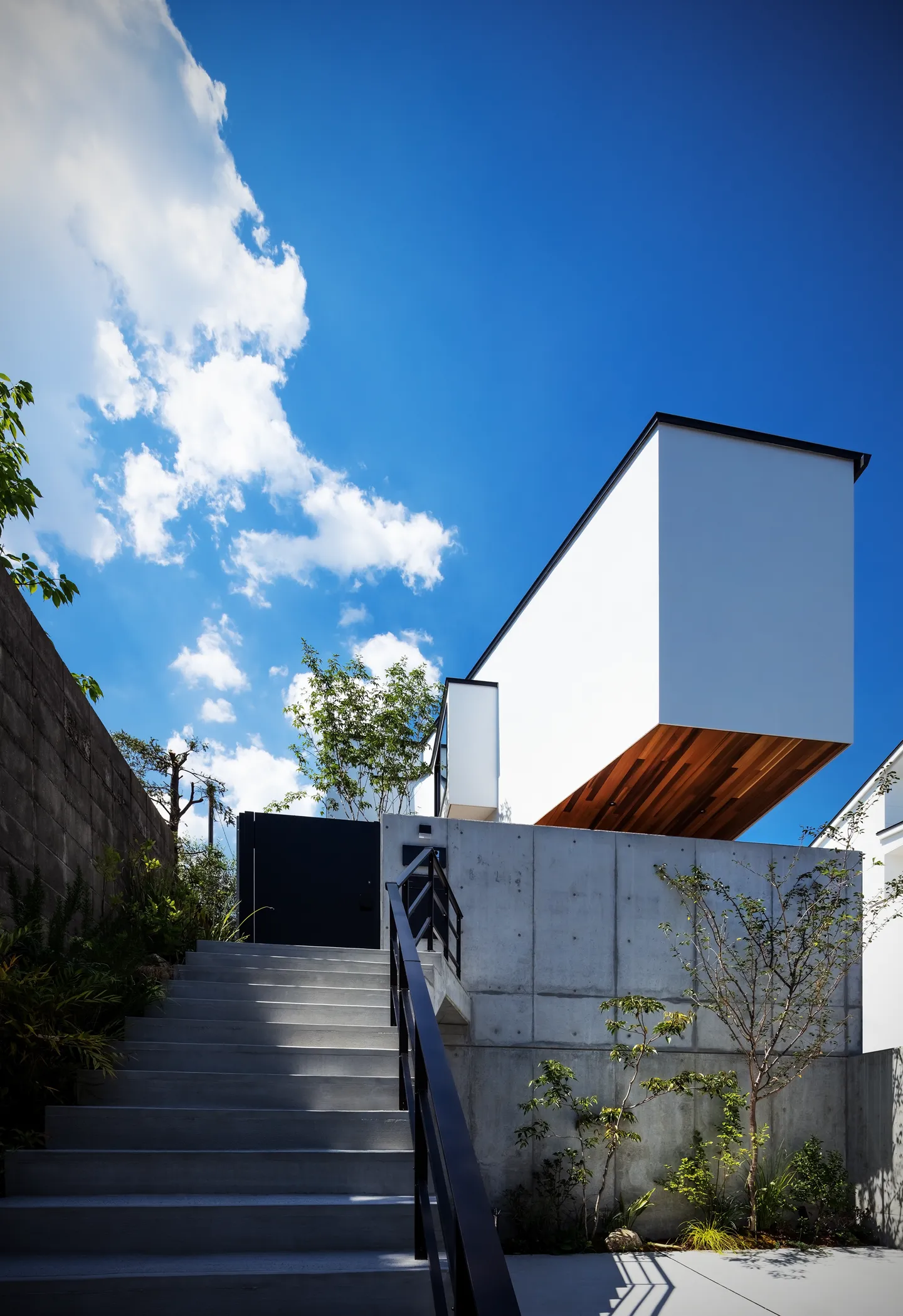
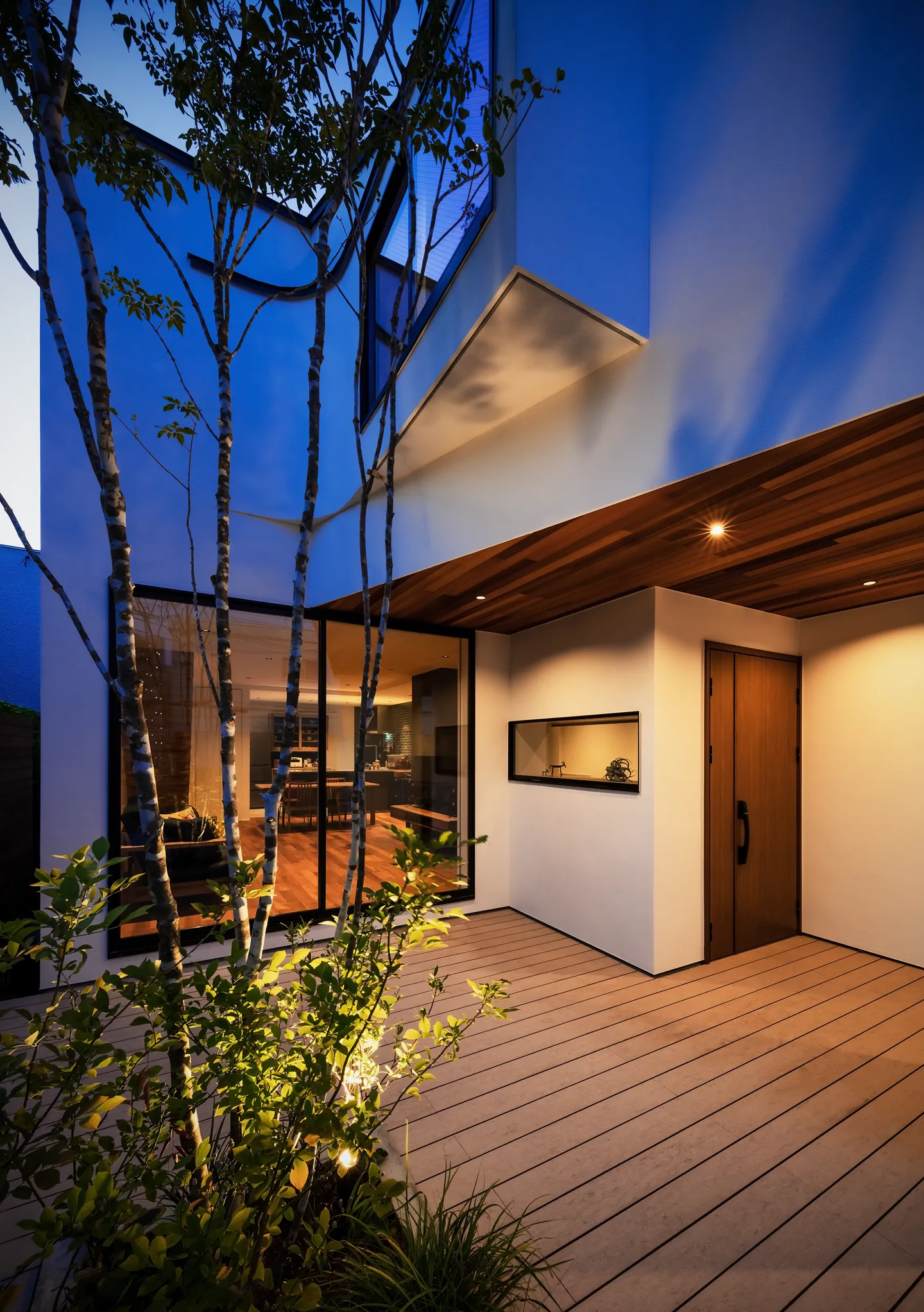
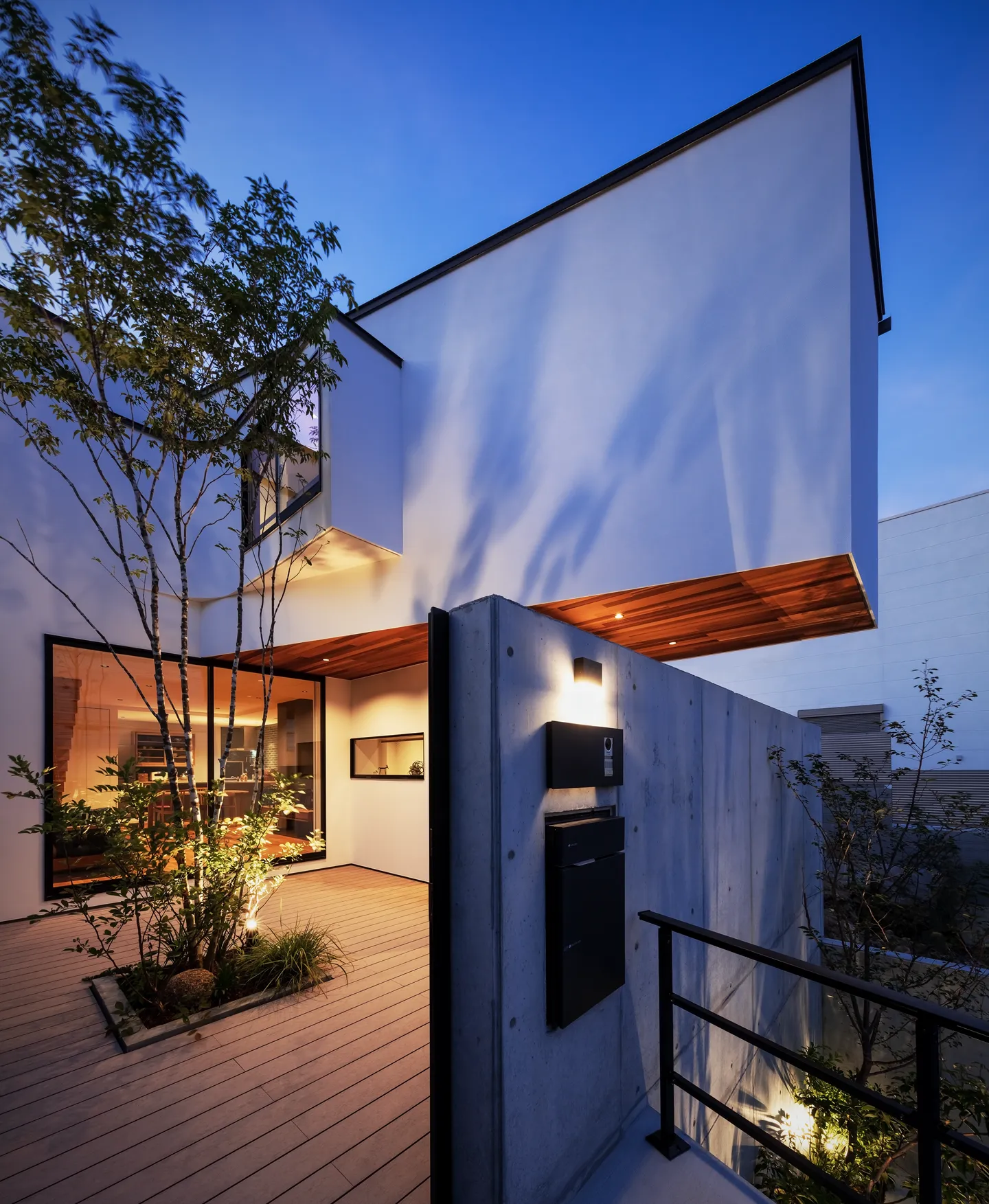
The theme became “Front Yard House.” By placing the garden at the front, on the south side, the house can take in light while protecting privacy, and the building itself can be kept compact and efficient. By deliberately making the front yard serve also as the approach, the façade took on a distinctive character.
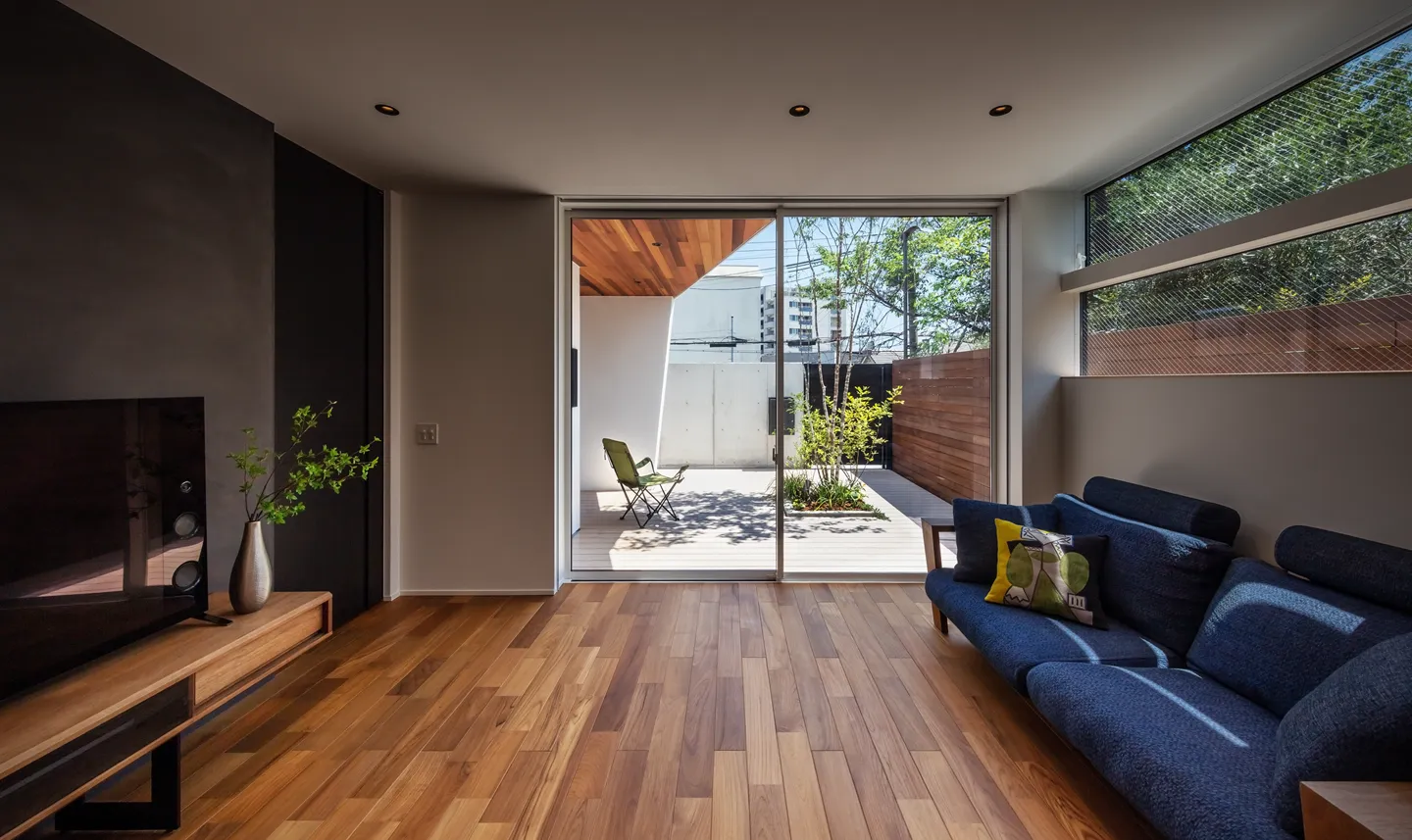
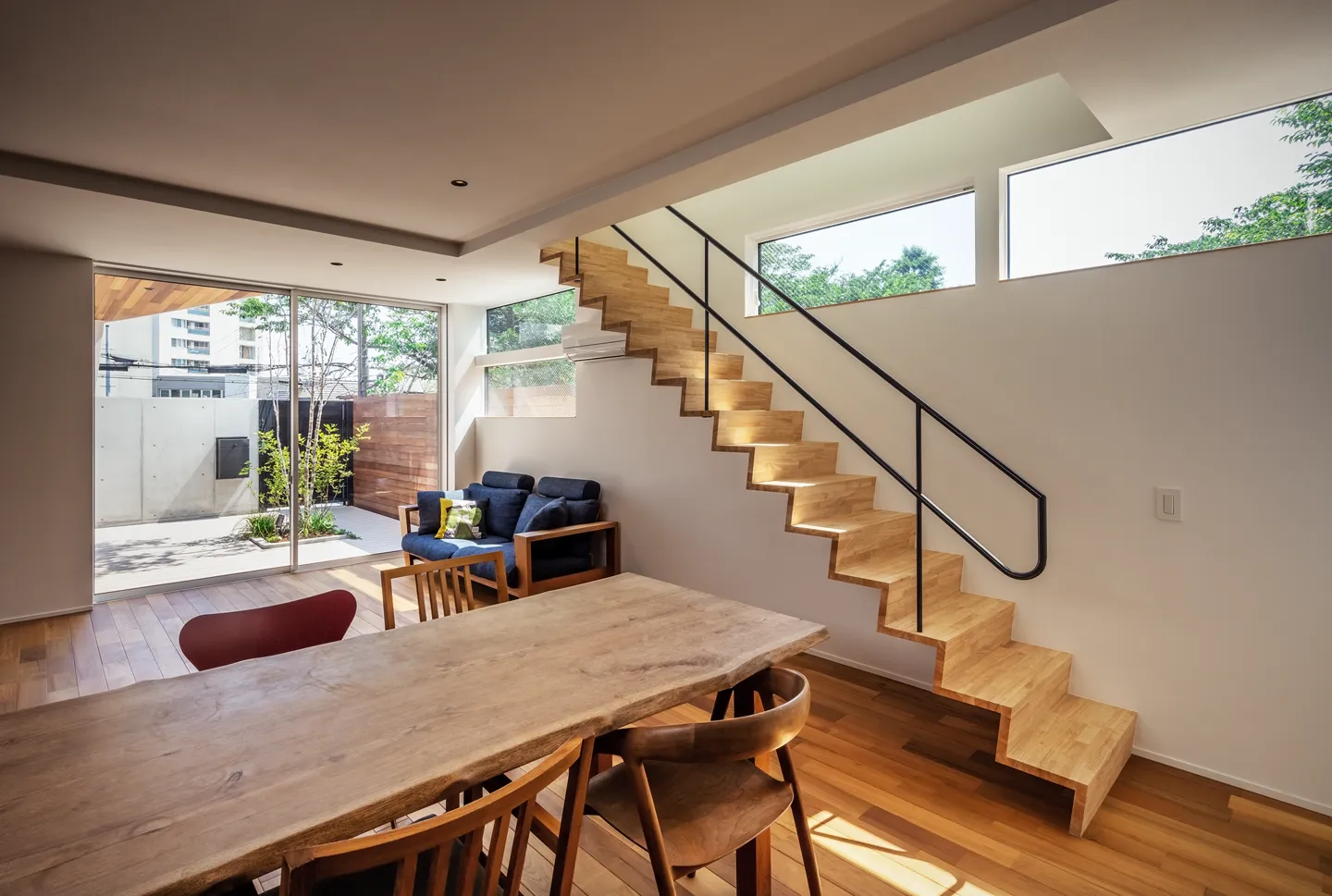
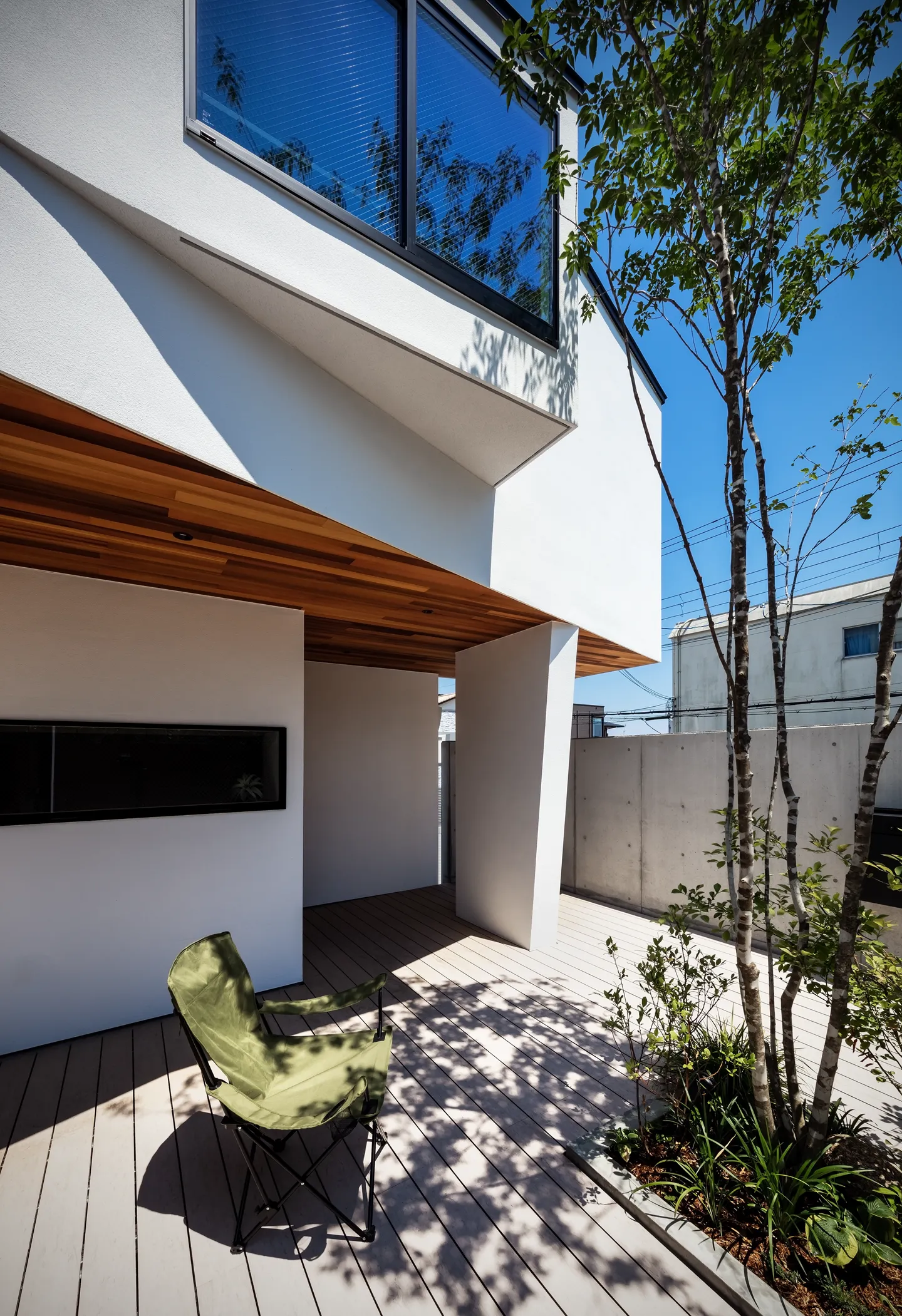
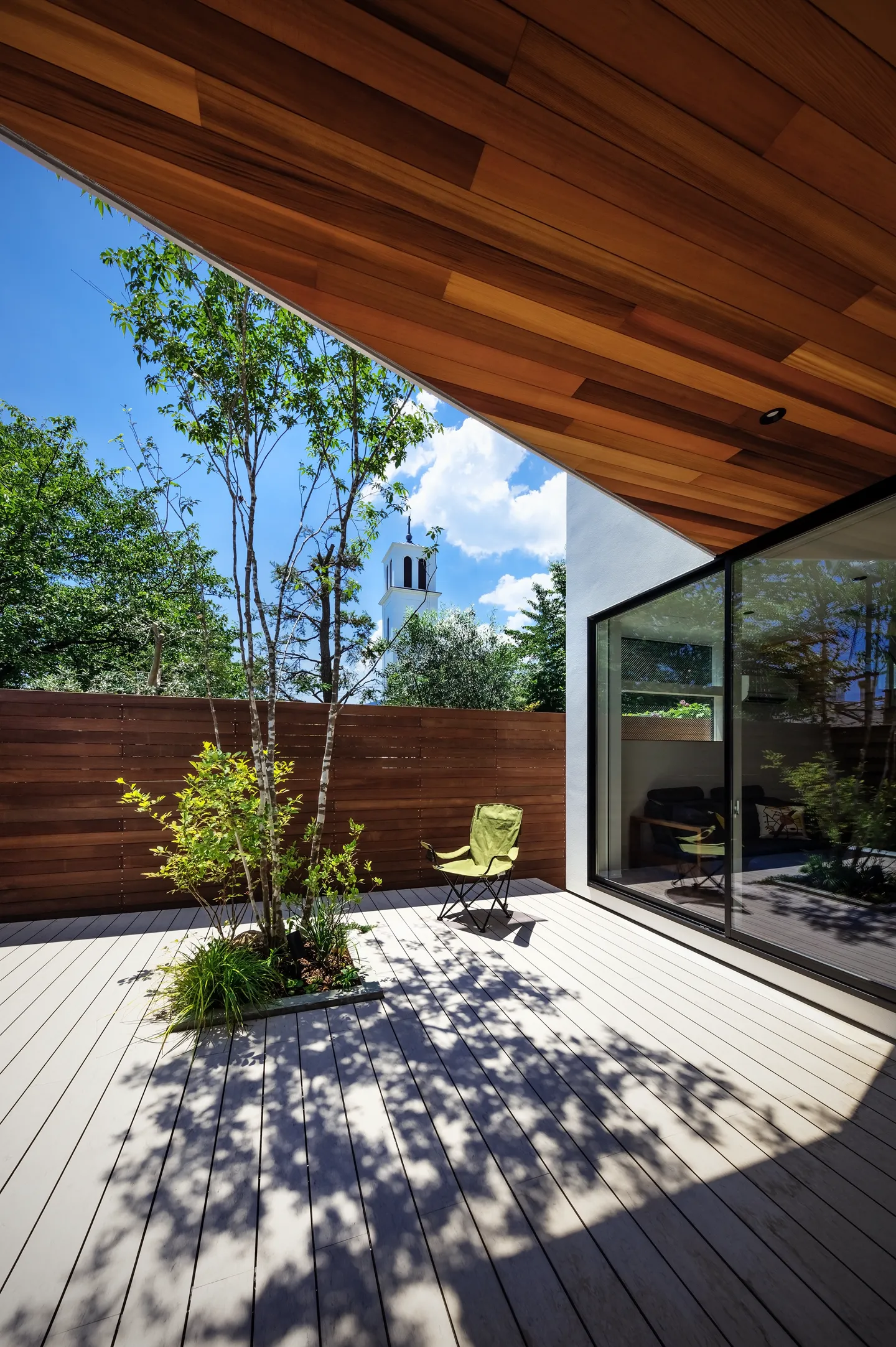
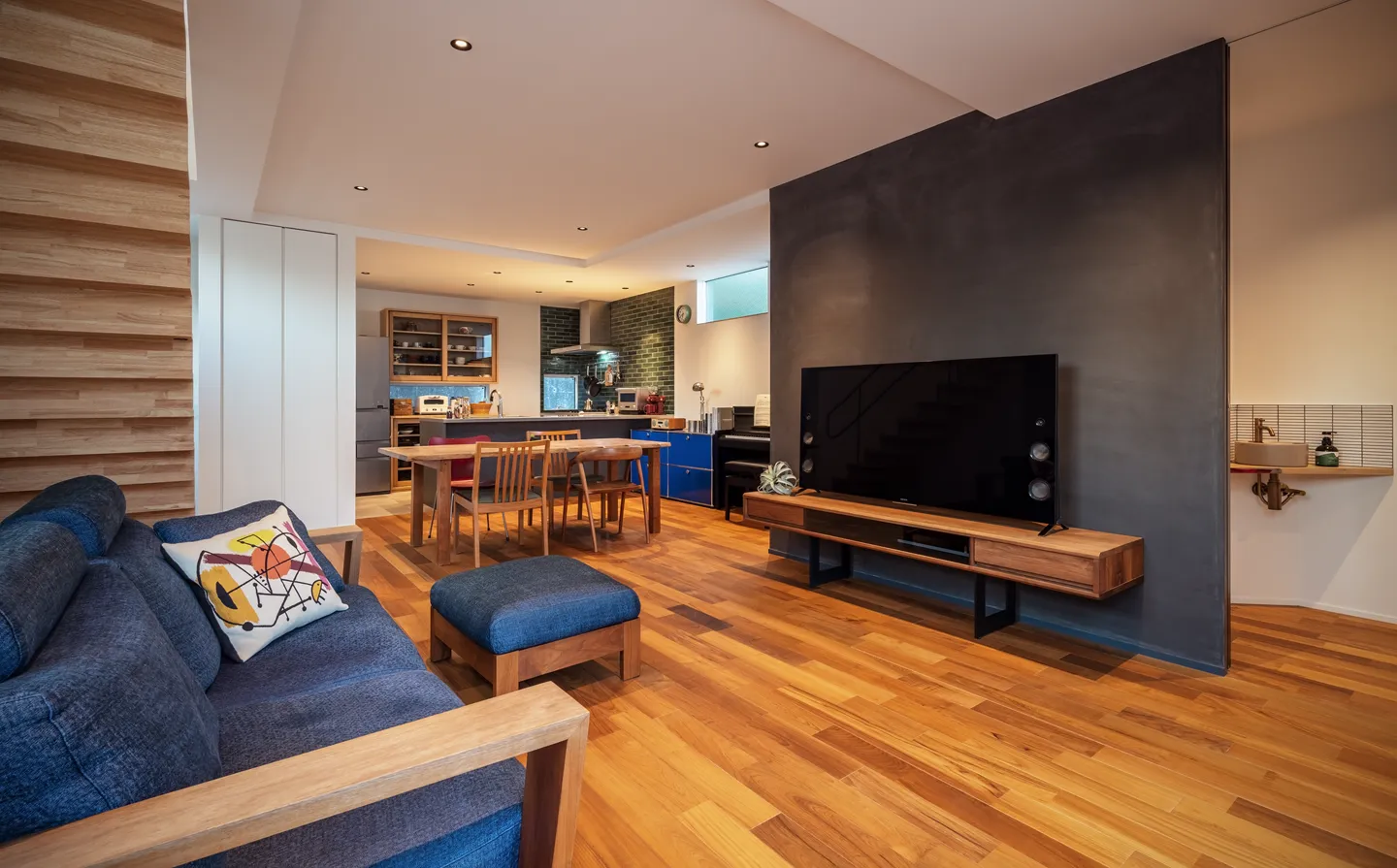
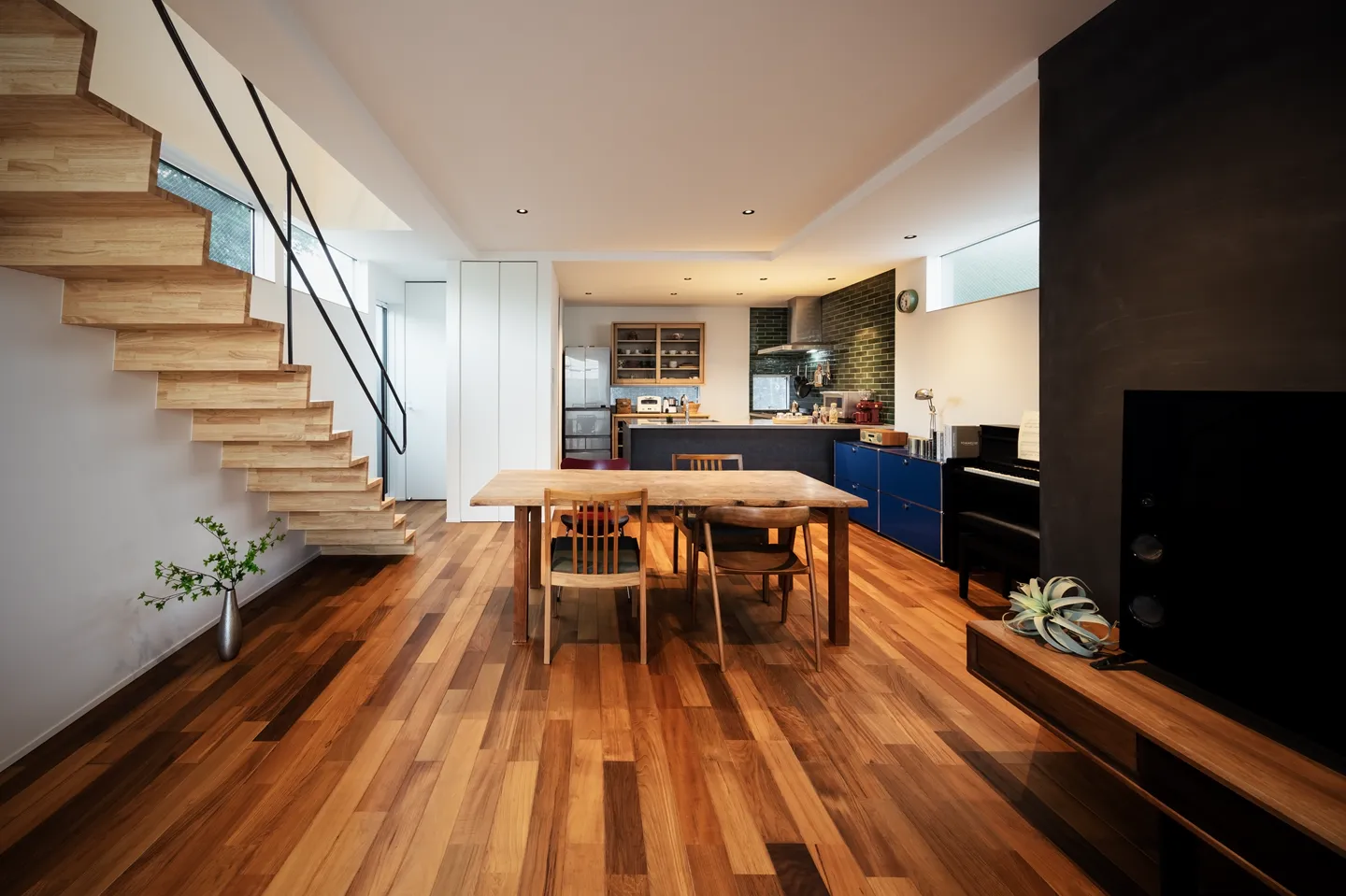
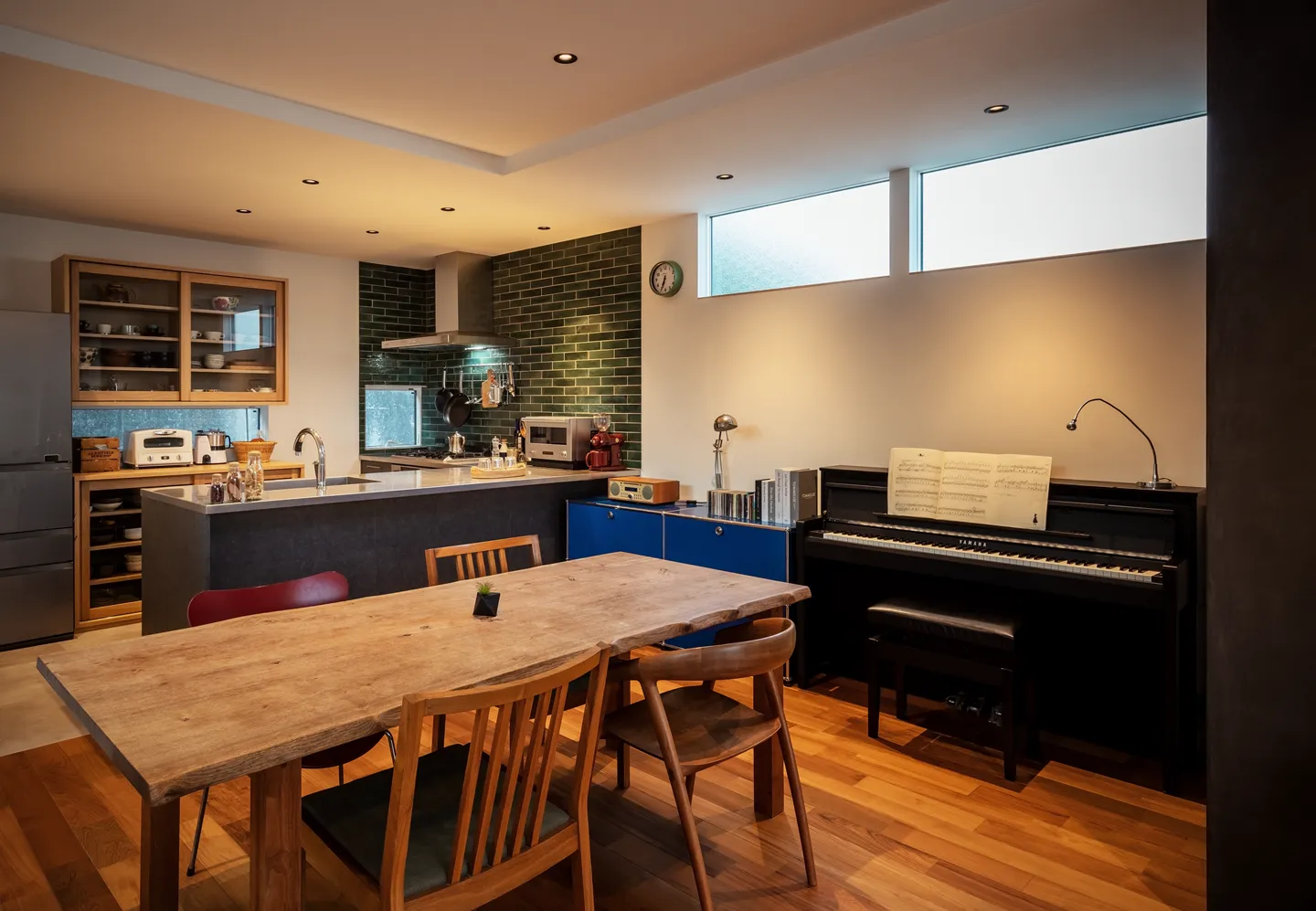
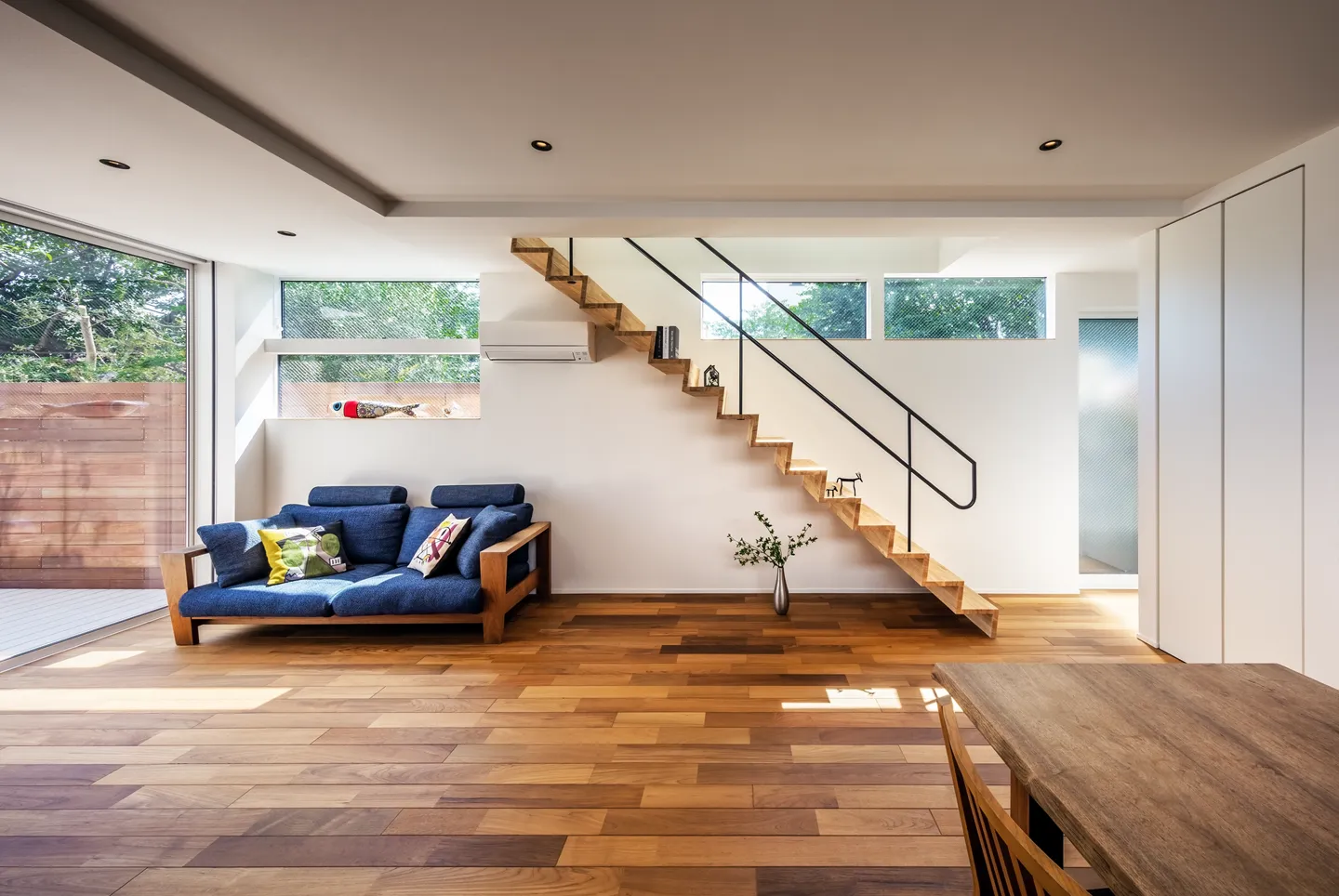
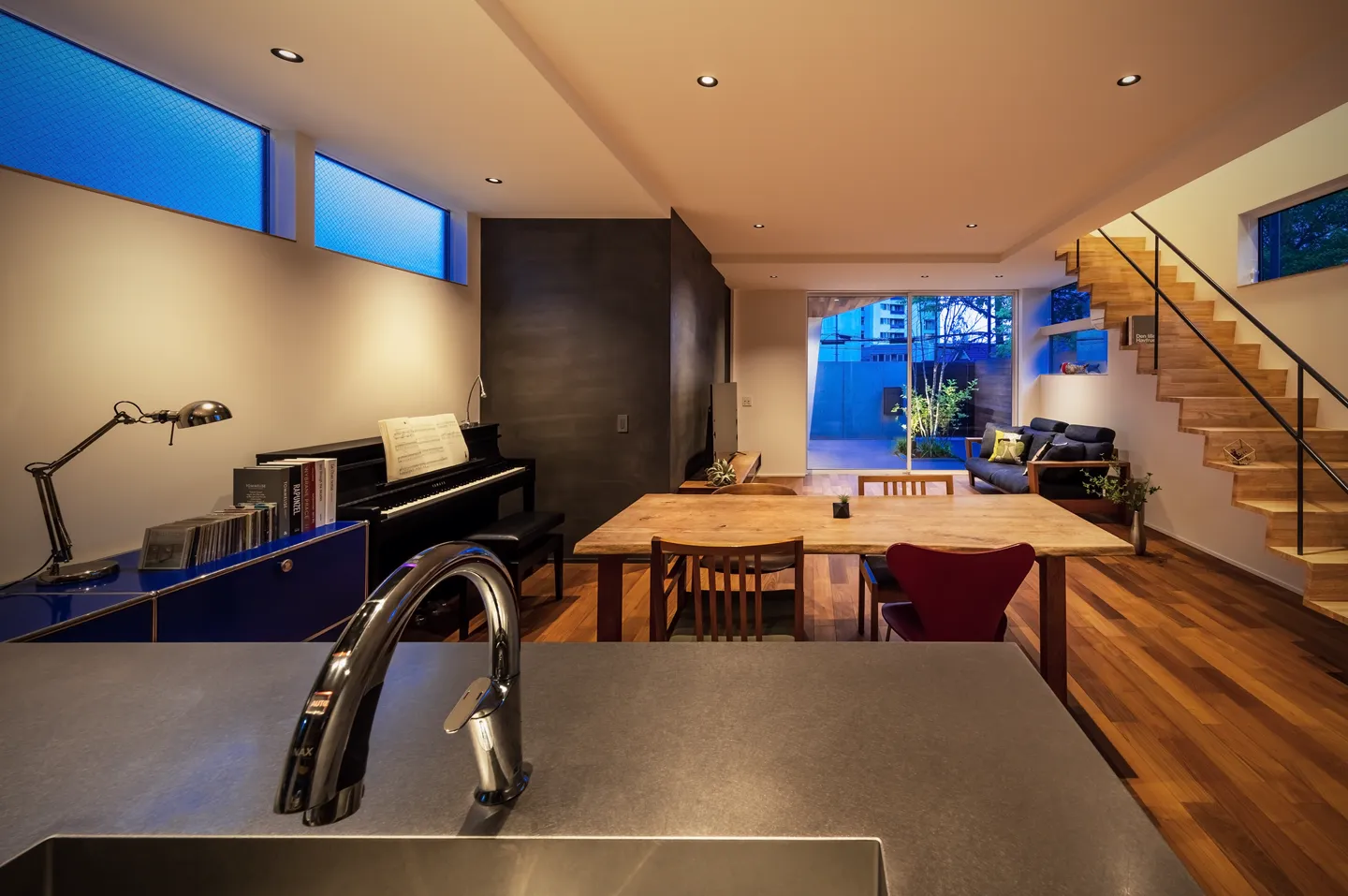
This 18-tatami front yard, partially roofed, is not a garden merely to be viewed but also functions as an outdoor living room. Combined with the 24-tatami living-dining-kitchen (LDK), it creates a 42-tatami family space to be enjoyed.
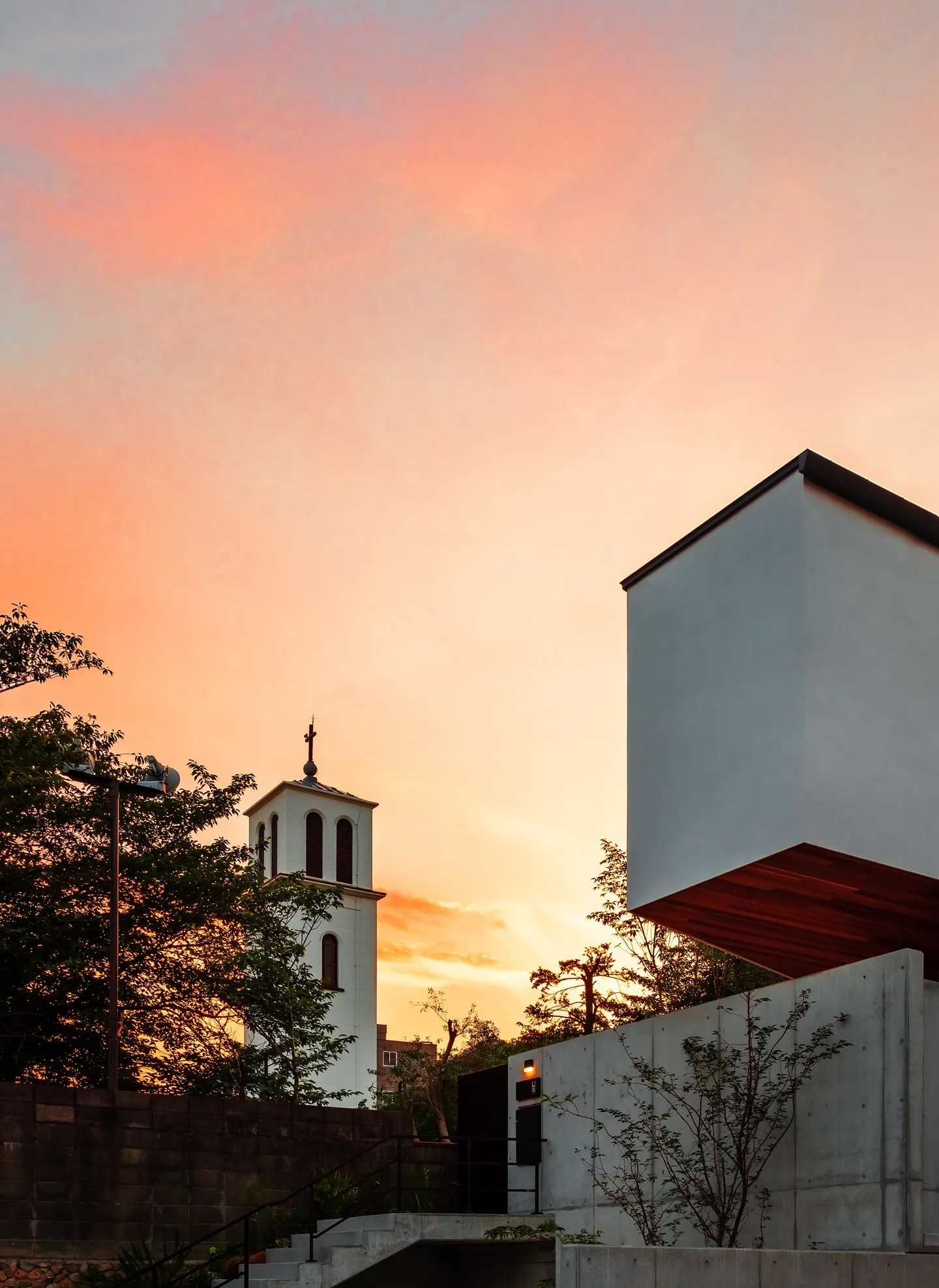
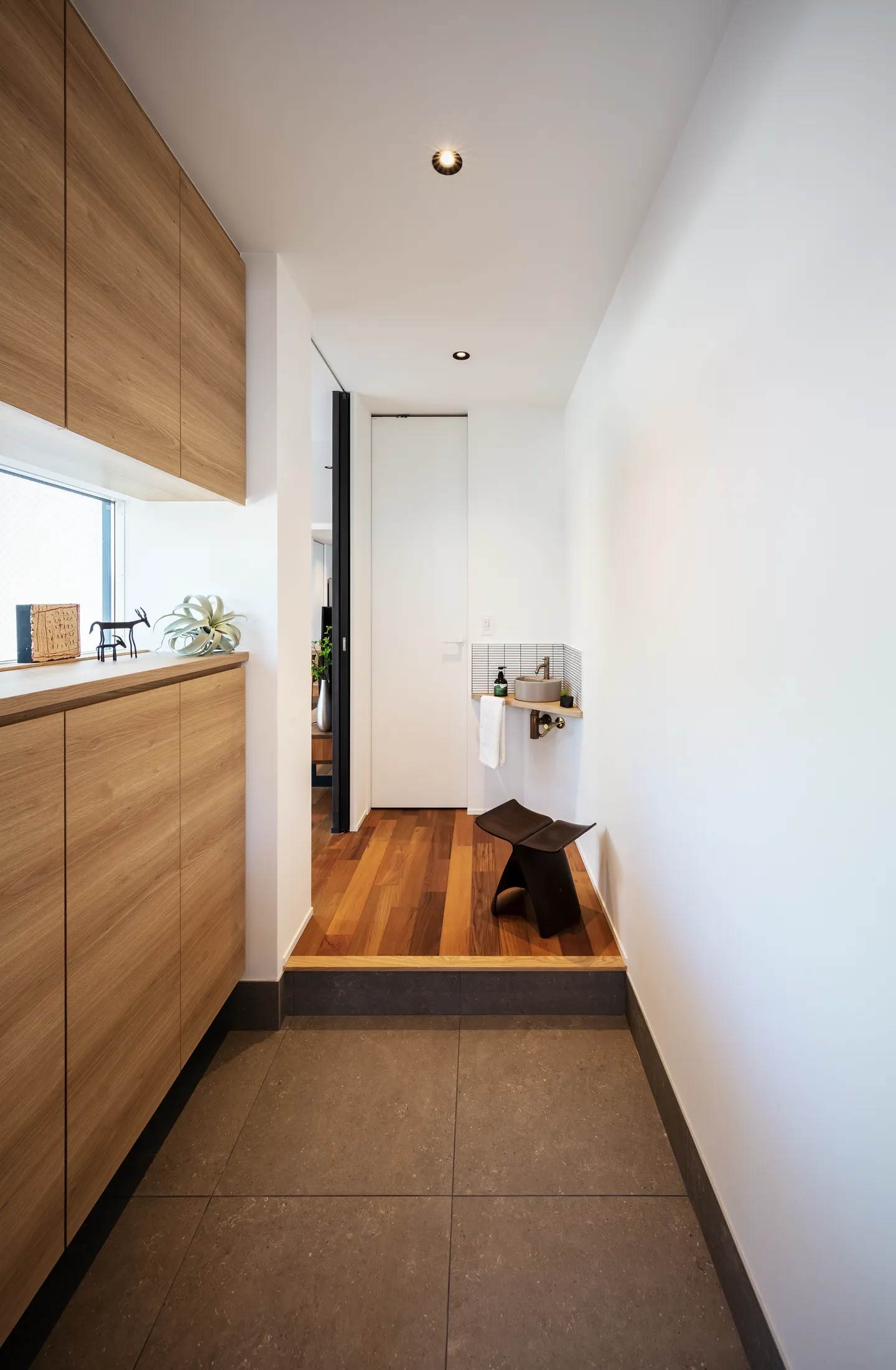
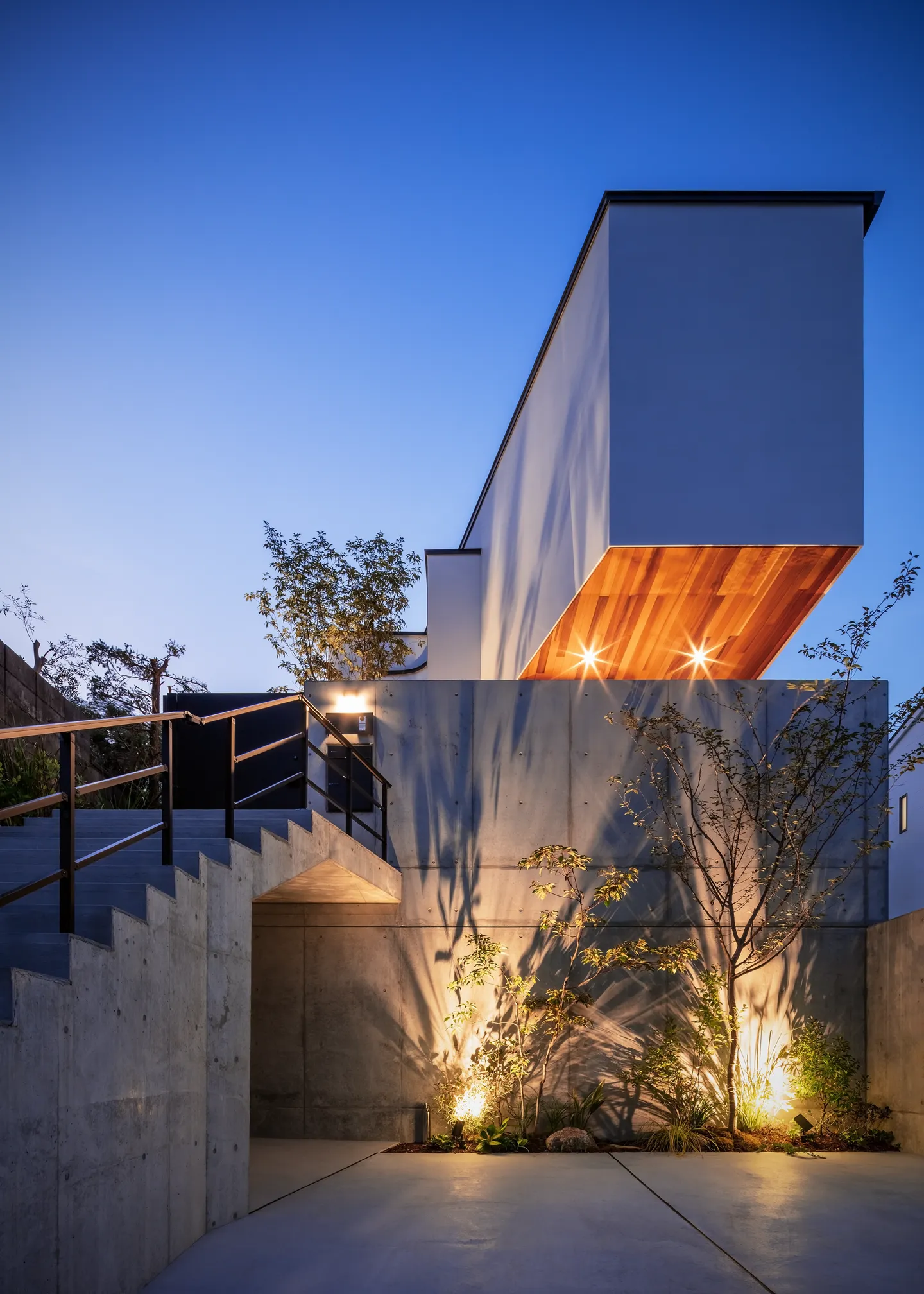
Climbing the broad steps and passing through the tall auto-lock sliding gate, one enters the front yard where a symbolic tree greets visitors. By integrating the entrance approach into the front yard, the limited frontage is used efficiently, securing a greater sense of openness.
By closing the east side while moderately opening toward the church side—where privacy is easier to maintain—the space allows enjoyment of borrowed views of the greenery and bell tower. A large slanted roof overhead enables the yard to function as an outdoor living room.
The LDK extends directly from this yard, maximized by placing other functions on the second floor, creating a unified spatial flow. From the LDK, one can see children off as they leave or welcome them back as they return.
To dedicate more area to family gathering spaces, private rooms are kept minimal. The children’s room, with a 1.8 m-wide closet and built-in bookshelf, fits a bed and desk. Though only 4-tatami in size, it provides sufficient function.
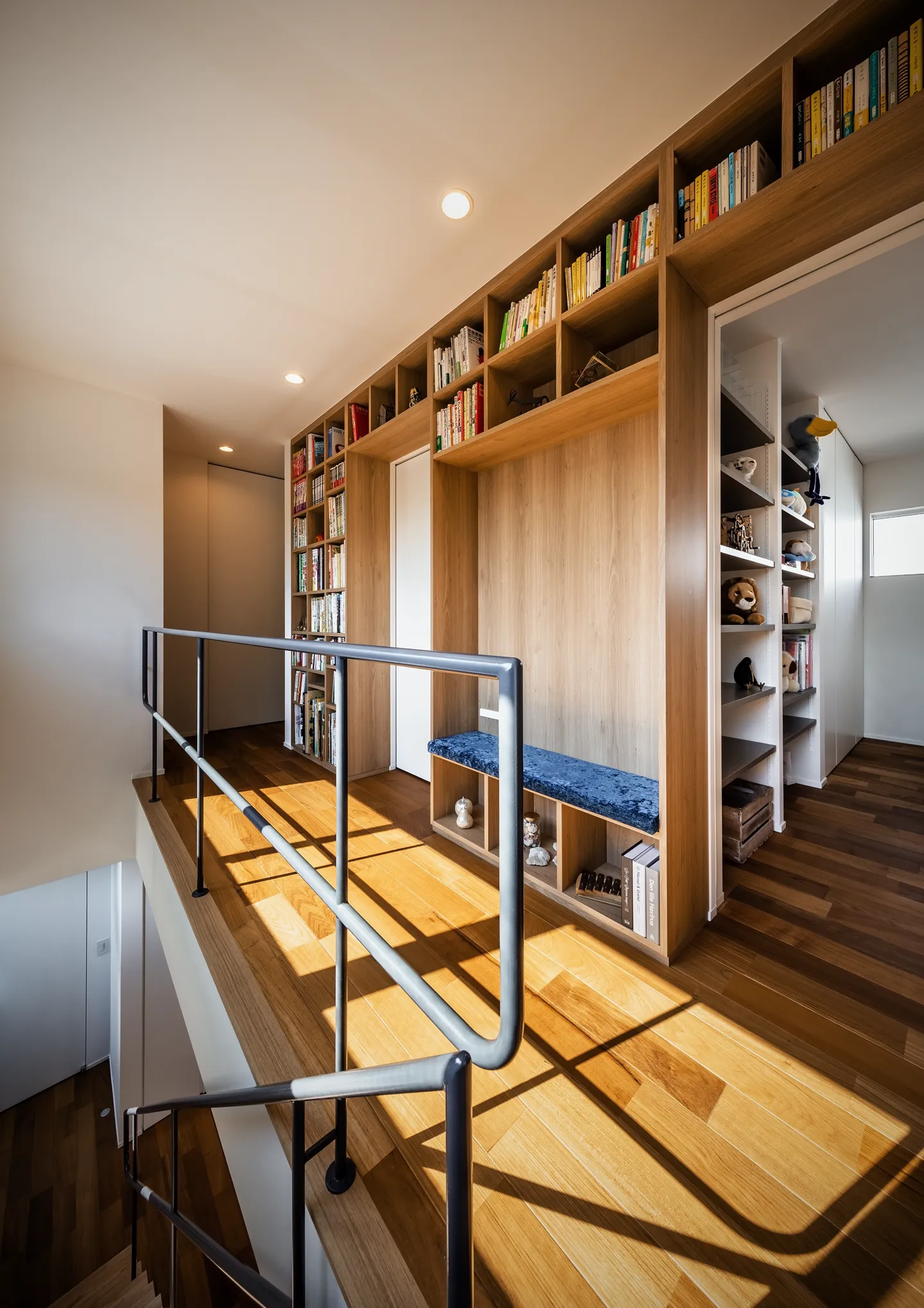
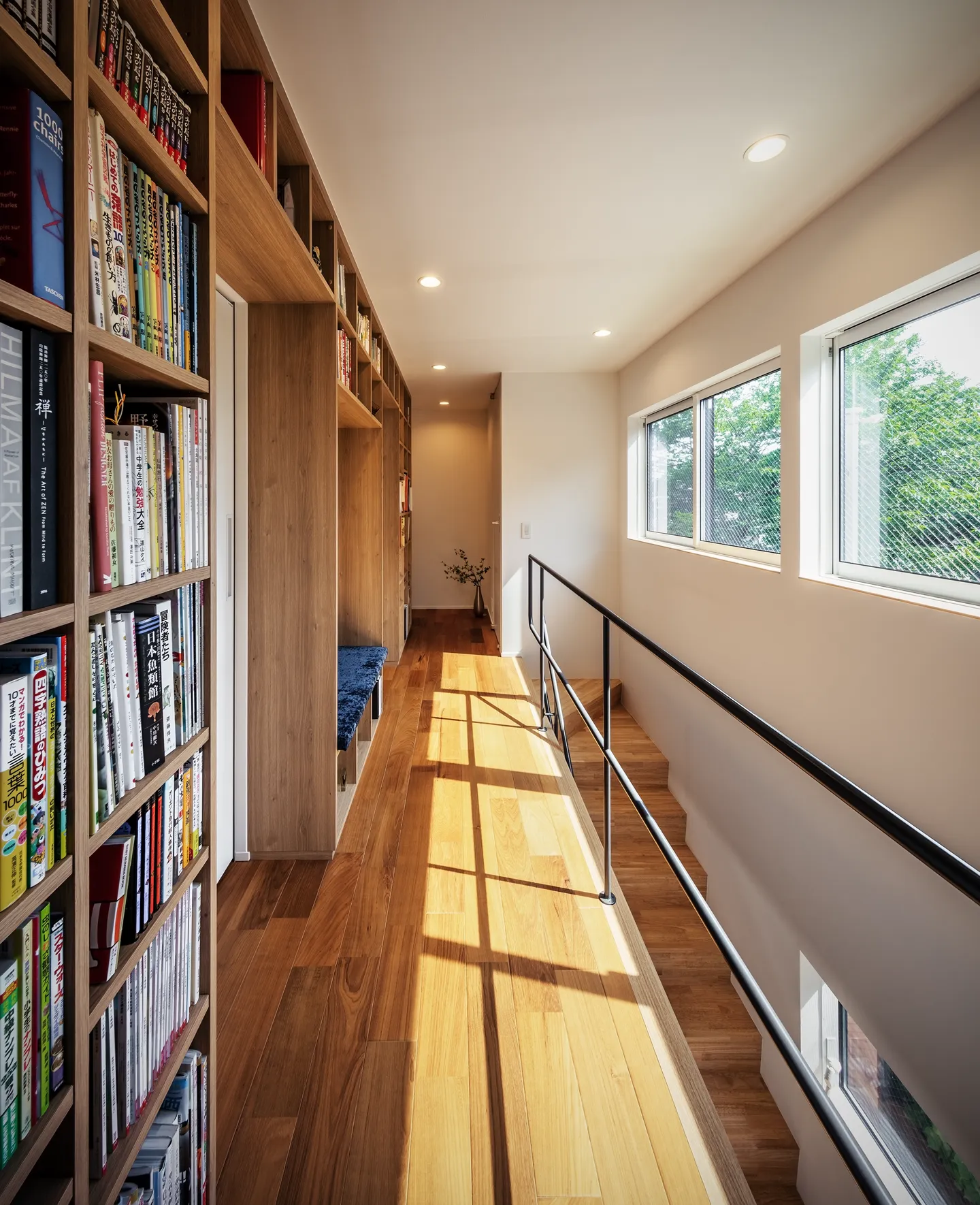
To complement this, the corridor is furnished as a library. On a long, narrow site, corridors are unavoidable, yet a dark and narrow passage would feel oppressive and wasteful. Here, a wall-mounted bookshelf and a bench along the children’s room wall transform the corridor into an expanded functional space, incorporating the stairwell’s vertical openness and offering views of the neighboring church through its window. It becomes a bright, open area rather than a mere passage.
| Builder | Susuki Komuten Co., Ltd. |
|---|---|
| Kitchen | Cucina Kobe |
| Location | Kobe City |
|---|---|
| Use | Private residence |
| Family | Couple + 2 children |
| Year | 2022 |
| Structure | Wooden / 2F |
|---|---|
| Site Area | 162.94 m² |
| Total Floor Area | 36 tsubo (≈119 m²) |
| Total Cost | 37.5 million JPY |