
Shaping
Site Analysis

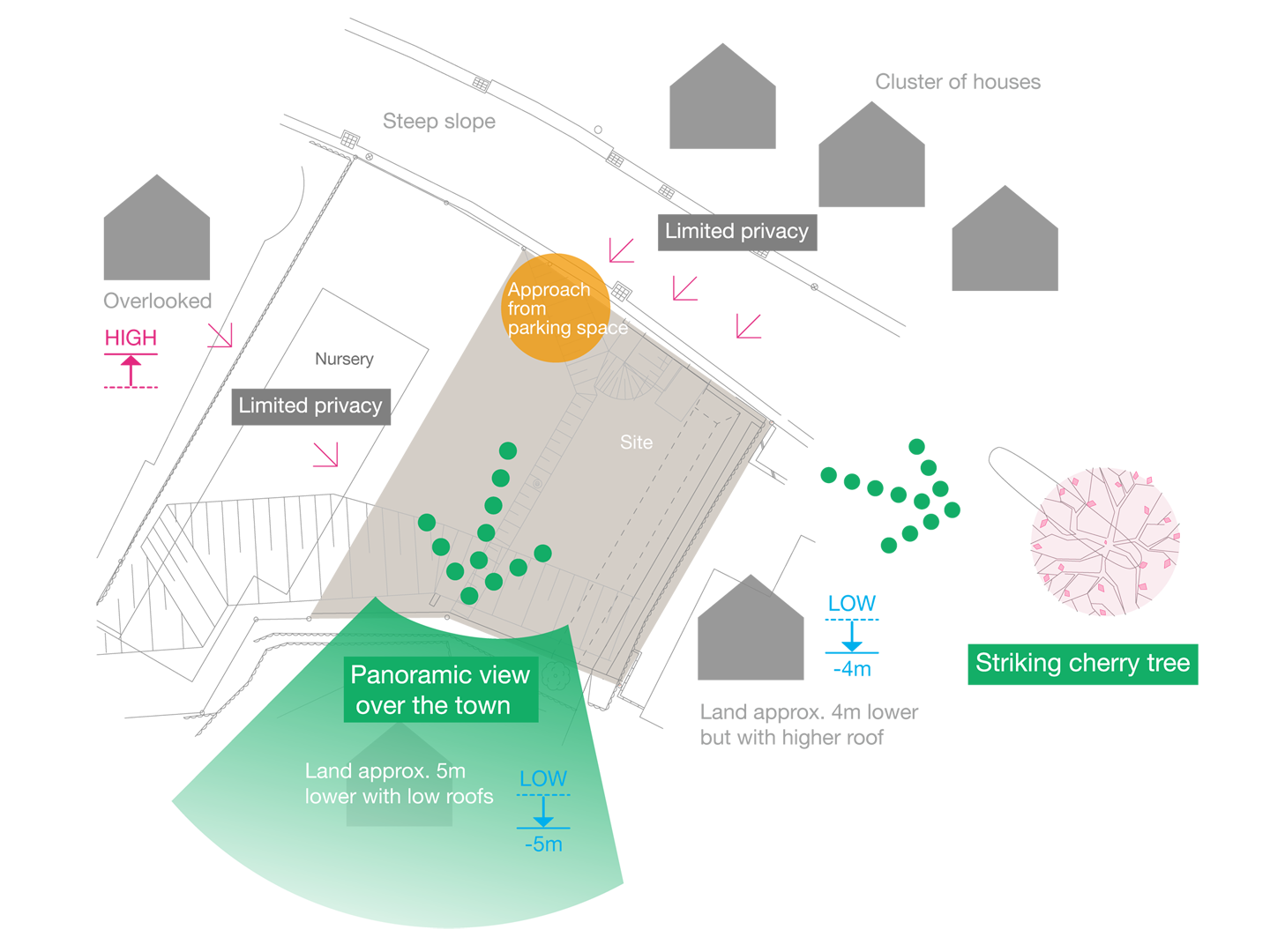
Plans


Photo by Akiyoshi Fukuzawa


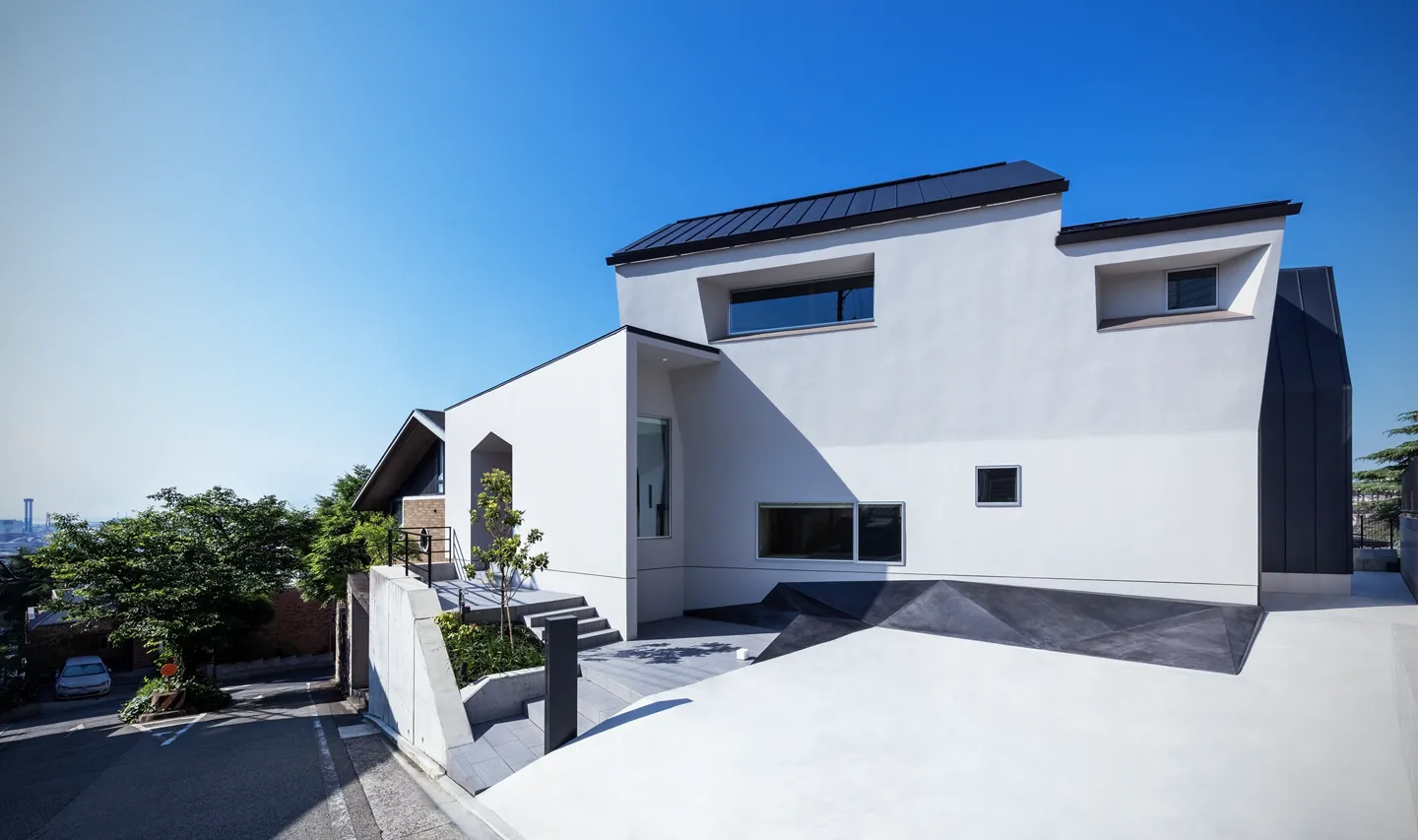
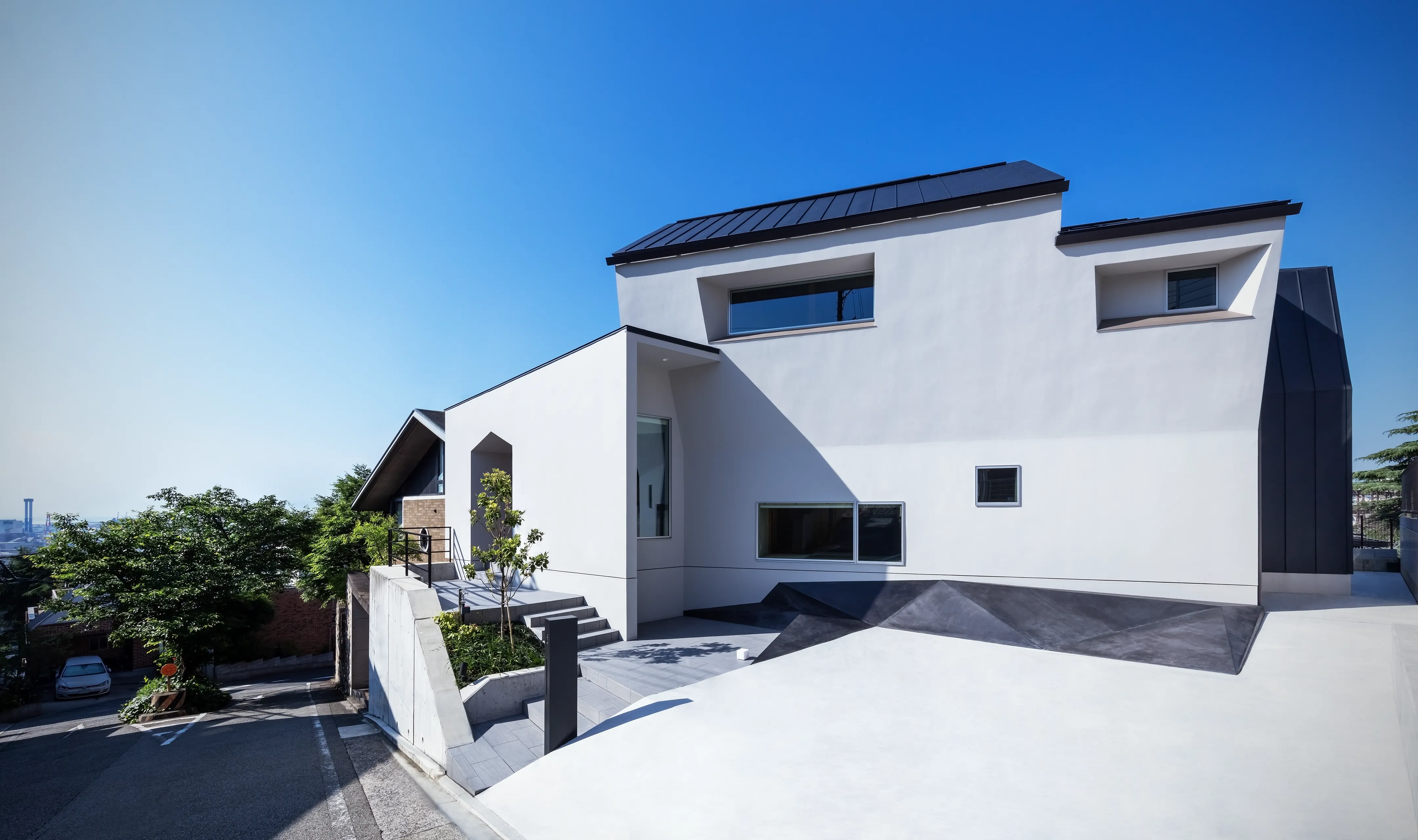
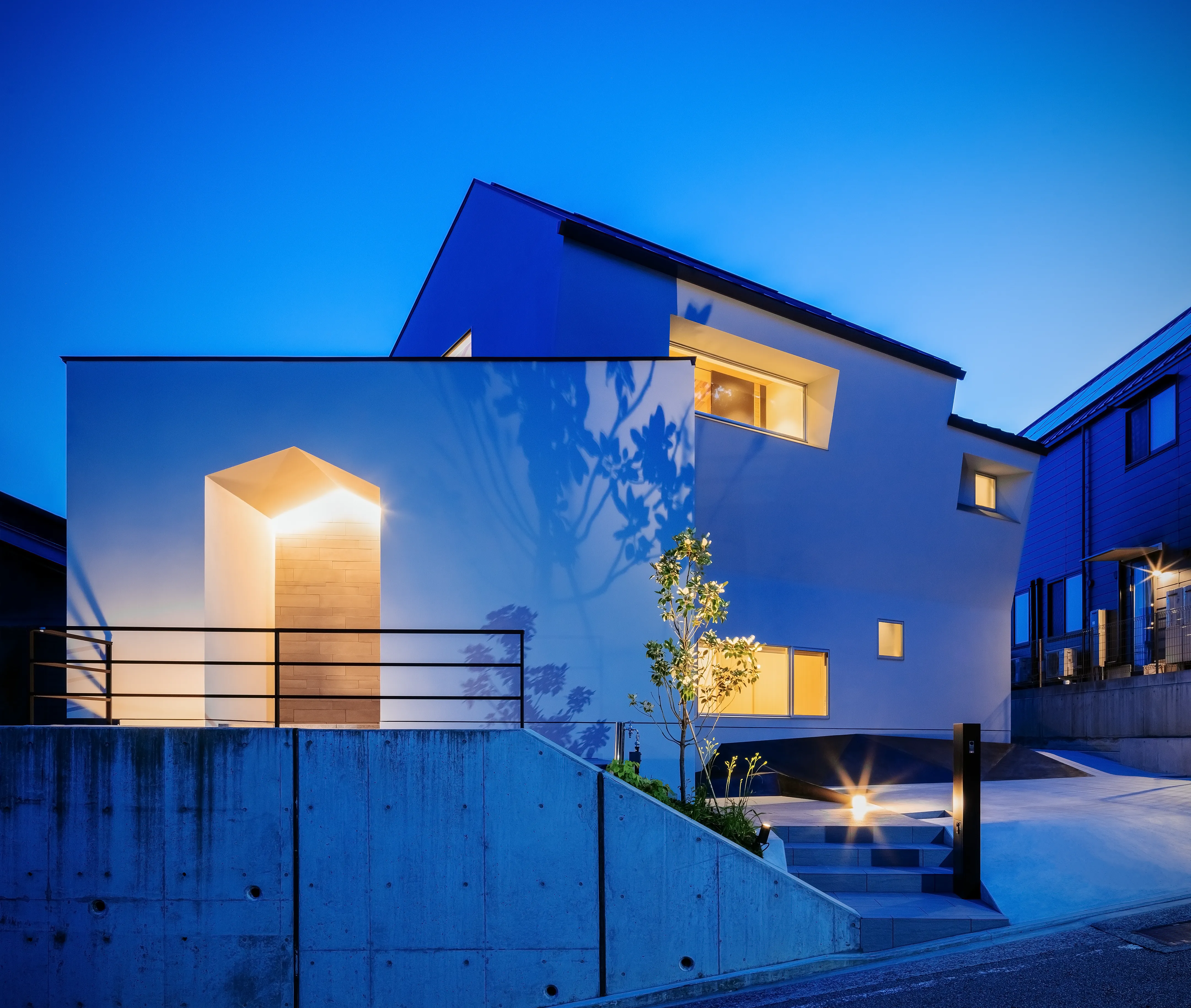
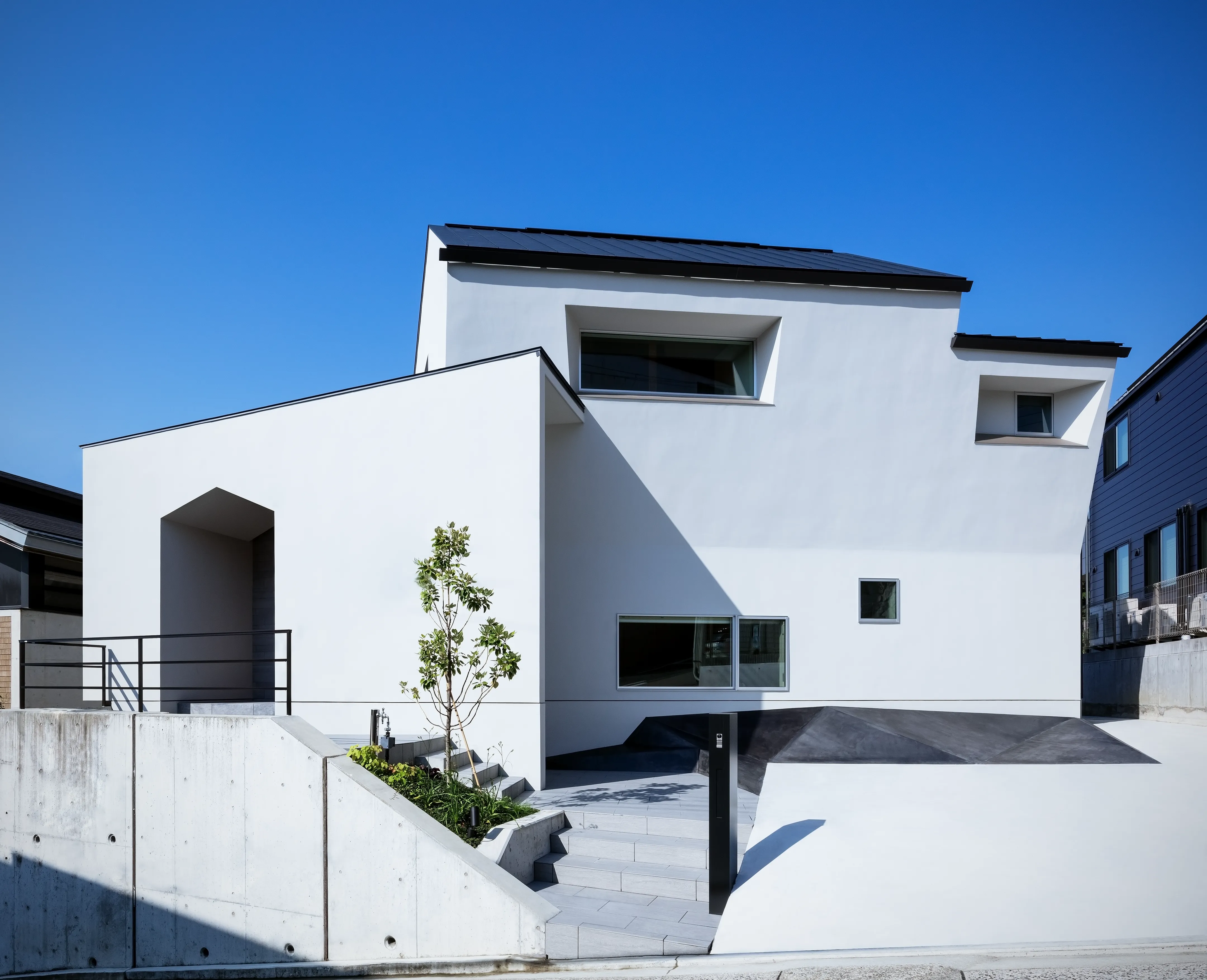
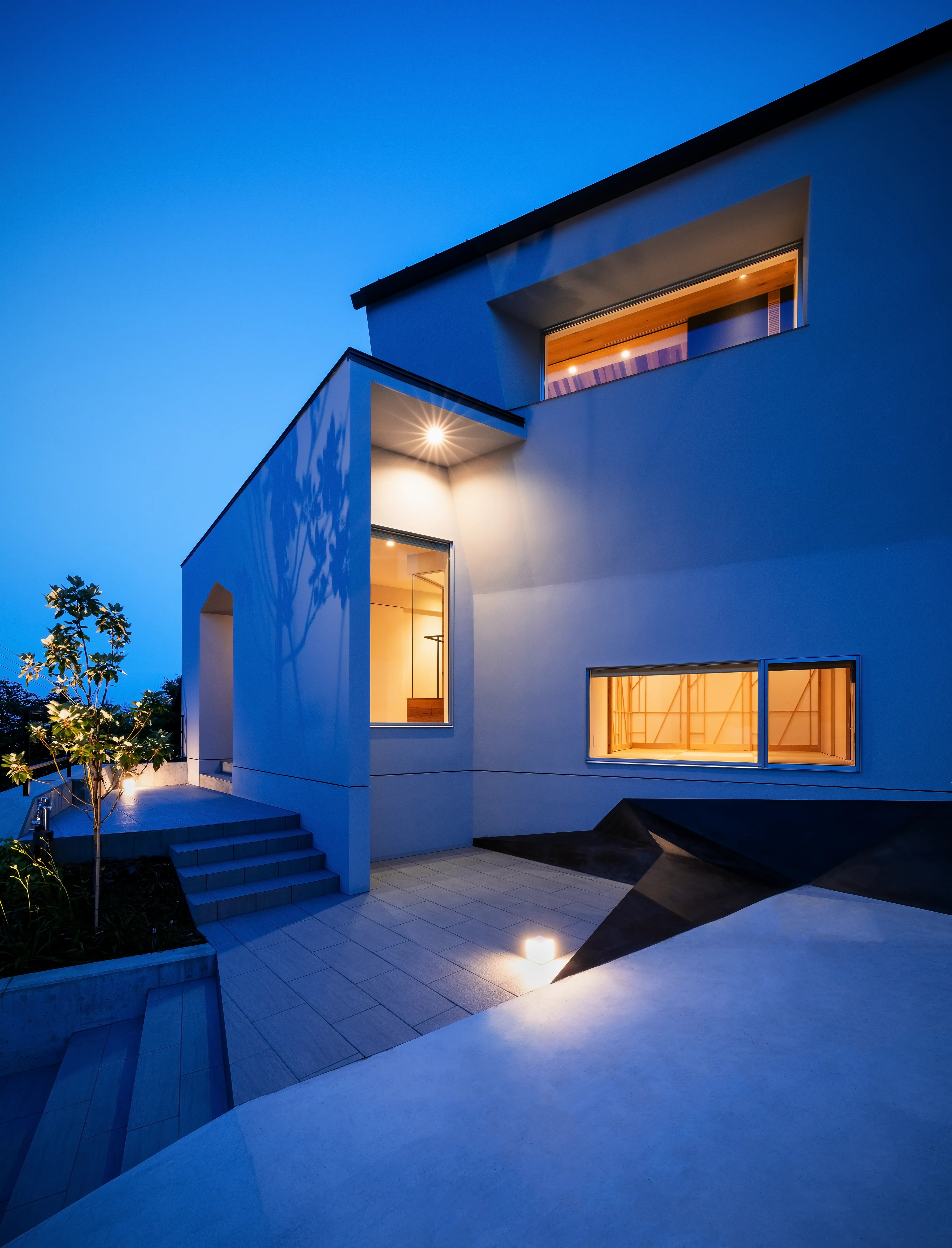
The site lies at the foot of the mountains in Kobe, reached by climbing a steep slope to a place with sweeping views. It is part of a quiet, upscale residential district characteristic of Kobe, where large houses stand with space around them. Here we planned a two-story wooden house with a building footprint of 27 tsubo (≈89 m²) and a total floor area of 48 tsubo (≈159 m²).
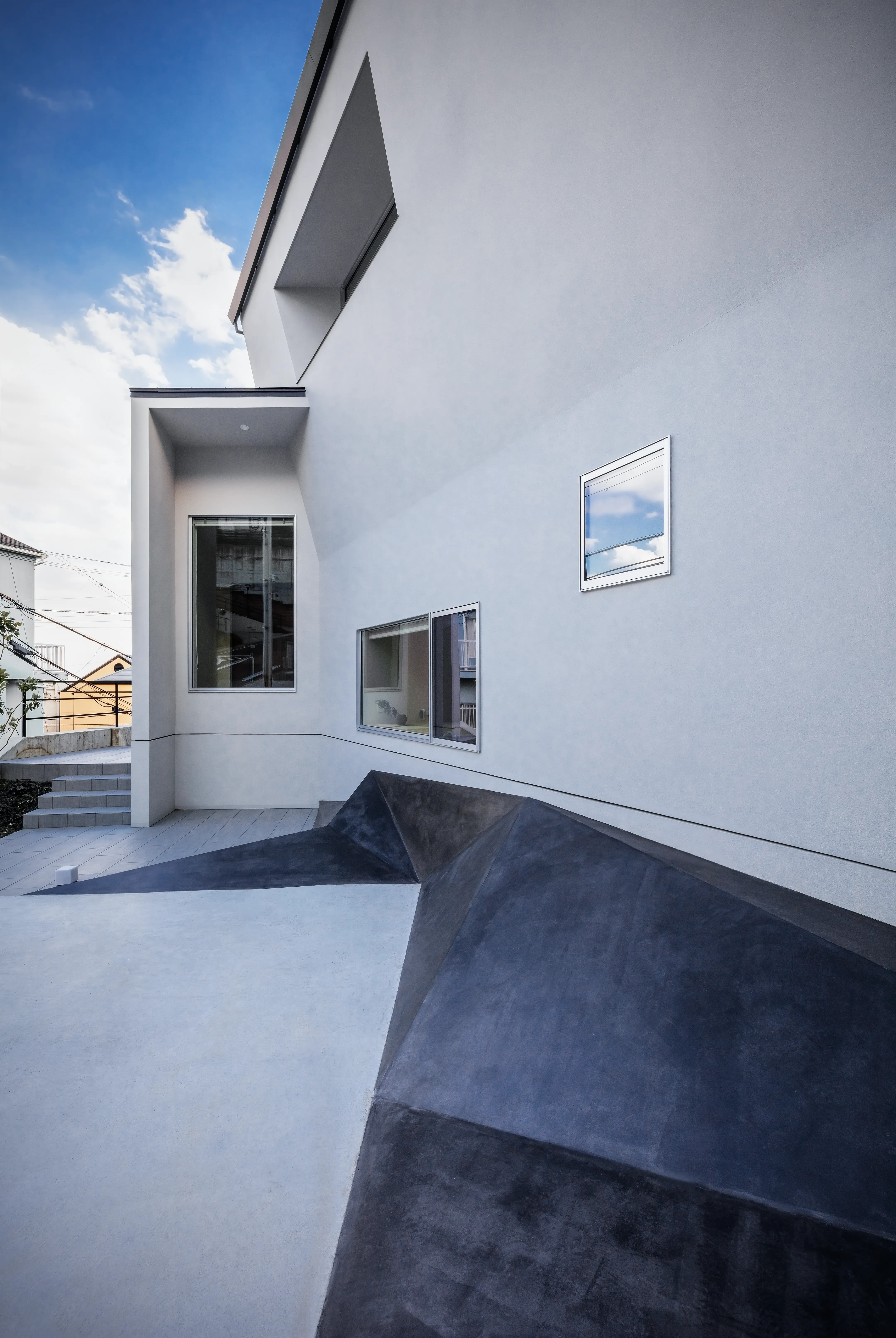
In planning, our first concern was “where” and “in what kind of space” to set the best vantage point for the view. With favorable surroundings and wide-open prospects, there were many options, which made the decision less straightforward. Guidance came from two conditions: the location of the parking space and approach, already fixed by the land development, and the fact that neighboring plots to the south and east are about one level lower, with the roofs of their houses also kept low. These hints helped define the layout.
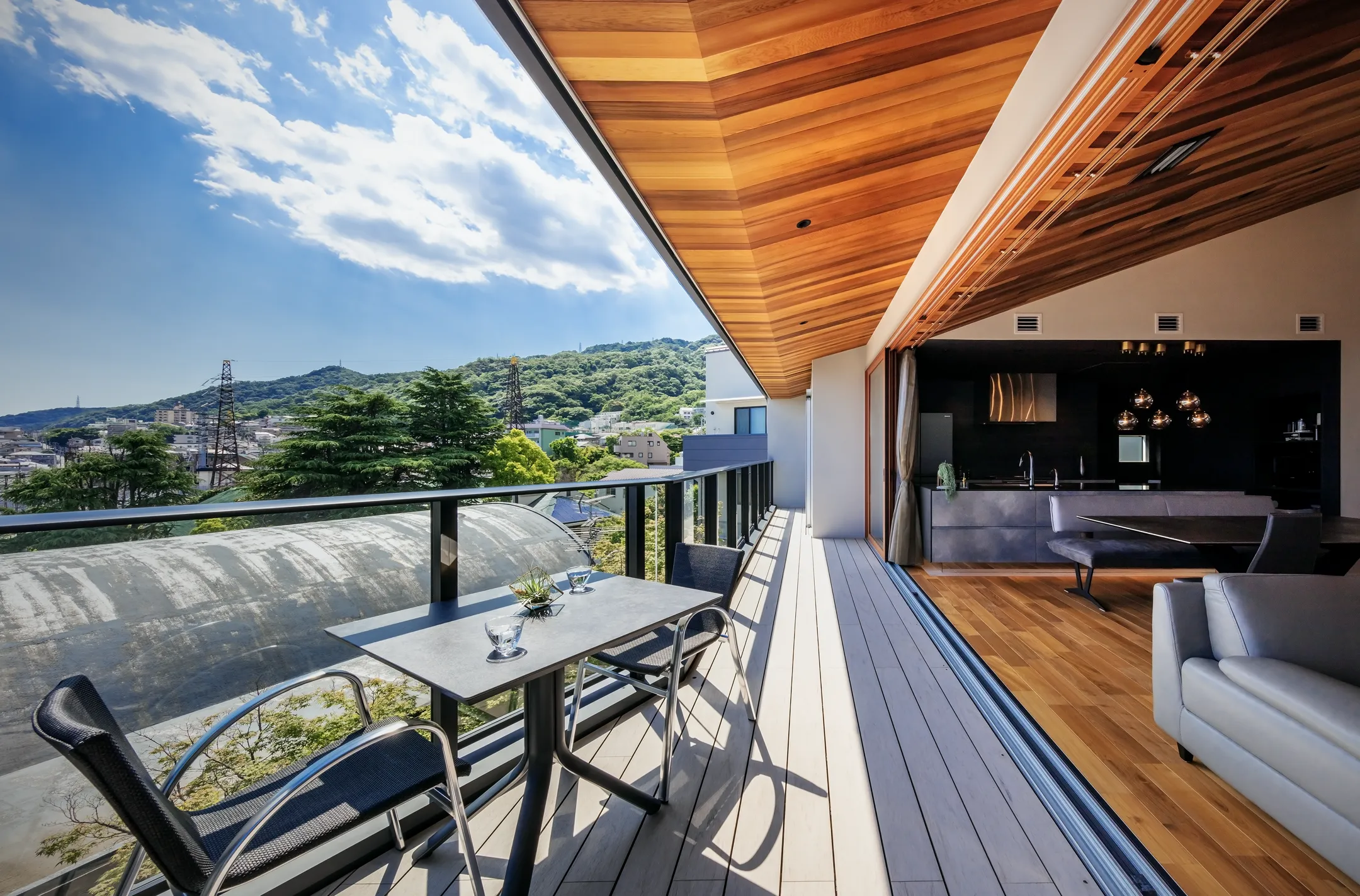
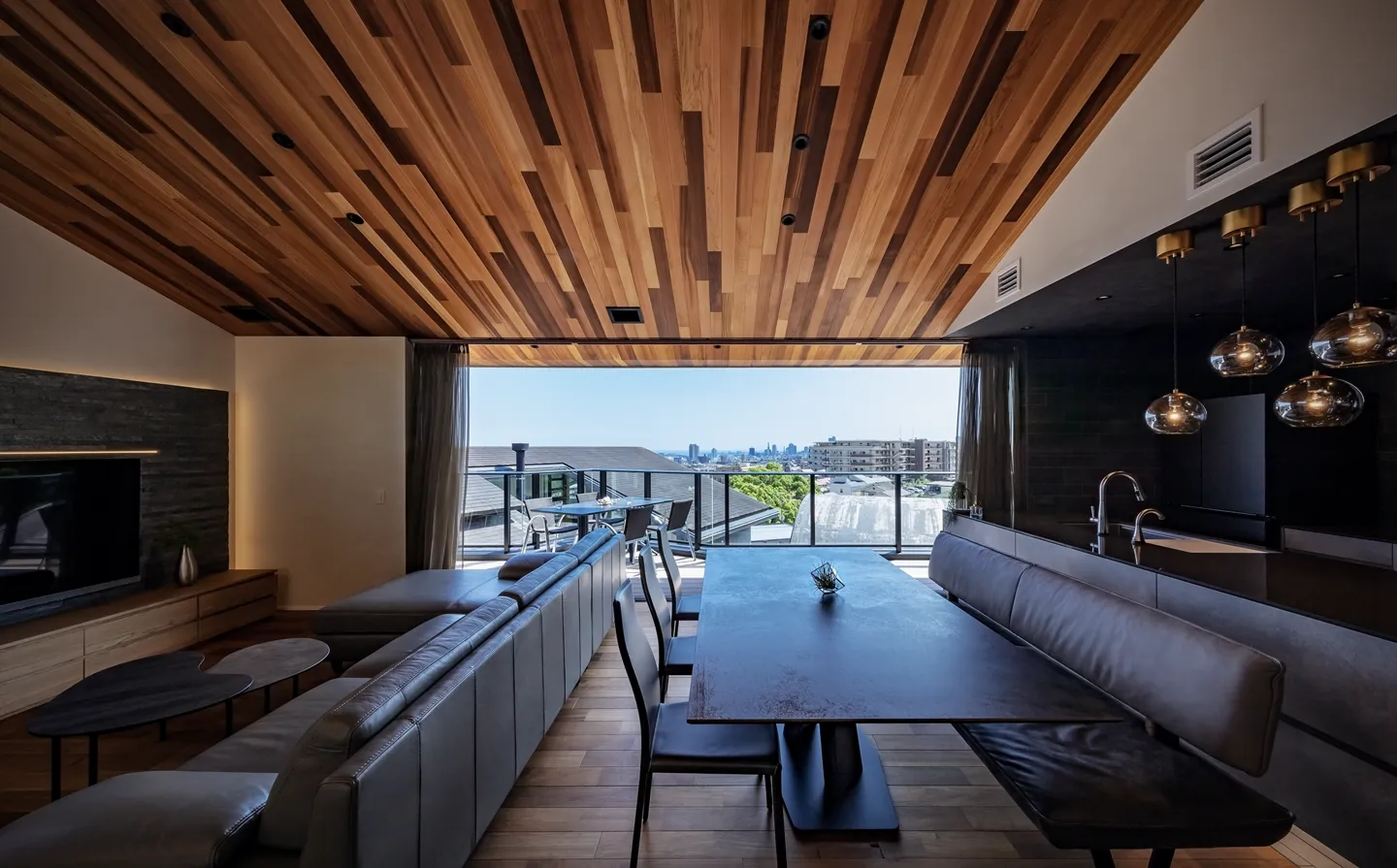
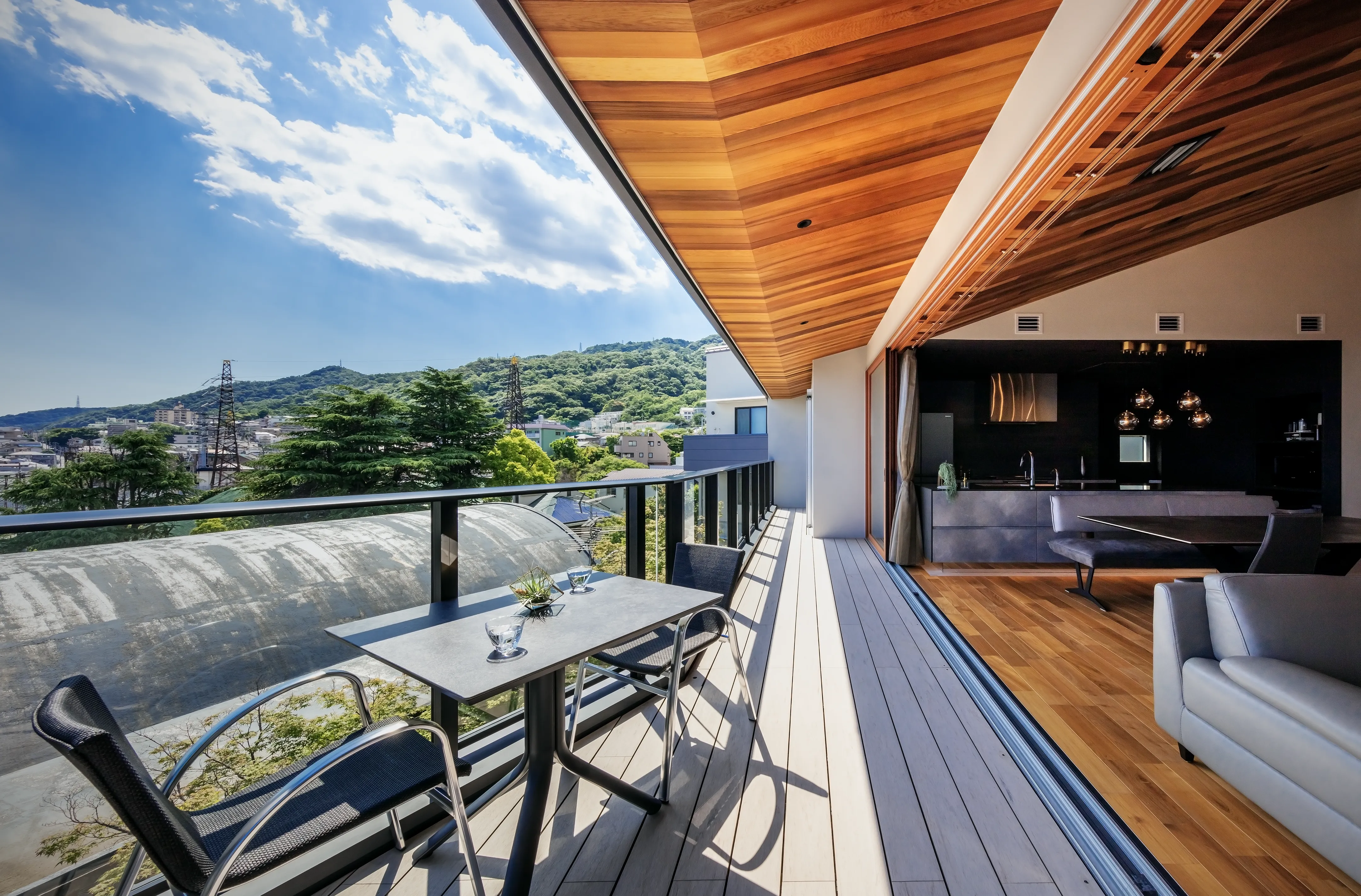
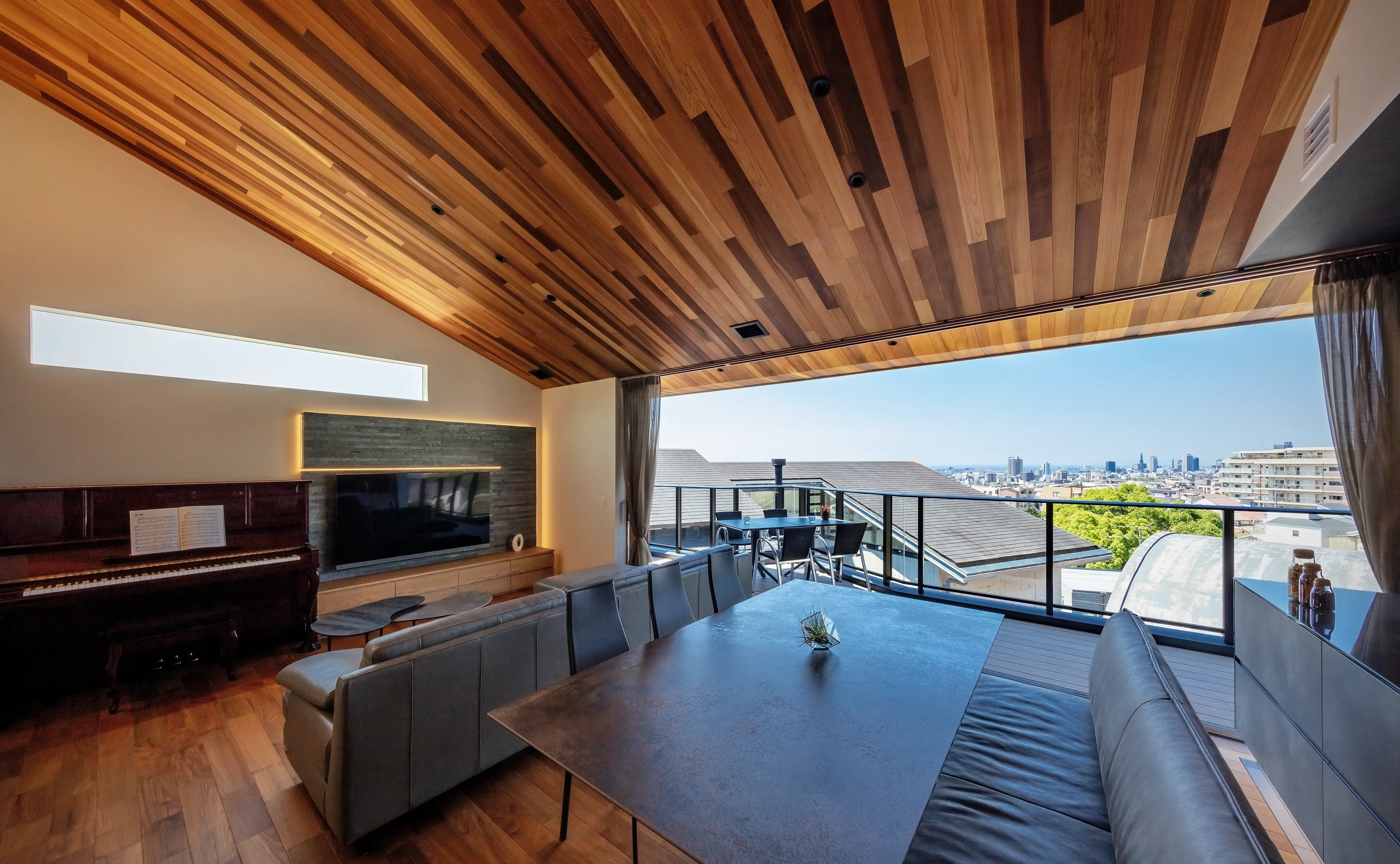
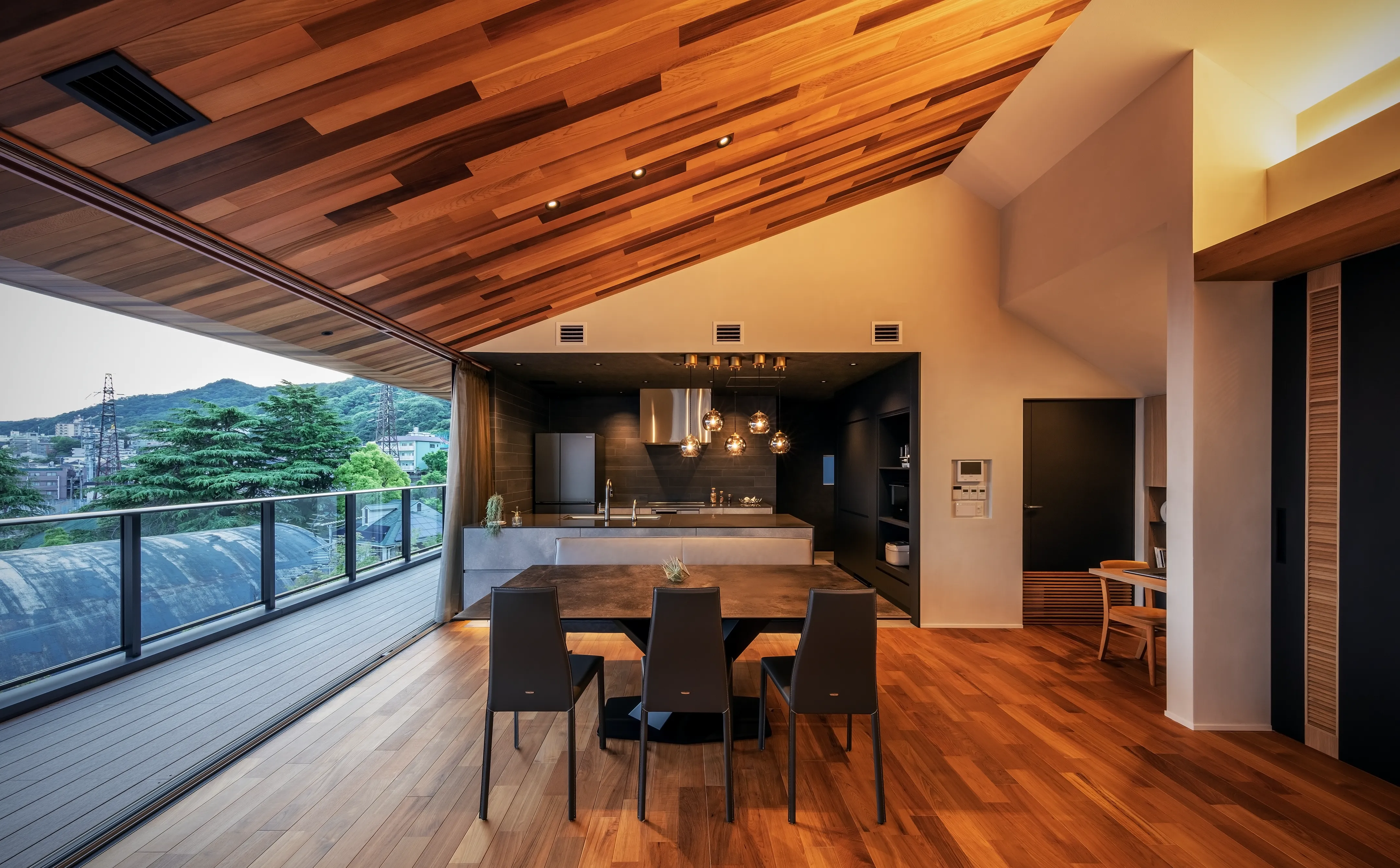
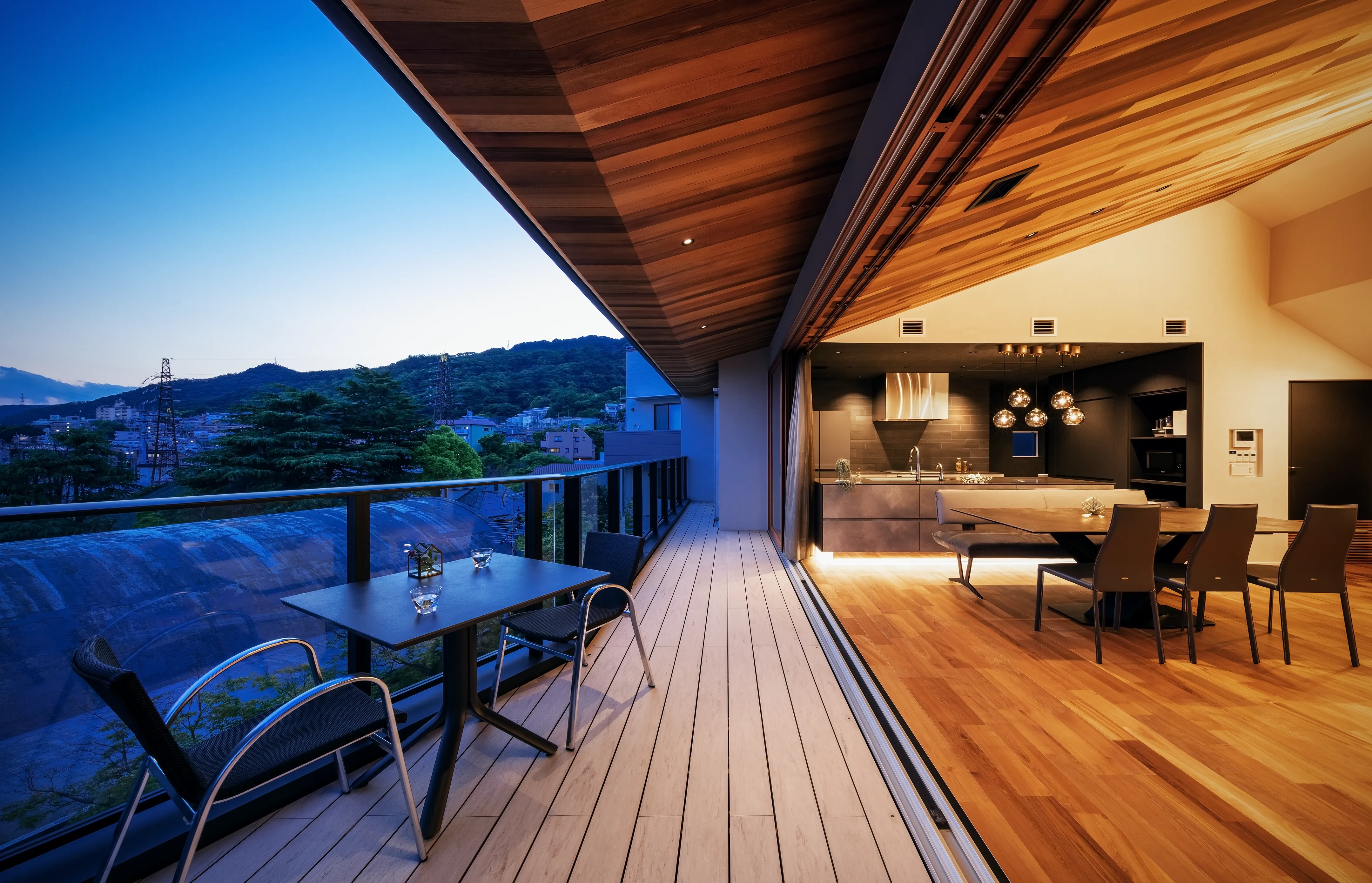
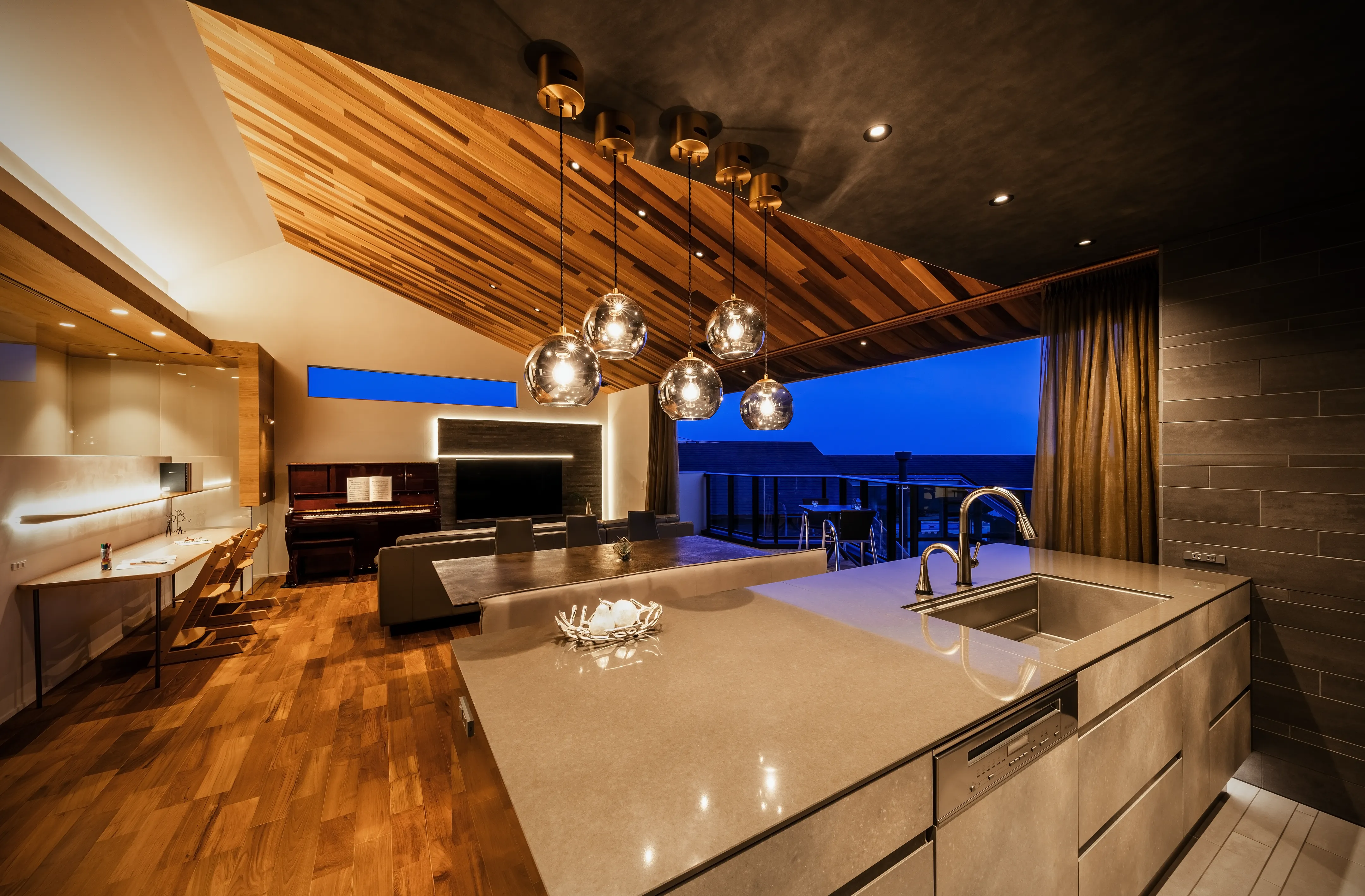
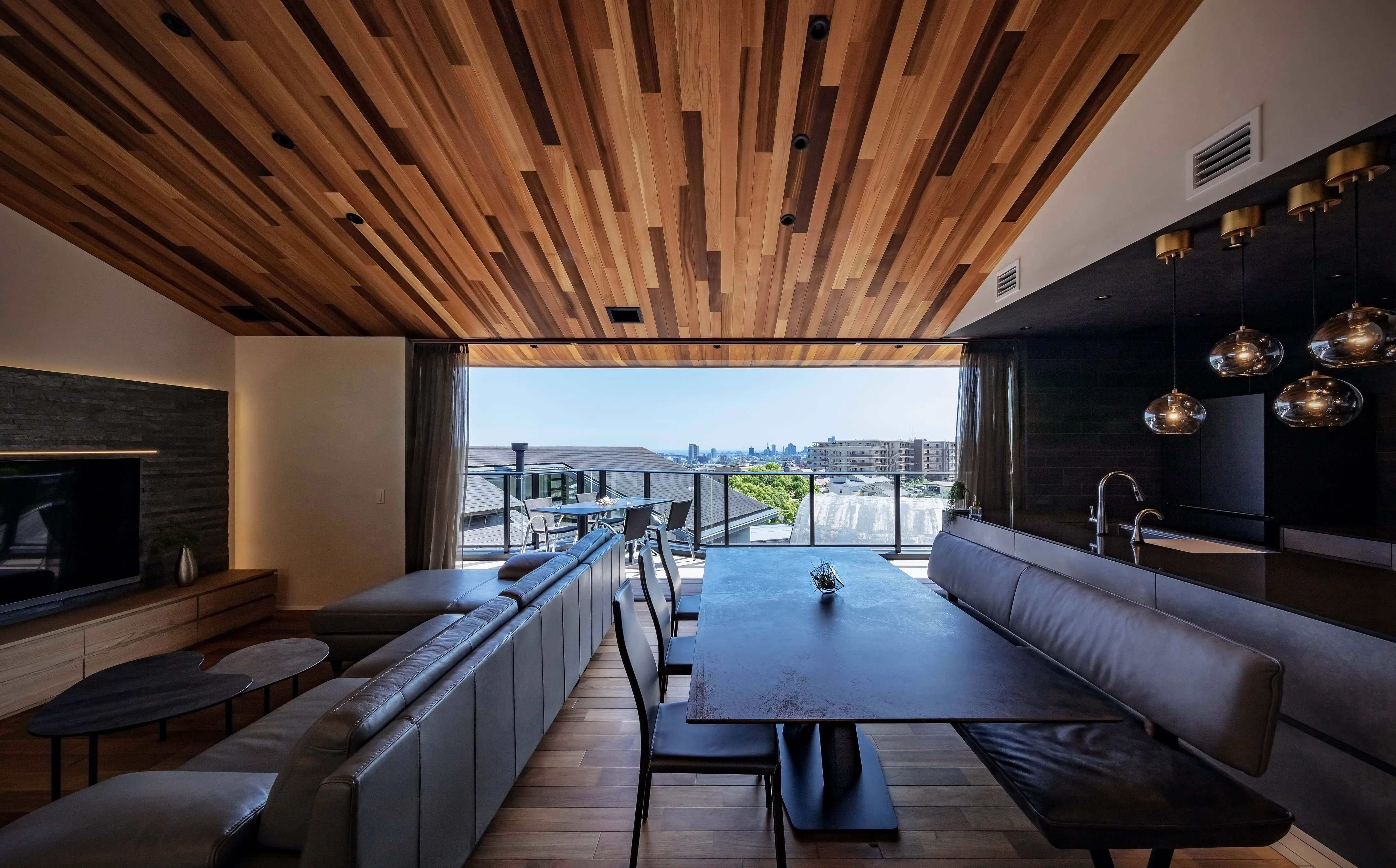
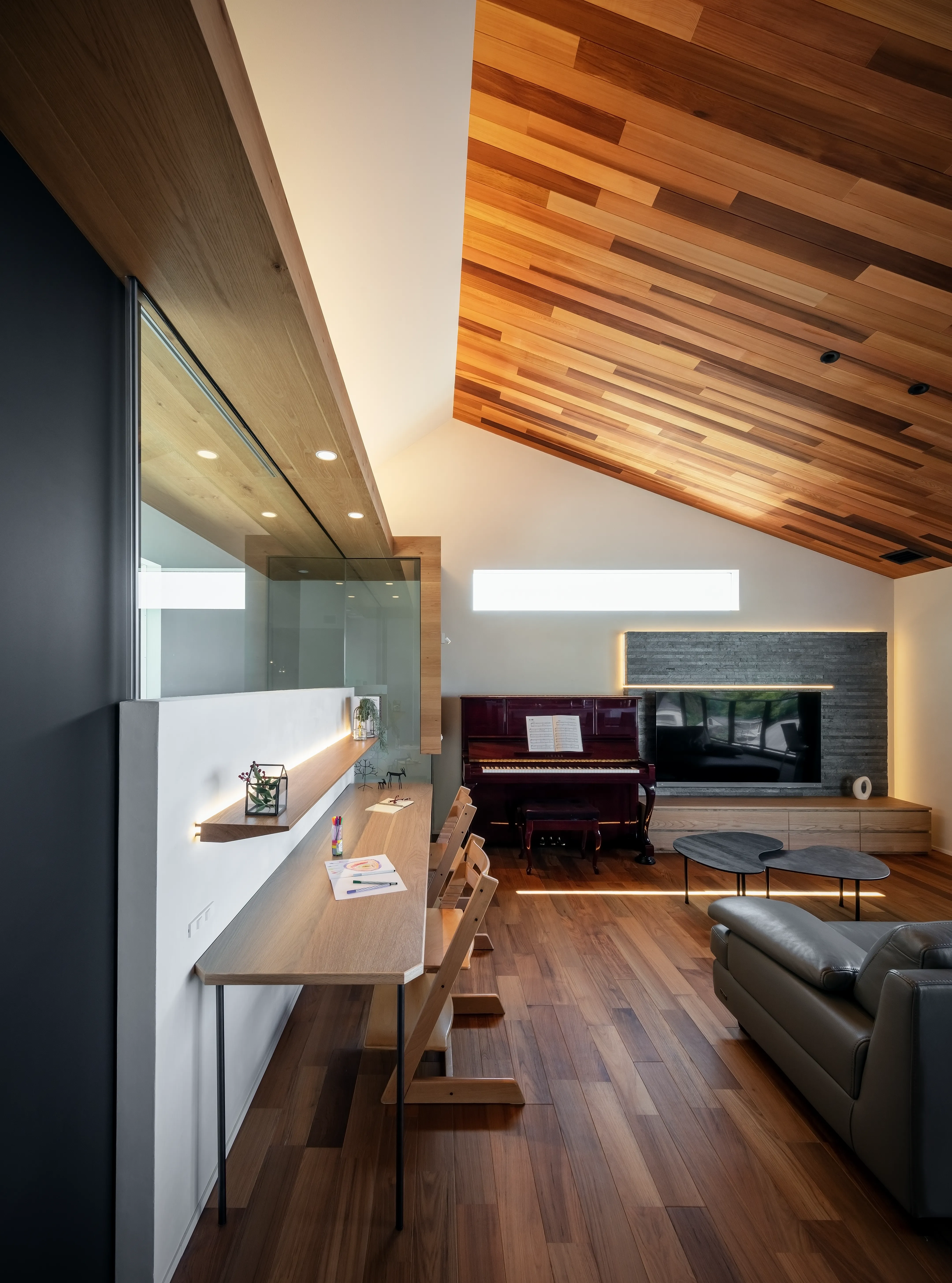
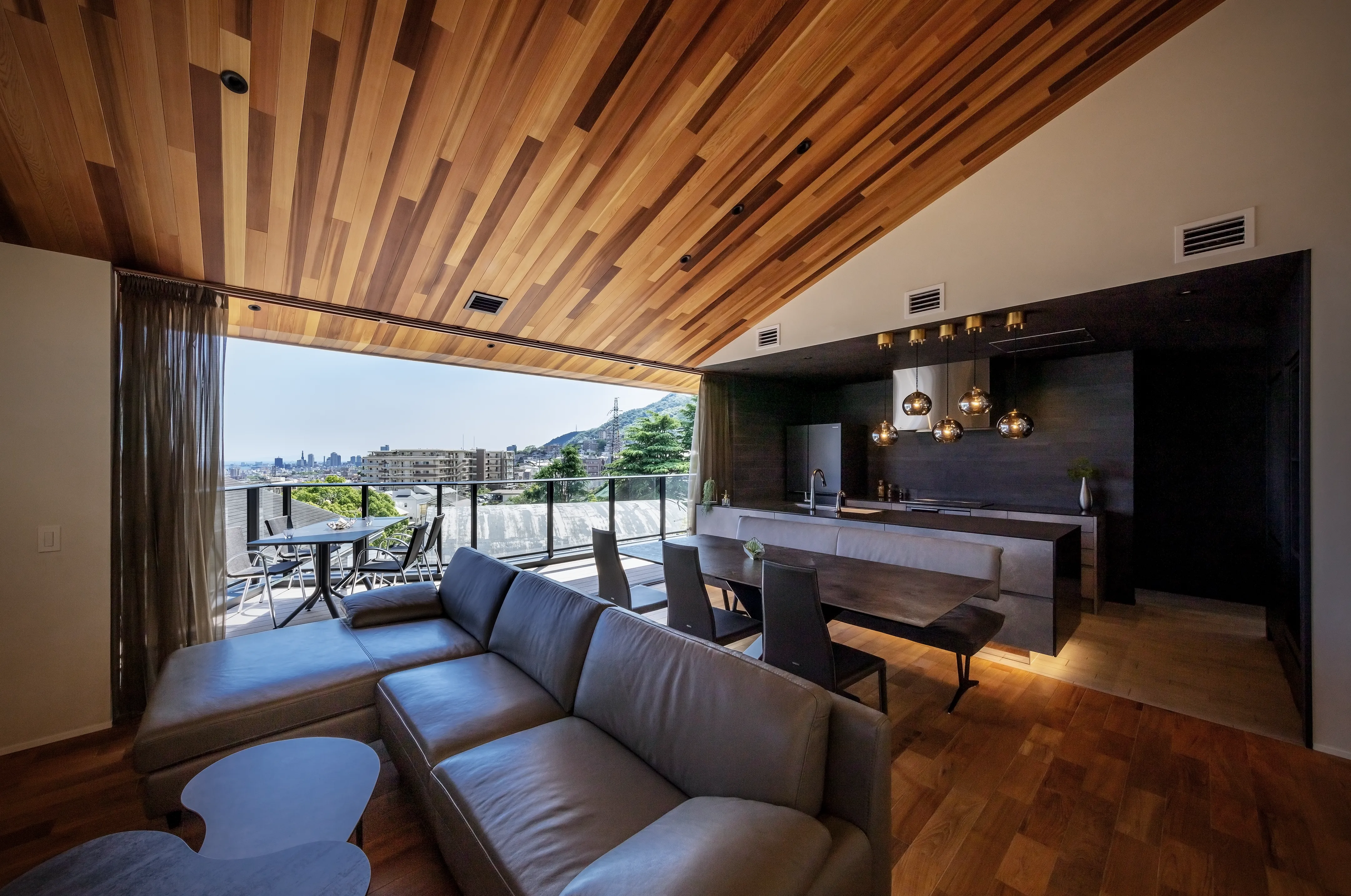
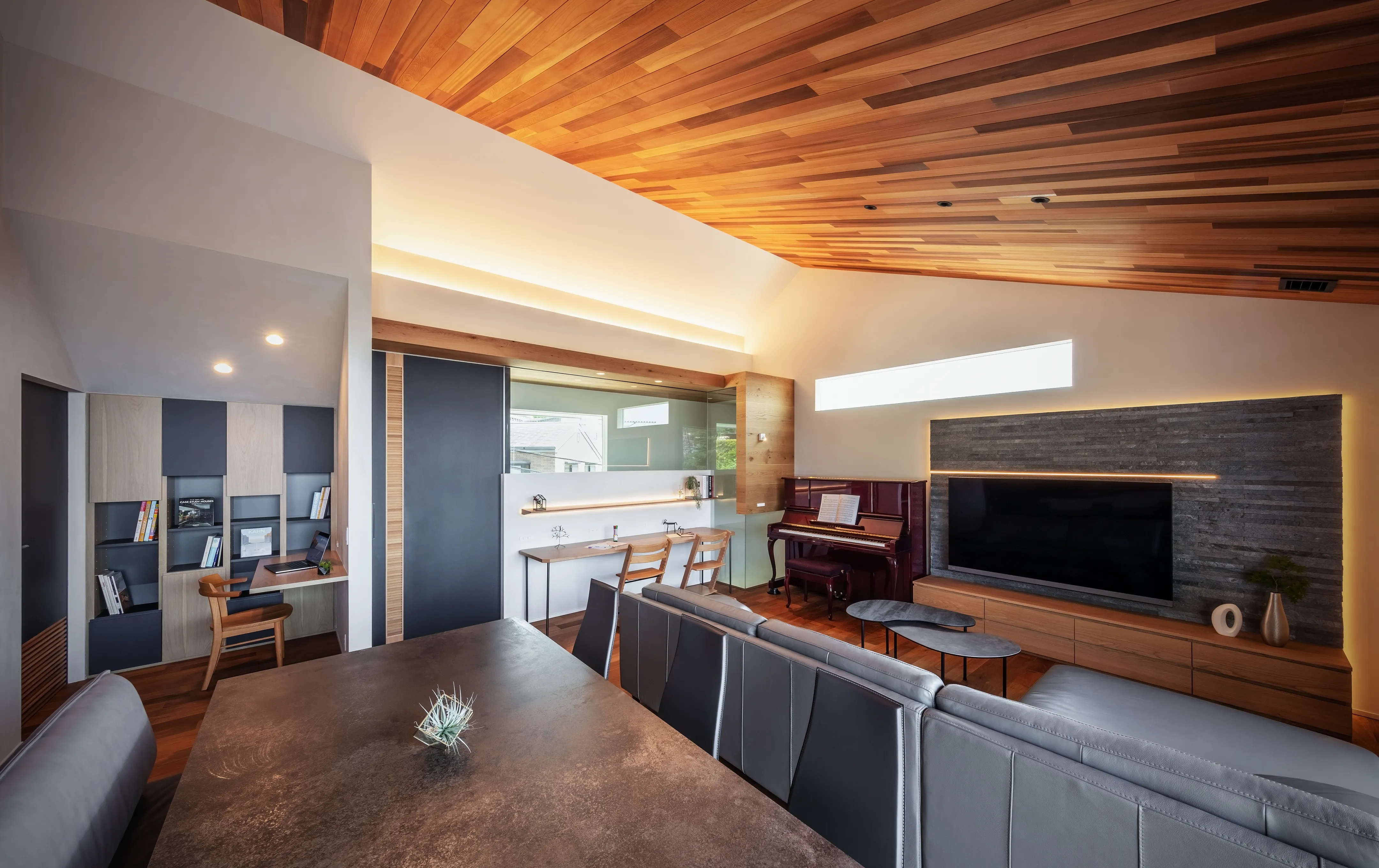
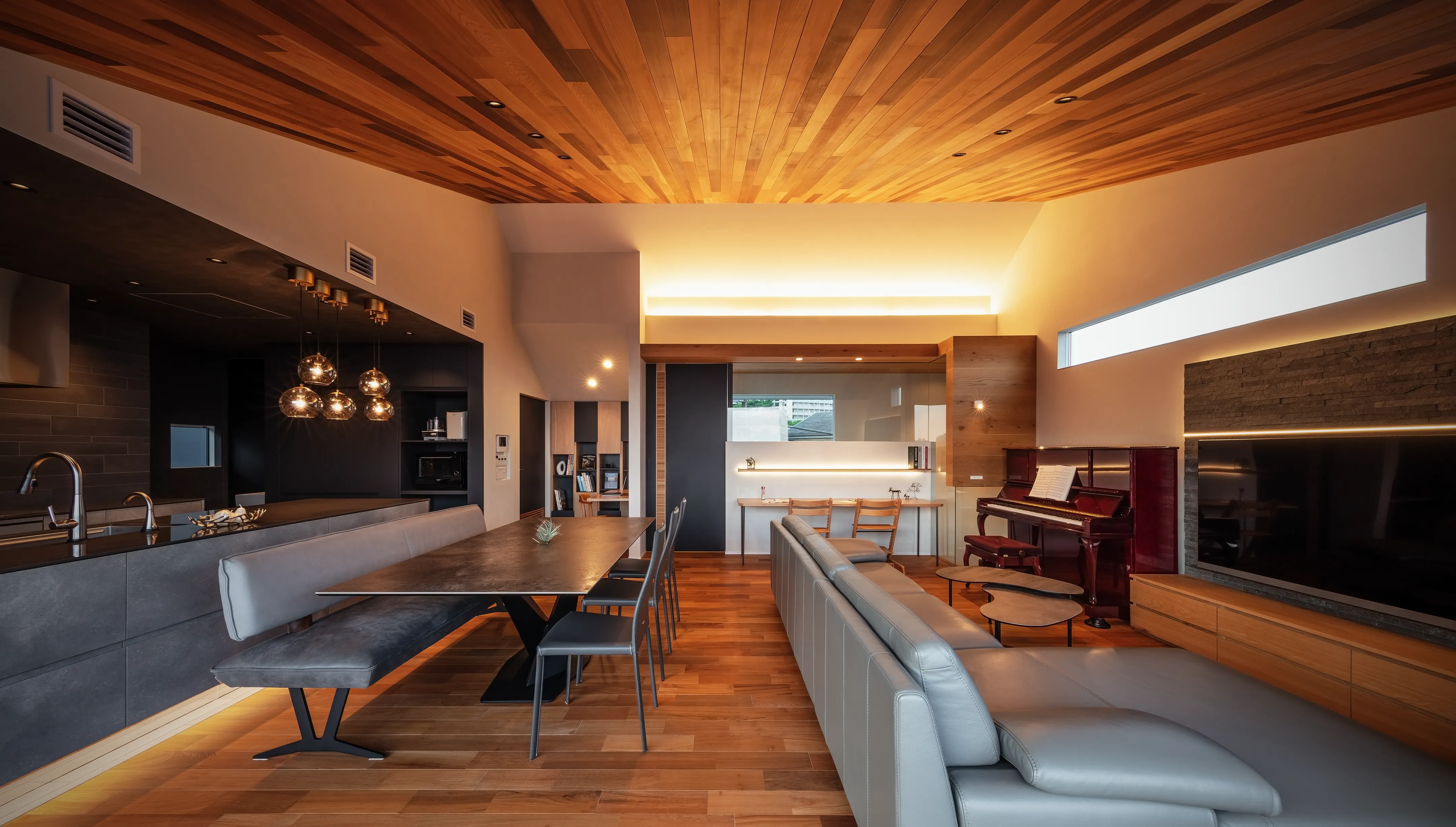
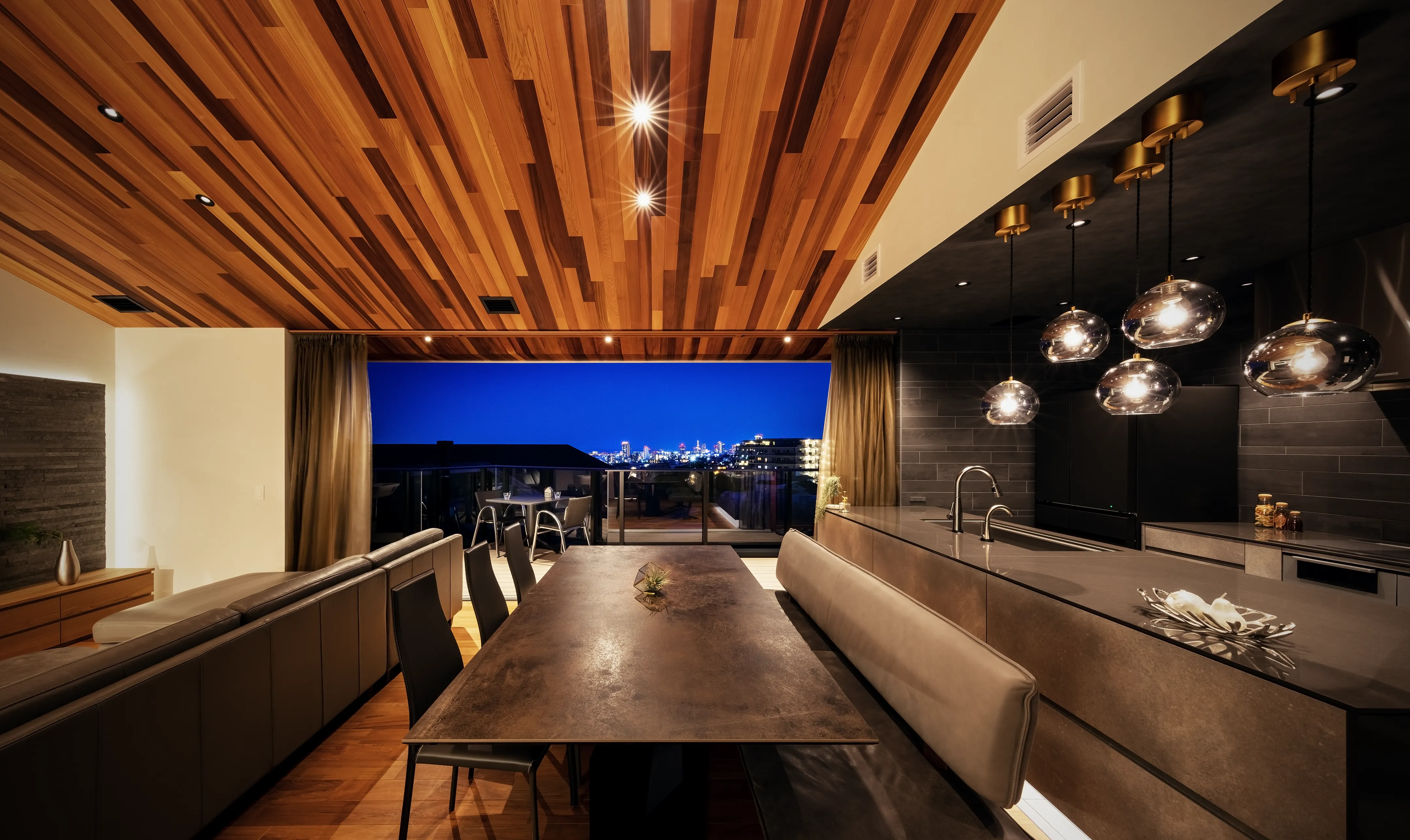
As a result, the private rooms were placed on the first floor, while the second floor was given a panoramic terrace connected directly to the family’s living-dining-kitchen (LDK). The 9.2-tatami panoramic terrace links seamlessly with the 25.8-tatami LDK through a full-opening sash, creating a space that naturally invites one outdoors, functioning almost like an outdoor living room. Together they amount to 35-tatami, with the open view beyond forming a large gathering place for the family.
On the performance side, the house is equipped with our standard high-airtight, high-insulation specification plus a whole-house air conditioning system, maintaining a clean and comfortable indoor climate at all times.
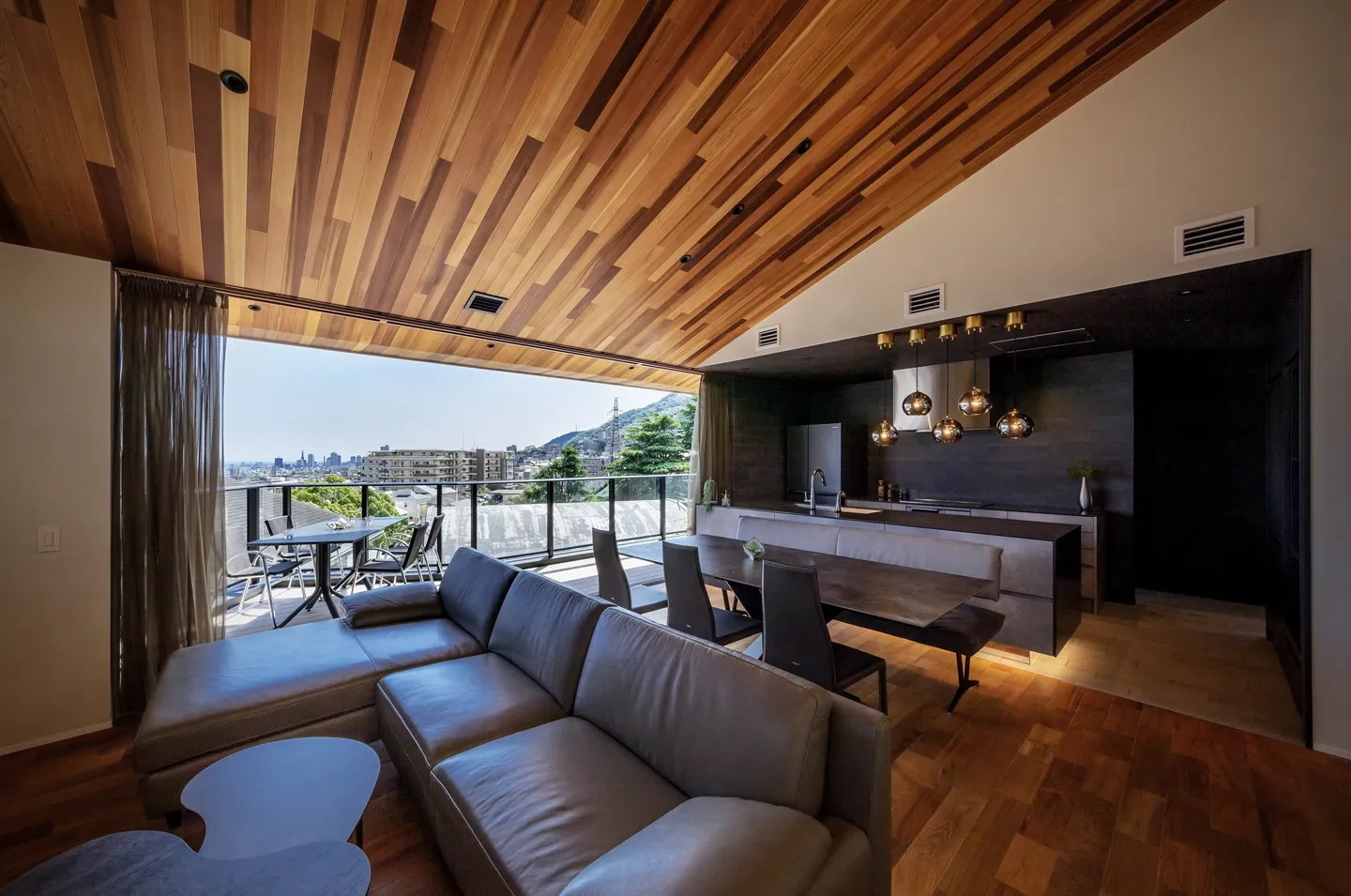
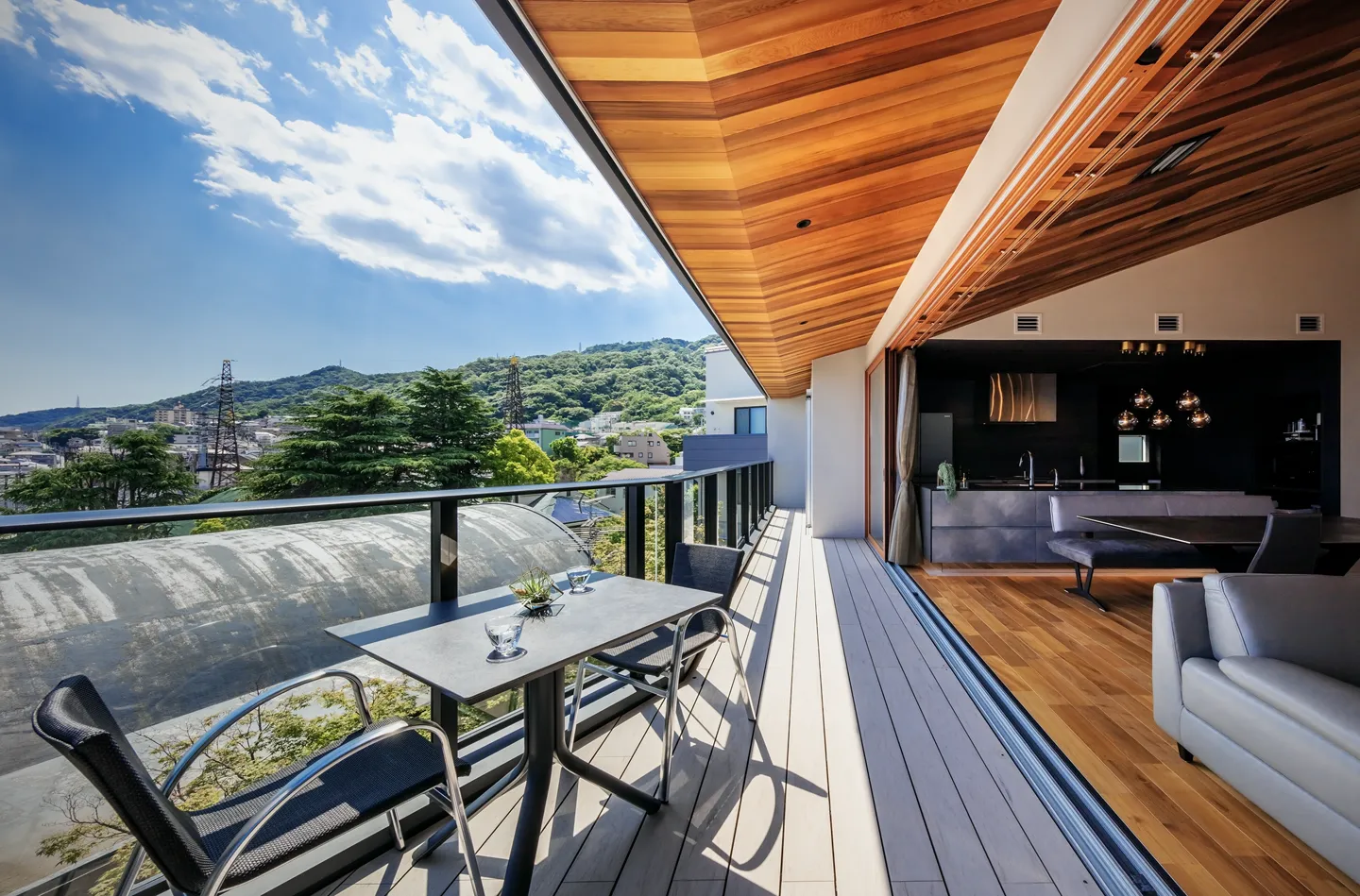
On the second floor, the LDK expands into the 9.2-tatami panoramic terrace to form a space that feels as large as 35-tatami. The opening between the LDK and the terrace measures 4.9 m wide and 2.5 m high; its four panels slide fully into the wall to open the entire span. The terrace railing uses glass panels, and the floor continues as a wood deck aligned with the LDK flooring. The usual raised waterproof threshold step of about 200 mm was eliminated by lowering the waterproof layer, allowing a flat transition. These elements create both openness and continuity that encourage stepping outside.
This full-open aperture is made possible by wooden sashes with the Hebeschiebe (lift-and-slide system) developed in Germany. Operated by handle, the heavy panels lift slightly and slide with ease. At 1,300 mm per panel, their large size minimizes vertical mullions when closed, preserving an unbroken view toward the panorama.
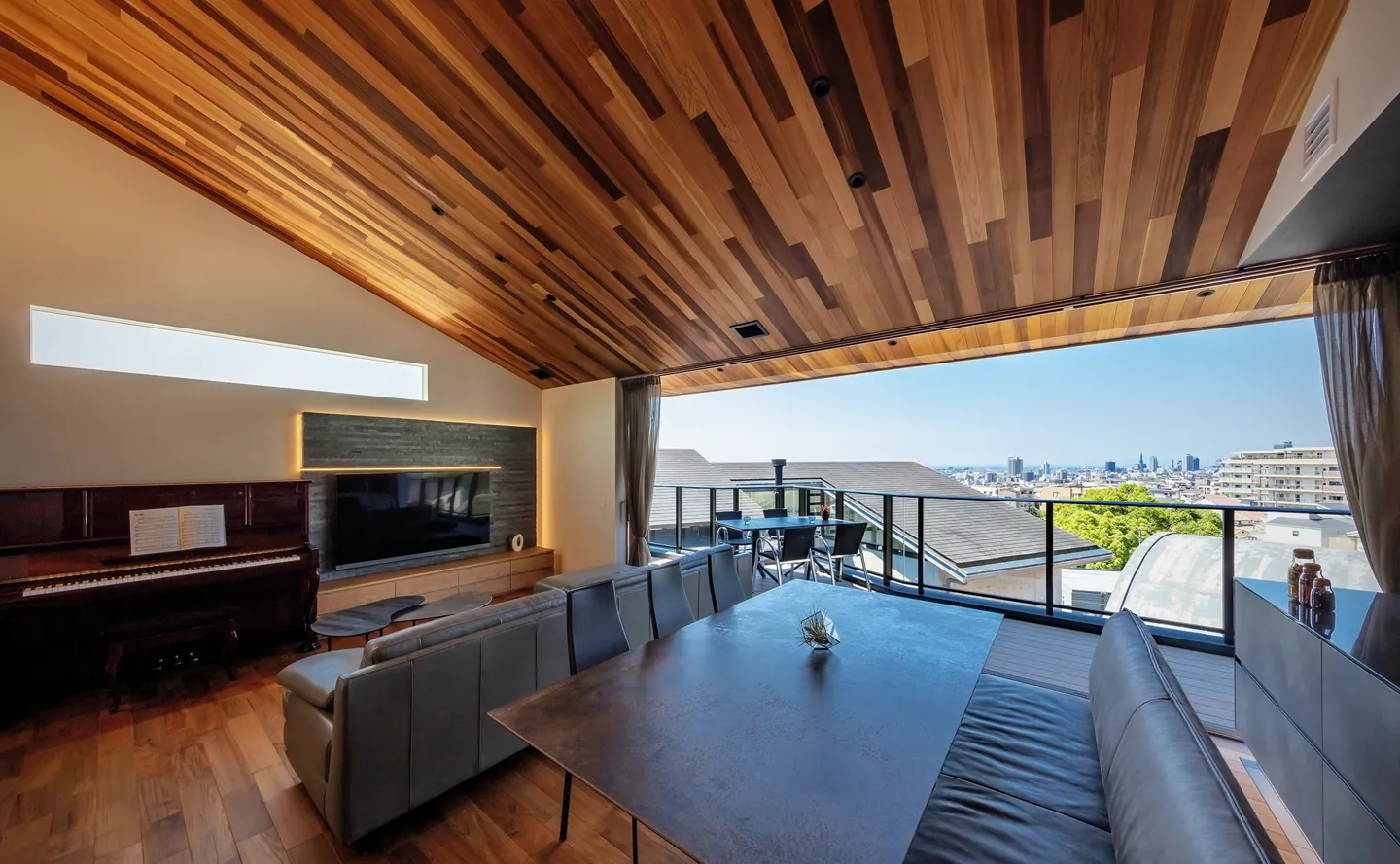
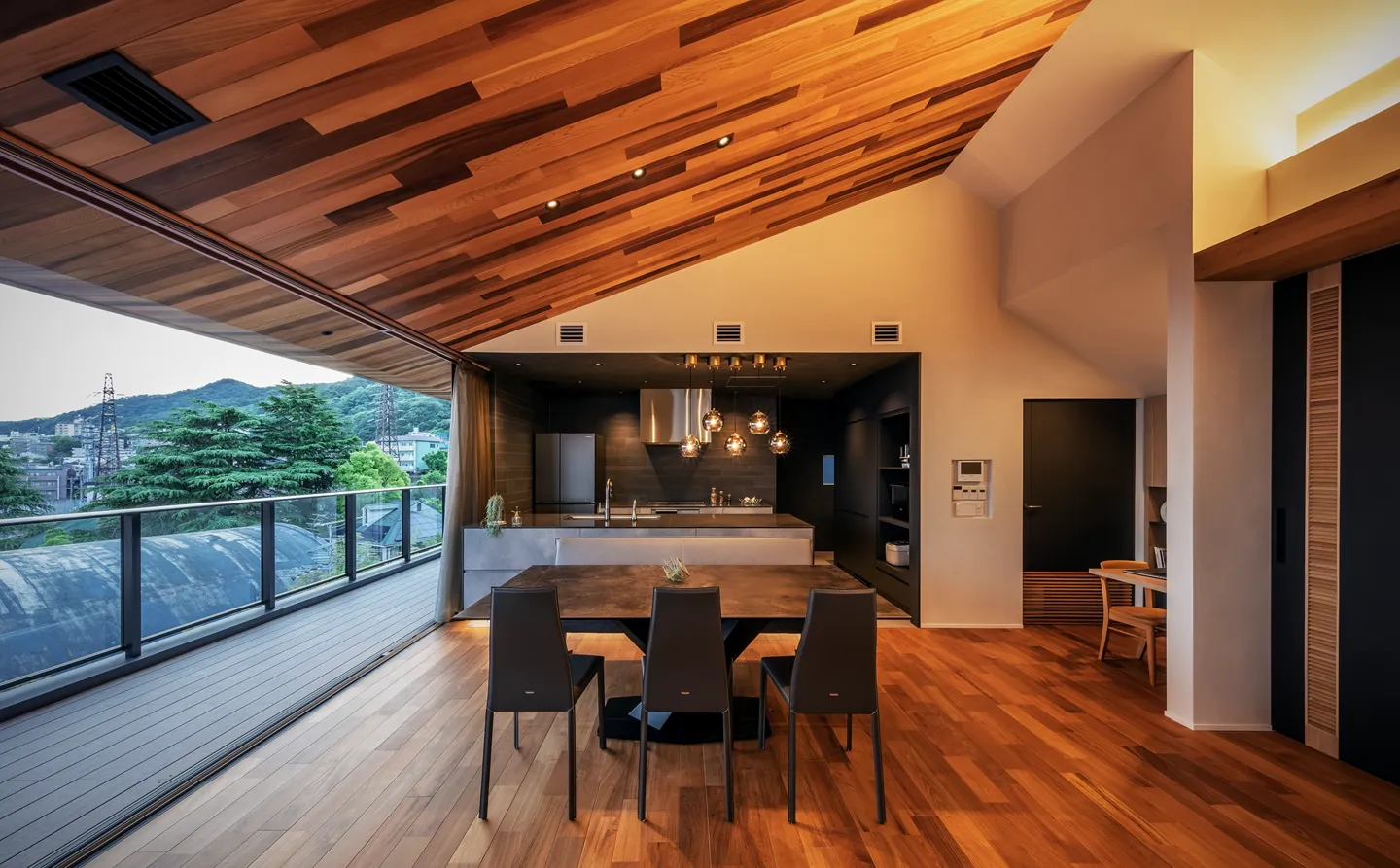
This approach brings in winter sunlight while shielding summer rays, so interiors remain cool in summer and warm in winter. The most effective method is to create a large south-facing opening with a deep eave. Without an eave, summer sun through an opening the size of two tatami mats can deliver as much as 650 W of heat—equivalent to having a wall-mounted heater. With an eave, that load is reduced to about 53 W.
In this house, opening the building toward the panorama coincides with orienting it southward. Naturally, the panoramic terrace with its large opening is fitted with eaves carefully dimensioned to the solar angles at solstice and equinox.
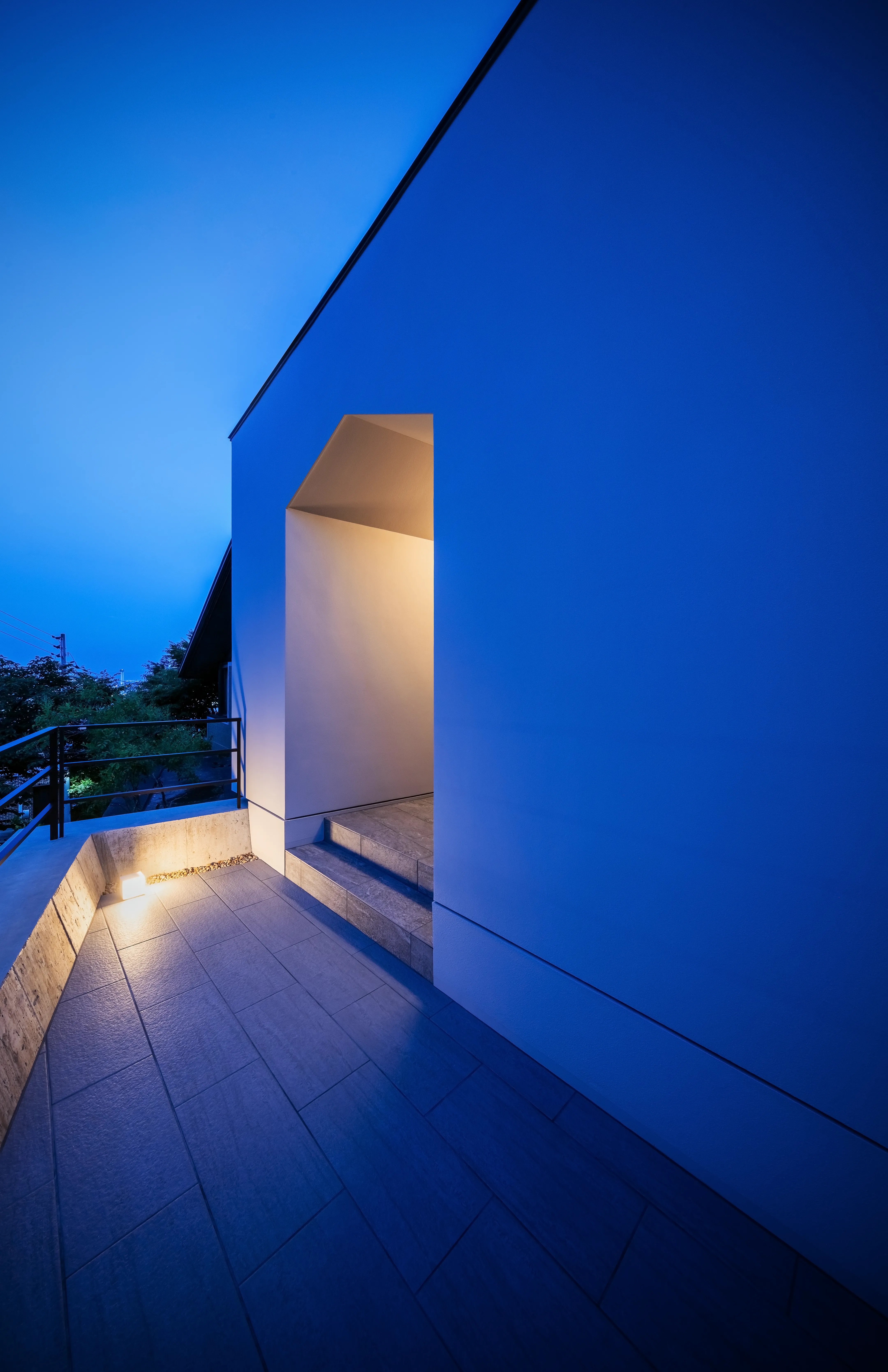
Both the external approach and the indoor circulation have been given subtle staging. From the approach to the entrance, the view over the town and the cherry tree standing in the middle of the nearby road are composed so that, upon reaching the entrance, one is welcomed by them. After climbing the steep slope and following the gentle exterior steps along the wall, the point at the entrance offers a natural pause and relief.
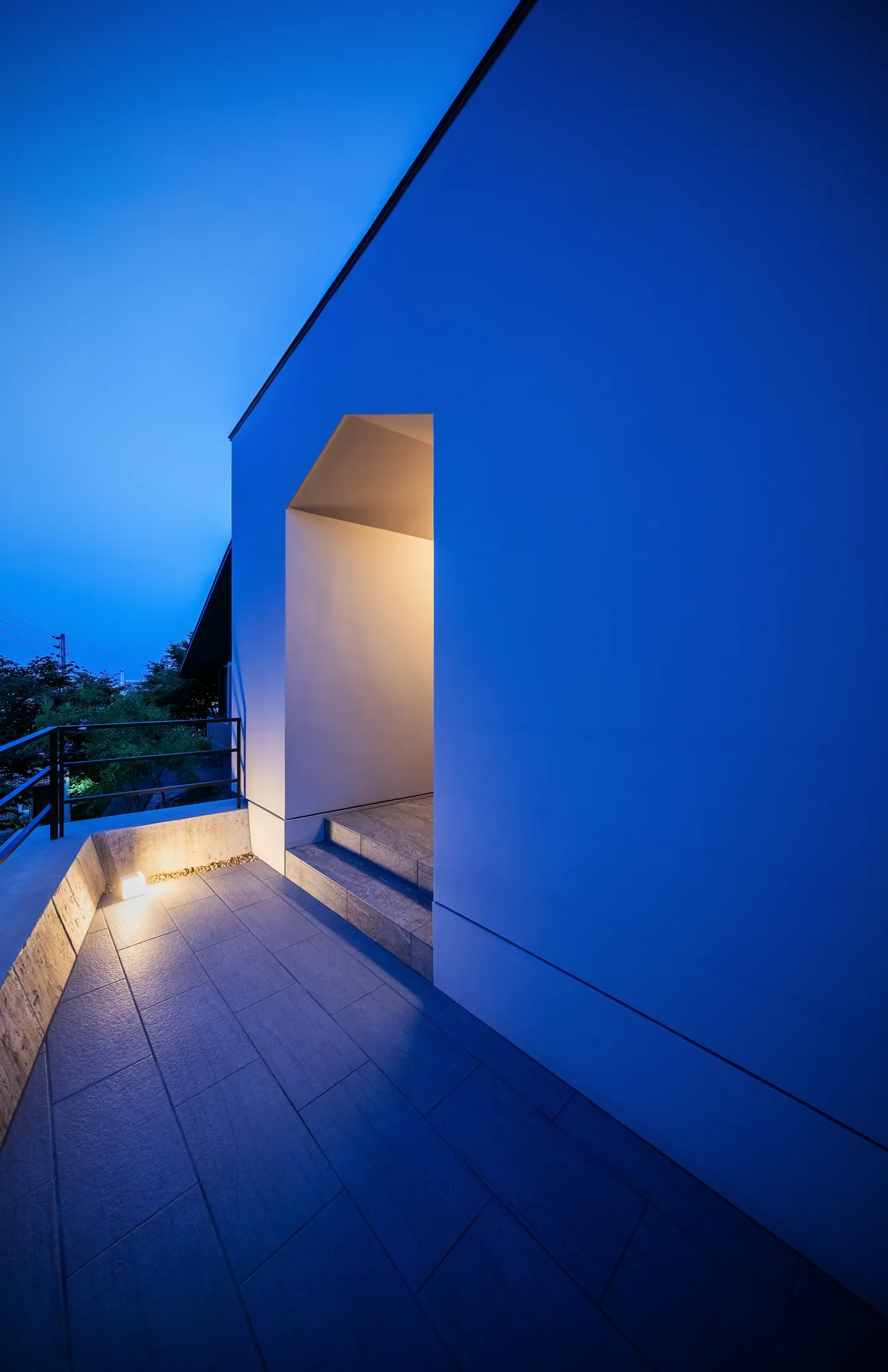
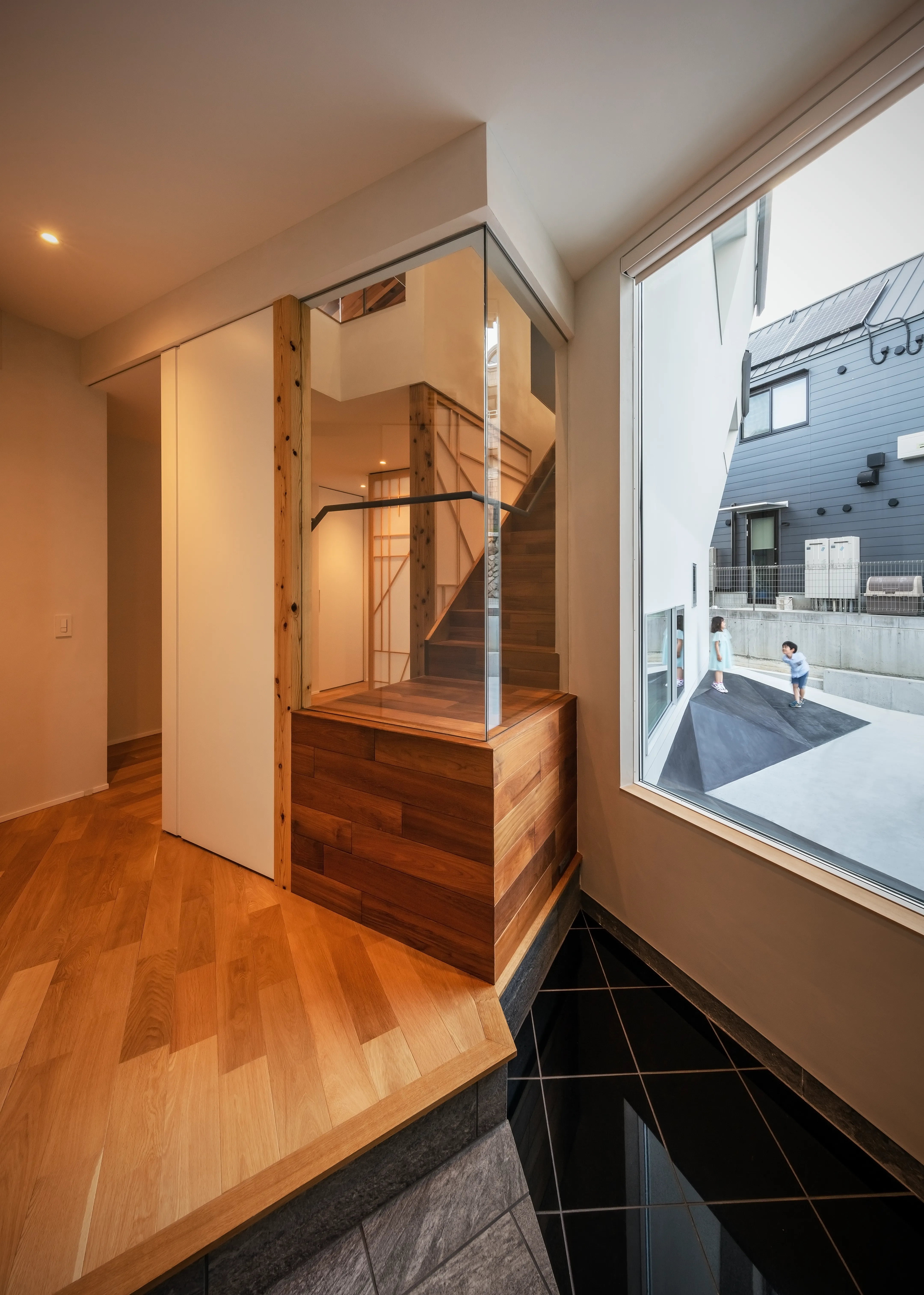
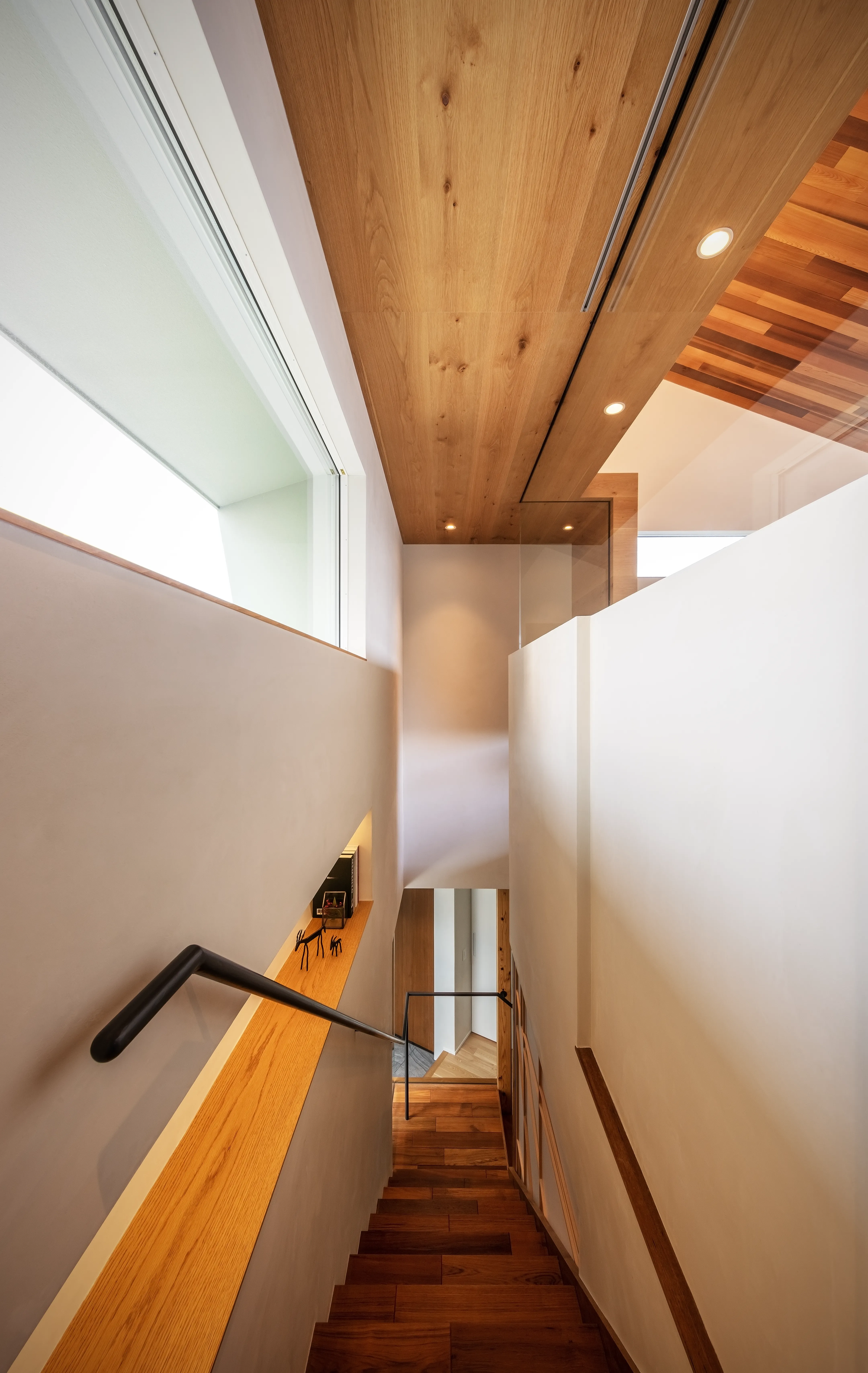
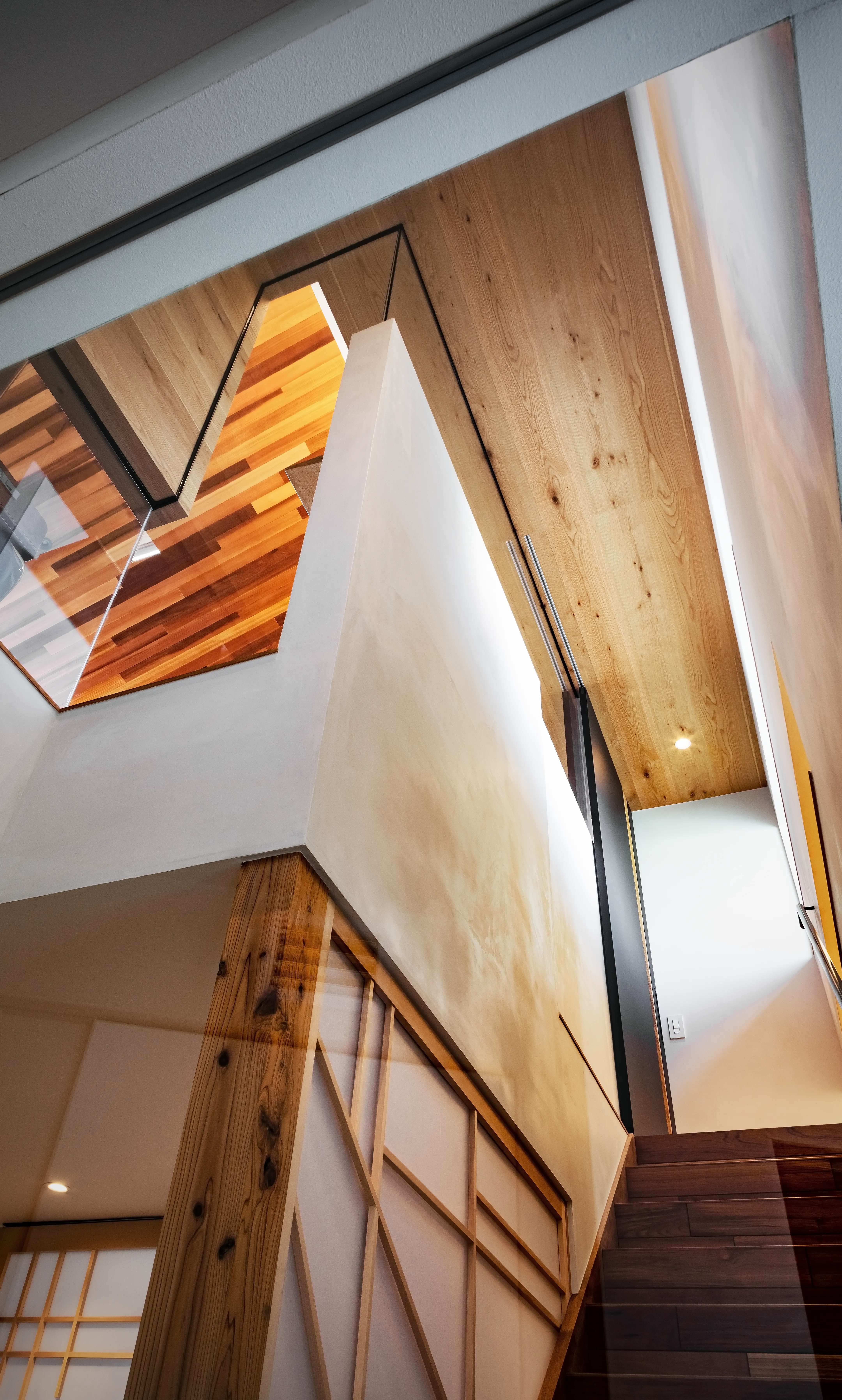
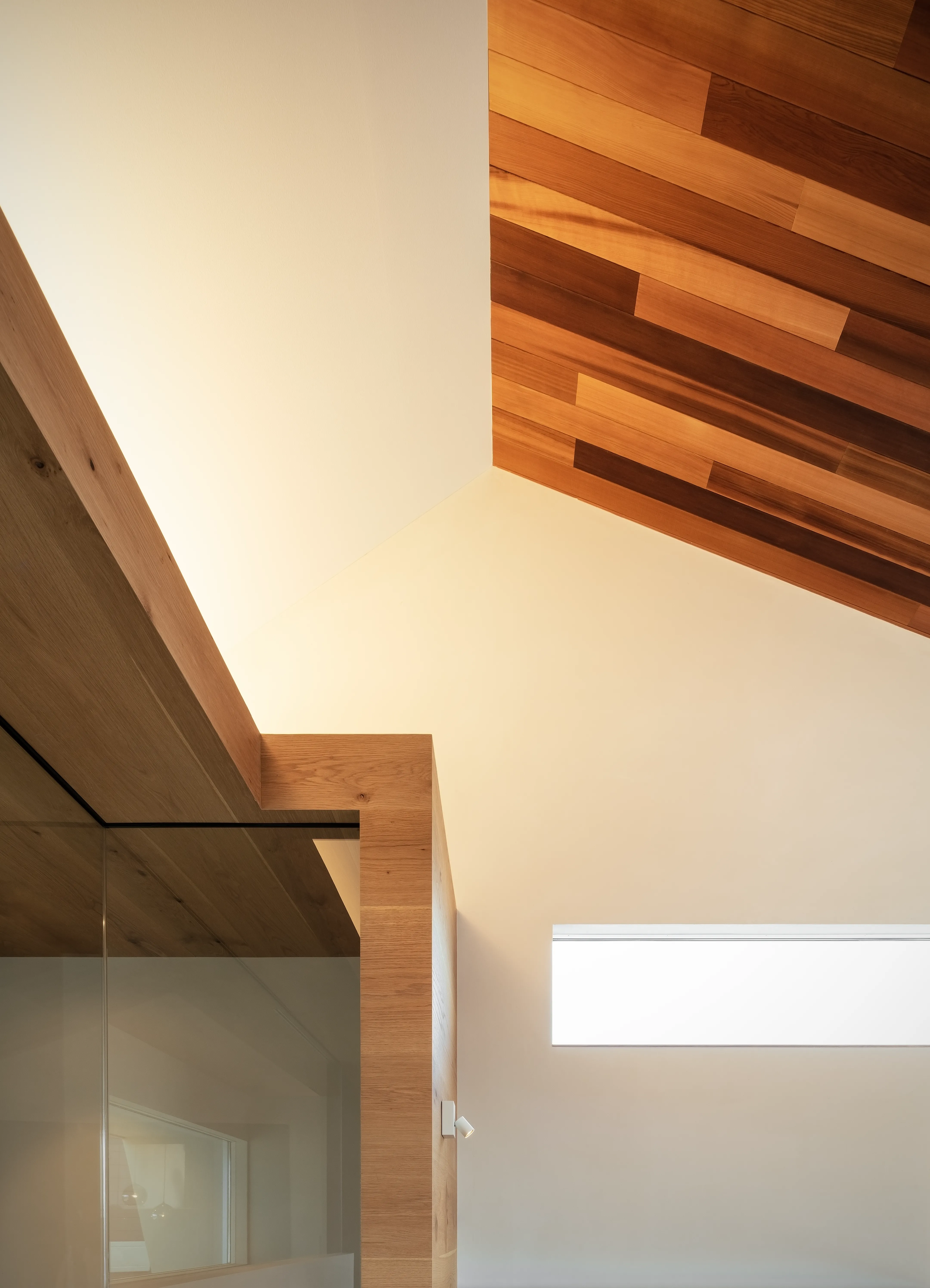
Passing through the distinctive gabled entrance, one enters a 4.7-tatami entrance hall with a large window and ceiling heights over 3 m at the highest point. It connects visually through a glass partition to the adjacent 5-tatami stair hall, giving a spacious impression. From the inside, the glass partition also buffers heat and cold from the entrance, making the stair and corridor more comfortable to use.
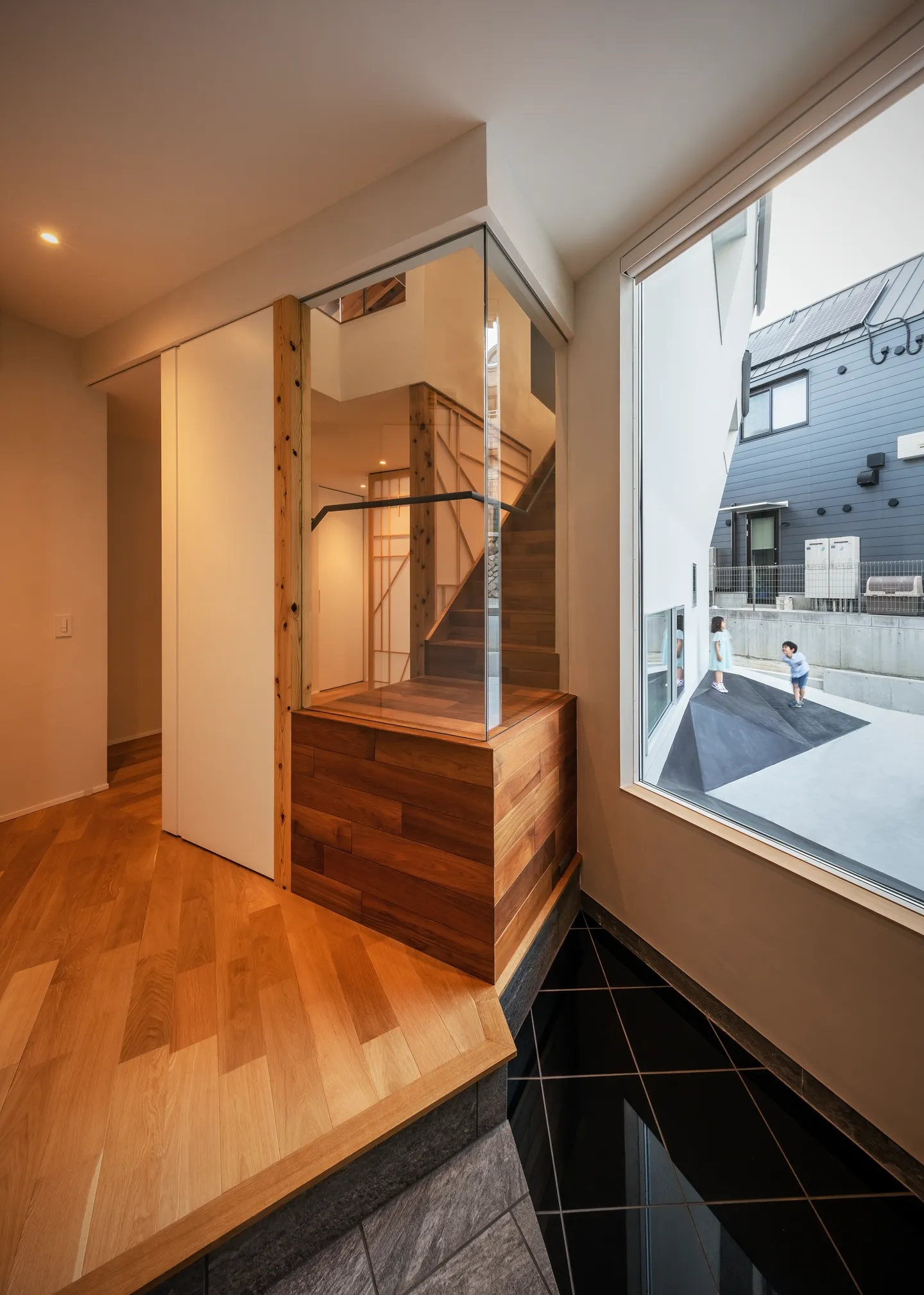
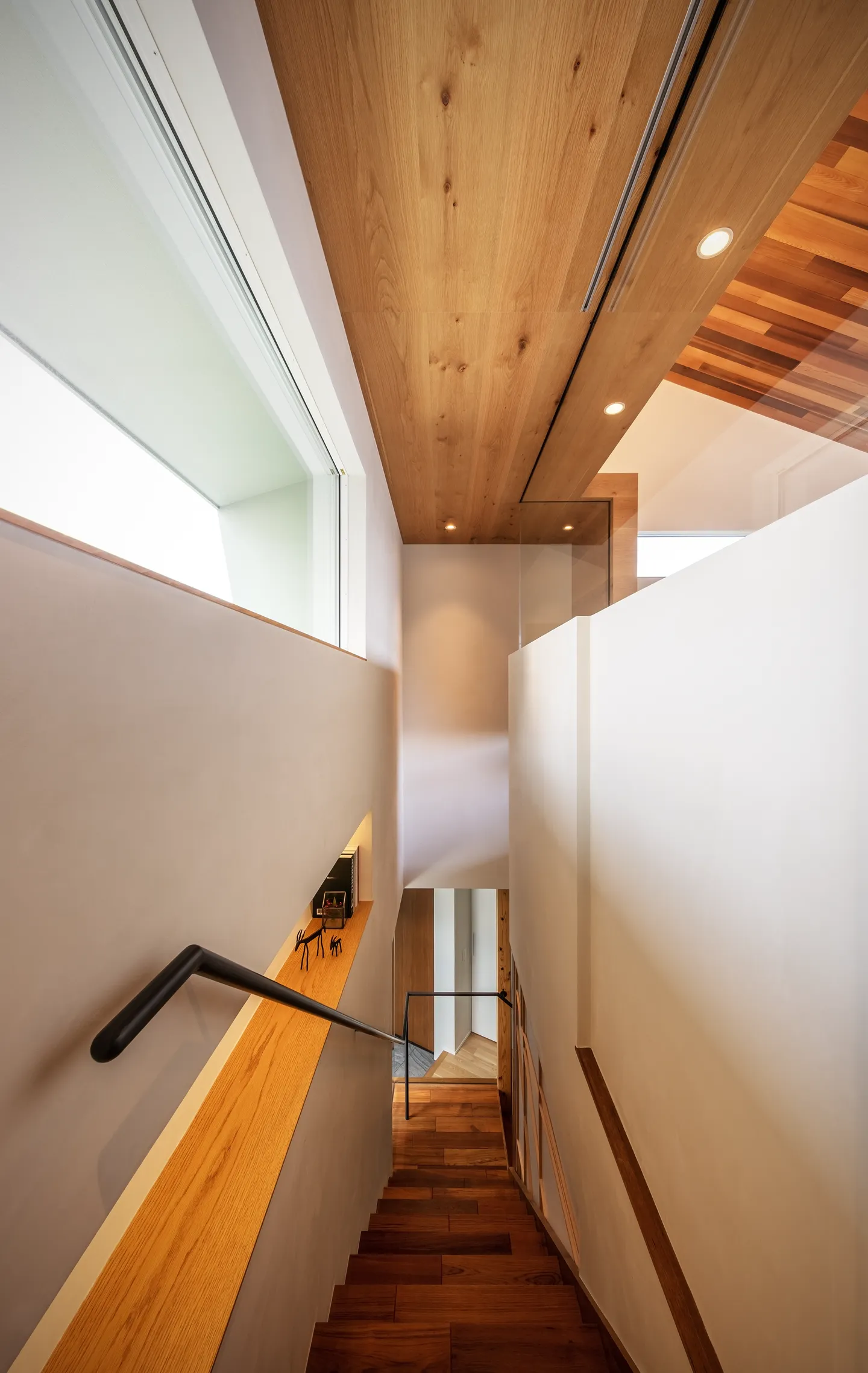
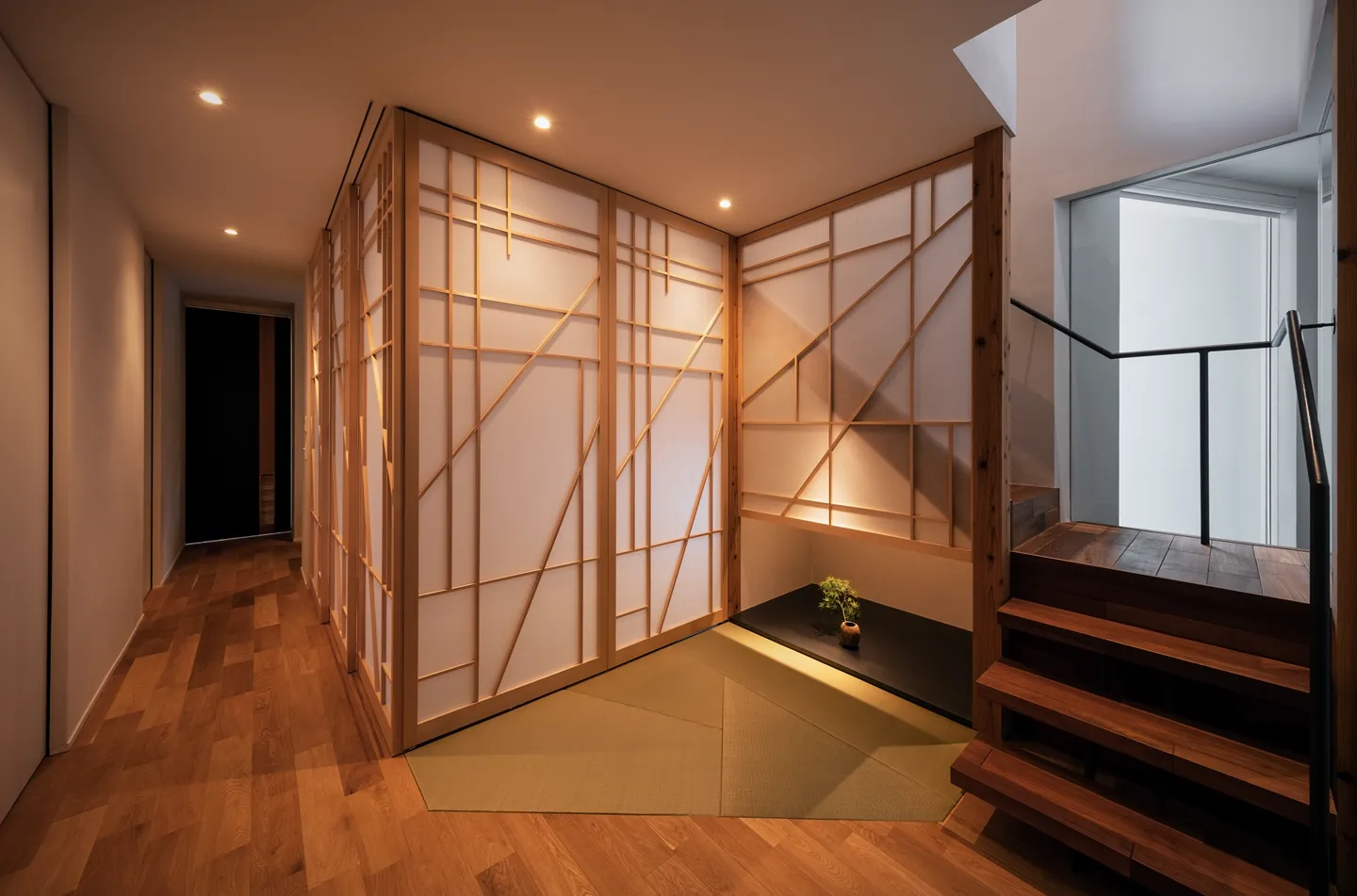
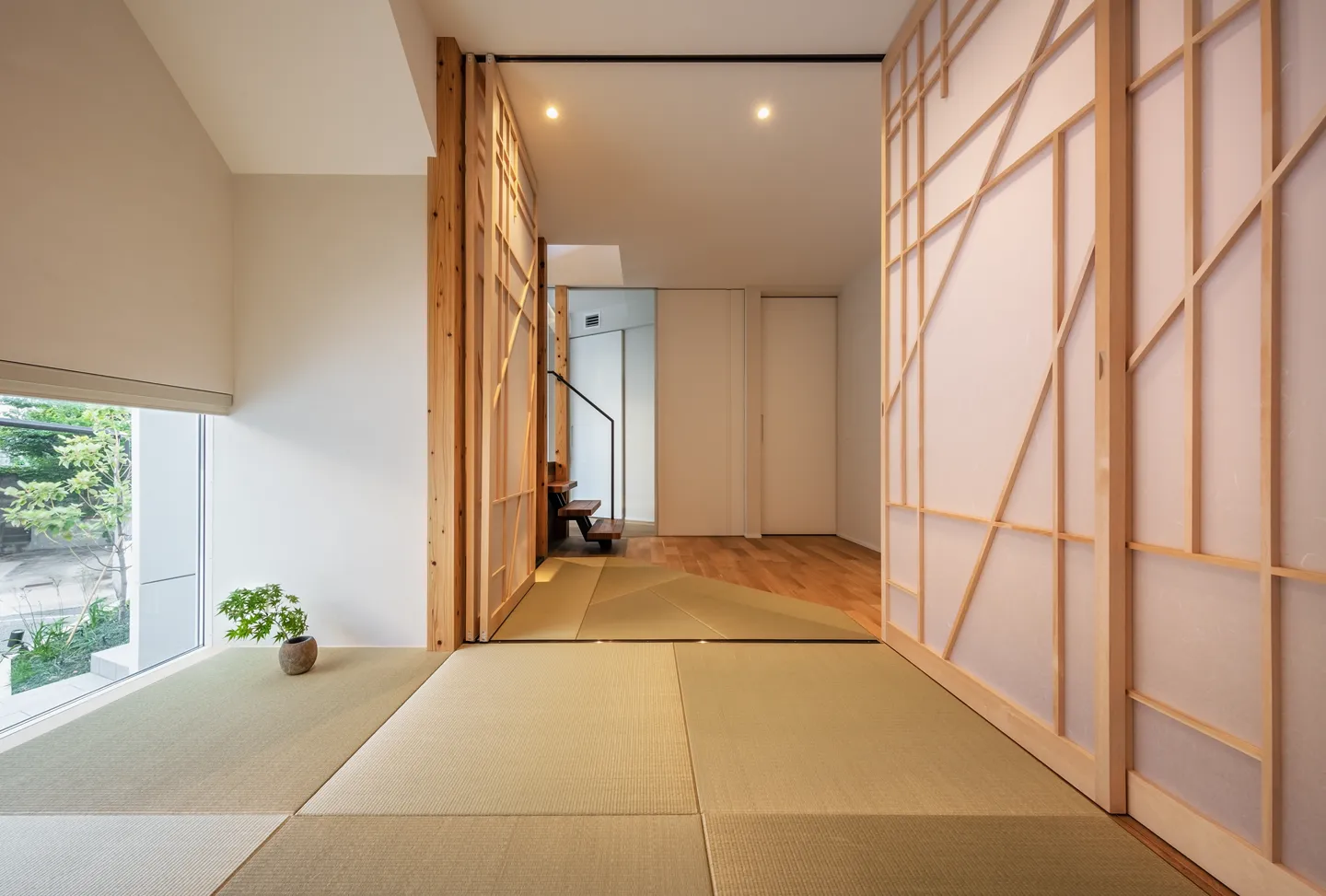
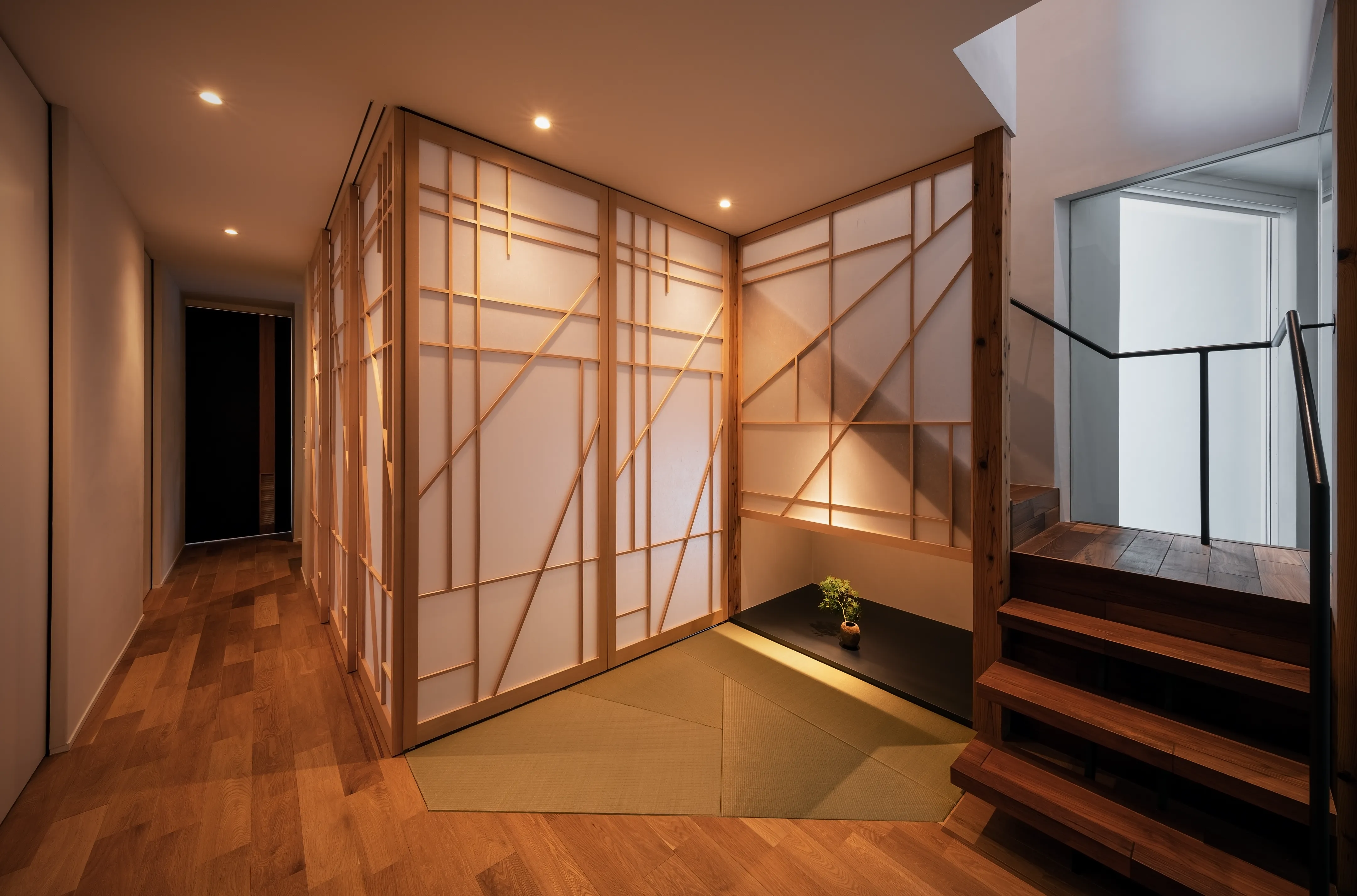
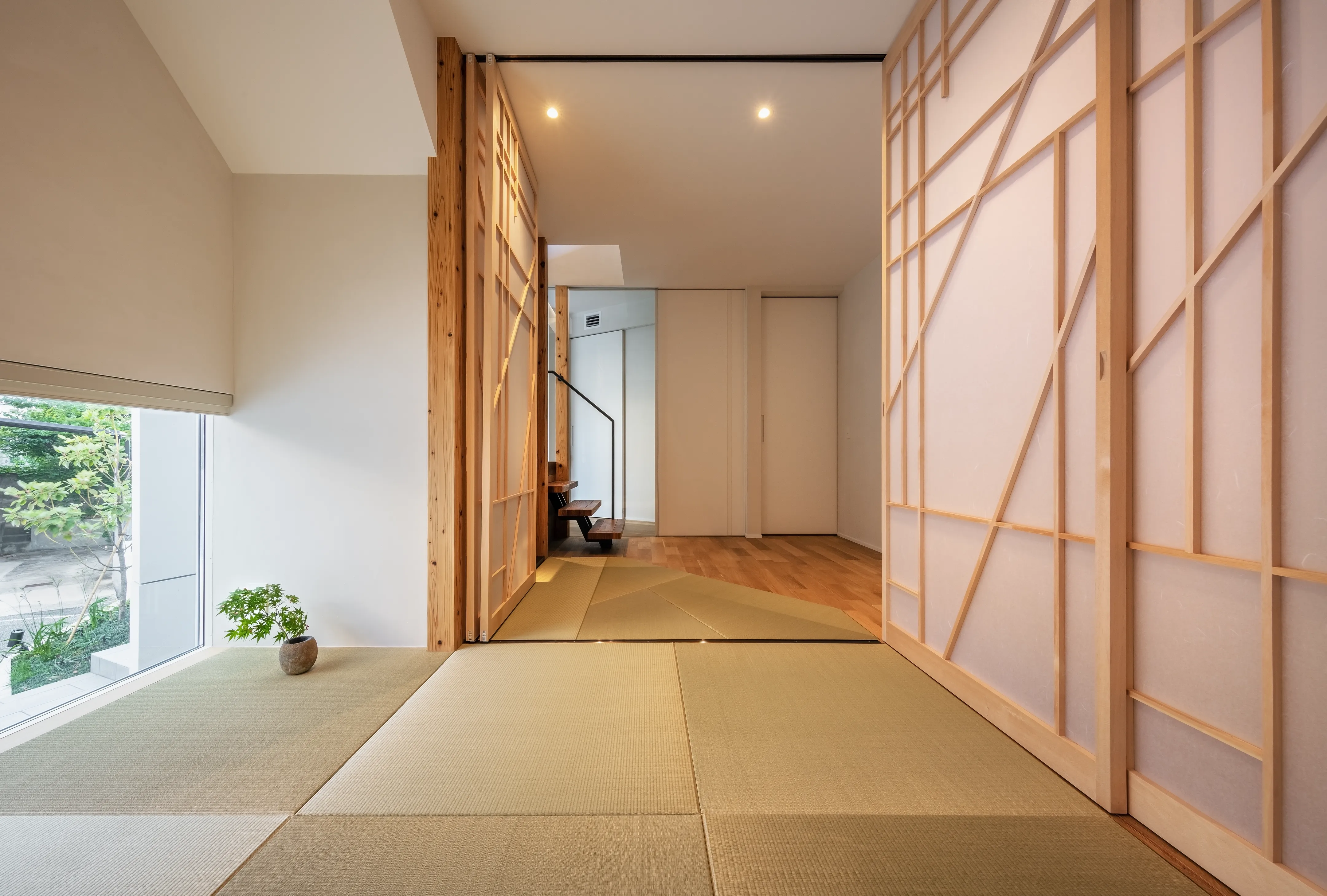
The washitsu (Japanese-style room) beyond the stair hall serves as both a guest room and a Buddhist altar room, while also functioning as a light source for the corridor and stair hall. In large houses, corridors tend to be long and dark, but here, light filtered through the shoji brightens the hallway. Leaving the shoji open further shortens the sense of distance, making the corridor feel broader. A 1.1-tatami custom-shaped mat that projects into the stair hall strengthens the unity between hall and washitsu, enhancing the everyday experience of moving through the house.
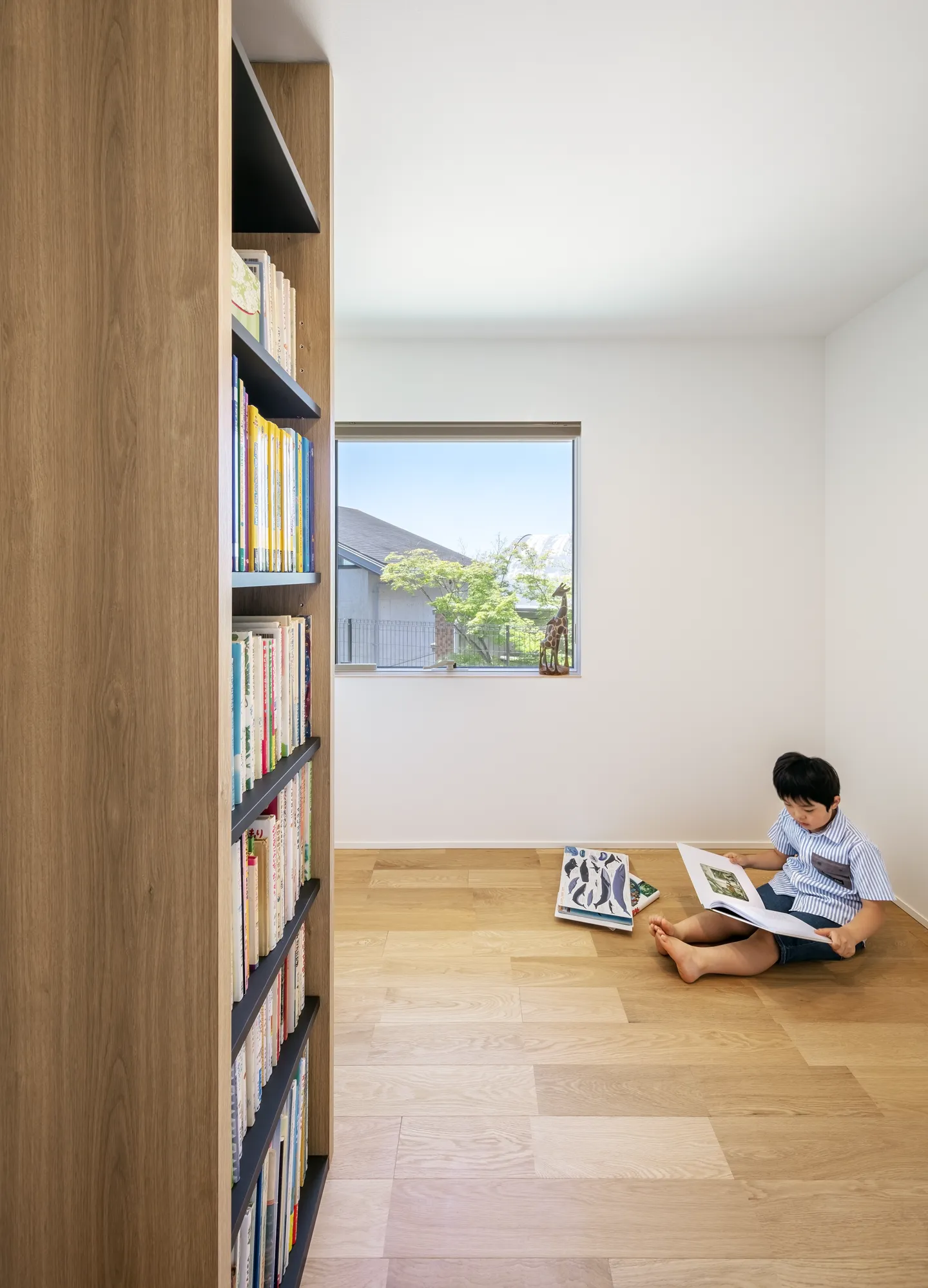
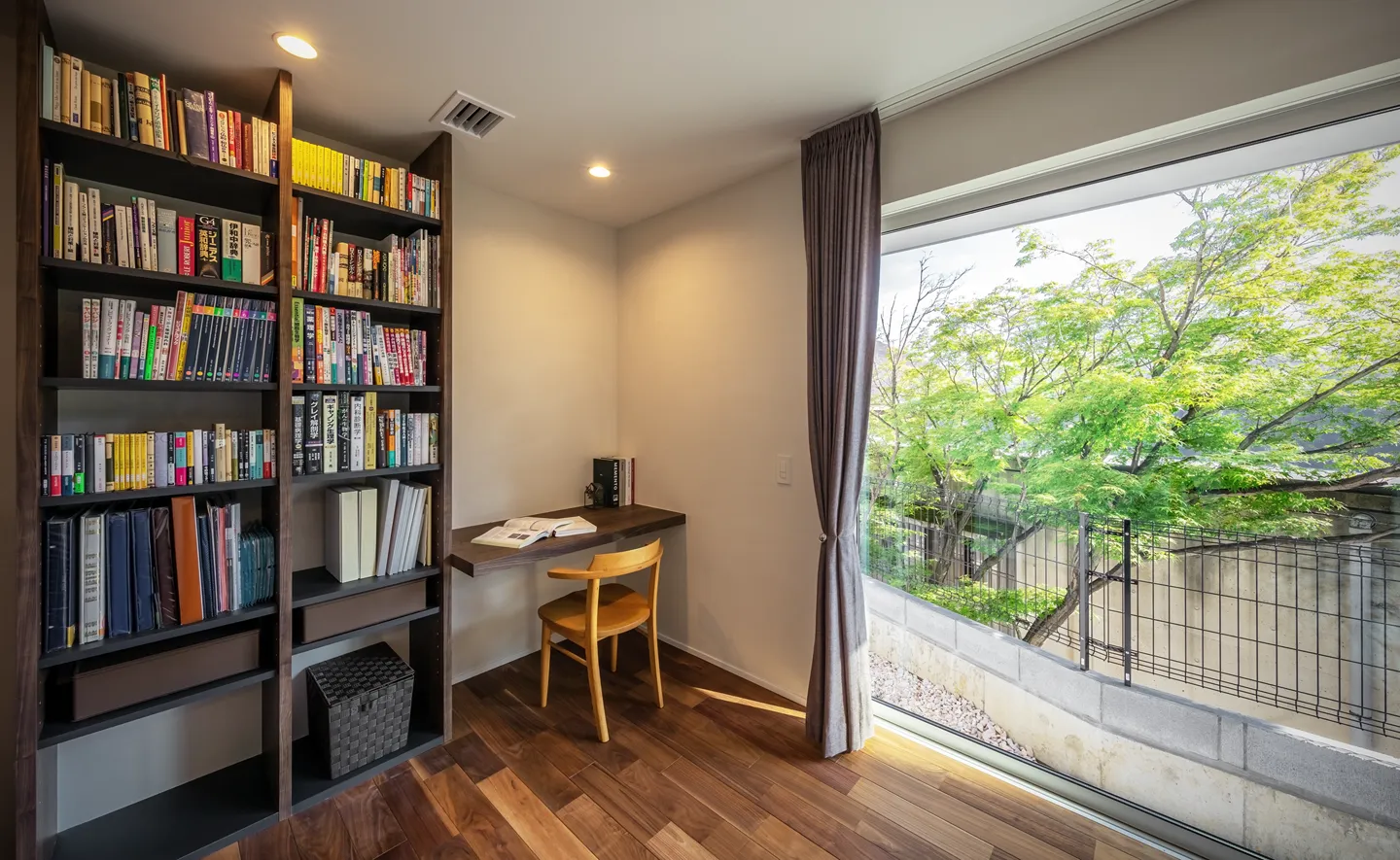
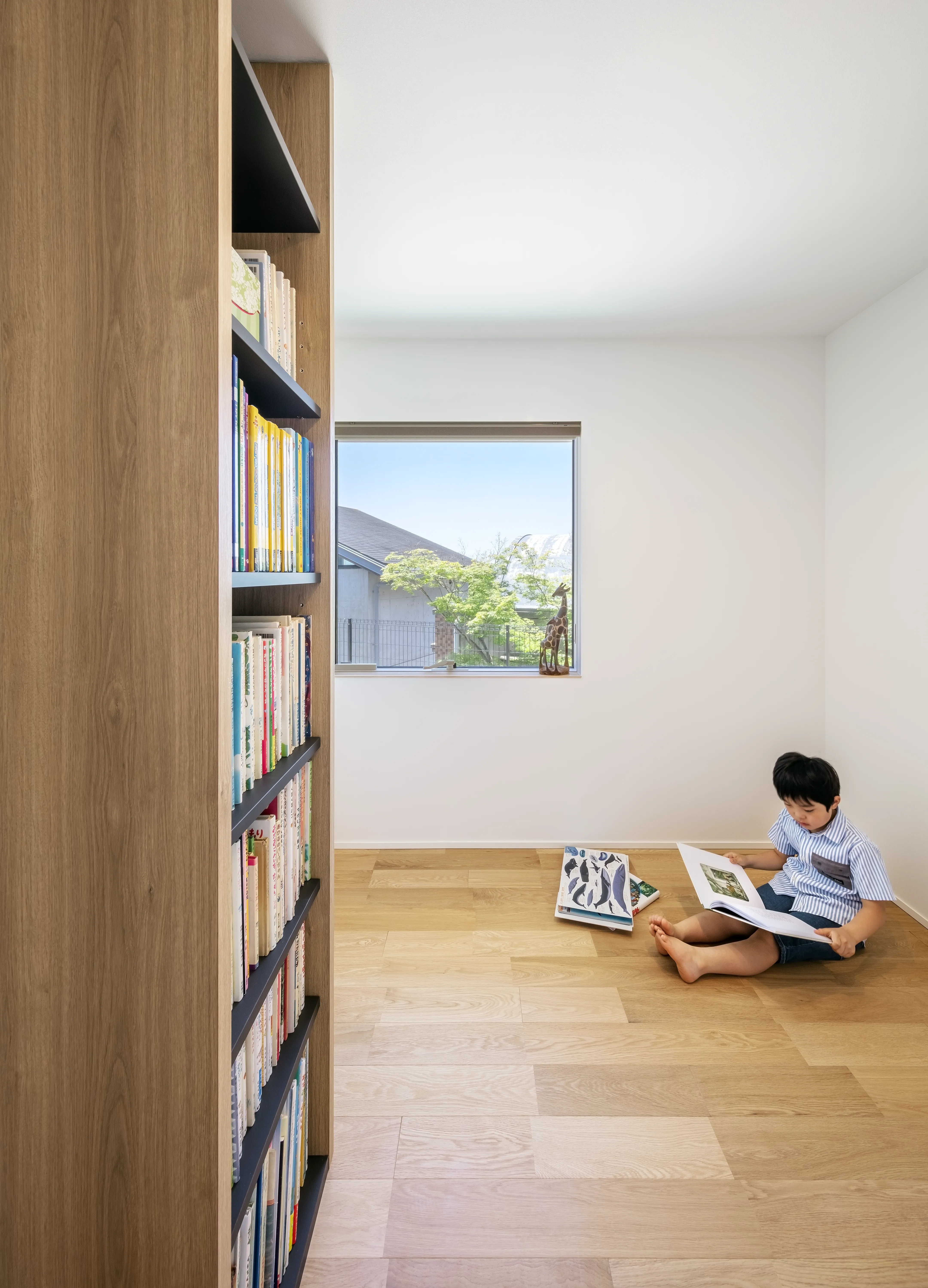
To allocate more area to the LDK where the family gathers, the private rooms are minimal. Since most time is spent together in the LDK, large private rooms are unnecessary. Children’s rooms are for study and sleep only, with space just for a 1.35 m-wide closet, bed, and desk. The main bedroom is somewhat more spacious but sized only for a double bed. It does, however, include a 3.1 m-long walk-in closet with ample storage capacity.

| Builder | Beams Construction Co., Ltd. |
|---|---|
| Kitchen | Cucina Kobe |
| Location | Kobe City |
|---|---|
| Use | Private Residence |
| Family | Couple + 3 children |
| Year | 2021 |
| Structure | Wooden / 2F |
|---|---|
| Site Area | 74.5 tsubo (≈246 m²) |
| Total Floor Area | 49.5 tsubo (≈163 m²) |
| Total Cost | ---- |